
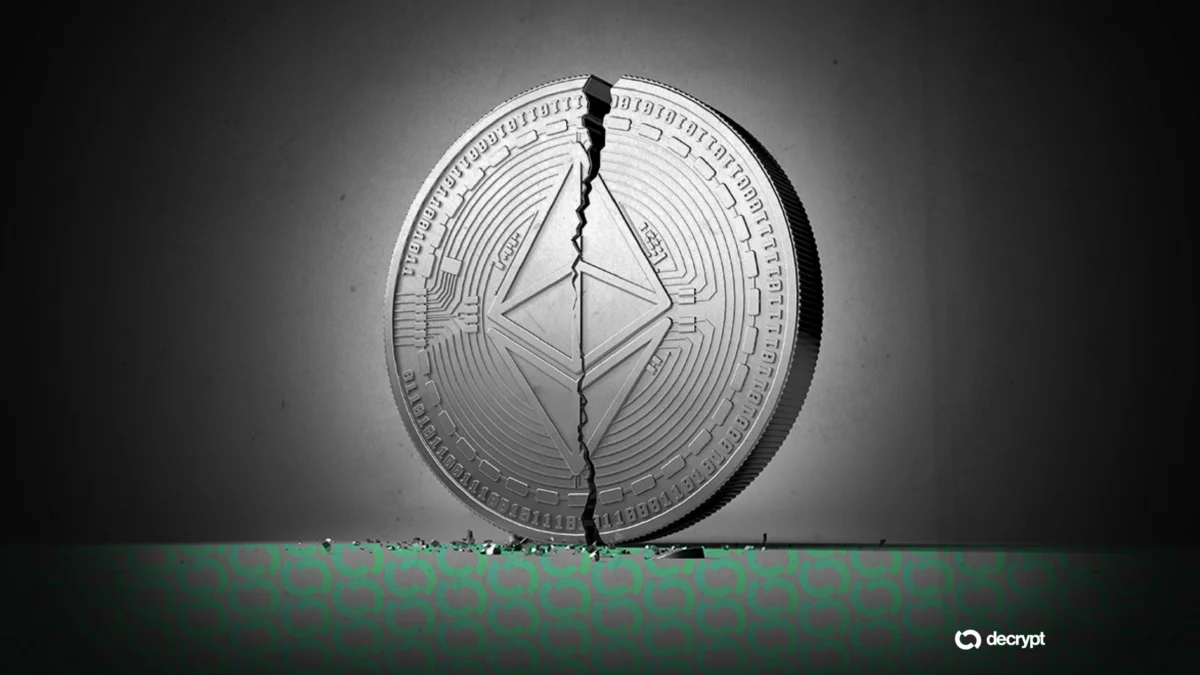

The foundational security of the global cryptocurrency ecosystem, long predicated on the robust mathematical difficulty of elliptic curve cryptography, is facing an unprecedented existential challenge. Justin Drake, a prominent researcher at the Ethereum Foundation, has issued a stark, industry-wide advisory urging stakeholders to adopt what he terms "bunker mode." This defensive strategy involves a coordinated, mass migration of digital assets to fresh, quantum-resistant addresses that utilize hash-based security rather than the exposed public keys common to standard wallets. The warning represents a significant pivot in the industry’s threat model, moving from long-term concerns regarding theoretical quantum computing to immediate, AI-driven risks that could potentially manifest within months.
The Mechanism of the Vulnerability: ECDSA Under Fire
At the heart of the concern lies the Elliptic Curve Digital Signature Algorithm (ECDSA), the cryptographic standard used by both Bitcoin and Ethereum to authorize transactions. In the current paradigm, when a user signs a transaction to move funds, their public key is revealed on the public ledger. If an attacker can derive a private key from that public key—a feat historically considered computationally infeasible—the entire security model of the blockchain would collapse.
While "Q-Day"—the anticipated arrival of sufficiently powerful quantum computers capable of breaking current encryption—has been a staple of cryptographic anxiety for years, the new threat profile is driven by the rapid maturation of artificial intelligence. Drake points to recent breakthroughs in AI-driven mathematical research, such as the comprehensive datasets published by OpenAI, as evidence that the "hard" problems once protecting elliptic curves are proving increasingly susceptible to superintelligence. Unlike hash functions, which possess a more straightforward and resilient mathematical structure, elliptic curves are complex, providing a larger surface area for algorithmic breakthroughs to exploit.
A Chronology of Escalating Concerns
The path to this moment of heightened alert has been marked by a series of increasingly urgent assessments from the global research community.
- Pre-2024: Cryptographic discussions focused almost exclusively on the distant horizon of hardware-based quantum computing. The industry operated under the assumption that defensive measures could be implemented over a decade-long timeline.
- March 2026: A pivotal research paper published by Google researchers suggested that quantum progress was accelerating faster than previously modeled. The study increased the probability of a "Q-Day" event occurring by 2032 to 10% or higher.
- Mid-2026: In response to these findings, the Ethereum Foundation officially inaugurated a specialized post-quantum security task force. Vitalik Buterin, co-founder of Ethereum, began outlining technical roadmaps for integrating quantum-resistant signatures into the network’s future upgrades.
- October 2026: The discourse shifted from long-term planning to immediate tactical defense. Justin Drake’s call for "bunker mode" marks the first time a major industry figure has suggested that the timeline for a potential breach may have condensed into months rather than years.
Understanding the "Bunker Mode" Strategy
Drake’s recommendation is rooted in the inherent design of blockchain addresses. A standard address reveals the public key, which is the primary target for a potential mathematical attack. A "fresh" address, however, utilizes a hash-based mechanism where the public key is effectively hidden behind a one-way cryptographic function until the moment a transaction is executed.
By moving funds to these obscured addresses, users can prevent their public keys from being exposed to the public record, thereby shielding their assets from anyone attempting to reverse-engineer private keys via AI or quantum hardware. Drake emphasizes that this does not require a fundamental change to existing wallet infrastructure or new, unproven cryptography. Rather, it is a operational shift in how assets are stored and managed.
The "Satoshi Shield" and Economic Risk Mitigation
A critical component of the current security landscape is the distribution of wealth across the network. Drake noted that a degree of natural protection exists for smaller holders due to the concentration of "exposed" wealth at the top of the chain.
For instance, the original Bitcoin addresses associated with the network’s creator, Satoshi Nakamoto, hold roughly 20,000 individual clusters of 50 BTC each. These addresses, which have been public since the inception of the network, would be the primary targets for any entity attempting to break ECDSA. This phenomenon, dubbed the "Satoshi Shield," suggests that smaller, less visible wallets may be lower-priority targets in the event of an initial, limited-scale breach. Nevertheless, Drake strongly advised major institutional custodians—including entities like Binance, Bitbank, Robinhood, Bitfinex, and Tether—to immediately enhance their cold storage security protocols to account for these risks.
Institutional Response and Technical Implications
The industry is currently in a state of cautious deliberation. While no institutional entity has yet confirmed a full-scale migration to "bunker mode," the pressure on exchange operators to implement quantum-safe protocols is mounting.
The technical challenge is twofold. First, there is the immediate operational risk of mass migration, which could congest the network and introduce human error. Second, there is the long-term challenge of updating the core protocols of major blockchains to support post-quantum cryptography natively. Vitalik Buterin’s current proposal for Ethereum involves a transition to quantum-resistant schemes, but such upgrades require significant network consensus and rigorous testing to ensure that the security of the chain is not compromised during the transition.
Analytical Outlook: The Intersection of AI and Cryptography
The shift in risk assessment is largely a result of the unpredictable velocity of AI development. For decades, mathematicians believed that the "discrete logarithm problem," which secures elliptic curves, was immune to the types of pattern recognition that characterize modern machine learning. However, the recent surge in AI-driven mathematical output suggests that superintelligence may be capable of discovering "shortcuts" in the mathematical structures that underpin digital signatures.
If an attacker were to utilize a large GPU cluster—now more accessible than ever—to perform these optimized attacks, a private key recovery that once seemed like a task for a future quantum supercomputer could theoretically be achieved in a matter of days or weeks. This changes the threat from a "catastrophic event" to a "managed risk" scenario, necessitating a proactive defensive posture.
The Path Forward
The Ethereum Foundation, under the guidance of experts like Drake and Buterin, is actively accelerating its research into hash-based signatures. This transition is no longer seen as a "nice-to-have" feature for the next decade, but as an urgent priority for the current roadmap.
For the average investor, the advice remains clear: stay calm, but stay informed. There is no immediate need for panic selling or impulsive actions that could compromise security through poor key management. However, the era of complacency regarding public key exposure is effectively over. As the industry moves forward, the adoption of obfuscated, hash-protected addresses is likely to become the new gold standard for long-term cold storage.
As the blockchain sector grapples with these developments, the integration of quantum-resistant standards will be the defining challenge of the next several years. The focus will remain on "maximum defensive acceleration," ensuring that while the technology evolves to meet the needs of the global economy, the fundamental integrity of the ledger remains intact against the rising tide of advanced computational threats. The coming months will likely see further, more concrete guidance from developers and researchers, as the industry works to ensure that the future of digital assets remains secure in an increasingly intelligent and powerful digital world.
