
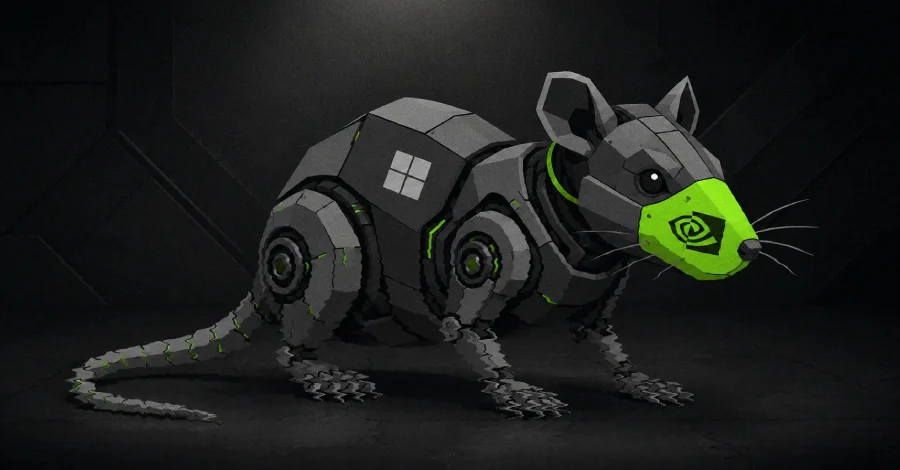

Cybersecurity researchers have sounded the alarm regarding the discovery of a sophisticated, previously undocumented remote access trojan (RAT) dubbed LabubaRAT, which leverages the modern Rust programming language and meticulously disguises itself as legitimate NVIDIA software to infiltrate and persist within target environments. This stealthy malware, identified and analyzed by experts at Blackpoint Cyber, represents a significant evolution in the threat landscape, offering attackers a robust, multi-functional platform for sustained malicious operations. The emergence of LabubaRAT underscores a growing trend among cybercriminals to adopt advanced programming languages for developing more resilient and evasive malware, complicating detection and remediation efforts for organizations worldwide.
Discovery and Initial Analysis by Blackpoint Cyber
The detailed analysis, published by Blackpoint Cyber researchers Sam Decker and Nevan Beal, highlights LabubaRAT’s primary objective: establishing a persistent and reusable foothold for hands-on activity within compromised systems. Their findings reveal a highly capable implant designed for comprehensive system interaction and data exfiltration. Upon successful deployment, LabubaRAT is equipped to perform extensive host profiling, identify crucial security tools installed on the system, execute operator commands, facilitate file transfers, capture screenshots, and even proxy network traffic through the infected host. This comprehensive suite of capabilities positions LabubaRAT as a potent tool for various stages of an attack lifecycle, from initial reconnaissance to data exfiltration and maintaining long-term access.
Crucially, the researchers noted the implant’s support for multiple communication methods, including standard HTTPS, WebView2, and highly surreptitious DNS tunneling. This redundancy in communication channels is a critical design feature, allowing attackers to maintain access to compromised hosts even if one pathway is detected and subsequently blocked by network defenses. Such resilience in command-and-control (C2) infrastructure significantly enhances the malware’s longevity and the difficulty of completely eradicating it from a network. Furthermore, the researchers observed indicators suggesting that LabubaRAT might be distributed and operated under a malware-as-a-service (MaaS) model, a concerning development that could lower the barrier to entry for less technically skilled malicious actors.
Technical Deep Dive: Modus Operandi and Evasion Techniques
The initial vector for LabubaRAT typically involves an executable file named "nvidia-sysruntime.exe," a deliberate impersonation of NVIDIA’s legitimate container runtime toolkit. This masquerade is a strategic choice, leveraging the widespread presence of NVIDIA hardware and software in modern computing environments, particularly in gaming, professional workstations, and data centers. By mimicking a common and often background-running process, the malware attempts to blend seamlessly into the operational environment, evading suspicion from users and potentially bypassing rudimentary security checks.
Unlike many conventional malware strains that hard-code their C2 server details directly into the binary, LabubaRAT exhibits a more sophisticated approach. It accepts runtime configuration through command-line arguments, a design choice that offers significant operational flexibility to the attackers. This dynamic configuration allows the campaign operator to define various critical parameters at launch, including the remote server details (e.g., "pipicka[.]xyz" as observed in the analyzed sample) and the polling interval the implant uses to communicate with its C2 infrastructure. Alternatively, attackers can supply these individual values as a single, Base64-encoded argument, further obscuring the configuration details from casual inspection.
The implications of this dynamic configuration are profound. As highlighted by the Blackpoint Cyber researchers, "Because those values were provided at launch, the same compiled binary could be reused with different infrastructure, organizations, or campaign groupings instead of relying on a hard-coded server." This reusability reduces development overhead for the attackers, enhances their agility in adapting to defensive measures, and makes it harder for security researchers to track campaigns based on unique binary signatures. It also supports the hypothesis of a MaaS model, where a single, versatile binary can be deployed by multiple subscribers with their own distinct C2 setups.
Upon successful execution and configuration, LabubaRAT stores its operational settings in a local SQLite database, a common and often legitimate data storage mechanism that helps it maintain persistence and blend in with normal system activities. Following this, the RAT initiates a comprehensive discovery phase, meticulously inventorying the host system. This reconnaissance includes identifying installed web browsers (such as Google Chrome, Mozilla Firefox, Microsoft Edge, and Brave) and, more critically, detecting the presence of a wide array of security products. The malware specifically checks for the existence of leading endpoint security solutions, including Microsoft Defender, CrowdStrike, SentinelOne, Carbon Black, Sophos, Malwarebytes, Bitdefender, ESET, Kaspersky, McAfee, Symantec, and Trend Micro.
Beyond security software, LabubaRAT gathers other vital system information, such as the hostname, total RAM size, CPU model, and the current state of Windows User Account Control (UAC). This extensive host profiling is not merely for reconnaissance; it serves to prepare the environment for subsequent stages of the attack. By understanding the defensive posture and system specifications, the operators can tailor their commands and exploits, potentially activating or deactivating certain RAT functionalities based on the security tools detected, thereby maximizing their chances of success and evading detection.
Comprehensive Command and Control Capabilities
Once fully launched and integrated into the compromised system, LabubaRAT supports a broad spectrum of malicious functions, giving the operator extensive control over the infected host. These capabilities include:
- Command Execution: The ability to execute arbitrary commands on the system, including shell commands, PowerShell scripts, and JavaScript, providing direct control over system processes and configurations.
- Screenshot Capture: Functionality to capture screenshots of the user’s desktop, enabling visual surveillance and exfiltration of sensitive information displayed on the screen.
- File Upload and Download: Robust file transfer capabilities, allowing attackers to exfiltrate sensitive data from the system or upload additional malware and tools.
- Archive Handling: Support for managing archived files, which can be used to compress exfiltrated data for easier transfer or to unpack additional payloads.
- SOCKS5 Proxy Support: The ability to route network traffic through the compromised system using a SOCKS5 proxy, effectively masking the attacker’s true origin and allowing them to access internal network resources from the victim’s perspective.
Blackpoint Cyber emphasized the completeness of this toolset: "Those capabilities gave the operator enough control to interact with the host, move files in and out of the environment, route traffic through the system, and maintain access without relying on a separate loader or narrowly scoped follow-on tool." This self-sufficiency means LabubaRAT can serve as a primary attack tool, reducing the need for multiple, specialized pieces of malware, thus streamlining attacker operations. The malware also supports maintaining user-level autostart, ensuring persistence across system reboots.
The "LabubaPanel" Branding and MaaS Model

The name "LabubaRAT" itself is derived from clues found within its command-and-control infrastructure, specifically the "LabubaPanel" title associated with its C2 interface and a distinct Labubu-themed favicon. This branding, while seemingly innocuous, points towards a more organized and potentially commercialized operation. The presence of a panel and a consistent branding strongly suggests a productized offering, reinforcing the hypothesis that LabubaRAT is being offered under a MaaS model.
The MaaS model has become increasingly prevalent in the cybercrime ecosystem, democratizing access to sophisticated attack tools for a wider range of malicious actors. Under this model, developers create and maintain malware, offering it as a subscription service to other criminals who then use it to conduct their own attacks. This allows the core developers to profit without directly engaging in the more risky aspects of hacking, while providing "customers" with powerful tools they might not be able to develop themselves. LabubaRAT’s modularity, dynamic configuration, and comprehensive feature set make it an ideal candidate for such a service.
The Rising Trend of Rust in Malware Development
LabubaRAT’s development in Rust is particularly noteworthy and aligns with a significant trend in the malware development landscape. Traditionally, malware was predominantly written in C, C++, or assembly for performance and low-level system access, or in scripting languages like Python for rapid development. However, languages like Rust and Go have gained traction among cybercriminals for several compelling reasons:
- Performance and Memory Safety: Rust offers performance comparable to C/C++ but with guaranteed memory safety, significantly reducing common vulnerabilities like buffer overflows that attackers might otherwise exploit in their own code or that defenders might use to disrupt malware.
- Cross-Platform Compatibility: Rust’s excellent cross-compilation capabilities allow malware developers to easily target multiple operating systems (Windows, Linux, macOS) from a single codebase, broadening their potential victim pool.
- Evasion Capabilities: Binaries compiled with Rust often have a different structure compared to those compiled with older languages, potentially making them harder for legacy signature-based antivirus solutions to detect. Furthermore, the compiled code can be more opaque to reverse engineers accustomed to patterns in C/C++ binaries, increasing the time and effort required for analysis.
- Modern Tooling and Ecosystem: Rust’s modern package manager (Cargo) and robust ecosystem provide developers with efficient tools and libraries, streamlining the malware development process.
The adoption of Rust by sophisticated threat actors signals a shift towards more robust, resilient, and evasive malware. Notable examples of Rust-based malware include components of the Hive ransomware, the BlackCat (ALPHV) ransomware, and various infostealers. LabubaRAT’s addition to this list underscores the need for security solutions to evolve beyond traditional detection methods and incorporate advanced behavioral analysis and threat intelligence specifically tailored to modern programming language characteristics.
Broader Context and Implications for Cybersecurity
The emergence of LabubaRAT fits into a broader threat landscape characterized by increasingly sophisticated evasion techniques and the professionalization of cybercrime. The impersonation of legitimate software, particularly from well-known vendors like NVIDIA, highlights the ongoing challenge of supply chain attacks and the importance of verifying software authenticity. Attackers are constantly seeking ways to blend into the noise of legitimate system processes, making it harder for both automated defenses and human analysts to distinguish malicious activity from benign operations.
The use of multiple communication channels, especially DNS tunneling, poses a particular challenge for network defenders. DNS is a fundamental internet protocol that is often less scrutinized than HTTP/S traffic, making it an attractive covert channel for C2 communications and data exfiltration. Organizations must implement deep packet inspection and behavioral analytics on DNS traffic to identify anomalies that could indicate malicious activity.
The MaaS model, as potentially leveraged by LabubaRAT, means that organizations face a wider array of adversaries, from state-sponsored groups to less experienced individuals, all wielding potentially powerful tools. This necessitates a proactive and multi-layered defense strategy.
Mitigation and Defense Strategies
Defending against sophisticated threats like LabubaRAT requires a comprehensive and adaptive cybersecurity posture. Organizations should consider implementing the following strategies:
- Robust Endpoint Detection and Response (EDR): Advanced EDR solutions are crucial for detecting anomalous behavior, process injection, file system modifications, and network connections that might indicate LabubaRAT activity, especially given its host profiling and command execution capabilities.
- Network Segmentation and Monitoring: Segmenting networks limits the lateral movement of malware. Continuous monitoring of network traffic, including DNS queries and HTTPS connections, for unusual patterns or destinations can help detect C2 communications.
- Application Whitelisting: Implementing strict application whitelisting policies can prevent unauthorized executables, such as
nvidia-sysruntime.exeif it’s not a legitimate, signed NVIDIA binary, from running on endpoints. - Employee Cybersecurity Awareness Training: Educating employees about phishing, social engineering tactics, and the dangers of downloading software from unofficial sources can significantly reduce the risk of initial infection.
- Patch Management: Regularly patching operating systems, applications, and firmware closes known vulnerabilities that attackers might exploit for initial access or privilege escalation.
- Principle of Least Privilege: Limiting user and application privileges minimizes the potential impact of a compromise.
- Strong Identity and Access Management (IAM): Multi-factor authentication (MFA) and robust access controls reduce the likelihood of attackers gaining persistent access through compromised credentials.
- Threat Intelligence Integration: Staying updated with the latest threat intelligence, including details about new malware like LabubaRAT, allows security teams to proactively configure their defenses and hunt for indicators of compromise (IoCs).
- Behavioral Analytics: Relying less on signature-based detection and more on behavioral analytics can help identify Rust-based malware that might evade traditional antivirus programs due to its unique compilation characteristics.
While NVIDIA has not issued a specific statement regarding LabubaRAT’s impersonation, it is implicitly understood that major software vendors continuously work to protect their brands from malicious exploitation and advise users to download software only from official, verified sources. The cybersecurity community, including Blackpoint Cyber, continues to share vital intelligence to help organizations fortify their defenses against these evolving threats.
Conclusion and Future Outlook
LabubaRAT represents a compelling example of the continuous innovation in the cybercrime ecosystem. Its Rust-based development, dynamic configuration, multi-channel communication, comprehensive host profiling, and powerful remote access capabilities mark it as a sophisticated and resilient threat. The potential operation under a MaaS model further amplifies its danger, making advanced tools accessible to a broader range of malicious actors. As cyber adversaries continue to leverage modern programming languages and sophisticated evasion techniques, the onus remains on cybersecurity professionals and organizations to adapt their defenses, prioritize robust detection and response capabilities, and foster a culture of continuous vigilance to safeguard digital assets in an ever-challenging threat landscape. The ongoing arms race between attackers and defenders demands constant innovation and collaboration to stay ahead of emerging threats like LabubaRAT.
