

Enterprise engineering leaders navigating the volatile technology landscape of 2026 have been inundated with stark warnings regarding workforce obsolescence. According to Deloitte’s 2026 State of AI in the Enterprise report, organizational leadership overwhelmingly targeted education and skills retraining as their primary talent strategy—surpassing both role redesign and workflow restructuring. Yet, the same survey revealed a glaring paradox: 84% of surveyed enterprises had failed to fundamentally restructure jobs around emerging artificial intelligence capabilities. Concurrently, the World Economic Forum’s Future of Jobs Report 2025 projected that 39% of core worker skills will undergo significant transformation by 2030. These macroeconomic forecasts, when absorbed through rapid executive summaries and corporate newsletters, foster a pervasive narrative that traditional software engineering competencies are rapidly depreciating, often used to market expensive, proprietary upskilling programs to jittery corporate budgets.
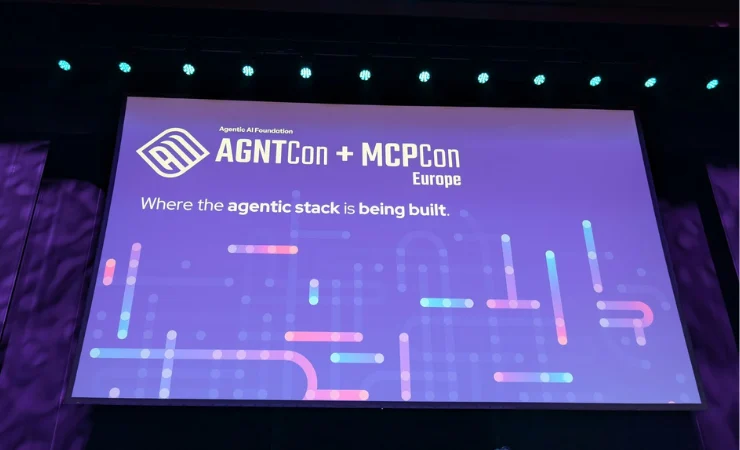
However, during a high-profile maintainer roundtable at the AGNTCon + MCPCon conference in Amsterdam, the architects building the foundational protocols of the modern agentic stack offered a radically different perspective. Far from rendering decades of computer science obsolete, the explosion of autonomous agents and probabilistic systems is actually underscoring the enduring value of foundational software engineering principles.
The Re-emergence of Computer Science Fundamentals
The discourse surrounding technical obsolescence was directly challenged by Nick Cooper, a member of the technical staff at OpenAI who contributes extensively across the Model Context Protocols (MCP), Agent2Agent (A2A), and AGENTS.md standards. Addressing industry concerns sparked by the launch of credentials such as the MCP Associate certification, Cooper articulated a foundational philosophy regarding the trajectory of software engineering.
"I’ve got this personal thesis that in the 1980s we actually solved most computer science, and all the time since has been learning how," Cooper stated during the panel. He emphasized that current agentic architectures provide a unique lens through which historical lessons in computer, human, and business systems can be re-evaluated and applied. "There are lessons in everything. There is so much experience in computer systems, in human systems, in business systems. And one wonderful thing about these agentic systems we have today is the ability to explore lessons from the past in a way we wouldn’t before. So I don’t think anything is truly passé."
Cooper’s perspective centers on timeless computational concepts: deterministic data routing, rigorous testing protocols, structural API design, and defensive security frameworks operating in trustless environments. When layered with architectural design, peer review, iterative development, and version control, these competencies form the exact blueprint software teams have relied upon for the past forty years.
David Soria Parra, co-creator of MCP at Anthropic, reinforced this sentiment, noting that while syntax memorization has diminished in utility due to automated code generation, the core competencies of systems integration have grown exponentially more vital. "Basically everything stays relevant," Soria Parra observed. While acknowledging that coding has become "a little bit less important" in terms of rote syntax recall, he stressed that interacting with complex systems, managing Retrieval Augmented Generation (RAG) pipelines, and orchestrating tool-calling mechanisms remain non-negotiable foundations.
Soria Parra also highlighted a growing qualitative divide in production-grade deployments. While some Model Context Protocol servers are meticulously engineered, others exhibit hallmarks of hasty, automated generation. These poorly constructed implementations are frequently shipped by practitioners who lack the critical evaluation skills necessary to distinguish robust architecture from flawed output. As the industry transitions from purely deterministic software toward probabilistic systems, developers deploying MCP servers must master system evaluation, operational monitoring, and complete specification adherence.
Adding a governance perspective, Kuba Herczyński, technical lead for A2A at Google, noted that classical design patterns derived from deterministic systems remain indispensable when constructing orchestration layers on top of probabilistic models. The core challenge facing modern engineering teams, according to Herczyński, lies in maintaining a delicate equilibrium between exerting operational control over erratic models and implementing sensible governance frameworks without falling into the trap of over-engineering.
Explosive Growth and the Evolution of the Agentic Stack
The theoretical arguments put forward by the roundtable maintainers are substantiated by unprecedented metrics of adoption across the global developer ecosystem. Data presented by Marlene Montgomery, senior developer advocate at GitHub, during the afternoon keynote illustrates the sheer scale of AI-assisted engineering. In March 2026 alone, software developers and autonomous systems co-authored 17.8 million pull requests. By August 2026, GitHub recorded 2.9 billion code commits pushed to the platform—representing a threefold increase over the entire volume recorded in 2025.
Adoption metrics for agent-specific protocols have followed a similarly parabolic trajectory. Anthropic’s Model Context Protocol has surpassed one billion lifetime tool calls, accompanied by more than 500 million downloads of its tier-one software development kits. Cloud infrastructure and deployment platforms such as Vercel and Replit have reported exponential multiplications in MCP-related network traffic over a compressed three-month window.
Reflecting on the rapid maturation of the ecosystem, Soria Parra recalled the state of the technology during MCP’s inception just two years prior, when basic tool calling "barely worked" and foundational models required constant human intervention and correction. Although the protocol and platform layers have evolved substantially, the maintainers insist that the requisite skills for navigating this frontier are not entirely novel; they are simply being applied to a new architectural paradigm.
Parallels to the Dawn of Serverless Architecture
To fully grasp the current operational friction within enterprise agentic deployments, industry veterans are drawing direct comparisons to earlier structural shifts in cloud computing. Clare Liguori, Senior Principal Engineer at AWS and a core MCP maintainer, addressed the operational inefficiencies of current agent deployments during her morning keynote on reactive agents.
Reactive agents represent an architectural pattern wherein autonomous entities remain dormant until triggered by specific operational events. However, current enterprise practices often reveal a mismatch between architecture and execution. Liguori pointed out that the vast majority of production agents spend their operational lifecycles completely idle. Enterprises frequently deploy these agents onto serverless container platforms, such as AWS Fargate, leaving instances provisioned and running continuously for extended windows—often fifteen minutes to an hour past the last user interaction—purely to maintain state continuity in anticipation of follow-up requests.
Admitting to similar experimental habits in her personal engineering work, Liguori noted, "I have a Mac Mini at home that’s running an agent, and it’s waiting right now for me to text it on Signal. It does less than a few minutes’ work per day. But that Mac Mini is on all the time, and that agent is running all the time because it’s constantly waiting for me to text."
This operational inefficiency has spurred architectural reinvention. Amazon’s experimental Project Infinity has successfully packed 75,000 dormant reactive agents into the memory constraints of a single Raspberry Pi. To support these workloads at scale, Liguori and fellow MCP maintainers overhauled the protocol specification. The July 28 architectural release introduced a stateless design paradigm, liberating agents from the requirement to hold continuous, resource-intensive network connections while awaiting external triggers.
Liguori contextualized this developmental phase by comparing it to the formative years of cloud serverless computing: "I see it as very similar to the early days of serverless, where everybody had to figure it out themselves how to piece these things together. It was difficult. People had to be really motivated to do that."
Looking forward, Liguori predicts that the agentic ecosystem will mirror the maturation curve of serverless technology over the coming decade. Within several years, developers will benefit from standardized frameworks, shared design patterns, and significantly reduced cognitive overhead. She emphasized that early practitioners working with AWS Lambda in 2014 were not deficient in capability; rather, they were pioneering an ecosystem before the emergence of comprehensive supporting frameworks. Consequently, enterprise leaders interpreting macroeconomic skills reports as a mandate to purchase expensive, vendor-locked training certifications may be misdiagnosing their organizational needs.
When asked what enterprise engineering and platform executives should prioritize, Liguori’s directives were refreshingly foundational: "Updating their clients and their servers." Combined with rigorous automated testing and comprehensive documentation, the prescription for navigating the agentic era relies heavily on timeless software engineering disciplines.
Industry Implications and Strategic Analysis
The divergence between corporate advisory reports forecasting massive skill obsolescence and the pragmatic insights of foundational protocol maintainers highlights a critical strategic inflection point for enterprise leadership. While macroeconomic surveys from institutions like Deloitte and the World Economic Forum correctly identify an impending structural shift in the global workforce, corporate responses often default to commercialized, high-ticket upskilling solutions that treat symptoms rather than systemic architecture.
If the technical maintainers driving the agentic stack are correct in their assessment that the industry currently mirrors the early, pre-framework era of serverless computing, corporate investment strategies require recalibration. Capital expenditure should prioritize portable, human-centric competencies over proprietary frameworks that risk rapid depreciation. Grounding engineering teams in fundamental principles—such as deterministic system integration, protocol security, rigorous testing, and robust architectural design—creates organizational resilience capable of withstanding rapid tool-level mutations.
As AGNTCon + MCPCon Amsterdam continues, subsequent sessions hosted by the Agentic AI Foundation are expected to yield further empirical insights into the realities of scaling probabilistic, multi-agent systems from experimental sandboxes into mission-critical enterprise production environments.
