

MDA Space, a global leader in advanced space technology, has reported a robust financial performance for the first quarter of 2026, underscored by a 32% year-over-year increase in total revenue. The company’s financial results, released during a period of significant transition in the commercial space sector, highlight the growing demand for high-volume satellite manufacturing and the emergence of sophisticated space defense capabilities. With total revenues reaching 464 million Canadian dollars ($340 million), the company has demonstrated its ability to scale operations amidst the rapid deployment of Low Earth Orbit (LEO) constellations and the increasing militarization of the space domain.
The surge in revenue was primarily fueled by the company’s Satellite Systems division, which saw a staggering 41% growth compared to the same period in 2025. This segment now accounts for more than 67% of MDA Space’s total revenue, a shift that reflects the company’s strategic pivot toward high-volume production lines. Key drivers for this growth include the ongoing execution of the Telesat Lightspeed program and the manufacturing of next-generation satellites for Globalstar. Chief Executive Officer Mike Greenley emphasized that the company’s operational momentum remains unhindered by broader corporate maneuvers in the industry, including the pending acquisition of Globalstar’s assets by Amazon, which is expected to finalize in early 2027.
Financial Breakdown and Segment Performance
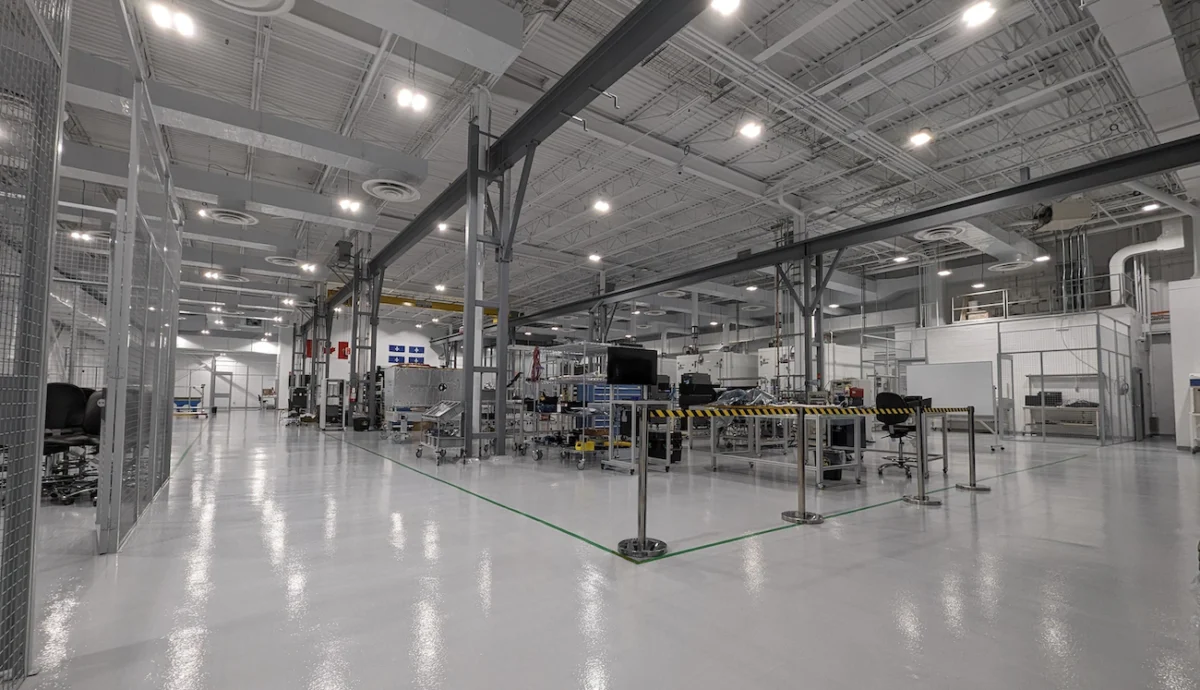
The first quarter of 2026 marked a period of across-the-board growth for MDA Space’s three core business pillars. The Satellite Systems segment led the charge, generating CA$313 million ($229 million). This performance is a direct result of the company’s transition from building bespoke, one-off satellites to operating a high-cadence production environment in its Montreal facilities. The division’s success is anchored in the MDA Aurora platform, a software-defined satellite product line designed to meet the requirements of large-scale LEO constellations.
In the Robotics and Space Operations division, revenue grew by 18.5% year-over-year to CA$91.6 million ($67 million). This growth was largely attributed to the increased volume of work on the Canadarm3 program, a critical component of the NASA-led Lunar Gateway. As the international community moves closer to a permanent human presence in lunar orbit, MDA Space’s expertise in autonomous robotics remains a cornerstone of its long-term contract backlog.
The Geointelligence segment also reported positive gains, with revenues increasing by nearly 15% to CA$59 million ($43 million). This growth was driven by a higher volume of work across various domestic and international programs, as governments and private entities seek more sophisticated Earth observation data for climate monitoring, resource management, and national security. The company’s adjusted net income for the quarter stood at CA$50.7 million ($37 million), a 32% increase year-over-year, reflecting improved operating efficiencies and higher margins from its standardized satellite platforms.
The Globalstar Partnership and the Amazon Factor
A significant portion of the Q1 investor call focused on MDA Space’s relationship with Globalstar. The company is currently tasked with building two distinct constellations for the satellite operator: a 17-satellite replacement fleet intended to maintain existing services and the "C-3" next-generation constellation. The latter is expected to provide enhanced data capabilities and support for the growing direct-to-device market.
The backdrop to this work is Amazon’s anticipated acquisition of Globalstar’s spectrum and certain operational assets. While such a major acquisition often introduces uncertainty for suppliers, Greenley reassured investors that MDA Space’s workflow has seen "no change." The company recently reached a major milestone by delivering the first batch of satellites for the replacement constellation and successfully completing the critical design review (CDR) for the next-generation LEO fleet.
Greenley noted that while it is "early days" regarding the Amazon acquisition, MDA Space is well-positioned to remain a Tier-1 supplier. The company’s technology roadmap is designed to be compatible with the evolving needs of hyperscalers like Amazon, who are looking to integrate satellite connectivity into broader cloud and consumer ecosystems. "We need to get our work done," Greenley stated, emphasizing that the focus remains on delivery rather than speculation on future contract expansions under Amazon’s ownership.
Resolving Supply Chain Bottlenecks: The SatixFy Milestone
One of the most critical developments for MDA Space’s satellite manufacturing timeline is the resolution of hardware delays related to space-grade semiconductors. The company confirmed that its subsidiary, SatixFy, has begun delivering production-ready chips essential for the MDA Aurora platform. These chips are the "brains" of the software-defined payloads, allowing for the dynamic allocation of bandwidth and beam steering required by modern constellations.
These delays had previously impacted the timeline for Telesat Lightspeed, a multi-billion-dollar LEO project designed to provide enterprise-grade broadband. With the chips now in hand, MDA Space is moving into full-scale production for Telesat. However, the ripple effects of earlier supply chain constraints mean that the launch of Telesat’s service has been rescheduled for 2028. The delivery of these chips is a significant de-risking event for MDA Space, as it validates the company’s vertically integrated approach to satellite component manufacturing.
Strategic Expansion into Space Control: MDA Midnight
Beyond traditional communications and robotics, MDA Space is aggressively pursuing the burgeoning "space control" market. During the Space Symposium in April 2026, the company unveiled "MDA Midnight," a dedicated on-orbit servicing platform designed for defense and security applications. This platform is part of a new class of "guard satellites" intended to protect critical space assets from physical or electronic interference.
The MDA Midnight platform leverages the company’s decades of experience in proximity operations and robotic manipulation—skills honed through the Space Shuttle and International Space Station programs. Greenley revealed that market research indicates at least 13 nations are actively exploring the procurement of space control capabilities. The platform is designed to detect, identify, and deter threats in increasingly contested orbits.
"This is a fit for defense customers and payload providers building sensors or electronic warfare capabilities," Greenley explained. While the sales cycle for defense procurement is notoriously long, MDA Space has seen a steady increase in engagement from government agencies and potential payload partners since the announcement. The company views space control as a high-growth vertical that complements its existing commercial satellite business, providing a hedge against fluctuations in the commercial broadband market.
Chronology of Recent Major Milestones
The strong Q1 2026 results are the culmination of several years of strategic repositioning. To understand the company’s current trajectory, it is essential to look at the timeline of events that led to this quarter’s performance:
- August 2023: MDA Space is awarded the prime contract for Telesat Lightspeed, shifting the project from European manufacturers to Canadian soil.
- Late 2024: The company begins a major expansion of its Montreal satellite production facility, aiming to produce up to two satellites per day.
- Mid-2025: MDA Space completes the acquisition of SatixFy’s digital payload division to secure its supply chain for advanced semiconductors.
- January 2026: The first batch of Globalstar replacement satellites is delivered, marking the start of a high-cadence launch schedule.
- March 2026: Telesat announces the 2028 service launch date, citing the finalized delivery schedule of MDA Space’s Aurora platform components.
- April 2026: MDA Midnight is officially launched at the Space Symposium, signaling the company’s entry into the orbital defense market.
Broader Industry Implications and Future Outlook
The performance of MDA Space in the first quarter of 2026 serves as a bellwether for the broader space economy. The transition from CA$351 million in Q1 2025 to CA$464 million in Q1 2026 suggests that the "New Space" era is entering a phase of industrial maturity. Large-scale manufacturing is no longer the sole province of government-funded giants; commercial demand for LEO connectivity is now a primary driver of industrial capacity.
The company’s focus on software-defined satellites (SDS) is particularly significant. As communication needs evolve, the ability to reconfigure a satellite’s mission while it is already in orbit provides a level of flexibility that traditional hardware-bound satellites cannot match. This technological edge, combined with the resolution of semiconductor supply issues, positions MDA Space to capture a larger share of the global satellite market, which is projected to continue growing as 5G integration and autonomous vehicle connectivity become more prevalent.
Furthermore, the rise of the "contested domain" in space is creating a new revenue stream for traditional space firms. By branding its robotics and proximity technology as "space control" through the MDA Midnight platform, the company is successfully pivoting to meet the national security requirements of the Five Eyes intelligence alliance and other allied nations.
As the fiscal year progresses, investors will be watching for updates on the Globalstar-Amazon transition and the first flight models of the Telesat Lightspeed constellation. With a robust backlog and a clear technological roadmap, MDA Space appears well-equipped to navigate the complexities of both the commercial and defense sectors in the evolving space landscape. The company’s ability to maintain a 32% growth rate while scaling its manufacturing capabilities suggests that its transition from a specialized robotics firm to a diversified space industrial powerhouse is nearly complete.
