
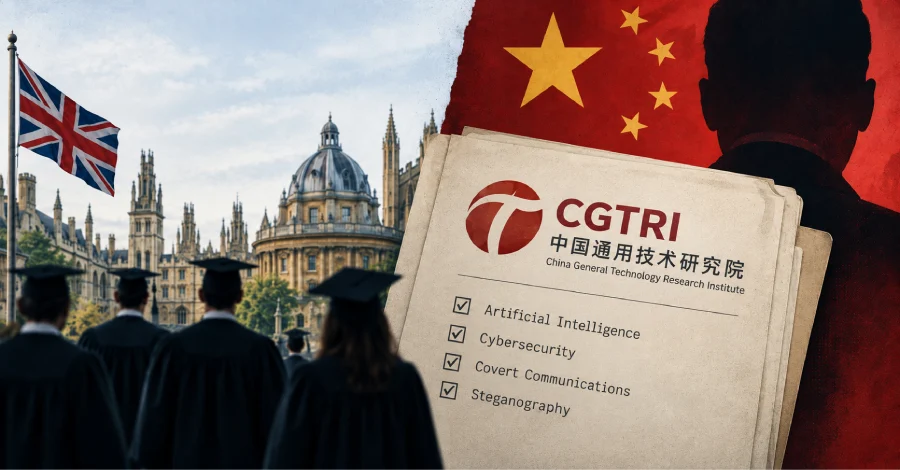

The United Kingdom’s domestic intelligence agency, MI5, has issued a landmark "Security Service Espionage Alert" warning that over 100 U.K.-based academics have inadvertently or knowingly contributed to intelligence-gathering efforts orchestrated by the Chinese Ministry of State Security (MSS). This unprecedented warning, released on September 30, 2026, identifies the China General Technology Research Institute (CGTRI)—also known as the China Academy of General Technology (CAGT)—as a primary vehicle for funding academic research specifically designed to enhance Chinese technical espionage capabilities. The alert highlights a growing tension between the necessity of international academic collaboration and the mounting imperative to protect national security, sensitive intellectual property, and critical infrastructure from foreign state-sponsored cyber operations.
The Mechanism of Espionage: Decoding the CGTRI Front
According to intelligence assessments, the CGTRI operates as a sophisticated front organization for the MSS. Its mandate is not academic advancement in the traditional sense, but the procurement of dual-use research that can be weaponized for national intelligence objectives. The institute focuses heavily on high-stakes technical fields, including artificial intelligence (AI), advanced cybersecurity, signal processing, covert communication systems, and steganography—the practice of concealing information within non-secret data.
MI5’s briefing suggests that the MSS uses the CGTRI to bypass traditional export controls and academic vetting processes. By providing monetary backing for projects at U.K. universities, the institute gains access to cutting-edge research, methodologies, and technical breakthroughs developed by British scholars. A critical element of this intelligence operation is the obfuscation of the funding source; many of the 100-plus academics targeted by this initiative may have been unaware that their research was being bankrolled by a body with direct ties to China’s primary intelligence service.
Chronology of Escalating Academic Concerns
The October 2026 alert is not an isolated incident but rather the culmination of a multi-year trend of increasing scrutiny regarding U.K.-China academic ties. The following timeline outlines the progression of this concern:
- 2023: The U.K. government passes the National Security Act 2023, providing new legal frameworks to prosecute individuals or entities engaged in assisting foreign intelligence services, significantly lowering the bar for identifying "material assistance" to hostile state actors.
- August 2025: The U.K.-China Transparency (UKCT) think tank releases a comprehensive report detailing allegations that Chinese students at British universities are being pressured or coerced into monitoring their peers to suppress discourse sensitive to the Chinese government.
- September 2026: MI5 publishes its formal "Security Service Espionage Alert," explicitly naming the CGTRI as an MSS front and warning U.K. institutions to conduct immediate audits of all ongoing collaborations with the institute.
- October 2026: In the immediate wake of the MI5 alert, the Chinese Embassy in London issues a formal rebuttal, characterizing the warning as a fabricated attempt to disrupt bilateral educational exchanges.
Supporting Data and Structural Overlaps
The link between the CGTRI and the MSS is not merely speculative. Investigative analysis by the UKCT think tank reveals significant structural and personnel overlaps between the CGTRI and China’s University of International Relations—an institution widely recognized by Western intelligence agencies as being uniquely integrated into the MSS apparatus.

The research funded by these entities is specifically tailored for strategic national objectives. By specializing in cybersecurity and AI-enabled tools, the CGTRI is positioned to assist the MSS in refining the technical sophistication of cyber-attacks. Historically, such attacks have targeted a broad spectrum of U.K. entities, including telecommunications firms, public sector databases, research hospitals, and university-affiliated technology laboratories. The ability to leverage academic research for these purposes allows the MSS to stay ahead of Western defensive measures, effectively turning the openness of the U.K. university system against itself.
Official Responses and Diplomatic Friction
The reaction from the Chinese Embassy in the U.K. has been swift and categorical in its denial. A spokesperson for the embassy stated that the accusations were "imaginary and purely fabricated," adding that the Chinese government "firmly opposes such baseless allegations." The embassy maintains that all scientific and academic exchanges between the two nations are conducted on a voluntary basis and in full compliance with international and domestic laws.
The embassy further accused British intelligence authorities of engaging in a smear campaign intended to undermine mutually beneficial cooperation. "We urge the U.K. intelligence authorities to stop spreading falsehoods and stop undermining educational exchanges and research cooperation between China and the U.K.," the spokesperson noted in an official statement released on October 1, 2026.
Conversely, the U.K. government’s stance is underpinned by the legal implications of the National Security Act 2023. British universities are now under significant pressure to implement rigorous due diligence protocols. The government has signaled that failure to properly vet research partners could lead to legal consequences for institutions and individual researchers if their work is found to be providing material assistance to a foreign intelligence service in a manner that harms the U.K.’s national interest.
Implications for the U.K. Research Landscape
The MI5 warning represents a paradigm shift in how the United Kingdom views academic freedom versus national security. For decades, the "open science" model—which prioritizes the free flow of ideas, global collaboration, and international research mobility—has been the bedrock of British academia. However, the current geopolitical climate, characterized by the "Great Power Competition," has forced a reassessment of this model.
1. Operational Compliance and Due Diligence:
Universities are now required to implement "Know Your Partner" (KYP) protocols that go beyond standard ethical reviews. This involves tracing the ultimate beneficial ownership of funding sources for research, particularly in STEM fields where dual-use technology is prevalent.

2. The Risk of Criminal Prosecution:
The National Security Act 2023 introduces a new, higher level of risk for academics. Research that was previously seen as benign may now fall under the scrutiny of the security services if it provides technical insights that could be utilized in offensive cyber operations. Academics are being advised to consult with their institution’s legal and compliance departments before entering into new contracts with international entities that lack transparency.
3. Impact on International Student and Scholar Populations:
The suspicion surrounding academic links is likely to have a cooling effect on student exchanges and research partnerships. While the U.K. remains a premier destination for global research, the potential for increased visa scrutiny and the vetting of academic projects may lead to a reduction in the number of Chinese students and researchers seeking to collaborate with U.K. institutions, potentially affecting the funding and output of university departments.
4. The Future of Strategic Autonomy:
The alert underscores the U.K.’s broader strategy of "strategic autonomy" in technology. By identifying and cutting off the pathways through which foreign intelligence services gain access to domestic intellectual property, the government aims to protect the nation’s technological edge in AI, quantum computing, and secure communications.
Conclusion
The MI5 alert serves as a stark reminder of the convergence of traditional espionage and modern technological warfare. As intelligence agencies become increasingly focused on the "gray zone" of academic collaboration, the onus falls on universities to bridge the gap between their commitment to academic freedom and their duty to protect the integrity of their research. With the U.K. government tightening its legislative grip through the National Security Act 2023, the era of unvetted international academic cooperation is rapidly coming to an end, replaced by a new, more cautious era of institutional vigilance and national security awareness. The resolution of this tension will be a defining factor in the future of British science and its ability to compete on the global stage while safeguarding its national interests against a sophisticated and persistent intelligence adversary.
