
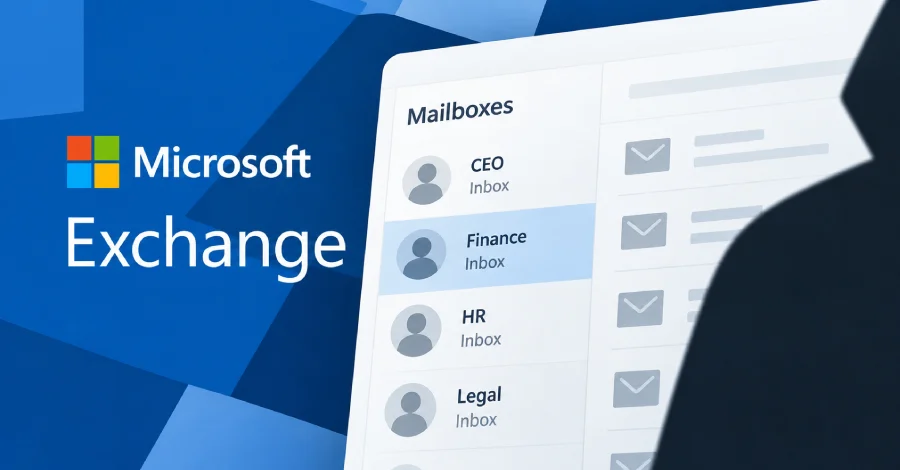

Microsoft has issued an emergency out-of-band security advisory to address a high-severity vulnerability within its Exchange Server software, a move that underscores the persistent risks associated with on-premises enterprise communication platforms. The vulnerability, officially tracked as CVE-2026-96940, carries a CVSS (Common Vulnerability Scoring System) score of 8.8, indicating a high potential for operational impact and unauthorized data access.
The flaw, which stems from a weakness in authorization protocols, allows an authenticated attacker to perform a privilege escalation maneuver over a network. By exploiting this gap, a malicious actor who has already gained a foothold within an organization can circumvent existing permission structures to access the mailboxes of other users within that same environment. While the breach is restricted to the internal organizational scope—meaning it does not facilitate cross-tenant access—the implications for corporate privacy, internal intelligence gathering, and sensitive communications are profound.
Chronology and Disclosure Details
The vulnerability was brought to light through the efforts of Microsoft researcher Jan Mitchell, who identified the authorization deficiency and reported it to the company’s internal security team. Microsoft officially disclosed the existence of the flaw on October 2, 2026, and immediately prioritized the development of corrective measures.
The rapid turnaround between the internal discovery and the public advisory is indicative of Microsoft’s proactive posture regarding Exchange vulnerabilities, which have historically been a prime target for state-sponsored threat actors and cybercriminal syndicates.
Following the disclosure, Microsoft moved quickly to deploy a service-side patch for Exchange Online customers. This automated response ensures that organizations relying on Microsoft’s cloud-based infrastructure are shielded from the exploit without requiring manual intervention from their IT departments. However, the situation remains significantly more precarious for organizations operating on-premises Exchange Server environments, as these entities must manually manage the deployment of the update across their local infrastructure.
Technical Assessment: Understanding the Risk
The classification of CVE-2026-96940 as "Exploitation More Likely" is a critical indicator for IT security teams. This rating, provided by Microsoft, suggests that the complexity of the exploit is low enough that threat actors are likely to develop reliable tools to leverage the vulnerability in the near future.
In technical terms, the flaw involves a failure in the server’s authorization logic. Typically, the Exchange Server enforces strict access control lists (ACLs) to ensure that users can only view their own mailbox contents. CVE-2026-96940 disrupts this verification process, allowing an attacker who possesses valid user credentials to spoof or bypass authorization checks to access data outside their assigned privilege scope.
Because the vulnerability requires the attacker to be authenticated, it is classified as a post-compromise risk. This means the primary defense remains robust credential management and multi-factor authentication (MFA). If an attacker manages to steal legitimate credentials—through phishing, session token theft, or credential stuffing—they could use this flaw to pivot from a standard user account to an administrative or high-value executive account, effectively harvesting sensitive emails, calendar entries, and file attachments without alerting the target user.
The Landscape of Exchange Server Security
The history of Microsoft Exchange Server is marked by high-profile security incidents that have reshaped how organizations view their email infrastructure. Since the massive ProxyLogon incidents of 2021, Microsoft has overhauled its approach to "Secure by Design" initiatives, yet the complexity of the Exchange codebase remains a significant challenge.

For years, on-premises Exchange servers have been the "crown jewels" for adversaries. Because these servers store the entirety of an organization’s internal communications, they are often the primary target for reconnaissance. When an attacker gains access to a mailbox, they are not merely stealing data; they are acquiring the context necessary for Business Email Compromise (BEC) attacks, intellectual property theft, and the planning of further lateral movement within the network.
The emergence of CVE-2026-96940 comes at a time of heightened regional tension in the cybersecurity landscape. Just days prior to this disclosure, security researchers at Symantec released a report detailing the activities of a China-linked threat actor known as "Warlock." According to the report, Warlock has been systematically exploiting vulnerabilities in Microsoft SharePoint to deploy ransomware against critical infrastructure in Spanish- and Portuguese-speaking nations. The intersection of these disclosures creates a challenging environment for Chief Information Security Officers (CISOs), who must balance the rapid patching of critical flaws with the ongoing need to defend against sophisticated, multi-vector campaigns.
Implications for Enterprise IT
The primary implication of this latest vulnerability is the urgent necessity for patch management rigor. Organizations that rely on legacy versions of Exchange Server—many of which are already nearing the end of their support lifecycles—face the highest level of risk.
For the average enterprise, the remediation process involves several key steps:
- Vulnerability Scanning: IT teams must utilize authorized scanners to identify instances of affected Exchange Server versions across their fleet.
- Patch Deployment: Following the verification, administrators must apply the specific security updates provided by Microsoft in the latest MSRC (Microsoft Security Response Center) bulletin.
- Post-Patch Monitoring: Because the vulnerability allows for unauthorized access, organizations should monitor for suspicious mailbox access patterns, such as unusual login locations or unexpected bulk export of emails, which could indicate that the vulnerability was exploited before the patch was applied.
- Credential Hygiene: Given that the exploit requires authentication, enforcing zero-trust principles, including the rotation of compromised passwords and the tightening of session timeouts, is essential.
Broader Industry Context
The professional consensus among security analysts is that as long as complex, feature-rich platforms like Exchange continue to run on-premises, they will remain targets. The architectural difficulty lies in maintaining interoperability between various legacy systems while attempting to implement modern security standards like OAuth 2.0 or modern authentication.
Furthermore, the "out-of-band" nature of this release is a signal that Microsoft viewed the risk as urgent. Standard monthly updates, often referred to as "Patch Tuesday," are the norm, but when a vendor opts to release a patch mid-cycle, it is almost always because they have evidence of potential exploitation or because the severity of the flaw is deemed high enough to pose an existential threat to the integrity of their platform.
As organizations move toward hybrid and cloud-native models, the disparity in security postures between Exchange Online and on-premises Exchange Server continues to widen. While the cloud offers a centralized, managed security layer that can be patched instantly by the vendor, on-premises servers remain entirely dependent on the responsiveness and capability of the local IT team. This "patching gap" is frequently cited as a major risk factor in modern corporate environments.
Concluding Summary
While there is currently no public evidence that CVE-2026-96940 is being actively weaponized in the wild, the combination of its high CVSS score and the "Exploitation More Likely" assessment makes immediate action non-negotiable.
The security community continues to monitor the situation, with many experts expecting to see proof-of-concept exploits appear on forums and security research platforms within the coming weeks. For now, the responsibility rests squarely on the shoulders of system administrators to audit their environments, ensure that all updates are applied, and verify that their access controls remain intact. In an era of pervasive cyber threats, the patching of a single high-severity vulnerability like this is not just a technical task—it is a critical defensive measure in protecting the digital sovereignty of the enterprise.
