
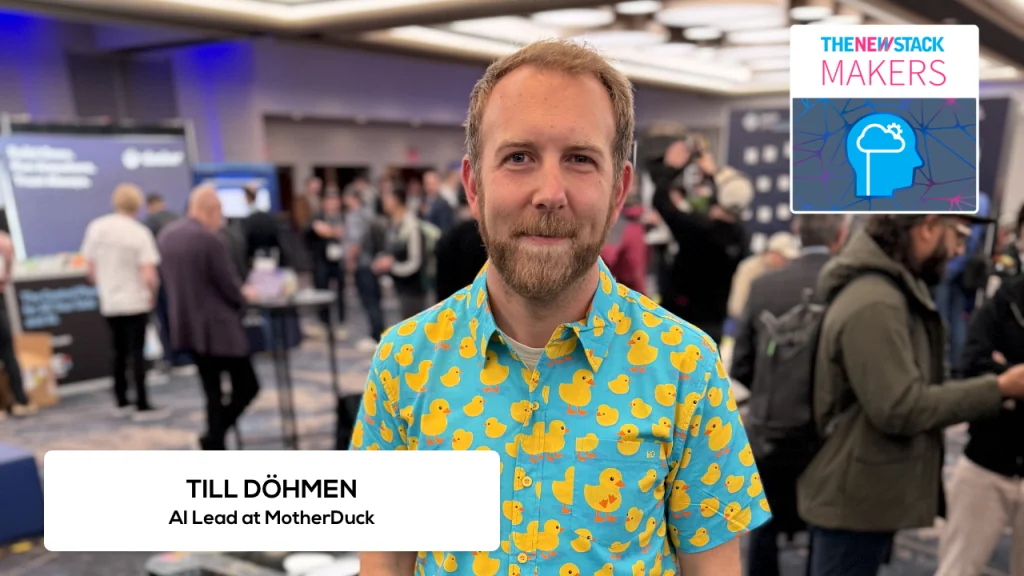

During the recent MCP Dev Summit North America held in New York City, The New Stack sat down with Till Döhmen, MotherDuck’s AI lead, to discuss how MotherDuck started its MCP journey and how even non-technical workers at the startup can now use agents to interact with their own data rather than relying on dashboards. The conversation offered a valuable glimpse into the intricate relationship between a burgeoning commercial entity and the open-source project it champions, highlighting a model of collaboration that is becoming increasingly vital in the modern technology landscape.
MotherDuck, a startup notably backed by venture capitalist Tomasz Tunguz and bolstered by the recruitment of Carly Spoljaric, is actively commercializing the widely adopted open-source DuckDB analytical database. This strategic move positions MotherDuck at the forefront of making powerful in-process analytical databases more accessible and feature-rich for a broader audience. However, the company’s approach to its core technology is perhaps more nuanced and collaborative than a typical commercialization effort.
The MCP Dev Summit North America, an event dedicated to exploring the evolution of computing platforms and developer tools, provided a fitting backdrop for Döhmen’s insights. The summit typically convenes leading figures from the tech industry to discuss emerging trends, best practices, and the future trajectory of software development. Discussions often revolve around cloud-native architectures, developer productivity, AI integration, and the ever-present tension between open-source innovation and commercial viability.
The Genesis of MotherDuck’s Open-Source Engagement
Döhmen elaborated on MotherDuck’s origins and its deep-seated connection with the DuckDB foundation, which serves as the steward of DuckDB’s intellectual property and the driving force behind its open-source development. This relationship is not merely one of adoption but of active participation and co-evolution.
"We have a very close collaboration with DuckDB Labs," Döhmen stated, emphasizing the direct line of communication and feedback between MotherDuck and the maintainers of the core DuckDB project. This close working relationship allows MotherDuck to identify and propose specific enhancements that could benefit the broader DuckDB ecosystem. "Specific things that should be added to DuckDB," Döhmen explained, are areas where MotherDuck can engage with the open-source maintainers to advocate for expansions and improvements to the foundational project.
This collaborative model offers a significant advantage. MotherDuck operates what Döhmen described as "the largest fleet of DuckDB databases in the world." This scale of deployment provides invaluable, real-world testing grounds, allowing the company to push the boundaries of what DuckDB can achieve. The insights gleaned from managing such a vast and diverse array of DuckDB instances – from performance bottlenecks under heavy load to novel use cases – are crucial for the ongoing development and refinement of the open-source project. In an era characterized by ever-increasing data volumes and more sophisticated analytical demands, this practical feedback loop is indispensable for keeping DuckDB robust, efficient, and competitive.
A Symbiotic Partnership: Beyond Forking
A pertinent question arises regarding the potential for commercial entities to diverge from their open-source roots, a phenomenon sometimes referred to as "forking." The New Stack inquired about what might prevent MotherDuck from developing proprietary enhancements to DuckDB independently, thereby potentially creating a more differentiated commercial offering without directly contributing back to the foundation.
Döhmen was unequivocal in his response, stating that MotherDuck has no interest in forking DuckDB. Instead, the company leverages DuckDB’s inherent extensibility, particularly its sophisticated query planner, to adapt and amend the database as needed without compromising the integrity of the core project. This approach underscores a commitment to contributing to, rather than competing with, the open-source community.
"But if we encounter things that happen that are inductively core that we would like to change," Döhmen continued, "it’s a different story." This suggests a clear demarcation: while MotherDuck benefits from and contributes to the general evolution of DuckDB, fundamental architectural shifts or core feature additions are likely to be a collaborative effort with the DuckDB Labs. This nuanced stance acknowledges the reality of commercial imperatives while respecting the principles of open-source development.
The Landscape of Open-Source Commercialization
MotherDuck’s strategy is not an anomaly in the tech industry. Numerous successful companies have emerged from the fertile ground of open-source projects. Databricks, for instance, was founded by the original creators of Apache Spark, transforming a powerful open-source big data processing engine into a leading commercial analytics platform. Similarly, Comfy, a platform for building and deploying generative AI applications, was born out of an open-source project and recently secured significant venture funding. The pattern is consistent: open-source innovation often serves as a powerful catalyst for commercial ventures.
However, the relationship between these commercial entities and their open-source origins can be complex. While commercial companies drive adoption, market reach, and often, substantial revenue, the core maintenance, bug fixing, and foundational development of the open-source project can remain with a dedicated, often smaller, team. This dynamic can sometimes lead to friction, as the commercial entity’s roadmap and priorities might not always perfectly align with the broader community’s needs or the foundation’s capacity.
Döhmen’s articulation of the MotherDuck-DuckDB Labs relationship paints a picture of a more harmonious integration. "It’s a partnership, a dance between two groups with very different bosses," he observed. This evocative metaphor captures the delicate balance required. The "bosses" of MotherDuck are its investors and its business objectives, while the "bosses" of DuckDB Labs are the principles of open-source development, community contribution, and the long-term health of the project. Successfully navigating this dynamic is key to achieving mutual growth and innovation.
Empowering Non-Technical Users with AI Agents
Beyond the technical and collaborative aspects of MotherDuck’s relationship with DuckDB, Döhmen also shed light on a key area of innovation: the application of AI agents to democratize data access. Traditionally, interacting with databases and extracting meaningful insights has required specialized technical skills. Dashboards and business intelligence tools have offered some relief, but they often present pre-defined views of data, limiting ad-hoc exploration.
MotherDuck’s development of AI agents aims to break down these barriers. These agents are designed to allow even non-technical employees within an organization to query and interact with their company’s data in a natural, conversational manner. Instead of writing complex SQL queries or navigating intricate dashboards, users can simply ask questions of their data.
This capability has profound implications for organizational efficiency and data-driven decision-making. When employees across departments – from marketing and sales to operations and HR – can directly access and understand the data relevant to their roles, the reliance on dedicated data analysts or IT departments for every data request diminishes. This not only frees up valuable technical resources but also empowers a wider range of employees to make more informed decisions based on real-time data.
The technical underpinnings of these agents likely involve sophisticated natural language processing (NLP) models trained to translate human queries into executable database commands. By leveraging DuckDB’s in-process architecture, these agents can operate efficiently without the need for separate, complex data warehousing infrastructure, making them particularly attractive for smaller organizations or specific departmental use cases.
The Future of In-Process Analytics and Collaborative Development
MotherDuck’s trajectory, marked by significant funding rounds – including approximately $100 million in known capital raised across three rounds in roughly 15 months, as previously reported by The New Stack in 2023 – underscores the market’s confidence in its vision. The company’s focus on both the commercialization of DuckDB and the innovative application of AI agents positions it as a key player in the evolving landscape of data analytics.
The success of MotherDuck’s collaborative model with the DuckDB foundation serves as a compelling case study for other startups built on open-source foundations. By fostering a transparent and mutually beneficial relationship, commercial entities can not only drive the adoption and refinement of open-source technologies but also achieve venture-attractive growth. This symbiotic approach, where commercial success directly fuels open-source advancement, offers a sustainable and powerful engine for technological progress.
As data continues to proliferate and the demand for accessible, powerful analytical tools grows, the strategies employed by companies like MotherDuck will become increasingly important. Their ability to harness the power of open-source software, coupled with cutting-edge AI, to empower a broader user base signals a promising future for data analytics and democratized access to information. The dance between MotherDuck and the DuckDB Labs, guided by distinct yet complementary objectives, appears to be leading both toward a shared future of innovation and impact.
