

The strategic roadmap for Movistar Plus+ is undergoing a profound transformation as the Spanish telecommunications giant shifts from a localized pay-TV operator toward becoming a formidable international content powerhouse. Following the recent unveiling of its ambitious 2027 vision—a year marked by a significant ramp-up in both fiction and non-fiction production—the platform is now aggressively diversifying its distribution channels. By moving beyond its proprietary app and subscriber base, Movistar Plus+ is effectively rebranding its "Originals" as a global commodity, securing distribution deals across four continents that elevate its domestic productions to international prestige status.
This shift is not merely a reaction to market trends but a calculated evolution of the company’s business model. As the streaming wars intensify and domestic markets reach saturation, Movistar Plus+ has realized that the longevity of its investment in high-quality original series relies on the ability to monetize these assets outside the confines of the Spanish borders. Through its dedicated division, Movistar Plus International, the company is successfully exporting the "Spanish flavor" of storytelling to audiences in Europe, the Americas, Asia, and Oceania.
A Chronology of Strategic Expansion
The current international push is the culmination of a multi-year effort to break free from the traditional confines of television distribution. The timeline of this transition illustrates a systematic approach to market penetration:
- Initial In-House Consolidation (2020-2022): The company focused on establishing a "brand identity" through critically acclaimed hits such as Antidisturbios, which set a new quality benchmark for Spanish drama.
- The Theatrical Pivot (2023-2024): Recognizing that premium content warrants a premium showcase, Movistar Plus+ began releasing original films in cinema circuits, blurring the lines between theatrical and streaming windows.
- TDT Integration (2024): A major milestone was reached when the platform bypassed its own paywall to bring the miniseries Anatomía de un instante to free-to-air digital terrestrial television (TDT) in Spain, testing the waters of mass-market reach.
- Global Syndication (2025-Present): The current phase represents the most aggressive expansion, utilizing licensing deals with international streaming giants and public broadcasters to ensure that Movistar Plus+ content becomes a staple in global television programming.
The MUBI Agreement: A Strategic Partnership
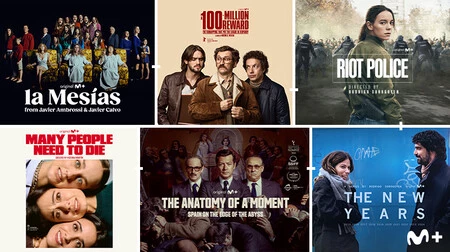
Perhaps the most significant development in this expansion is the global agreement with MUBI, the curated streaming platform known for hosting arthouse and high-end independent cinema. By securing a deal to place La Mesías—a series that has garnered significant critical acclaim—and the gritty drama Antidisturbios onto the MUBI platform, Movistar Plus+ is signaling a move toward "prestige distribution."
This agreement is strategic because MUBI’s audience profile aligns perfectly with the target demographic of Movistar’s high-budget original productions. By excluding Spain and Andorra from this deal, Movistar Plus+ protects its domestic subscriber base while simultaneously generating revenue from markets where it lacks a direct presence. Analysts suggest that this "dual-track" strategy allows the company to maximize the ROI of its productions without cannibalizing its local market share.
Penetrating European Public Media
While global streamers offer reach, Movistar Plus+ has also successfully navigated the complexities of the European public broadcasting landscape. The decision to license Anatomía de un instante to major public entities such as ARTE (France), RTP (Portugal), RTS (Switzerland), and RTV (Slovenia) serves as a validation of the series’ cultural and historical weight.
Furthermore, the partnership with the Greek platform CINOBO is particularly noteworthy. CINOBO will host a diverse array of Movistar content, including two seasons of Bellas Artes, Por cien millones, and Los años nuevos. This suggests that Movistar Plus+ is not simply dumping content into foreign markets; it is curating bundles of shows that cater to the specific cultural sensibilities of the European Mediterranean and beyond.
Economic Implications and Future Projections
The shift toward international distribution is an essential hedge against the volatility of the Spanish pay-TV market. As of late 2026, the cost of high-end series production continues to climb due to inflation in talent costs and production logistics. By recouping a portion of these costs through foreign licensing, Movistar Plus+ is effectively subsidizing its future production slates.
Financial analysts monitoring the telecommunications sector note that this strategy serves three key purposes:
- Brand Equity: Establishing the "Originals Movistar Plus+" label as a mark of quality globally, which increases the value of future production partnerships.
- Revenue Diversification: Reducing dependence on domestic subscriber growth, which has slowed significantly as consumers move toward "cord-cutting" behaviors.
- Data Acquisition: By observing how content performs in varied international markets, Movistar can refine its commissioning process, focusing on genres and themes that demonstrate universal appeal.
The 2027 Vision: A Production Hub
Looking toward 2027, the internal plans at Movistar Plus+ suggest a doubling down on the current trajectory. The company is not only increasing the volume of its output but is also diversifying into hybrid formats that combine reality, documentary, and high-end drama. The integration of international sales into the development phase of new projects—a concept known as "born global"—means that future series are likely to feature international co-productions, multi-language dialogue, and cross-cultural themes from the very first script draft.
This proactive approach is essential in a market dominated by global giants like Netflix, Disney+, and Amazon Prime Video. By refusing to play by the rules of a traditional local operator, Movistar Plus+ is essentially attempting to transform itself into a niche global content house that provides "curated, premium Spanish storytelling."
Industry Reactions and Market Sentiment
While the company has not issued specific revenue targets for its international division, the sentiment within the Spanish audiovisual industry is one of cautious optimism. Industry experts have observed that the success of series like La Mesías proves that local, highly specific narratives can indeed travel across borders if the production value meets international standards.
Statements from industry analysts suggest that the "Movistar model" is being closely watched by other European telecom operators. If Movistar Plus+ succeeds in creating a sustainable, long-term international distribution pipeline, it could provide a blueprint for other regional players looking to maintain their relevance in an era of global platform dominance. The ability to export content to Oceania and across the Americas—regions traditionally dominated by US-centric content—marks a bold step for a Spanish-language platform.
Conclusion
The evolution of Movistar Plus+ from a domestic provider to an international distributor is a case study in corporate agility. By leveraging its robust library of original content, the company is successfully transitioning from a platform-centric business to a content-centric one. As it moves toward 2027, the focus remains clear: strengthen the domestic brand, expand the international footprint through strategic partnerships, and maintain a high standard of creative output.
Whether this strategy will eventually lead to the establishment of a standalone global streaming brand remains a subject of debate. However, for now, the objective is clearly defined: to ensure that the "Originals Movistar Plus+" stamp becomes synonymous with prestige television in every corner of the globe. Through careful navigation of international licensing, partnerships with public broadcasters, and a rigorous selection of high-quality fiction, the company is ensuring its survival and growth in an increasingly crowded and competitive global marketplace. The transition is not just about reach; it is about establishing a permanent and influential presence in the global narrative landscape, ensuring that Spanish voices continue to resonate far beyond the borders of their origin.
