
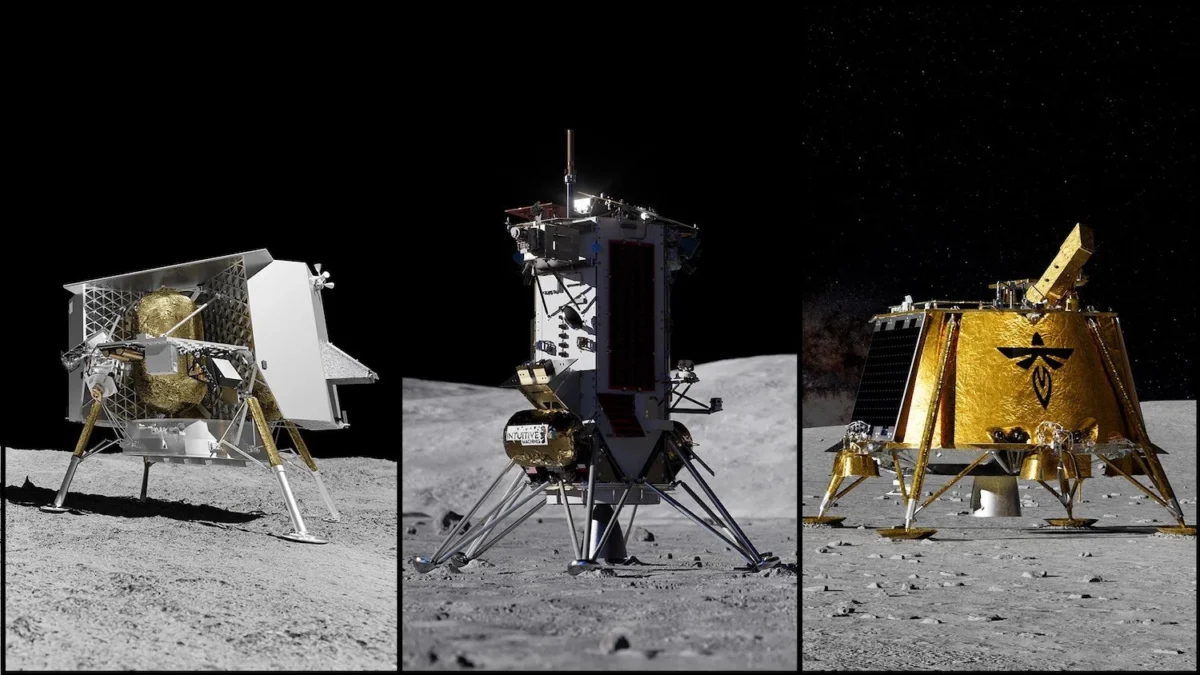

In a significant move to bolster the infrastructure of the Artemis program and expand the commercial lunar economy, NASA has officially awarded contracts totaling approximately $590.4 million to three prominent American aerospace firms: Astrobotic, Firefly Aerospace, and Intuitive Machines. These awards, announced on Tuesday, are part of the agency’s Commercial Lunar Payload Services (CLPS) initiative, a framework designed to leverage private sector innovation to deliver science and technology payloads to the Moon’s surface. The selected providers will utilize updated versions of their existing lunar lander platforms for missions currently scheduled to launch in late 2028. This strategic investment underscores NASA’s commitment to establishing a long-term human presence on the Moon while fostering a competitive marketplace for deep-space logistics.
Strategic Breakdown of the CLPS Contract Awards
The distribution of the nearly $600 million in funding reflects both the complexity of the missions and the varying capabilities of the selected vendors. Astrobotic, based in Pittsburgh, emerged as the largest beneficiary of this round of funding, securing a total of $297.9 million. This contract covers two separate deliveries to the lunar surface. Astrobotic intends to utilize its Peregrine lander for these missions. Despite the challenges faced during its initial flight in early 2024, the company has worked closely with NASA to implement technical upgrades and system redundancies. Furthermore, the contract allows Astrobotic to maximize its revenue by offering additional payload capacity to commercial, academic, and international partners, effectively turning each mission into a multi-user transport service.
Intuitive Machines, headquartered in Houston, was awarded $148.3 million for a single delivery. The company made history in early 2024 when its Odysseus lander became the first American spacecraft to touch down on the Moon in over five decades, and the first ever by a private company. This new contract will see the deployment of an evolved version of their Nova-C lander, incorporating lessons learned from their previous lunar descent and surface operations.
Firefly Aerospace, a Texas-based firm, received $144.2 million for one mission. This award marks the sixth contracted lunar mission for Firefly’s Blue Ghost lander. Unlike its competitors, Firefly has focused on a vertically integrated approach, aiming to provide end-to-end mission services. The Blue Ghost platform is designed to handle high-mass payloads and provide robust power and data support for long-duration surface science, making it a critical asset for NASA’s more demanding instrumentation.
The Technical Core: Standardized Payloads for Lunar Science
Each of the four missions funded under these new awards will carry a suite of three standardized NASA payloads. These instruments are designed to address fundamental questions regarding the lunar environment and the physical impacts of spacecraft landings, which are essential for the safety of future crewed missions.
The first instrument is a group of specialized cameras known as SCALPSS (Stereo Camera for Lunar Plume-Surface Studies). These cameras are strategically mounted to capture high-definition imagery of the engine’s exhaust plume as it interacts with the lunar regolith (dust and soil) during the final stages of descent and touchdown. Understanding how lunar dust is displaced by rocket engines is vital for preventing damage to nearby lunar bases or hardware during high-frequency landing operations.
The second payload is a Laser Retroreflector Array (LRA). This is a passive optical instrument that functions as a permanent marker on the Moon. By bouncing laser beams from orbiting spacecraft or even Earth-based stations off these reflectors, scientists can achieve precise measurements of the distance between objects and the exact location of the lander on the lunar surface. These arrays serve as a foundational "GPS" system for future lunar navigation.
The third component is a sophisticated radiation monitor. As NASA prepares for the Artemis missions, which will see astronauts living and working on the Moon for extended periods, understanding the fluctuating radiation environment is a top priority. These monitors will provide continuous data on the types and levels of solar and cosmic radiation reaching the surface, helping engineers design better shielding for future habitats. NASA has also indicated that it is reviewing the potential to add more complex, mission-specific payloads to these flights as the 2028 launch window approaches.
Chronology and Context: The Evolution of the CLPS Program
The Commercial Lunar Payload Services initiative was established in 2018 as a radical departure from traditional NASA procurement methods. Rather than NASA designing, building, and owning the spacecraft, the agency acts as one of many customers purchasing a "ride" to the Moon. This model was intended to lower costs through competition and to encourage the private sector to develop a self-sustaining economy in cislunar space.
The timeline of the CLPS program has been marked by both historic triumphs and technical setbacks. In January 2024, Astrobotic’s Peregrine Mission 1 suffered a propulsion leak shortly after launch, preventing a lunar landing but providing invaluable flight data. Just weeks later, in February 2024, Intuitive Machines’ IM-1 mission successfully landed near the lunar south pole. While the lander tipped over upon touchdown, it remained operational, transmitting data and proving that the commercial delivery model was viable.
The late 2028 timeline for these new missions places them in a critical window for the broader Artemis program. NASA aims to land the first woman and next man on the Moon with Artemis III, followed by the establishment of the Gateway station and the eventual construction of the Artemis Base Camp. The 2028 CLPS missions will serve as the logistical backbone for these efforts, delivering the supplies and scientific data necessary to sustain a permanent human presence.
Official Responses and Industry Sentiment
The announcement was met with optimism from both NASA leadership and the executive teams of the contracted companies. Lori Glaze, the associate administrator for the Human Spaceflight Mission Directorate at NASA Headquarters, emphasized the strategic necessity of these missions. “These new awards to our commercial partners, totaling nearly $600 million to land more missions on the Moon with science payloads, demonstrate our commitment to accelerating our effort to build a long-term presence on the lunar surface,” Glaze stated. “They give us more opportunity to develop the skills we need to prosper there.”
Industry analysts view these contracts as a stabilizing force for the commercial space sector. The award for Astrobotic comes at a pivotal moment for the company, as it was recently announced that Voyager Space plans to acquire the firm. This acquisition is expected to provide Astrobotic with the capital and corporate infrastructure needed to execute its ambitious two-mission manifest.
Steve Altemus, CEO of Intuitive Machines, has frequently noted that the consistency of NASA contracts allows for "production-line" efficiency in spacecraft manufacturing. By using updated versions of previously flown hardware, these companies can reduce development costs and improve reliability—a concept known in the industry as "heritage."
Broader Impact and Implications for the Space Economy
The implications of these awards extend far beyond the immediate scientific data. By committing to a 2028 timeline, NASA is signaling to the global market that the Moon is "open for business." This encourages venture capital investment in secondary lunar industries, such as lunar mining, telecommunications, and power distribution.
Furthermore, the CLPS model is being watched closely by international space agencies. The European Space Agency (ESA) and the Japan Aerospace Exploration Agency (JAXA) are increasingly looking toward commercial partnerships to achieve their own lunar goals. The success of Astrobotic, Firefly, and Intuitive Machines could set the global standard for how deep-space exploration is conducted in the 21st century.
However, the path to 2028 is not without risks. The lunar environment remains one of the most hostile frontiers for robotic exploration. Issues such as extreme temperature fluctuations, abrasive lunar dust, and the difficulty of autonomous landing in rugged terrain continue to pose significant engineering hurdles. The $600 million investment represents a calculated risk by NASA, betting that the lessons learned from the "first wave" of commercial landers in 2024 will translate into a high success rate for the "second wave" in 2028.
As the 2020s progress, the focus of the space industry is shifting from simply "getting there" to "staying there." With these new contracts, NASA has ensured that the cadence of lunar deliveries will remain steady, providing the essential data and logistical support required to transform the Moon from a distant destination into a functional outpost for humanity. The 2028 missions will likely be remembered as the point where lunar transport moved from experimental sorties to a standardized, reliable service, cementing the roles of Astrobotic, Firefly, and Intuitive Machines as the primary architects of the lunar supply chain.
