

Kubernetes, a platform widely recognized for its power and flexibility, presents an inherent complexity that magnifies exponentially when deployed at "fleet scale." Managing thousands of Kubernetes clusters distributed across on-premises data centers, multiple public clouds, and edge locations introduces significant challenges in synchronizing configurations and maintaining operational coherence. This article delves into how organizations are addressing this growing complexity, focusing on solutions like Microsoft Azure Kubernetes Fleet Manager, empowered by technologies such as Cilium Cluster Mesh.
The Evolving Landscape of Kubernetes Management
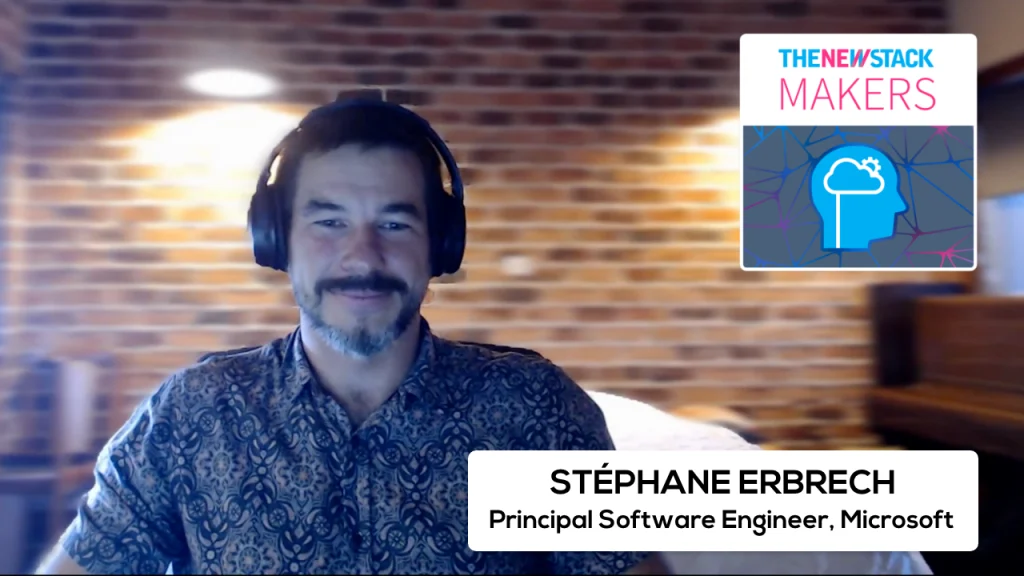
The foundational principles of Kubernetes management, often rooted in GitOps, typically assume a one-to-one relationship between a Git repository and a single Kubernetes cluster. This model, where a Git repository defines the desired state of a cluster and automated controllers reconcile it with the actual state, works effectively for teams managing a handful of clusters. However, as Stephane Erbrech, principal software engineer at Microsoft, points out, this paradigm encounters substantial limitations when the scale increases to hundreds or thousands of clusters.
"In a standard GitOps setup, cloud-native software engineering teams might manage one or two clusters," Erbrech explained to The New Stack. "At fleet scale, the complexity shifts from how you deploy… to how you govern a massive, distributed environment without manual intervention."
The journey from a few clusters to a vast fleet is a common trajectory for organizations embracing Kubernetes. What begins as a single cluster for a new project often blossoms into two, then ten, and subsequently into hundreds or even thousands as adoption and application sprawl accelerate. This growth mirrors the challenges previously faced with managing virtual machines at scale, where maintaining compliance, security, and operational integrity across a large, distributed infrastructure becomes a paramount concern.
A significant driver for this massive distribution of Kubernetes is the pervasive deployment of artificial intelligence (AI). From sophisticated machine learning models running in central data centers to inference workloads on edge devices like wind turbines and bakery ovens, AI is becoming increasingly decentralized. This trend necessitates a unified and scalable cluster management approach that can keep pace with the distributed nature of AI inference. The inherent reconciliation lag of traditional GitOps models becomes a bottleneck when dealing with the real-time demands of these distributed workloads.
Addressing Multi-Cluster Complexities
The limitations of single-cluster GitOps become apparent when considering the intricate requirements of fleet-scale management. These include:
- Global Traffic Routing: Orchestrating traffic flow across numerous geographically dispersed clusters.
- Cross-Cluster Secret Synchronization: Securely distributing sensitive credentials and configurations to multiple clusters.
- Unified Observability: Establishing a cohesive view of system health, performance, and security across the entire fleet.
- Consistent Policy Enforcement: Applying uniform security and compliance policies across all managed clusters.
Traditional GitOps often overlooks these critical multi-cluster dynamics, leading to operational silos and increased management overhead. The need for a more sophisticated management layer is evident as organizations grapple with maintaining consistency and control over their expansive Kubernetes infrastructure.
Microsoft Azure Kubernetes Fleet Manager: Orchestrating at Scale
Microsoft Azure Kubernetes Fleet Manager emerges as a pivotal solution designed to tackle these fleet-scale challenges. This management-layer technology empowers teams to define and execute reusable strategies for orchestrating cluster updates and lifecycle management across their entire fleet. A key feature is the ability to group clusters into "stages," enabling a controlled, phased rollout of updates.
"This control enables developers to deploy applications safely, environment by environment, cluster by cluster, at the pace the team chooses, all while continuously checking metrics and ensuring nothing breaks across the deployed environment," Erbrech elaborated.
This staged rollout approach allows for the sequential application of cluster updates, with opportunities for validation in lower-risk environments, such as staging or test clusters, before propagating to critical production environments. This risk mitigation strategy is crucial for maintaining application uptime and ensuring a smooth transition during fleet-wide operations.
The Role of Cilium Cluster Mesh
Underpinning the cross-cluster connectivity and seamless networking capabilities of Azure Kubernetes Fleet Manager is Cilium Cluster Mesh. Cilium, an open-source networking, security, and observability solution for cloud-native environments, has been extended to address multi-cluster complexities through its Cluster Mesh functionality.
"Cilium Cluster Mesh is the technology we use to ‘underneath’ to enable the cross-cluster connectivity that Microsoft Azure Kubernetes Fleet Manager delivers and enable the network to work in a seamless manner," Erbrech stated.
The integration of Cilium Cluster Mesh provides a robust foundation for inter-cluster communication. Leveraging eBPF (extended Berkeley Packet Filter) technology, Cilium offers advanced network policy enforcement and control mechanisms. This allows for sophisticated management of network traffic and security policies across multiple clusters, simplifying tasks that were once arduous. For instance, managing certificates across a fleet can be streamlined, potentially reducing the administrative burden significantly.
The aggregated control offered by these technologies is highly attractive to cloud-native engineers who are acutely aware of the inherent complexities of the Kubernetes ecosystem. Azure Kubernetes Fleet Manager, in conjunction with Cilium Cluster Mesh, enables clusters to communicate effectively, allowing workloads to be moved between clusters seamlessly and transparently to end-users. This dynamic workload mobility ensures high availability and optimal resource utilization.
Optimizing Resource Utilization with Cross-Cluster Workload Mobility
A compelling use case for cross-cluster workload mobility is the efficient utilization of expensive and sometimes scarce resources, particularly GPUs. As AI inference workloads become increasingly distributed, the ability to dynamically shift these compute-intensive tasks across available clusters can prevent resource idleness and waste.
"Because GPU resources are expensive and occasionally scarce, cross-cluster workload journeys help ensure teams make efficient use of provisioned resources and do not leave them idle or wasted," Erbrech noted. This strategic allocation of resources not only optimizes cost but also enhances the overall performance and responsiveness of AI-driven applications.
Comprehensive Cluster Lifecycle Management
Beyond deployment and operational management, Azure Kubernetes Fleet Manager also extends to comprehensive cluster lifecycle management. This includes orchestrating not only sequential Kubernetes version upgrades but also managing end-of-life actions as clusters are periodically retired. This end-to-end lifecycle management capability is critical for maintaining a healthy and up-to-date fleet.
As platform engineering responsibilities increasingly intersect with cloud-native management layers across distributed and complex environments, robust fleet management becomes indispensable. The potential for misconfigurations to proliferate across a vast armada of clusters necessitates proactive and automated governance. Solutions like Azure Kubernetes Fleet Manager, empowered by technologies like Cilium Cluster Mesh, offer a pathway to navigating these challenges, ensuring operational stability and security in the ever-expanding universe of Kubernetes deployments. The journey from a single cluster to a distributed fleet is fraught with complexity, but with the right tools and architectural approaches, organizations can build and manage resilient, scalable, and efficient Kubernetes environments.
