
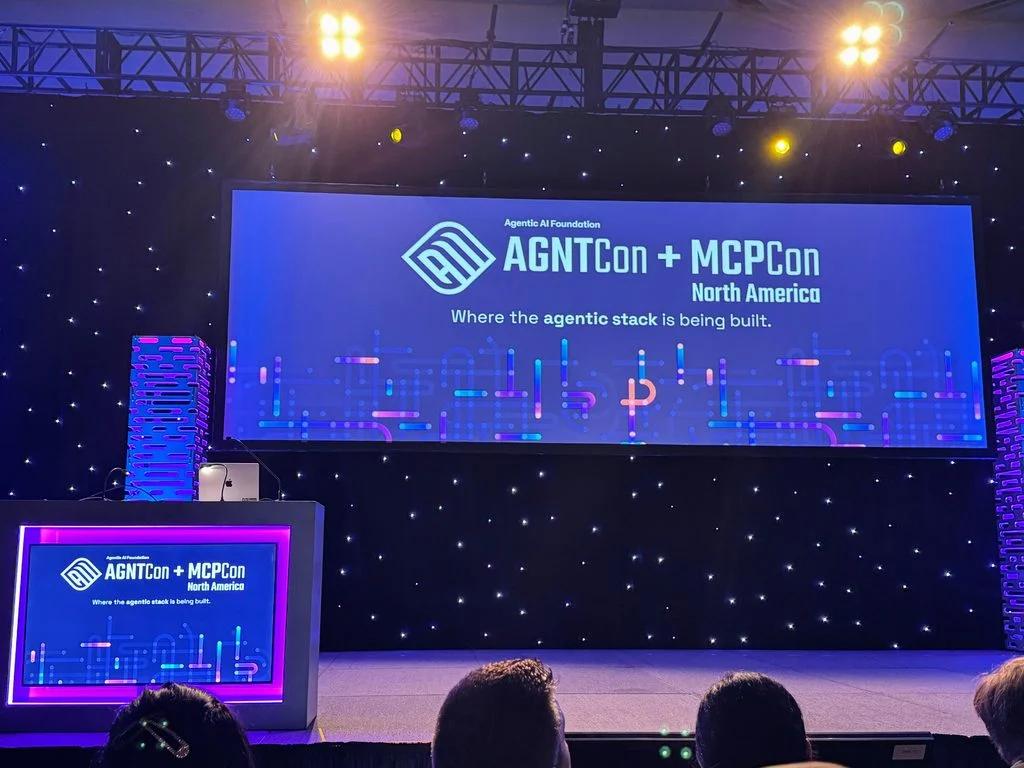

OpenAI announced a significant shift in its open-source strategy by officially donating the Open Responses API specification to the Agentic AI Foundation (AAIF), a Linux Foundation-backed project launched in December 2025. This move aims to establish a universal, vendor-neutral standard for developers building AI agents. Alongside Open Responses, several other prominent infrastructure components and frameworks—including OpenSandbox, Anthropic’s Agent Skills, and Hugging Face’s OpenEnv framework for agent environments—are also joining the AAIF ecosystem.
The integration of these critical specifications into a unified governance body marks a major turning point for the generative artificial intelligence industry. As artificial intelligence models transition from passive text-generation tools to active, autonomous software agents capable of executing complex multi-step workflows, the underlying infrastructure has faced increasing fragmentation. By consolidating key standards under a neutral technical steering committee, the foundation seeks to ease the burden on developers who currently must write, maintain, and update numerous disparate integrations for every large language model (LLM) provider they utilize.
The Mechanics of Open Responses and the Quest for Standardization
At its core, the Open Responses API specification addresses a pervasive inefficiency in modern software engineering: while virtually all major LLM providers utilize the same foundational building blocks—such as system prompts, structured user messages, sequential tool calls, and automated function execution—each platform implements them through proprietary, idiosyncratic application programming interfaces.
When OpenAI first introduced the specification earlier in the year, project engineers emphasized that developers spend an inordinate amount of time writing translation layers. Switching an application from one model provider to another often requires extensive refactoring of API payloads, error handling, and response-parsing logic. The Open Responses specification defines a standardized set of core API primitives and schema files, ensuring that identical code structures can interact seamlessly across multiple LLM endpoints.
By placing the project under the stewardship of the AAIF, OpenAI has relinquished unilateral control, transferring governance to a neutral technical steering committee composed of project maintainers and industry stakeholders. This collaborative model mirrors the successful governance strategies historically employed by the Linux Foundation for foundational cloud-native and operating system technologies, fostering trust among competing corporate entities that might otherwise hesitate to adopt a standard controlled by a single commercial rival.
Chronology of the Agentic AI Foundation and Ecosystem Growth
The evolution of the Agentic AI Foundation has moved at a rapid pace, reflecting the breakneck speed of agentic workflow adoption across the enterprise software sector.
In December 2025, the Linux Foundation formally established the AAIF to serve as the definitive vendor-neutral home for foundational agent protocols and open-source tooling. At its inception, the foundation welcomed three flagship projects: the Model Context Protocol (MCP), the open-source AI agent runtime known as goose, and AGENTS.md, a specification introduced by OpenAI designed to provide coding agents with project-specific instruction sets.
Throughout early 2026, the ecosystem steadily expanded as developers and platform vendors recognized the necessity of unified interoperability standards. The latest expansion brings a powerful cohort of projects into the fold. OpenSandbox, Open Responses, Anthropic’s Agent Skills, and Hugging Face’s OpenEnv framework join existing foundational assets such as agentgateway, A2A protocols, and the Agent Router.
This rapid consolidation highlights a broader industry consensus: autonomous agents require a standardized substrate to operate reliably across hybrid cloud architectures, local machine environments, and enterprise data perimeters.
Current Industry Adoption and Notable Ecosystem Splits
The push toward standardization has already gained substantial traction across the artificial intelligence landscape. A diverse array of hyperscalers, infrastructure providers, and open-source tooling ecosystems have rallied behind the Open Responses specification. Prominent early adopters include Amazon Web Services (via Amazon Bedrock), Databricks, LM Studio, Ollama, Hugging Face, Nvidia, OpenRouter, Red Hat, and Vercel, alongside critical open-source execution layers such as vLLM and OGC (formerly known as Llama Stack).

However, the current adoption map also reveals lingering ideological and architectural divides within the artificial intelligence community. Notably, OpenAI’s chief rival, Anthropic, maintains its own distinct proprietary standard through the Messages API, which powers access to the Claude family of models. Google similarly relies on its native Interactions API as the default interface for its developer ecosystem.
Despite these divergent paths, the industry landscape is heavily influenced by cross-compatibility efforts. Anthropic’s Messages API has left an indelible mark on the ecosystem, largely driven by the explosive enterprise popularity of developer tools like Claude Code. Consequently, competing model providers—including DeepSeek, Moonshot, Z.ai, and MiniMax—frequently expose Anthropic-compatible endpoints to capture existing developer mindshare.
This bifurcation between OpenAI-aligned patterns, Anthropic-aligned patterns, and proprietary cloud vendor endpoints creates the very fragmentation that the AAIF is designed to mitigate. Although Anthropic is an active member of the AAIF, it remains to be seen whether competing frontier labs will eventually converge on the Open Responses specification or maintain distinct protocol layers for their respective model architectures.
Official Reactions and Stakeholder Perspectives
Representatives from OpenAI emphasized that the donation of Open Responses represents a deliberate step toward reducing engineering overhead in multi-model environments.
"When we co-founded AAIF, we contributed AGENTS.md, a way to give coding agents project-specific instructions," an OpenAI spokesperson noted in a statement to industry publication The New Stack. "Open Responses addresses another part of building agents by giving developers a shared format for working with models across endpoints that support it, so they have fewer provider-specific integrations to maintain."
The spokesperson further highlighted that enterprise adoption is already underway, pointing out that infrastructure platforms such as the Vercel AI Gateway and Databricks Model Serving have already implemented the specification. By handing the project over to the AAIF, OpenAI aims to provide a neutral forum where developers, independent researchers, and commercial competitors can collaboratively evolve the schema without single-vendor bias.
Fact-Based Analysis of Implications for Developers and Enterprises
The institutionalization of Open Responses and its sibling frameworks within the Linux Foundation carries profound implications for software architects, enterprise procurement teams, and artificial intelligence startups.
-
Reduced Technical Debt and Vendor Lock-In: Standardized API primitives significantly lower the friction associated with multi-model strategies. Enterprises can dynamically route inference requests to different foundational models based on cost, latency, or domain-specific performance benchmarks without rewriting core application logic.
-
Acceleration of Agentic Workflows: Autonomous agents require constant interaction with external tools, APIs, and sandboxed execution environments. Standardizing schemas for responses, function calling, and agent environments (via OpenEnv and OpenSandbox) enables developers to construct more reliable, deterministic agent loops that are less susceptible to breaking changes introduced by underlying model updates.
-
The Maturation of Open Source AI Governance: The involvement of major competitors—including OpenAI, Anthropic, and Hugging Face—under a single foundation signals a maturing software ecosystem. Much like the transition of web protocols or container runtimes to neutral foundations (such as the W3C or the Cloud Native Computing Foundation), the AI industry is institutionalizing collaboration on plumbing and protocols, reserving commercial competition for model intelligence, proprietary data, and specialized application layers.
As the technical steering committee begins its work on the newly donated specifications, the success of the Agentic AI Foundation will ultimately be measured by its ability to bridge the gap between rival frontier labs and deliver a frictionless development experience for the next generation of autonomous software.
