

OpenAI officially launched GPT-6.1 Terra this Monday, marking a significant iteration in its mid-tier artificial intelligence offerings. This latest model is designed specifically for "computer use"—the capability of an AI to interact with software interfaces by observing a screen, moving a cursor, and executing keyboard commands. By positioning Terra as a high-efficiency tool for routine office automation, OpenAI is signaling a strategic shift toward practical, agentic workflows that prioritize speed and cost-effectiveness over the raw, heavy-duty reasoning power found in its flagship models.
The release of GPT-6.1 Terra brings with it a aggressive pricing adjustment, offering a 50% reduction in standard API costs compared to its predecessor, GPT-5.6 Terra. This move is expected to have substantial implications for developers who integrate OpenAI’s technology into third-party applications. By lowering the barrier to entry, OpenAI is likely aiming to accelerate the adoption of agentic AI, encouraging companies to move beyond simple chatbots and toward autonomous software agents capable of navigating complex operating systems and web environments.
A Chronology of the Terra Lineup
The evolution of the Terra model has been rapid and deeply intertwined with both internal development cycles and external political pressures. The model series first emerged on June 26, when OpenAI unveiled it as part of the GPT-5.6 family. This initial launch was characterized by a limited, controlled preview requested by the Donald Trump administration, highlighting the intersection of advanced AI deployment and national policy interests.
By July 9, the model was expanded to a public release, where it was positioned as a competitor to existing GPT-5.5 tiers, offering similar performance at a significantly lower operational cost. The subsequent months saw a flurry of activity in OpenAI’s product ecosystem. In September, the company introduced GPT-6 Sol and Luna in a rapid, reactionary rollout, occurring just minutes after Anthropic announced its Claude Opus 5.5 model. Notably, that September event excluded a new version of Terra, leaving the market to speculate on when the "workhorse" model would receive its own performance-enhancing update.
With this week’s release, GPT-6.1 Terra is now immediately available to users across the Plus, Pro, Enterprise, and Edu tiers. It is integrated directly into the ChatGPT Work environment—OpenAI’s agentic interface—and its coding tool, Codex. Free users, meanwhile, remain supported by the lower-tier GPT-5.6 Luna, maintaining a tiered structure that differentiates between casual and power users.

Benchmarking Performance and Factual Accuracy
OpenAI’s internal testing suggests that the transition from GPT-5.6 to 6.1 represents a substantial leap in reliability. The company utilized a suite of adversarial prompts designed specifically to induce hallucinations or procedural errors in the model. Under "low reasoning effort"—a setting that limits the computational time spent per task—the factual error rate dropped from 53.6% in the previous version to 16.7% in GPT-6.1. When set to maximum effort, the error rate plummeted to 4.3%, reflecting an 18-percentage-point improvement.
Beyond simple factual accuracy, the model’s utility as a coding and task-execution agent has been validated through Terminal-Bench 4.0. This benchmark tests AI agents on their ability to interact with a command-line terminal to solve complex software engineering tasks. In these tests, GPT-6.1 Terra at maximum effort achieved a 50.3% success rate, more than doubling the 21.5% success rate recorded by its predecessor.
Furthermore, OpenAI claims that the model is significantly faster than its siblings in the GPT-6 ecosystem, specifically outperforming the Astra and Sol models by a factor of three in terms of average task completion speed. While these figures are based on internal data and have yet to be independently audited by third-party research institutions, they provide a clear roadmap of OpenAI’s current development focus: optimizing for "latency and reliability" rather than just model size.
Industry Implications and Market Positioning
The decision to emphasize "computer use" is a direct response to the growing demand for agents that can perform multi-step workflows. In a professional setting, the ability of an AI to read a screen and interact with legacy software—rather than just processing text—transforms it from a search tool into a digital employee. This is particularly relevant for the enterprise sector, where manual data entry and repetitive software navigation represent a massive, untapped opportunity for automation.
From a competitive standpoint, the 50% price cut is a strategic maneuver designed to capture a larger share of the developer ecosystem. By making its agentic capabilities more affordable, OpenAI is effectively challenging competitors like Anthropic and Google to match their pricing or risk losing developer loyalty. The cost reduction suggests that OpenAI has successfully optimized its infrastructure, perhaps through more efficient distillation techniques or hardware utilization, allowing it to pass savings to the consumer while maintaining, or even increasing, profit margins through higher volume.
However, despite these advancements, OpenAI remains careful to manage user expectations. For research-heavy tasks or highly complex, creative coding projects, the company continues to recommend its more robust models: GPT-6.1 Sol and GPT-6 Astra. This bifurcation of the product line is crucial; it prevents the "one-size-fits-all" trap, ensuring that developers do not rely on a high-speed, low-cost model for tasks that require the deep reasoning capabilities of a larger, more expensive neural network.
The Human-AI Interface
The integration of GPT-6.1 Terra into ChatGPT Work represents a maturing of the user interface. By automating the act of "clicking and typing," OpenAI is moving toward a future where the AI acts as a layer above the operating system. This development is not without controversy or technical challenges; ensuring that an AI can reliably navigate an infinite variety of software interfaces requires significant robustness.
Observers within the AI community note that while the error rates have significantly decreased, the "last mile" of automation—ensuring the AI performs a task exactly as a human would in an unpredictable UI—remains the greatest hurdle for the industry. The 16.7% error rate at low effort, while a massive improvement over previous iterations, still suggests that human oversight remains a necessity for critical, high-stakes tasks.
Future Outlook
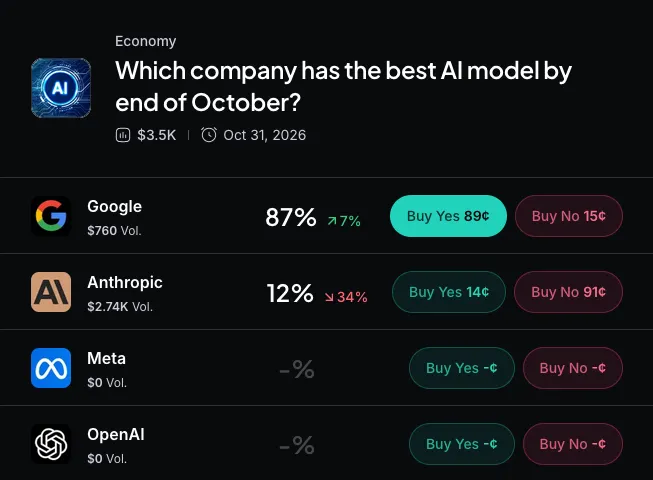
As the industry approaches the end of 2026, the focus on "agentic performance" is likely to dominate the discourse. With predictions markets and industry analysts closely watching which company will hold the title for the "best" model, OpenAI’s focus on the practical, mundane aspects of office work may be its strongest asset. By focusing on the "everyday" tasks that consume the bulk of an office worker’s time, OpenAI is building a stickier, more integrated ecosystem.
Whether GPT-6.1 Terra will hold its ground against upcoming iterations from competitors remains to be seen. However, by providing a faster, cheaper, and more accurate tool for the most common digital interactions, OpenAI has solidified its position as the primary provider of agentic utility. For developers and enterprise clients alike, the choice is becoming increasingly clear: for specialized, high-intensity intelligence, use the flagship models; for the daily grind of digital labor, rely on the efficiency of the Terra line.
As of this week, the rollout is underway, and the initial data points to a model that is both technically superior and economically viable for a wide range of use cases. Whether the industry at large can match these performance gains while keeping prices low will be the defining theme for the remainder of the year. For now, OpenAI’s strategy is clear: make the AI faster, make it cheaper, and make it work like a human, one screen at a time.
