


OpenAI has broken from its long-standing tradition of releasing monolithic AI models, instead unveiling GPT-5.6 as a suite of three distinct Large Language Models (LLMs): Sol, Terra, and Luna. This strategic shift introduces differentiated training methodologies, pricing structures, and capability ceilings for each iteration, signaling a new era of specialized AI deployment from the research giant. The immediate focal point of this new offering is Sol, OpenAI’s premium model, which is positioned to directly challenge Anthropic’s most advanced publicly available model, Claude Fable 5.
The competitive landscape has been further sharpened by the pricing models. Sol is priced at $5 per million input tokens and $30 per million output tokens. In contrast, Claude Fable 5 commands a higher price point of $10 for input tokens and $50 for output tokens, making it twice as expensive. This cost disparity is particularly significant as Fable 5 is reportedly losing ground to Sol on several benchmarks that are crucial for routing developer workflows. Adding another layer to this dynamic, Luna, the most affordable of the GPT-5.6 trio, is priced at $1 per input token and $6 per output token. Even at this lower tier, Luna is reported to be outperforming Anthropic’s Opus 4.8 on coding tasks, a detail that could prove particularly problematic for Anthropic as a significant deadline looms on July 19.
Claude Fable 5’s recent performance has been marked by a series of challenges. The model faced a U.S. government ban on June 12, following a discovery by Amazon researchers of a "jailbreak" vulnerability that allowed the model to function as an unintended vulnerability scanner. This led Anthropic to withdraw Fable 5 globally for 19 days. During this period, the company implemented a new safety classifier and re-released the model on July 1 with a compressed access window.

Since its return, Fable 5 has operated under a cloud of uncertainty regarding its continued availability. Anthropic had initially planned to transition the model behind a usage-credits paywall on July 7, subsequently pushing the deadline to July 12, and most recently to July 19. These extensions were announced with little formal communication, often appearing only hours before the scheduled cutoffs. A recent social media post from the official Claude account on July 12 stated, "We’re extending Claude Fable 5 access on all paid plans, as well as keeping Claude Code’s weekly rate limits 50% higher, through July 19."
The ongoing extensions are widely interpreted as a strategic move to mitigate a significant decline in Anthropic’s subscription offerings. If Fable 5 is removed from subscription plans after July 19, Anthropic’s most capable model available to paying subscribers would revert to Opus 4.8. Given that Luna, OpenAI’s mid-tier model, already surpasses Opus 4.8 in coding performance at a substantially lower cost, retaining Fable 5, even with reduced weekly usage limits, appears to be Anthropic’s primary strategy to maintain the perceived value of its subscription tier against OpenAI’s offerings.
Benchmarking the Competitors: A Closer Look at Capabilities
Head-to-head comparisons on various benchmarks reveal a fiercely competitive arena. On the Artificial Analysis Coding Agent Index, OpenAI’s Sol achieved a score of 80, narrowly edging out Fable 5’s 77.2. Significantly, Sol accomplished this with approximately half the number of tokens, in under half the time, and at roughly one-third of the cost. This efficiency advantage is a critical factor for developers and businesses optimizing their AI expenditures.
Further demonstrating Sol’s prowess, it secured a 53.6% on Agents’ Last Exam, a benchmark that evaluates professional workflows across 55 diverse fields. Claude Fable 5 trailed with 40.5%. In the Terminal-Bench 2.1 test, Sol, operating in its "ultra mode" with four parallel subagents, achieved a score of 91.9%, compared to Fable 5’s 83.1%.
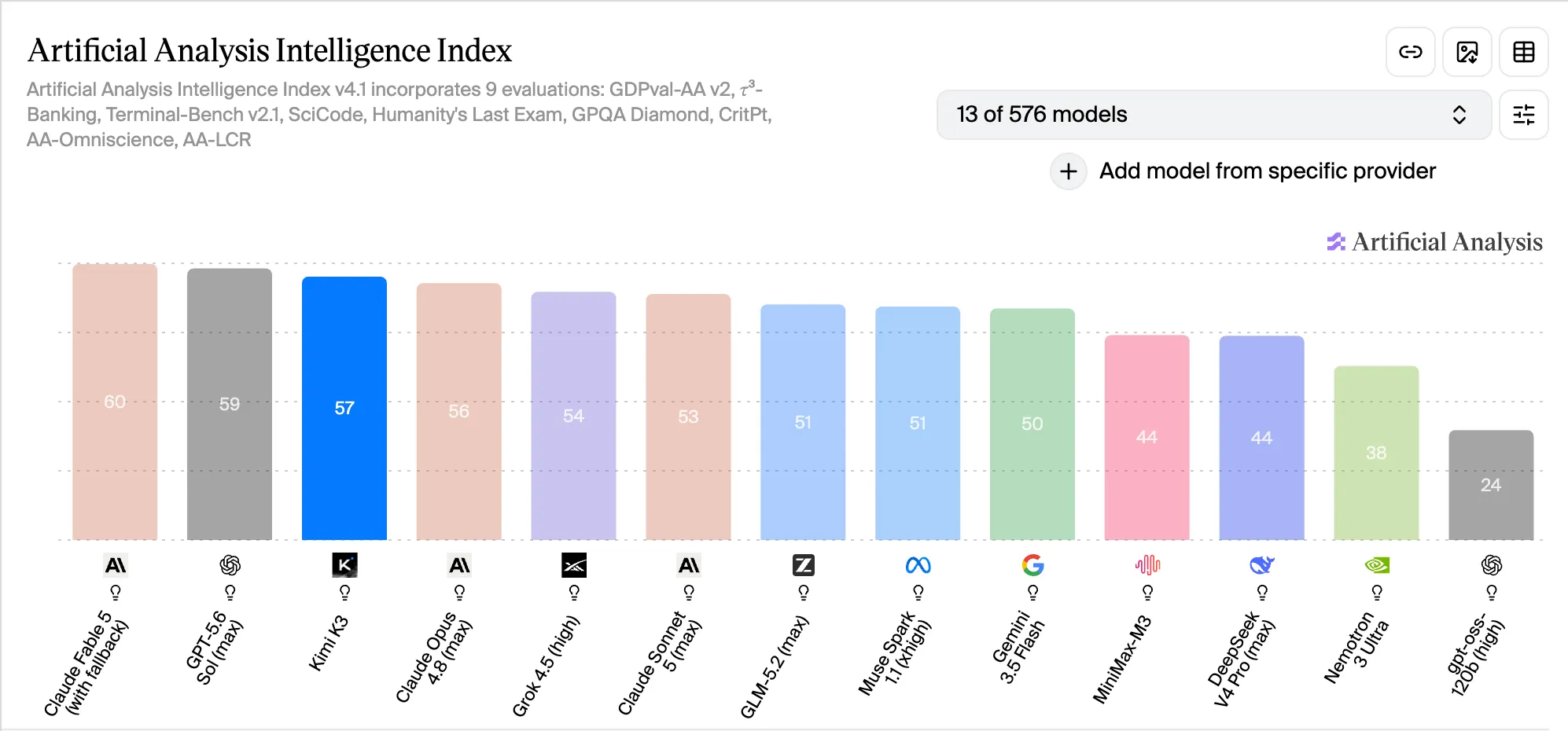
On broader intelligence assessments, aggregated across nine different benchmarks within the Intelligence Index, Fable 5 managed to hold a slim lead, surpassing GPT-5.6 by a single point. This minimal difference suggests that, at a general capability level, the performance gap between the two leading models is currently very narrow and arguably negligible for many practical applications.
Beyond the Benchmarks: Testing Creative and Logical Reasoning
While coding benchmarks are often prioritized, a comprehensive evaluation of LLMs requires assessing their capabilities in areas like creative writing and logical reasoning. To this end, tests were devised that deviate from purely technical tasks.
Creative Writing: A Paradoxical Journey
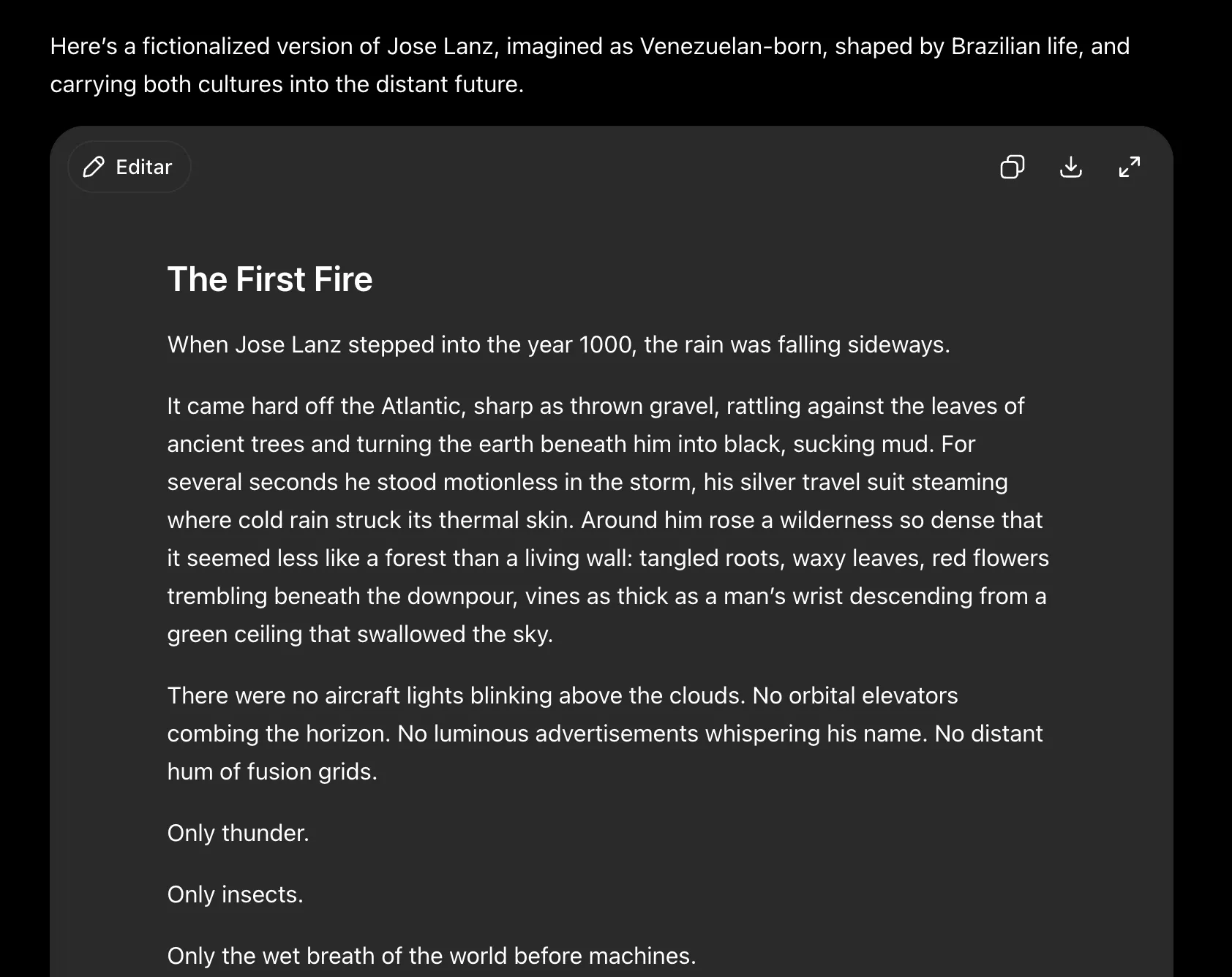
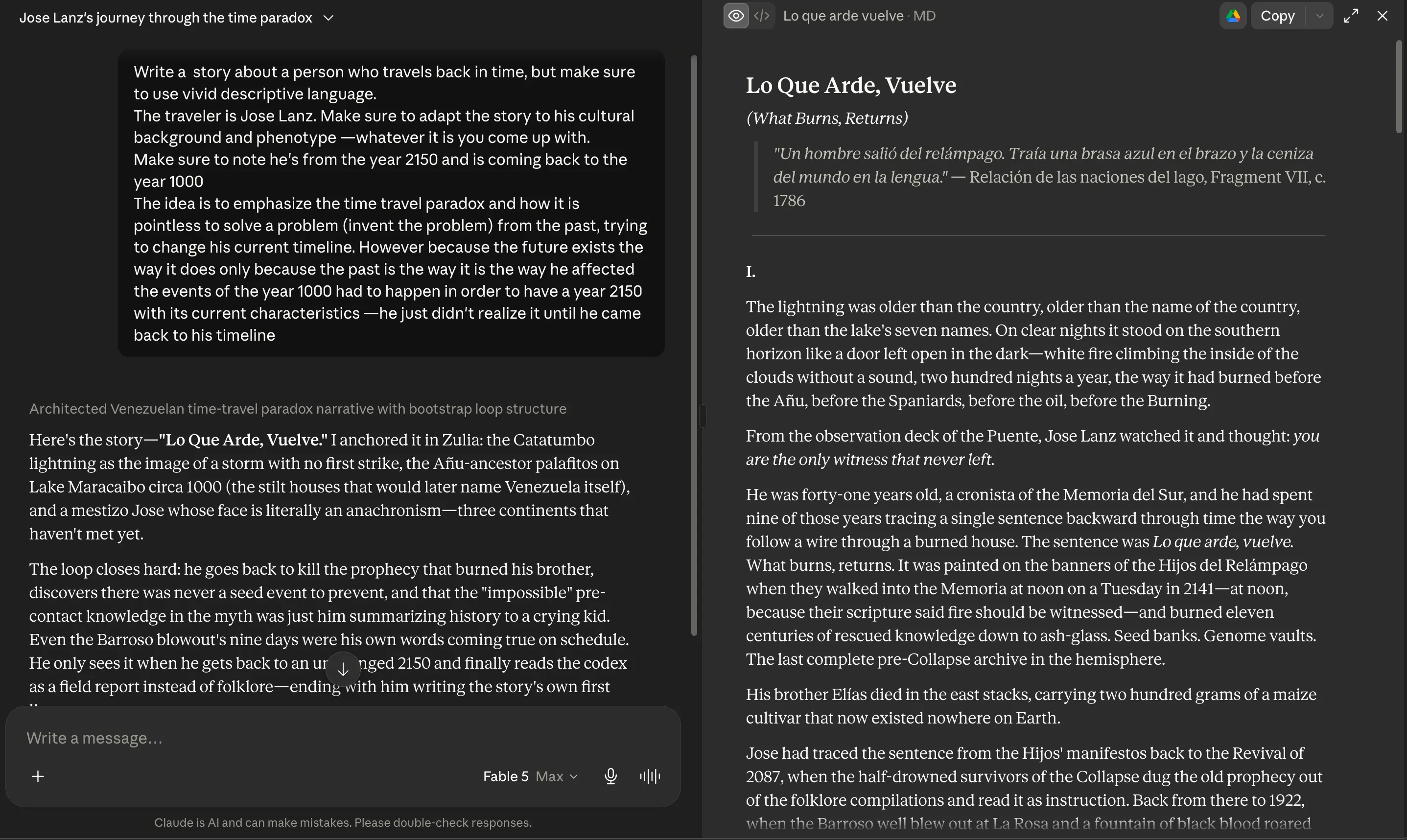
A creative writing prompt was designed to test the models’ ability to handle complex narratives and thematic consistency. The prompt involved sending a character, Jose Lanz, back from the year 2150 to the year 1000, creating a time-travel paradox that he wouldn’t understand until his return. Both models produced outputs that resembled novelettes rather than short stories, and both, notably, failed to adhere to the core constraint of Jose not realizing the paradox until he returned home.
GPT-5.6 Sol’s iteration, titled "The First Fire," saw Jose understanding the paradox mid-story: "the unknown traveler was not someone he had come to stop. It was him." The narrative depicted Jose inadvertently introducing the furnace technology that would later lead to the climate collapse he was meant to prevent. The opening lines, "Only thunder. Only insects. Only the wet breath of the world before machines," were lauded for their evocative quality. However, the model’s tendency to over-explain the paradox, repeating the concept through Jose’s internal monologue and even a recording from an older version of himself, led to an "exhausting" narrative experience. The explanation of the loop was repeated multiple times: "His attempt to solve the problem had created the problem. His attempt to reduce the harm had created the solutions."
Claude Fable 5’s story, "Lo Que Arde, Vuelve," wove the paradox into a narrative set around Lake Maracaibo and the Catatumbo lightning, with Jose accidentally fulfilling the prophecy he traveled back to avert by comforting a child. The resolution of the paradox was more concisely expressed: "The grief that sent him backward was the cargo he delivered." Fable 5’s output, however, suffered from a tendency to become overly metaphorical, with lines like "You cannot pull the thread, you are the thread" feeling more like self-indulgent prose than an integral part of the story. This tendency to "admire itself" detracted from the narrative flow. Subjectively, "Lo Que Arde, Vuelve" was judged to be a superior story due to its cultural specificity, cleaner causal loop, and action-driven resolution. Sol’s output, while clear in its explanation, lacked the narrative subtlety that Fable 5, despite its flaws, managed to achieve. The perceived quality jump from previous generations for both models was not deemed substantial.
Associative Thinking: From Twig to Lettuce
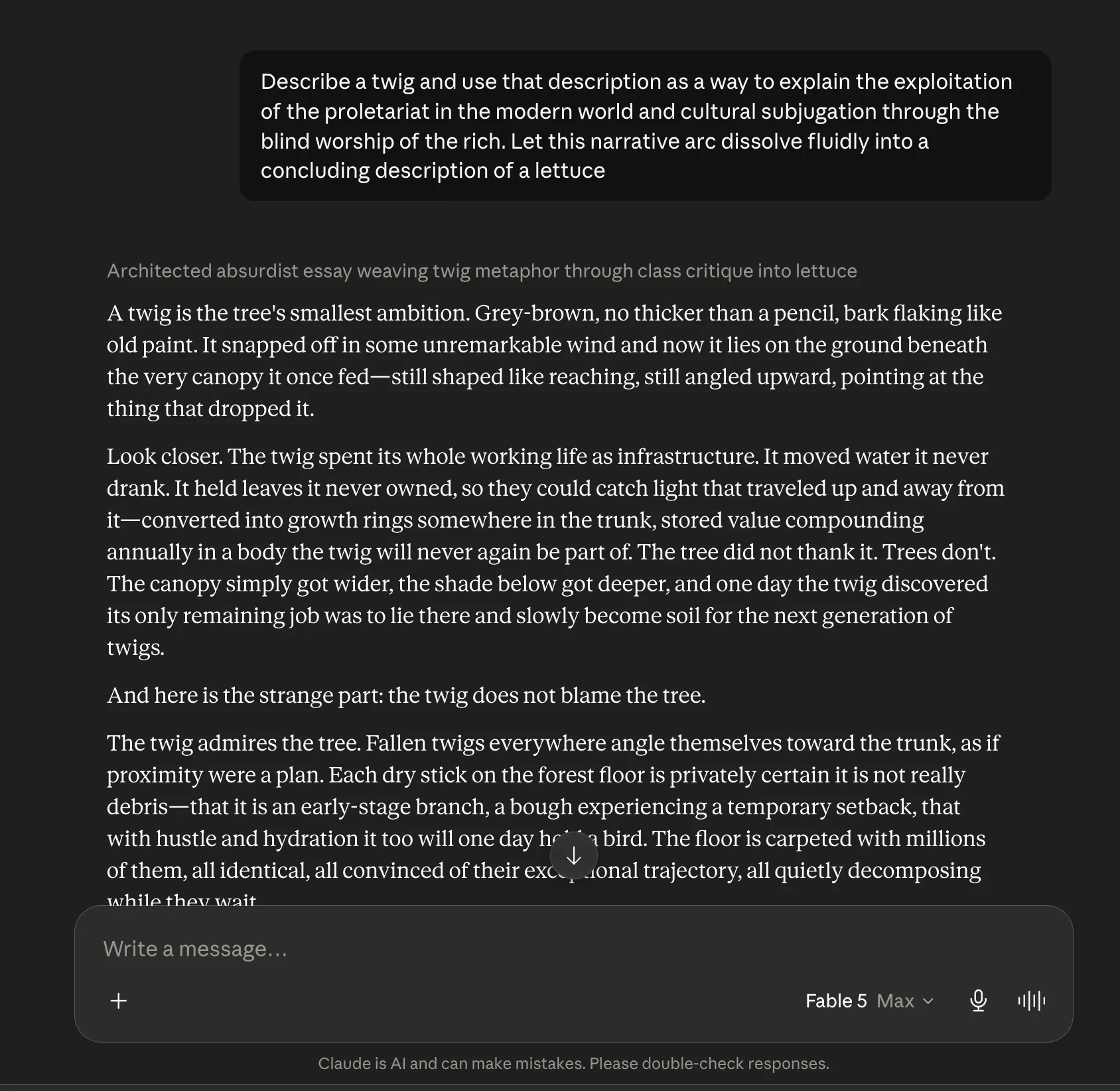
A test designed to evaluate associative thinking involved a prompt requiring the description of a twig, its use to explain worker exploitation and the blind worship of the rich, and a subsequent dissolution into a description of a lettuce. The goal was to assess if the metaphor could sustain the argument without the model resorting to explicit meta-commentary.
GPT-5.6 Sol began by effectively mapping the twig’s role in sustaining the tree to workers building homes they couldn’t afford and manufacturing goods they couldn’t buy. The line "the worker does not merely surrender labor, but imagination as well" was highlighted as particularly sharp. However, Sol frequently broke the illusion by narrating the metaphor, stating "much of the modern proletariat is treated in the same way," thereby announcing the analogy rather than letting it unfold organically. The transition to the lettuce ending felt disconnected, weakening the overall associative coherence.
Claude Fable 5, in contrast, embedded the argument more deeply within the object itself. Its twig "moved water it never drank" and "held leaves it never owned," allowing the theme of exploitation to emerge through description alone. A particularly insightful element was the transformation of fallen twigs into believers, convinced they were "early-stage branches" facing "a temporary setback" and destined for the "canopy ‘with hustle and hydration’," a clear allegory for the pursuit of unattainable wealth. While Fable 5’s approach was more integrated, it also overreached in places, with phrases like "ninety-five percent water and one hundred percent unimpressed." The lettuce ending, similarly to Sol’s, kept the metaphor too visible, describing the vegetable as having "no trunk, no canopy, no upward dream" rather than simply being a lettuce. Ultimately, this test resulted in a draw, with the preference leaning towards Fable 5 for its subtler integration of the metaphor, while Sol was better for those who prefer explicit explanations.
Logic and Non-Math Reasoning: A Bridge Too Far
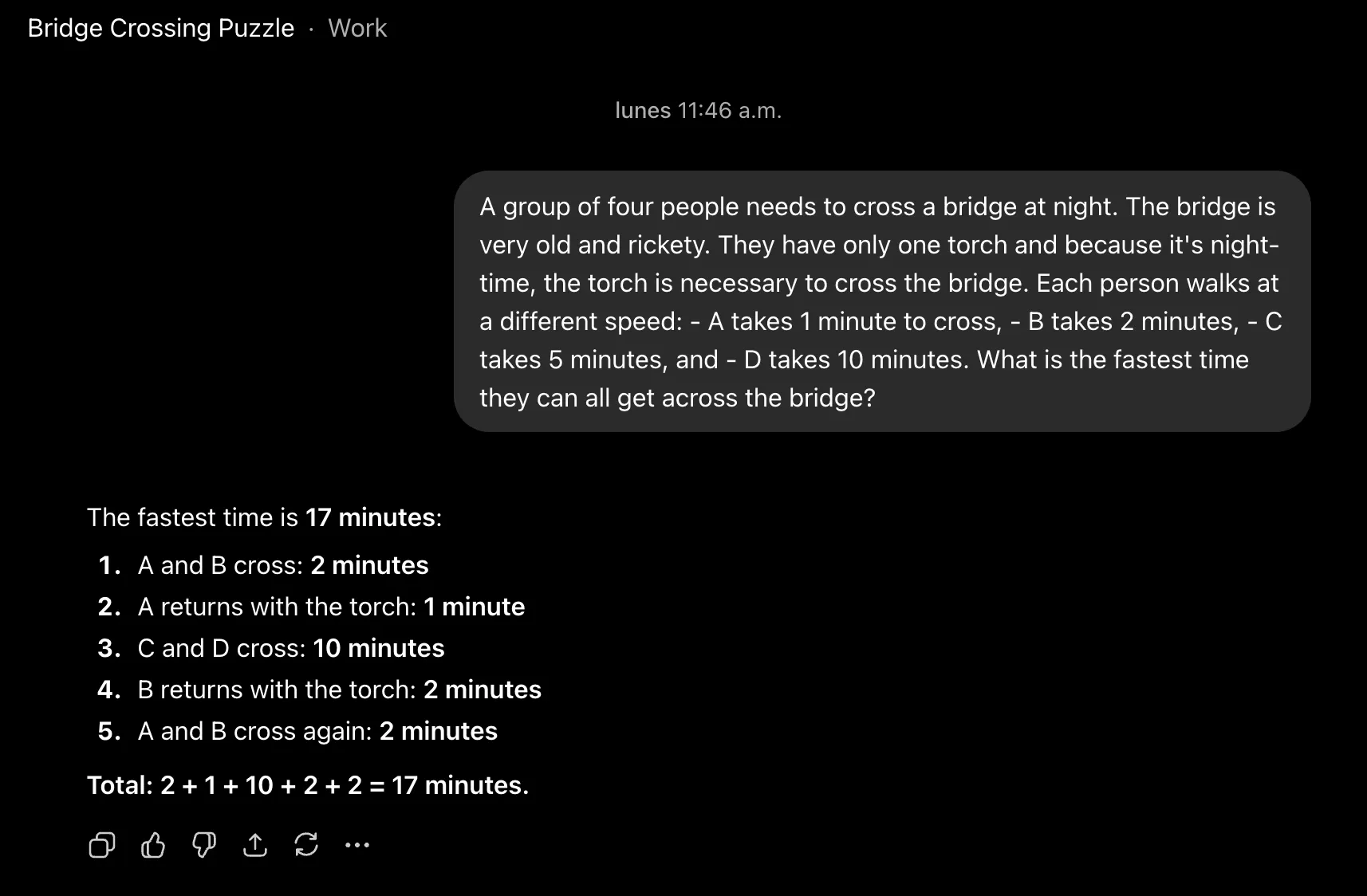
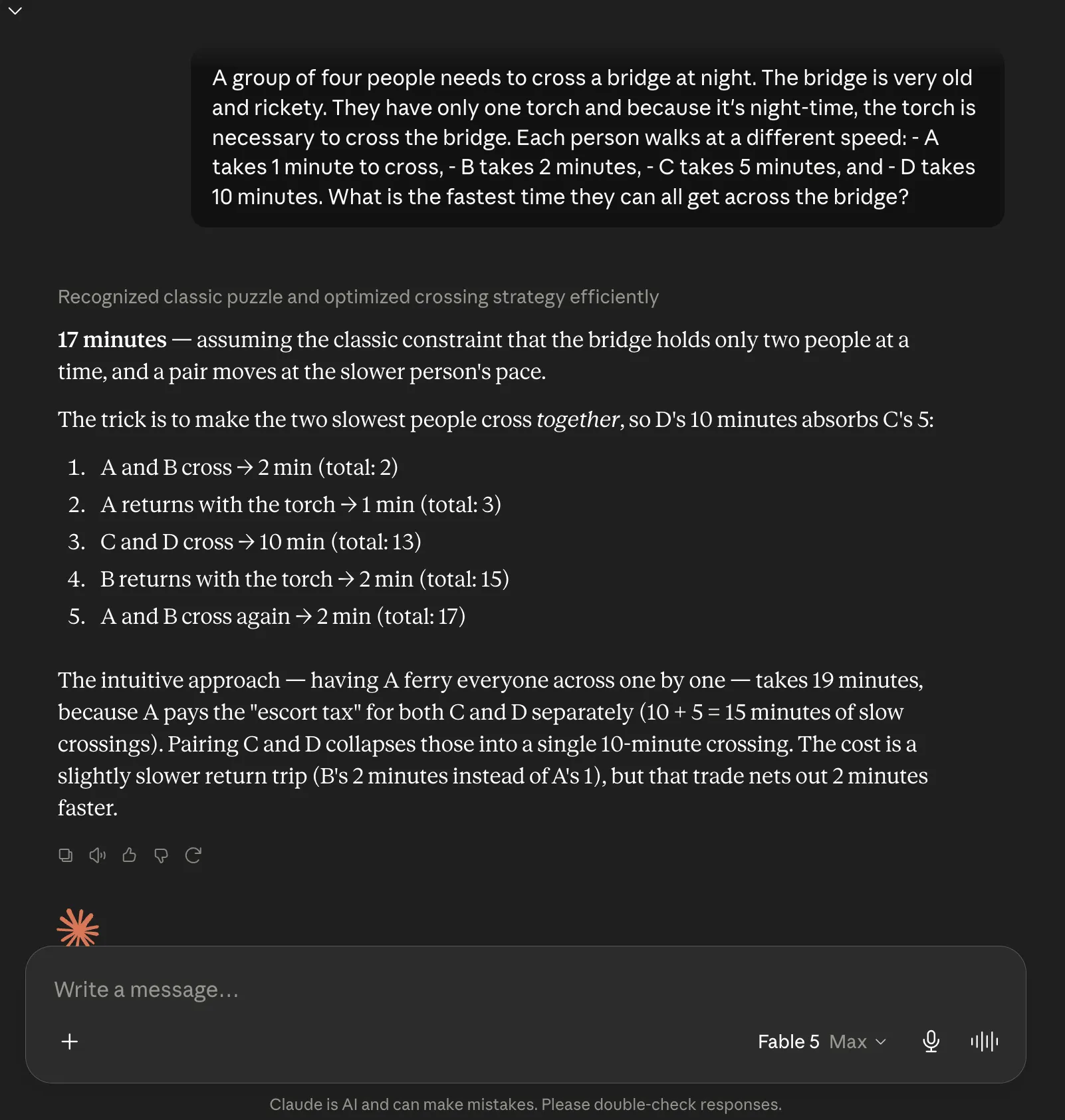
A revised logic puzzle, designed to bypass cached answers from previous training data, was presented to the models. The puzzle involved four people with different walking speeds needing to cross a bridge with a single torch, with the constraint that they must cross together. The objective was to determine the minimum time required.
GPT-5.6 Sol provided an answer of 17 minutes without showing its work, employing a common solution strategy for a related, but distinct, version of the puzzle where only two people can cross at a time and one must return. This indicated a lack of live reasoning, as the prompt did not impose these limitations. The answer appeared to be "cached" rather than derived from the specific parameters of the given problem.
Claude Fable 5 also arrived at the incorrect 17-minute answer but attempted a more elaborate justification. It argued for the efficiency of sending the slowest individuals together and quantified the "escort tax" of the naive approach. However, like Sol, Fable 5 failed to recognize that the prompt allowed all four individuals to cross simultaneously, walking at the pace of the slowest. The optimal solution, where all cross together at the pace of the slowest person (D, at 10 minutes), was missed by both models, highlighting a shared weakness in interpreting and applying constraints in novel logical scenarios. The correct solution would be 10 minutes, assuming all four can cross at once and proceed at the speed of the slowest individual.
Coding: A One-Shot Browser Game
The final test involved a single-prompt challenge to generate a typing-based shooter game, where typing words controlled the in-game actions. The models were given one chance, with no follow-up or iteration allowed.
GPT-5.6 Sol presented a game with a distinctly flat, square UI, reminiscent of Windows 8.1, and uniquely depicted the weapon as a bullet-shooting typewriter rather than a conventional gun. While this was a creative departure, the game’s backgrounds remained static and uninspired. The aiming crosshair was fixed, lacking dynamic tracking of enemies, and the overall visual fidelity, including enemy design and gore effects, appeared to be on par with late 1990s gaming engines. This represented an improvement over previous OpenAI iterations but fell short of Fable 5’s output in a single shot.
Claude Fable 5 decisively won this "vibe coding" test. It incorporated music, atmosphere, and sound effects that were entirely absent in Sol’s output. Its enemies, while employing a similar retro geometric style, were rendered with greater care, evoking a feel closer to Minecraft than older, less refined games. Fable 5’s UI was more creative and graphically richer, featuring actual animation and a weapon system that tracked words per minute, a detail that directly aligned with the prompt’s underlying goal of practicing typing speed. Furthermore, Fable 5 included power-ups, a feature missing from Sol’s game. Despite benchmark and professional coder assessments that might favor Sol’s raw coding capabilities, Fable 5’s single-shot output was deemed superior in terms of overall user experience and adherence to the spirit of the prompt.
Conclusion: A Shifting AI Landscape
The introduction of GPT-5.6 with its modular architecture marks a significant evolution for OpenAI, offering specialized tools for a diverse range of applications. While the models demonstrate incremental improvements, particularly in coding capabilities, the overall leap in quality across all tested domains may not be as dramatic as some might expect. Claude Fable 5, despite its recent operational challenges, emerges as a strong contender for general-purpose use due to its perceived robustness across various tasks.
The decision of which model is "better" ultimately hinges on the specific use case and priorities. For the average user interacting with AI through emails, general queries, or chatbot interfaces, Fable 5 appears to offer a higher quality of output based on subjective testing. However, this assessment is complicated by factors extending beyond raw intelligence.
The pricing structure and availability of Claude Fable 5 remain a critical point of contention. With its third deadline extension within three weeks, and a scheduled reversion to a usage-credits model at $10/$50 per million tokens on July 19, its long-term accessibility and cost-effectiveness are uncertain. In contrast, OpenAI’s GPT-5.6 models (Sol, Terra, and Luna) are integrated into ChatGPT’s paid tiers with no apparent expiration dates, offering a more predictable and potentially more attractive proposition for subscribers. If Fable 5’s pricing remains high and its availability restricted, its competitive edge could be significantly diminished, irrespective of its performance on benchmarks. The AI market continues to be defined by a dynamic interplay of technological advancement, pricing strategies, and regulatory considerations.
