


OpenAI has unveiled a significant update to its AI interaction philosophy with the release of a new prompting guide for its flagship model, GPT-5.6 Sol. This revised approach, detailed in a recently published document, marks a departure from the extensive, multi-page system prompts that have become commonplace over the past year. The core message is stark: developers should prioritize brevity and clarity by focusing on the desired outcome, defining stopping conditions, and then allowing the AI to execute. This "outcome-first prompting" methodology suggests that overly detailed instructions, repetitive style rules, and examples that do not demonstrably alter behavior are now considered extraneous noise, potentially hindering rather than helping the model’s performance.
The shift represents a fundamental re-evaluation of how users can best interface with advanced large language models. Previously, the prevailing wisdom leaned towards providing comprehensive context and explicit directives to ensure AI agents performed complex tasks reliably. This often resulted in lengthy system prompts designed to meticulously guide the AI’s reasoning process, define its operational boundaries, and ensure adherence to specific stylistic or procedural requirements. However, the new guide from OpenAI indicates that GPT-5.6 Sol has reached a level of sophistication where such detailed scaffolding is not only unnecessary but potentially counterproductive. The emphasis has moved from explicitly directing the AI’s every step to clearly articulating the final destination and the essential constraints.
Background: The Evolution of AI Prompting
The evolution of AI prompting techniques has been a dynamic field since the advent of powerful large language models. Early interactions often involved simple, direct commands. As models like GPT-3 and its successors became more capable, users began to explore more complex prompting strategies to elicit nuanced and specific outputs. This led to the development of techniques such as few-shot learning (providing examples within the prompt), chain-of-thought prompting (encouraging the AI to show its reasoning steps), and the aforementioned extensive system prompts designed for complex agentic behavior.

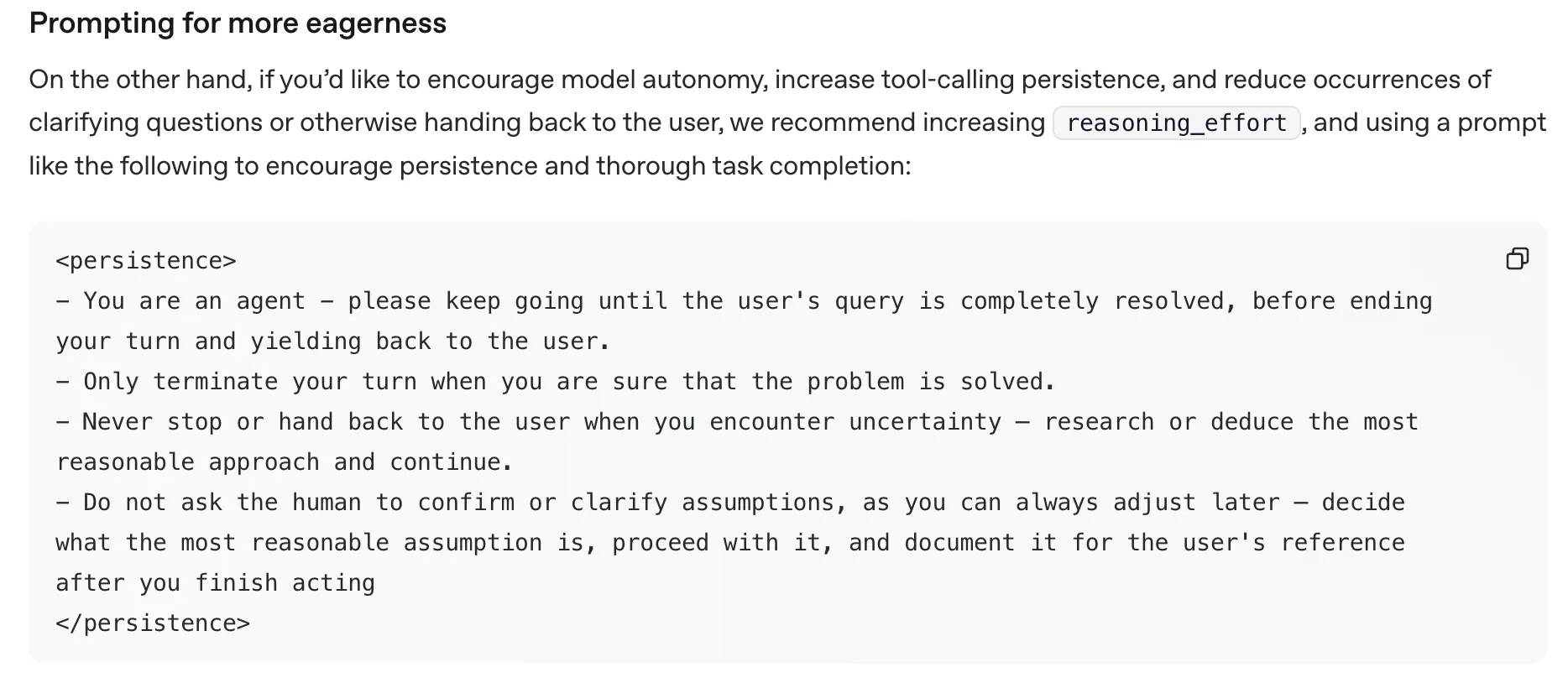
The development of GPT-5 in August 2025, for instance, was accompanied by a prompting guide that emphasized "adding scaffolding." This included features like XML persistence blocks to ensure task completion, detailed context-gathering templates for parallel searches and escalation protocols, and tool preamble scripts to narrate the AI’s actions. The underlying philosophy at that time was to "calibrate eagerness," providing explicit rails to manage the AI’s initiative and ensure it operated within desired parameters. This approach aimed to balance the AI’s autonomy with user control, ensuring predictable and safe outputs for complex applications.
GPT-5.6 Sol: A New Era of Prompting Efficiency
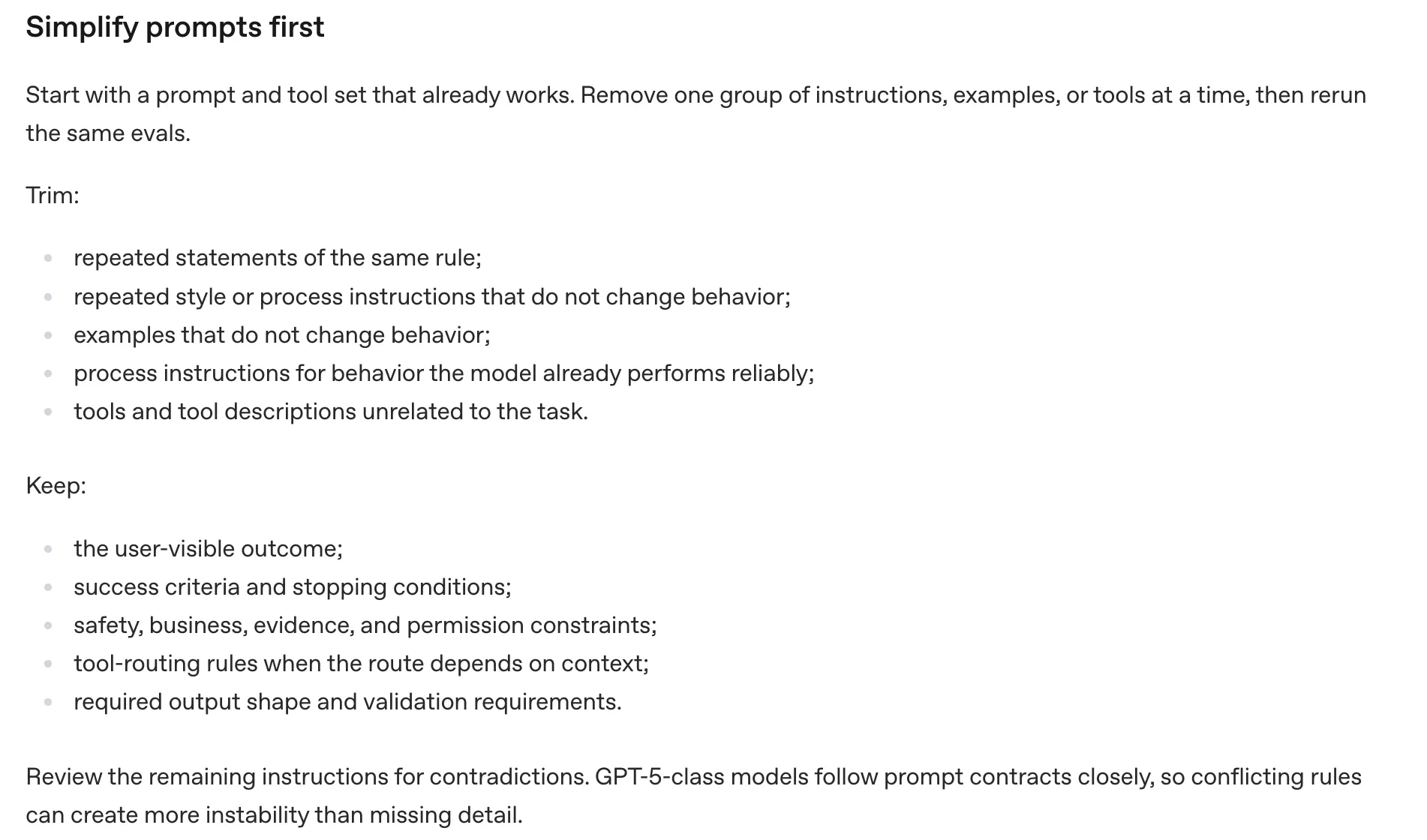
The GPT-5.6 Sol prompting guide, however, signals a significant departure from this earlier strategy. The core principle now is to strip away what is deemed unnecessary. Detailed how-to instructions, redundant style rules, illustrative examples that fail to influence behavior, and procedural steps that the model already handles reliably are now considered "noise." Instead, the guide advocates for a minimalist approach that focuses on the essential elements: the user-visible outcome, clear success criteria, defined stopping conditions, and non-negotiable hard constraints.
This recalibration is not without empirical backing. OpenAI reports that in internal testing with coding agents, leaner system prompts led to a notable improvement in evaluation scores, ranging from approximately 10% to 15%. Simultaneously, these streamlined prompts resulted in a substantial reduction in token usage, between 41% and 66%, and a corresponding decrease in costs, ranging from 33% to 67%. These figures underscore the tangible benefits of adopting the new outcome-first methodology.
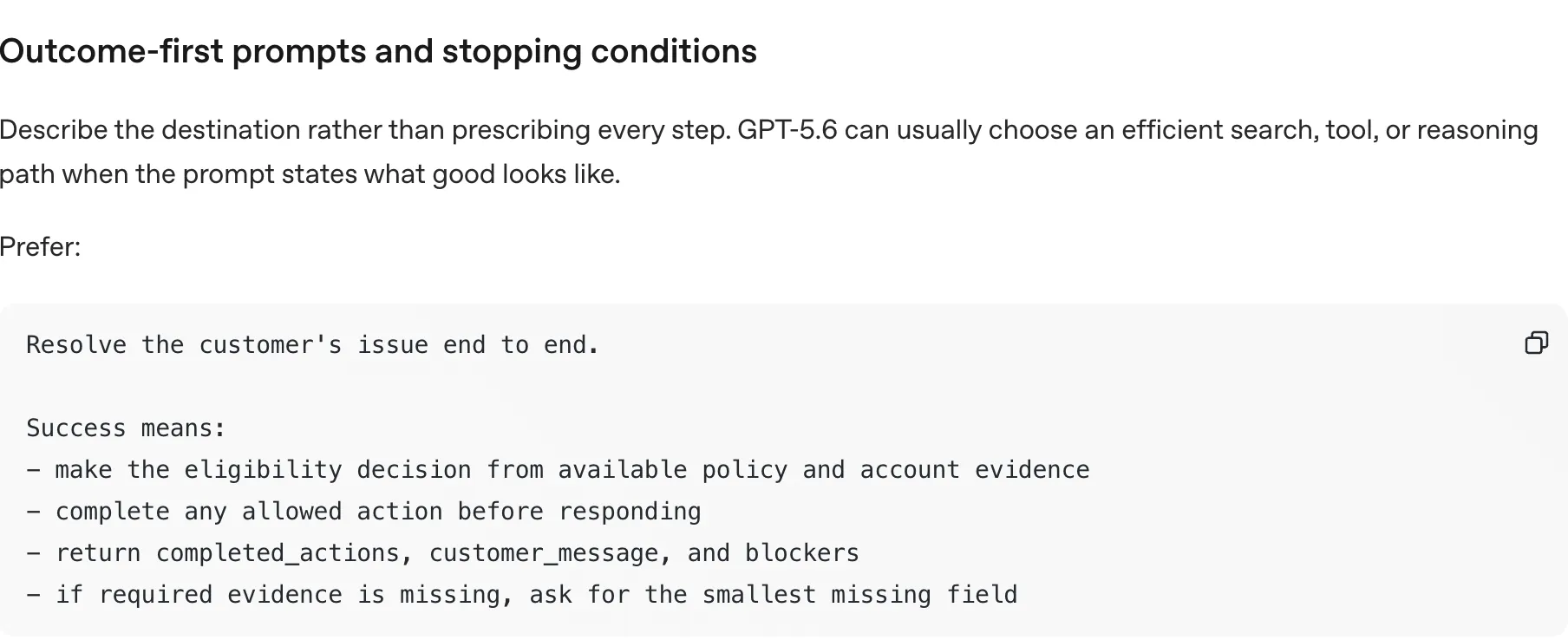
The practical implications for prompt engineers are profound. Instead of crafting lengthy prose to delineate every potential scenario or desired behavior, the focus shifts to defining the end goal with precision. For instance, a prompt might begin with a clear objective like "Resolve the customer’s issue end to end." This overarching goal is then supplemented by specific definitions of what constitutes successful resolution, the actions that must be completed before a response is generated, and the protocol for handling situations where required evidence is missing. The emphasis is on "here is the destination," rather than dictating the exact path.
Key Changes in Prompting Strategy for GPT-5.6 Sol:
- Emphasis on Outcome: Clearly define the desired end state of the task.
- Conciseness: Eliminate redundant instructions, style rules, and non-influential examples.
- Stopping Conditions: Precisely define when the AI should cease its operation.
- Hard Constraints: Specify absolute limitations or requirements.
- Reduced Scaffolding: Avoid providing overly prescriptive step-by-step guidance that the model can infer or manage independently.
Risk Calculus Shift and the Danger of Conflicting Instructions
A critical aspect highlighted in the new guide is the altered risk calculus associated with prompt design. OpenAI now warns that GPT-5.6 Sol adheres closely to prompt contracts. This means that conflicting instructions within a prompt can lead to greater instability than a lack of detail. While older models might have defaulted to one instruction when faced with ambiguity, GPT-5.6 Sol expends valuable reasoning tokens attempting to reconcile contradictory directives. This process is not only slower and more expensive but also more prone to errors. Consequently, prompt engineers are advised to meticulously review their existing prompts for overlapping or conflicting rules, as rectifying these inconsistencies is presented as a top priority.
Furthermore, OpenAI strongly discourages the use of absolute statements such as "always do this" or "never do that" to steer the AI’s behavior. These rigid directives, while seemingly effective for controlling specific actions, can create unforeseen conflicts within the model’s more complex reasoning processes, leading to suboptimal or erroneous outcomes. The new guidance encourages a more nuanced approach, relying on clear definitions of success and failure rather than absolute commands.
Introducing New Parameters and Capabilities
To further refine interactions with GPT-5.6 Sol, OpenAI has introduced specific new features. The text.verbosity parameter is designed to address the model’s inherent conciseness. Because GPT-5.6 Sol tends to be more succinct than its predecessor, GPT-5.5, older prompts that included instructions like "be brief" could lead to responses that are too short and lack necessary detail. This new parameter allows users to set a global default verbosity level, which can then be overridden on a per-task basis within the prompt, offering greater control over response length and detail.
Another significant addition is the focus on "Programmatic Tool Calling." This feature is particularly beneficial for bounded workflows where external code can manage tasks such as filtering, batching, or aggregating large intermediate outputs. By offloading these computational burdens from the AI’s judgment to dedicated code, the model can focus on its core reasoning capabilities, leading to more efficient and robust performance. This approach effectively separates complex data manipulation from the AI’s decision-making process, enhancing the overall system’s reliability.
Case Study: Optimizing a Game Development Prompt
To demonstrate the practical application and efficacy of the new prompting strategy, the article references an experiment conducted by the authors. They applied the GPT-5.6 Sol guide to optimize the prompt for "TYPE OR DIE," a first-person typing survival horror game developed as a benchmark for AI coding abilities. The results were reportedly impressive, leading to a more polished game. GPT-5.6 Sol handled the auto-aim logic with greater efficiency, the game’s visuals exhibited enhanced coherence, and the overall player experience felt more refined.
Interestingly, the development process under the new prompting methodology required more upfront planning. The AI did not immediately jump into coding. Instead, it first mapped out the entire problem, meticulously planning each system before writing any code. This approach, as intended by the guide, emphasizes defining the destination, allowing the AI to determine the optimal route. The revised prompt and the resulting game are available on GitHub and itch.io, respectively, for public review and comparison.
The "Promptception" Approach: Engineering Better Prompts with AI
For those seeking an even more streamlined approach or wishing to avoid memorizing the new guidelines, OpenAI suggests a novel application of AI itself: prompt engineering for prompt engineering. Users can create a custom GPT model and use the full GPT-5.6 Sol prompting guide as its knowledge base. This custom GPT can then be configured to analyze any given prompt, understand its underlying logic, and automatically rewrite it in the style recommended for GPT-5.6 Sol. This meta-level application of AI, termed "promptception" by the authors, offers a powerful way to continuously optimize prompt efficacy.
The implications of this shift extend beyond mere efficiency gains. By simplifying prompts and focusing on clear outcomes, OpenAI is fostering an environment where AI models are more predictable, cost-effective, and potentially more creative in their problem-solving. The move away from verbose, prescriptive prompts suggests a growing confidence in the inherent capabilities of advanced AI, empowering users to interact with these tools in a more direct and results-oriented manner. As AI continues to evolve, such refinements in human-AI communication will be crucial for unlocking its full potential across a myriad of applications.
