
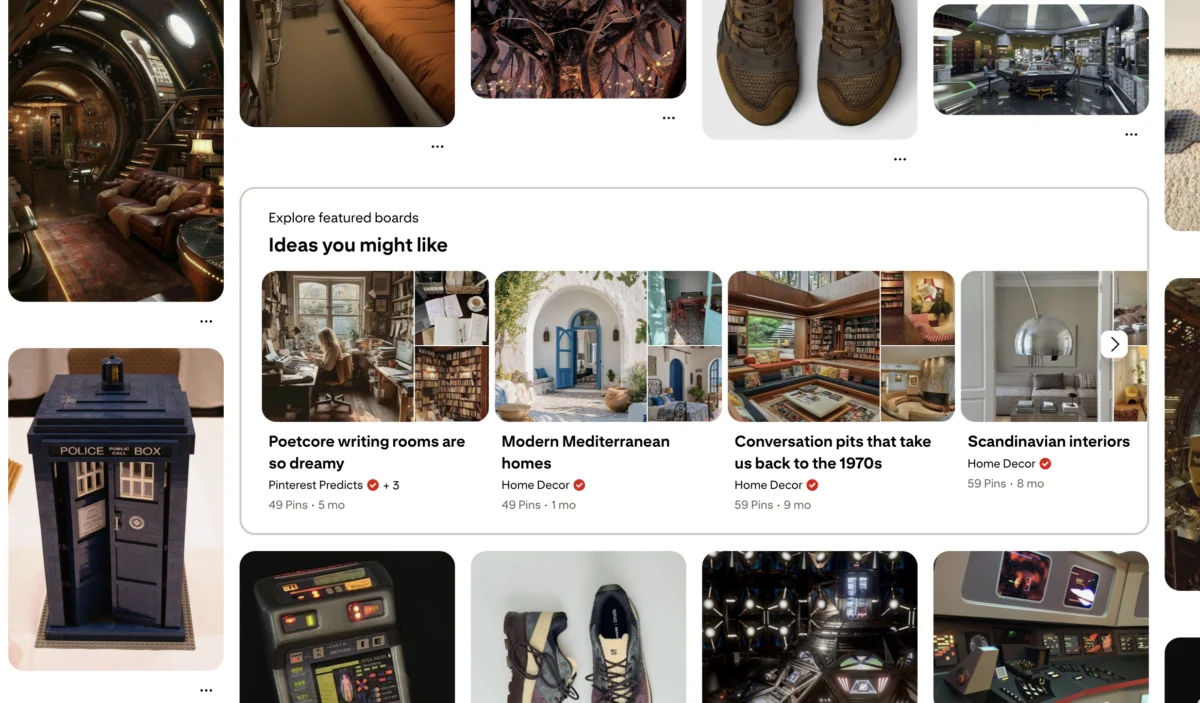

In a comprehensive vision for the future of digital discovery, Pinterest CEO Bill Ready has positioned the platform not merely as a social curation tool, but as a sophisticated, AI-driven shopping assistant tailored for the year 2026 and beyond. Since its inception sixteen years ago, Pinterest has evolved from a "catalog of ideas" into a powerhouse of commercial intent, leveraging a massive proprietary dataset to solve the inherent limitations of text-based search. Ready’s recent strategic outline emphasizes a pivot toward "agentic commerce," where AI does more than just answer prompts—it anticipates needs and facilitates seamless transactions through visual recognition and personalized "taste graphs."
The shift comes at a critical juncture for the company, as it navigates a competitive landscape increasingly dominated by generative AI and large language models (LLMs). By leaning into its unique position as a visual-first platform, Pinterest aims to capture the significant portion of the consumer journey that begins with a vague inspiration rather than a specific product name. This strategy is backed by a robust ecosystem of 631 million monthly active users (MAUs), all of whom are logged in and actively seeking inspiration, providing a closed-loop data environment that Ready argues is superior to general-purpose AI for commercial applications.
A Chronology of Transformation: From Pins to Purchases
Pinterest’s journey began in 2010 as a niche platform for collectors and hobbyists. For over a decade, its primary value proposition was "inspiration," encouraging users to save images to virtual boards. However, the appointment of Bill Ready as CEO in June 2022—a veteran of Google’s commerce division and PayPal—signaled a definitive move toward monetization and shopping integration. Under Ready’s leadership, the platform has accelerated its technical infrastructure to bridge the gap between seeing an item and owning it.
The 2026 vision represents the culmination of this transition. While early iterations of the platform relied on user-generated tags and basic metadata, the current iteration utilizes one of the largest image corpuses in the Western world. This technological evolution has moved through several distinct phases:
- The Curation Era (2010–2017): Focused on user boards and social sharing.
- The Discovery Era (2018–2022): Introduction of "Visual Search" and basic shop tabs.
- The Agentic Era (2023–Present): Integration of proprietary AI models, the "Taste Graph," and automated advertising suites like Pinterest Performance+.
Specialized AI vs. Generalized LLMs: The Strategic Divide
A central pillar of Ready’s thesis is the distinction between specialized and generalized AI. While the tech industry has been captivated by the rise of chatbots like OpenAI’s ChatGPT, Ready argues that these platforms face a "blank screen" problem. In a text-based interface, a user must know exactly what to type to receive a helpful result. This creates a meaningful barrier for discovery-based shopping, where a consumer may have a specific aesthetic in mind but lack the vocabulary to describe it.
Pinterest’s data supports this distinction. Of the more than 80 billion monthly searches conducted on the platform, approximately 50 percent are commercial in nature. In contrast, ChatGPT’s own data suggests that only 2 percent of its prompts are commercial. Ready asserts that Pinterest is solving the "I’ll know it when I see it" problem—a psychological state common in fashion, home decor, and wedding planning that text-based search engines were never built to address.
Furthermore, Pinterest is taking a defiant stance on the "unit economics" of AI development. Rather than relying on expensive, over-engineered third-party LLMs, the company is building compact, fit-for-purpose models trained on its proprietary data. This approach offers three distinct advantages:
- Reduced Latency: In-house models running on Pinterest’s own cloud infrastructure provide faster responses for visual searches.
- Enhanced Security: By keeping data within its own environment, Pinterest maintains a more secure ecosystem for both users and advertisers.
- Cost Efficiency: By avoiding the "premium" associated with proprietary third-party models, Pinterest can scale its AI capabilities at a fraction of the cost, ensuring long-term margin health.
The Power of the Taste Graph and Data Feedback Loops
At the heart of Pinterest’s competitive advantage is the "Taste Graph." Unlike a standard interest graph that tracks what a user likes, the Taste Graph tracks how those interests evolve over time. It understands the nuance between a user who is browsing for "mid-century modern furniture" for a one-time project versus a professional interior designer with a long-term affinity for the style.
This data is being leveraged beyond the Pinterest app itself. A tangible example cited by Ready is the company’s partnership with tvScientific. By applying Pinterest’s Taste Graph to tvScientific’s advertising algorithms, the partnership achieved a 27 percent increase in outcomes and a 65 percent increase in purchases. This demonstrates that Pinterest’s proprietary data is not just a tool for internal curation, but a high-value asset that can improve performance across the broader digital advertising ecosystem.
Performance+ and the Future of Advertiser Relations
As the platform matures into a shopping assistant, its relationship with advertisers is also evolving. The company has introduced "Pinterest Performance+," an automated suite of tools designed to handle bidding, budgeting, and creative features. According to the company, these campaigns require half as many manual inputs as standard campaigns while significantly reducing cost-per-acquisition (CPA) and cost-per-click (CPC).
Currently, approximately 30 percent of Pinterest’s lower-funnel revenue—money generated from ads specifically designed to drive a purchase—is running through Performance+. The company expects this number to grow as more sophisticated advertisers integrate their proprietary in-house measurement systems with Pinterest’s API.
One pilot program with a large advertiser focused on customer lifetime value (LTV) reported a 15 to 20 percent improvement in LTV-based return on ad spend (ROAS). By allowing advertisers to define their own successful outcomes—whether it is profit per order or long-term loyalty—Pinterest is positioning its bidding systems to act as a dynamic partner rather than a static billboard.
Agentic Commerce and Ecosystem Incentives
The concept of "agentic commerce"—AI agents that can act on behalf of a user to find, compare, and eventually purchase products—is a burgeoning field. However, Ready notes that many platforms have struggled with this because they attempt to disintermediate the relationship between the brand and the customer.
Pinterest’s strategy is explicitly partner-centric. Ready emphasizes that the barriers to agentic commerce are often not technical, but rooted in user behavior and ecosystem incentives. Pinterest intends to facilitate the journey to a real product on a brand’s website rather than attempting to trap the transaction entirely within its own walls. This approach maintains the "real-world" connection that has always been central to Pinterest’s brand identity, where the goal is to inspire users to "go out and do that thing."
Market Implications and Fact-Based Analysis
The implications of Pinterest’s AI pivot extend across the tech and retail sectors. Analysts suggest that if Pinterest successfully converts its 80 billion monthly searches into a high-conversion shopping funnel, it could pose a significant threat to the "discovery" dominance of platforms like Instagram and TikTok.
Key takeaways from Pinterest’s current trajectory include:
- The Specialization Trend: The industry is moving away from the "one model to rule them all" philosophy. Pinterest’s success with fit-for-purpose models suggests that domain-specific AI may be more profitable than general AI for enterprise applications.
- Visual Search as a Standard: As visual AI becomes more accurate, the reliance on keywords is likely to diminish. This favors platforms with deep image libraries and curated metadata over those that rely on web-crawled text.
- Privacy and Logged-in Environments: With the deprecation of third-party cookies, Pinterest’s 631 million logged-in users provide a "walled garden" of first-party data that is increasingly valuable to advertisers seeking precise attribution.
Ready’s vision for 2026 paints a picture of a platform that has finally aligned its technical capabilities with its original founding purpose. By moving from a passive gallery to an active, AI-powered assistant, Pinterest is betting that the future of commerce is not found in a search box, but in the seamless transition from a visual spark of interest to a tangible purchase. While the competition from LLM providers remains fierce, Pinterest’s focus on the "I’ll know it when I see it" segment of the market provides a specialized moat that may prove difficult for general-purpose bots to cross.
