

As Amazon’s veteran head of devices, David Limp, prepares to step down amid a broader wave of high-level executive departures over the past year, the consumer technology landscape finds itself at a critical inflection point. Next year marks a significant milestone: the tenth anniversary of the introduction of Alexa and the Amazon Echo. This impending decade-long marker has sparked intense industry-wide reflection regarding the trajectory of voice assistants, the evolution of the smart home ecosystem, and the lingering questions surrounding whether connected hardware can achieve true financial and operational independence.
The state of the modern smart home remains a complex tapestry of high-concept innovation, premium pricing barriers, and persistent infrastructural hurdles. These contradictions are vividly mirrored in recent product releases and market developments. From high-end kitchen appliances attempting to redefine sustainability to luxury architectural hardware hitting mainstream retail shelves, the Internet of Things (IoT) sector continues to grapple with the delicate balance between consumer utility and cost-prohibitive complexity. Simultaneously, regulatory bodies are stepping in to establish much-needed guardrails, while cybersecurity researchers uncover vulnerabilities that underscore the vital importance of industrial and consumer digital hygiene.
A Decade of Voice: The Evolution and Challenges of Alexa
When Amazon first unveiled the Echo speaker powered by Alexa nearly ten years ago, it catalyzed a profound shift in human-computer interaction. Voice-activated computing transitioned from science fiction into a mainstream household utility. Over the ensuing decade, millions of consumers integrated smart speakers into their kitchens, living rooms, and bedrooms, using them to check the weather, play music, control lighting, and manage daily schedules.
However, the commercial reality of operating a massive voice ecosystem has proven arduous. Despite widespread adoption, smart speakers have historically functioned as loss-leader hardware for tech giants aiming to lock consumers into broader retail and software ecosystems. With David Limp’s upcoming retirement—capping a career that defined Amazon’s hardware division through the explosive growth of Echo, Kindle, and Ring—the company faces strategic decisions about the future profitability and direction of its ambient computing initiatives.
The core question as Alexa approaches its tenth birthday is whether the smart home can stand on its own feet economically. For years, manufacturers relied on subsidized pricing to drive adoption. Today, as consumers face broader macroeconomic pressures, the demand for demonstrable value over novelty has never been higher.
Luxury Innovation Meets the Consumer Market
The current duality of the smart home market is perfectly illustrated by recent product introductions that push the boundaries of design and engineering while simultaneously highlighting affordability hurdles.
Take, for instance, the recent market rollout of advanced home sustainability solutions, such as the Mill composting system developed by Nest co-founder Matt Rodgers. Designed to tackle food waste directly in the kitchen, the appliance offers sophisticated technological processing for domestic waste management. Yet, reviews and market reception reveal a persistent friction point in the smart home space: high initial capital investment.
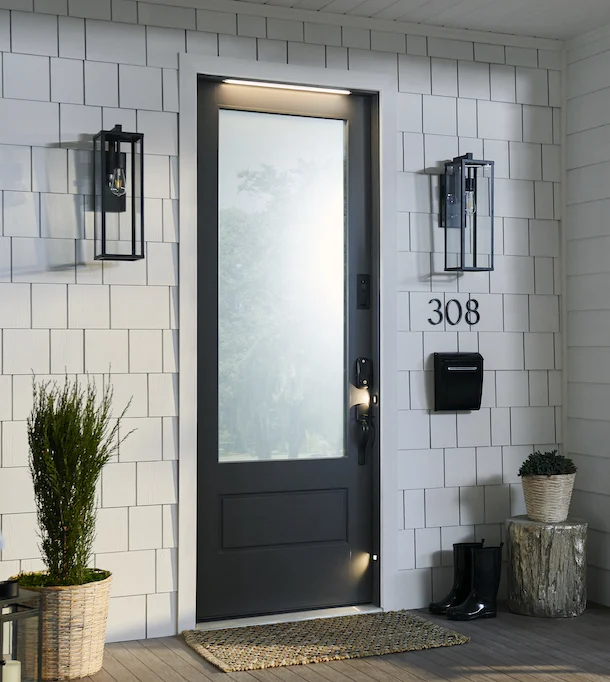
A similar dynamic surrounds architectural hardware innovations. Masonite has officially brought its high-end smart door to major retail channels like Home Depot, marking a historic moment for integrated home security and automated entry. Featuring built-in power management, lighting, and connectivity systems, the world’s first commercially available smart door represents the pinnacle of modern home integration. Nevertheless, its premium price tag places it well out of reach for the average consumer, positioning it as a luxury upgrade rather than a standard residential fixture. These disparate products underscore a broader industry trend: while the technology exists to automate virtually every facet of domestic life, bridging the gap between high-end innovation and mass-market affordability remains a formidable challenge.
Regulatory Action and Cybersecurity Imperatives
As the density of connected devices in residential and industrial environments multiplies, cybersecurity has transformed from an afterthought into an urgent regulatory priority. Recognizing the systemic risks posed by poorly secured connected devices, the Federal Communications Commission (FCC) has formally released its Notice of Proposed Rule Making regarding an official IoT cybersecurity labeling program.

The proposed initiative aims to introduce a standardized consumer-facing cybersecurity label—often envisioned as a "U.S. Cyber Trust Mark"—to help buyers identify smart devices that meet rigorous security standards. The FCC’s framework is designed to empower consumers to make informed choices while incentivizing manufacturers to harden their hardware against common attack vectors, such as default passwords, unpatched firmware, and weak data encryption. With a strict public comment window mandated for the proposal, industry stakeholders, manufacturers, and consumer advocacy groups have mobilized to shape the final regulatory standards.
The necessity of such oversight was thrown into sharp relief by recent cybersecurity disclosures. Researchers at Microsoft uncovered a sophisticated suite of vulnerabilities affecting critical industrial equipment. These flaws, if exploited maliciously, could theoretically grant attackers the ability to disrupt or outright shut down vital infrastructure, including power plants. The discovery highlights the invisible threads connecting consumer-grade smart home gadgets to industrial control systems, emphasizing that a security failure in one domain can have cascading repercussions across the broader digital ecosystem.
Infrastructure Upgrades: Z-Wave Expansion and Local Control
Beneath the consumer-facing layer of voice assistants and smart appliances lies the complex plumbing of wireless protocols that allow devices to communicate. Among these, the Z-Wave standard has long served as a foundational mesh network for home automation, prized for its reliability and operation on non-crowded radio frequencies compared to standard Wi-Fi.
For years, the Z-Wave ecosystem faced a significant structural bottleneck: a single primary chip provider. That limitation is now shifting with the emergence of Trident IoT, a new enterprise founded by industry veterans, including founder and CTO Mariusz Malkowski. Serving as a secondary source for Z-Wave chips, Trident IoT injects vital supply chain redundancy and competitive vigor into the market.
Industry discussions with Malkowski shed light on the strategic implications of this expansion. Beyond manufacturing alternative silicon, Trident IoT is positioning itself as a comprehensive ecosystem partner. The company plans to build and integrate multiple smart home radio protocols into its hardware offerings while simultaneously operating as an official Z-Wave certification house. This development promises to accelerate product development timelines for manufacturers and reduce time-to-market constraints.
Furthermore, the integration of Z-Wave with the emerging Matter interoperability standard represents a crucial frontier. Bridging legacy proprietary protocols with open-source frameworks like Matter is essential for ensuring that consumers do not find themselves locked into isolated digital silos. Industry observers are closely tracking developments surrounding Z-Wave Long Range (Z-Wave LR) and upcoming security enhancements, which promise extended transmission ranges and fortified encryption capabilities for large residential and commercial deployments.
In tandem with hardware-level advancements, consumer demand for reliable local control—as opposed to strictly cloud-dependent architectures—is gaining momentum. Recent hands-on evaluations of advanced smart home hubs, such as the Homey Pro, demonstrate the growing appetite for systems capable of managing automation locally. While carrying a premium price tag, hubs that prioritize local execution offer distinct advantages in latency, reliability, and privacy, shielding smart homes from internet outages and external server deprecations.
Broader Implications and Future Outlook
The convergence of leadership transitions at major tech firms, maturing wireless standards, regulatory crackdowns, and evolving consumer expectations signals that the smart home industry is maturing out of its experimental adolescence.
The upcoming tenth anniversary of Alexa and the Echo serves as a natural checkpoint for the industry. While voice assistants successfully established ambient computing as a permanent fixture in modern life, the next decade will likely be defined by profitability, enhanced interoperability via Matter, stringent cybersecurity compliance, and robust local control mechanisms.
As regulatory bodies enforce transparency through labeling initiatives and component manufacturers diversify supply chains to prevent single points of failure, the smart home ecosystem is slowly building the resilient infrastructure required for mass-market longevity. Whether these collective advancements will finally allow the smart home to stand entirely on its own—economically, technically, and operationally—remains the defining question for the industry’s next chapter.
