

The intersection of industrial automation and artificial intelligence continues to accelerate, bringing machine learning models out of resource-heavy cloud environments and directly onto peripheral edge devices. In this week’s comprehensive industry podcast episode, technology experts examine the profound operational shifts driving the adoption of TinyML, alongside a myriad of systemic hurdles facing the broader Internet of Things (IoT) ecosystem. Featuring a keynote discussion with Muthu Sabarethinam, Vice President of AI/ML Products and Services at Honeywell, the broadcast explores how industrial giants are deploying localized intelligence to manage over a million field-deployed sensors. Simultaneously, the episode tackles pressing technological bottlenecks, including the ongoing interoperability crises plaguing the Matter smart home standard, major semiconductor consolidation efforts led by semiconductor heavyweights, and evolving paradigms in home energy management.
Industrial Edge Intelligence and Honeywell’s TinyML Strategy
As heavy industries seek to optimize equipment performance, reduce unplanned downtime, and extract actionable insights from legacy hardware, cloud-based data processing increasingly presents prohibitive latency, bandwidth, and security challenges. To address these limitations, industrial automation leader Honeywell is aggressively redefining its technological roadmap through the implementation of TinyML—machine learning algorithms specifically optimized to run on low-power, resource-constrained microcontrollers and edge sensors.
Muthu Sabarethinam joined the podcast to articulate how Honeywell is systematically transforming raw equipment telemetry into high-value commercial services. Managing a sprawling infrastructure of over one million sensors deployed across diverse industrial landscapes presents a monumental engineering challenge. According to Sabarethinam, pushing machine learning models directly onto the sensor hardware offers a transformative triad of benefits: enhanced data security, minimized power consumption, and virtually instantaneous latency reductions.
By processing diagnostic and operational data locally, industrial facilities mitigate the vulnerability of transmitting sensitive telemetry across extensive network perimeters. Furthermore, localized processing drastically cuts down the power demands associated with continuous wireless data transmission, thereby extending the operational lifespan of remote industrial hardware. Sabarethinam also highlighted the critical necessity for standardized algorithm packaging. For enterprises to scale TinyML deployments effectively across millions of disparate field nodes, software development kits and machine learning models must be packaged uniformly, ensuring seamless integration, rapid deployment, and simplified lifecycle management across heterogeneous industrial ecosystems.
The Ecosystem Crisis: Matter, Thread, and Interoperability Strains
While industrial sectors push the boundaries of edge computing, the consumer smart home landscape grapples with persistent systemic friction. The episode takes a critical look at the current state of the Matter smart home standard, analyzing the widening gap between consumer expectations and real-world execution. Referencing recent investigative reporting by prominent technology publications, the discussion dissects the fundamental issues obstructing seamless smart home integration.
Despite being championed as the universal protocol designed to bridge disparate ecosystems across Apple, Google, Amazon, and other major platforms, Matter has encountered significant implementation roadblocks. Central to the debate is the complexity surrounding Thread border router interoperability and uneven device support among vendors. Analysts and industry observers have highlighted acute difficulties with Thread credentialing during initial device setup, leaving consumers and smart home enthusiasts frustrated by inconsistent cross-platform reliability.
Rather than faulting the underlying technical architecture of the standard itself, industry commentators point the finger squarely at vendor execution and proprietary firmware implementations. As manufacturers race to claim Matter compatibility, the resulting fragmentation underscores the enduring difficulty of enforcing true universal interoperability in a hyper-competitive consumer electronics market.

Semiconductor Consolidation and Emerging RISC-V Dynamics
Beyond software standards, the hardware foundation of the IoT industry is undergoing rapid structural consolidation and realignment. The podcast explores several high-stakes financial and strategic maneuvers shaping the semiconductor landscape. Most notably, industry titans Qualcomm, NXP Semiconductors, and Infineon Technologies have joined forces to back a newly established semiconductor enterprise aimed at accelerating the commercial adoption and development of the open-source RISC-V architecture. This strategic alliance represents a concerted effort to diversify hardware instruction sets, reduce licensing dependencies on proprietary architectures, and foster greater innovation in embedded computing and IoT silicon design.
Concurrently, corporate restructuring continues to reshape the supply chain. Recent financial filings indicate that Renesas Electronics has entered into a definitive agreement to acquire a prominent cellular IoT module business, a move designed to bolster Renesas’s wireless connectivity portfolio and strengthen its competitive positioning in industrial and automotive IoT markets. These corporate developments reflect a maturing semiconductor market where scale, hardware-software integration, and specialized connectivity protocols dictate long-term market dominance.
Critical Infrastructure, Cybersecurity, and Remote Automation
The expanding digital footprint of critical infrastructure introduces heightened cybersecurity vulnerabilities that demand rigorous examination. The broadcast addresses alarming reports concerning cybersecurity anomalies and potential cyber interference involving radiation sensors at the Chernobyl exclusion zone. Security researcher Kim Zetter’s recent investigations into mysterious radiation spikes highlight the profound geopolitical and safety risks associated with connected industrial control systems and environmental monitoring infrastructure. As critical infrastructure becomes increasingly digitized and reliant on remote telemetry, securing edge nodes against malicious tampering remains a paramount priority for national security and public safety agencies.
In parallel with cybersecurity concerns, innovation in aerial robotics is transforming industrial site monitoring. A California-based drone startup, Birdstop, recently secured fresh capital funding to expand its nationwide network of Beyond Visual Line of Sight (BVLOS) autonomous drones. Designed to monitor and protect critical infrastructure, the company’s on-demand drone architecture mirrors the operational structure of a satellite network. This model allows operators to conduct remote inspections, security surveillance, and asset monitoring over vast geographic expanses without the requirement of on-site pilots, signaling a major leap forward in automated infrastructure protection.
Consumer Smart Home Evolution: Home Assistant and Energy Management
Shifting focus back to the consumer domain, the podcast delves into the ongoing evolution of smart home self-hosting and energy management strategies. Co-host Kevin shared candid reflections and audience feedback following his high-profile public transition to Home Assistant, illustrating a broader consumer migration away from closed, cloud-dependent ecosystems toward open-source, locally controlled automation platforms. This trend reflects a growing consumer demand for data privacy, reduced reliance on third-party cloud services, and superior customization capabilities.
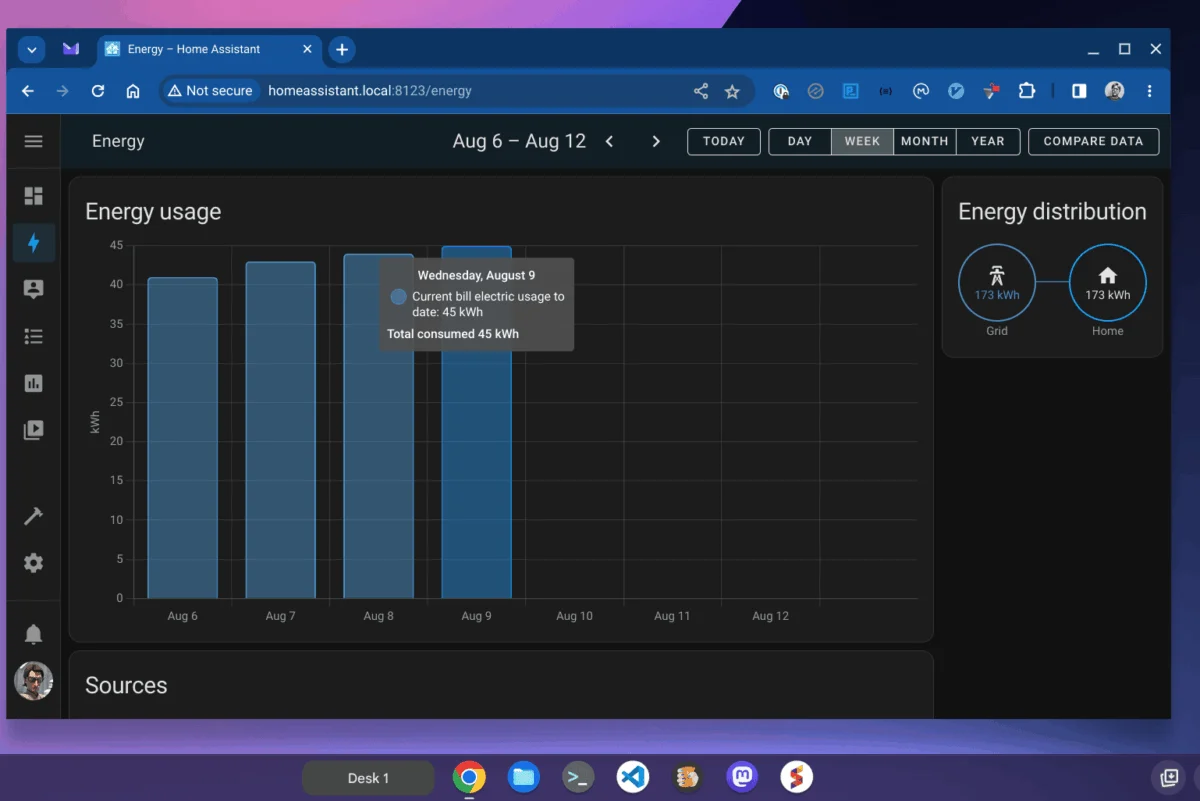
Building upon the theme of localized control, the episode outlines practical preparation steps for homeowners anticipating upcoming smart energy management and demand-response programs. As utility providers increasingly incentivize dynamic load shifting to stabilize regional electrical grids, integrating localized energy monitoring systems—such as those powered by Home Assistant—enables consumers to automate power consumption, optimize appliance usage during off-peak hours, and maximize the efficiency of renewable energy assets like residential solar arrays and battery storage systems.
The broadcast concludes with a dedicated listener Q&A session, addressing compatibility considerations for the Amazon Echo Show and evaluating how various smart home peripherals integrate with multimodal smart displays. By bridging the gap between high-level industrial edge computing and practical consumer smart home applications, this week’s comprehensive analysis underscores the complex, rapidly evolving architecture of the global Internet of Things.
