

The intersection of artificial intelligence, edge computing, and the industrial internet of things (IIoT) represents one of the most rapidly evolving frontiers in modern enterprise technology. As industries strive for greater operational efficiency, predictive maintenance, and real-time responsiveness, the traditional cloud-centric architecture of data processing is increasingly facing bottlenecks related to latency, bandwidth constraints, and cybersecurity vulnerabilities. Addressing these complex engineering and strategic challenges, this week’s comprehensive industry briefing and podcast episode examine a wide array of critical developments spanning smart home interoperability failures, semiconductor industry consolidation, critical infrastructure security, and a deep-dive interview with Muthu Sabarethinam, Vice President of AI/ML Products and Services at Honeywell.
The dialogue begins with a major foundational announcement regarding the podcast and its accompanying newsletter, signaling an expansion of their coverage into the deeper technical weeds of enterprise and consumer IoT. From there, the discussion pivots to a hard-hitting analysis of the current friction points plaguing the smart home ecosystem, specifically focusing on the Matter smart home standard, Thread border routers, and device interoperability.
The State of Matter, Thread Credentialing, and Smart Home Fragmentation
For years, the smart home industry has promised consumers and developers a unified utopia where devices from disparate manufacturers communicate seamlessly regardless of the underlying wireless protocol. The launch of the Matter standard—backed by tech giants including Apple, Google, Amazon, and Samsung—was supposed to be the definitive solution to device fragmentation. However, recent developments and extensive reporting from industry outlets like The Verge have illuminated severe structural roadblocks.
The primary culprits behind the current friction are not necessarily technical deficiencies within the Matter protocol itself, but rather vendor implementation strategies, uneven device support, and complex setup procedures. Both podcast hosts and external journalists have highlighted acute challenges surrounding Thread credentialing. When users attempt to onboard new Thread-enabled devices into border routers managed by different ecosystems, they frequently encounter error-ridden provisioning processes. This lack of harmonization has left consumers frustrated and has slowed the broader adoption rates that the Connectivity Standards Alliance (Alliance for Open Standards) initially projected.
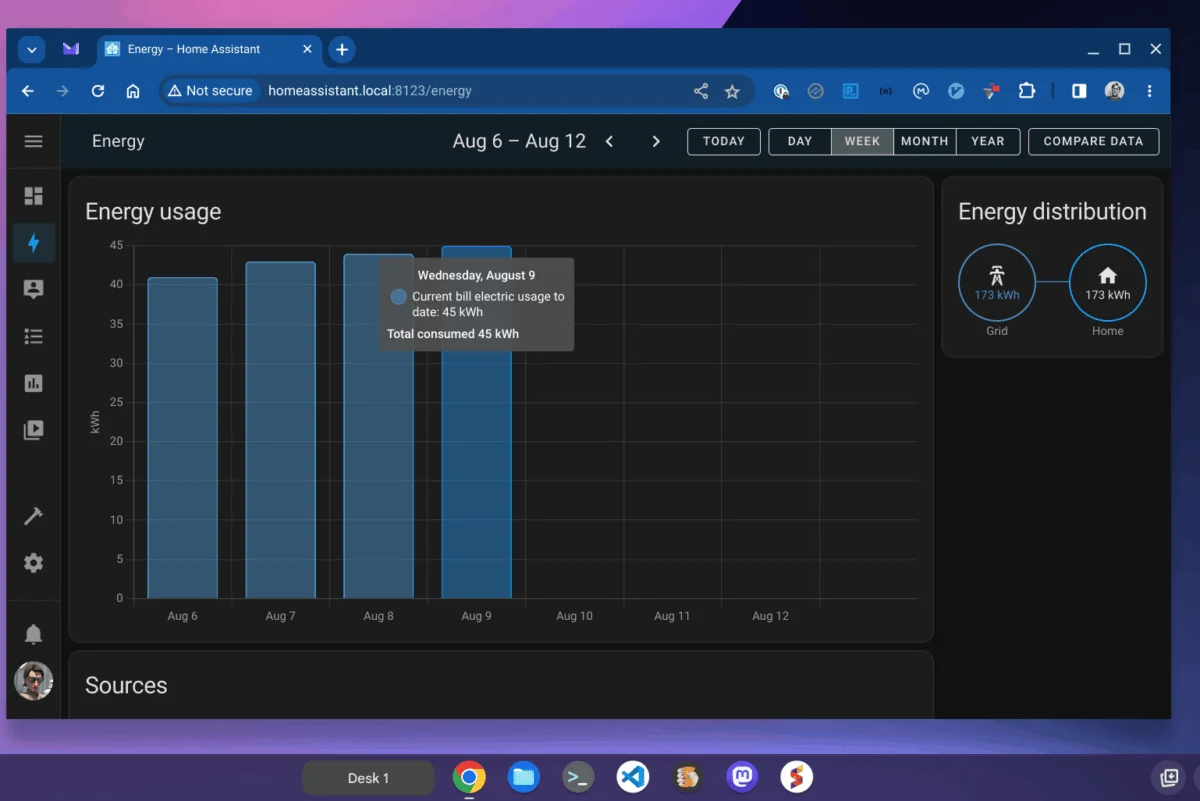
Compounding these consumer-facing frustrations is the ongoing evolution of home automation platforms. The discussion also touches upon user migration trends toward open-source, highly customizable hubs like Home Assistant. As commercial ecosystems struggle with walled gardens and cumbersome onboarding, an increasing number of technical enthusiasts are making the switch to self-hosted platforms that offer robust local control and extensive energy-monitoring capabilities. To assist households preparing for automated utility management, the broadcast outlines foundational tips for prepping homes ahead of smart energy management programs—an increasingly vital capability as electrical grids face surging demand and dynamic pricing models.
Critical Infrastructure, Cybersecurity, and Semiconductor Industry Realignment
Moving from the residential smart home to high-stakes industrial environments, the conversation addresses alarming cybersecurity vulnerabilities. Investigative reporting by cybersecurity journalist Kim Zetter recently brought to light a troubling mystery regarding inexplicable radiation spikes detected at the Chernobyl exclusion zone. The prospect of compromised or hacked radiation sensors underscores the severe geopolitical and safety risks associated with connected critical infrastructure. As industrial facilities integrate more smart sensors and remote monitoring capabilities, the attack surface expands exponentially, making robust edge security an absolute operational imperative.
In the semiconductor sector, major structural shifts are underway to secure supply chains and accelerate next-generation architectures. Qualcomm, NXP Semiconductors, Infineon Technologies, and other industry leaders have recently joined forces to back a new company aimed at accelerating the adoption and commercialization of RISC-V, an open-standard instruction set architecture (ISA) that challenges proprietary ARM and x86 designs. By pooling resources, these semiconductor giants intend to foster a more resilient, flexible, and cost-effective hardware foundation for automotive, industrial, and consumer IoT devices.
Concurrently, corporate consolidation continues to reshape the IoT landscape. Renesas Electronics announced a definitive agreement to acquire Sequans Communications, a prominent specialist in cellular IoT modules. This strategic acquisition is designed to bolster Renesas’s connectivity portfolio, enabling the company to offer highly integrated solutions spanning Wi-Fi, Bluetooth, and cellular IoT (such as LTE-M and NB-IoT) directly to industrial and enterprise customers.

In the realm of aerial surveillance and logistics, the drone industry is also witnessing novel infrastructure plays. California-based startup Birdstop recently secured new funding to expand its nationwide network of Beyond Visual Line of Sight (BVLOS) drones. Designed explicitly to monitor and protect critical infrastructure assets across the United States, Birdstop’s operational model mirrors a satellite constellation network deployed in the low Earth atmosphere, providing continuous, automated oversight for energy pipelines, utilities, and remote industrial facilities.
Honeywell and the Strategic Imperative of TinyML at the Industrial Edge
The centerpiece of this week’s industry analysis is an in-person feature interview with Muthu Sabarethinam, Vice President of AI/ML Products and Services at Honeywell. As a global industrial technology leader operating in sectors ranging from aerospace and building technologies to performance materials and safety solutions, Honeywell manages an immense footprint of physical hardware deployed across diverse global environments.
During the interview, Sabarethinam elaborates on how Honeywell is fundamentally rethinking its approach to equipment data. Historically, industrial machinery generated vast quantities of operational telemetry that was either discarded locally or shipped via high-bandwidth connections to centralized cloud servers for post-processing and diagnostics. However, as industrial operations scale, relying entirely on cloud-based machine learning presents prohibitive latency issues, excessive bandwidth consumption, and heightened security risks.
To mitigate these challenges, Honeywell is heavily investing in TinyML (Tiny Machine Learning)—the practice of running lightweight machine learning algorithms directly on resource-constrained microcontrollers and edge sensors. Sabarethinam breaks down the core motivations driving Honeywell toward sensor-level intelligence:
- Latency Reduction: In critical industrial settings—such as rotating machinery in manufacturing plants or safety systems in refineries—waiting for data to round-trip to the cloud before detecting an anomaly is entirely unviable. TinyML algorithms running directly on the sensor can detect vibrations, temperature spikes, or structural stress anomalies in milliseconds, triggering immediate local mitigation protocols.
- Enhanced Security: Transmitting raw industrial telemetry across public or private networks creates multiple vectors for interception or cyberattack. By processing data at the point of capture and transmitting only cryptographic insights or anomaly flags rather than raw operational streams, Honeywell significantly shrinks the potential attack surface.
- Power Efficiency: Industrial sensors are frequently deployed in remote, hazardous, or hard-to-reach locations where continuous wired power is unavailable. Modern TinyML models are optimized to consume minimal electrical power, allowing battery-operated or energy-harvesting sensors to execute complex machine learning inference over extended multi-year lifecycles without manual battery replacements.
Scaling AI across a Million-Sensor Footprint
Deploying machine learning models across a fragmented array of hardware has historically been a monumental software engineering challenge. Honeywell’s perspective carries immense weight in the industrial sector because the company currently supports more than one million active sensors deployed in the field—all of which represent potential deployment targets for scaled TinyML firmware updates.
Addressing the practicalities of mass deployment, Sabarethinam shares strategic insights into how industrial enterprises and software vendors must package their algorithms. To achieve large-scale deployment, AI models cannot be custom-coded for every individual sensor model. Instead, developers must adopt standardized model containerization, robust over-the-air (OTA) update frameworks, and hardware-agnostic abstraction layers. This standardization ensures that predictive maintenance algorithms can be pushed out efficiently across massive, heterogeneous fleets of industrial hardware without requiring physical site visits by technicians.
Furthermore, the conversation explores evolving business models in the industrial IoT space. As customers increasingly shift away from traditional perpetual software licensing and hardware-only procurement, they demand flexible, data-driven service models. Industrial clients are looking to purchase guaranteed uptime, predictive insights, and outcome-based performance metrics rather than raw sensor hardware alone. Honeywell’s strategic alignment of TinyML capabilities with modern software-as-a-service (SaaS) and data-access frameworks positions the company to meet these shifting customer expectations.
Broader Implications and Market Outlook
The convergence of the topics discussed in this week’s broadcast—ranging from consumer smart home fragmentation to industrial edge intelligence—illustrates a unified macroeconomic trend: the decentralization of computing intelligence. Whether dealing with messy Matter onboarding protocols in residential spaces or deploying sophisticated TinyML anomaly detection models across industrial sensor fleets, the fundamental engineering challenge remains identical. Systems must become more autonomous, more secure at the edge, and less dependent on fragile cloud infrastructure.
As semiconductor manufacturers align behind open standards like RISC-V, and as enterprise giants like Honeywell operationalize machine learning at the micro-controller level, the architectural blueprint of the connected world is undergoing a profound transformation. The success of these initiatives will ultimately depend on industry-wide collaboration, rigorous security standardization, and a relentless focus on simplifying user and operator experiences. For engineers, enterprise leaders, and technology enthusiasts alike, navigating this complex transition will define the next decade of digital and industrial transformation.
