
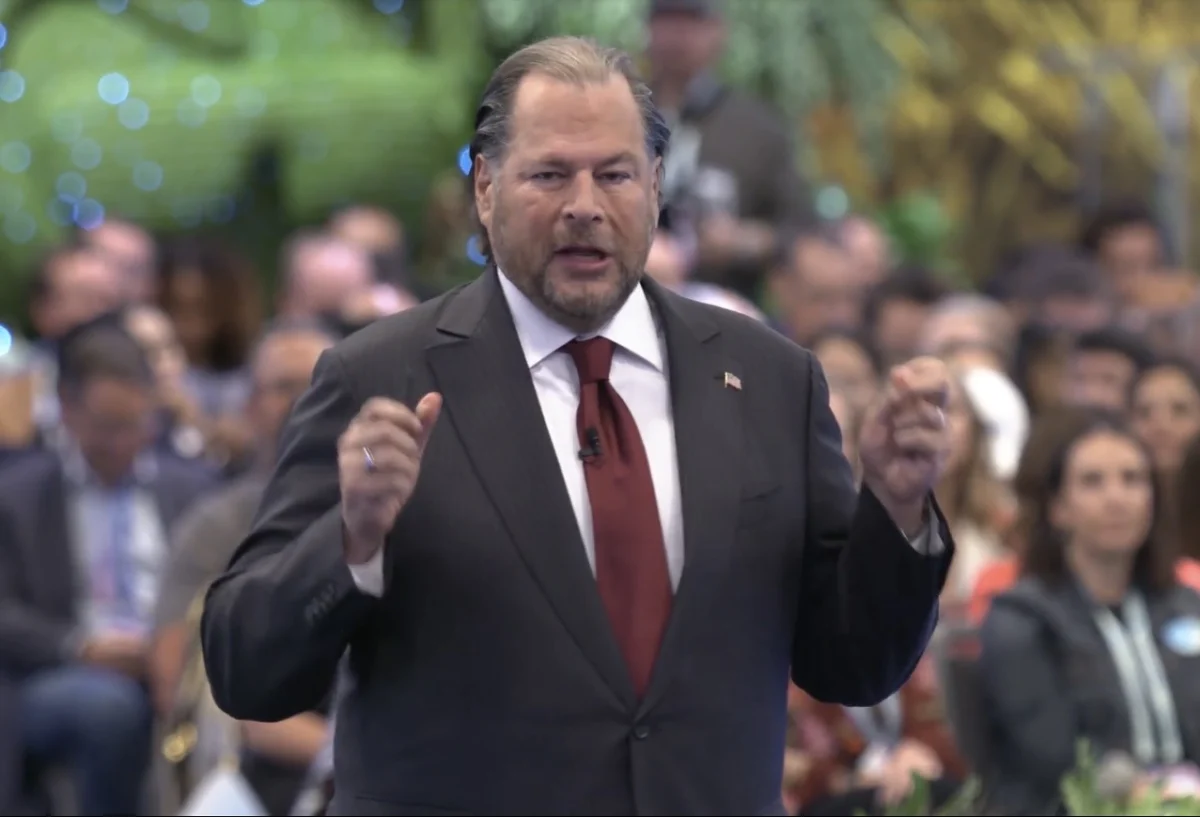

The curtains closed on Dreamforce 2026 in San Francisco this week, marking the end of another high-profile gathering for the cloud computing giant Salesforce. Amid a backdrop of rapid technological evolution and intense market competition, Chief Executive Officer Marc Benioff used the final day of the conference to outline what he terms the "year of the interface." This strategic pivot introduces a radically redesigned enterprise software experience aimed at bridging the gap between theoretical artificial intelligence capabilities and practical daily operations for global businesses.
The announcement positions Salesforce at the forefront of a broader industry transition. According to Benioff, the enterprise sector is currently navigating its fifth major technological paradigm shift, following the historical progressions from IBM mainframes and mini-computers to client-server computing and, most recently, cloud computing. As organizations seek to integrate advanced automation and machine learning into their core workflows, Salesforce is championing an agnostic interface model designed to help administrators manage complex systems, build proprietary applications, and execute daily operational tasks seamlessly.
Context and Chronology of the 2026 Pivot
Dreamforce has historically served as a bellwether for enterprise software trends, drawing tens of thousands of professionals, developers, and corporate leaders to the Moscone Center in San Francisco. The 2026 conference arrived at a critical juncture for the artificial intelligence sector. While consumer adoption of generative AI tools has surged since late 2022, enterprise deployment has faced persistent hurdles regarding integration, security, and measurable return on investment.
Throughout the multi-day event, Salesforce executives rolled out successive layers of their new interface strategy, beginning with early previews of unified agentic AI tools earlier in the week. By the final day, Benioff emphasized that the company’s objective is to provide a definitive technological North Star, much as it has historically done with its pioneering cloud-based architecture and its philanthropic 1/1/1 corporate giving model. Industry observers noted that while initial messaging regarding the newly branded interface systems felt somewhat diffuse during the opening keynote, the company refined its narrative considerably by the conclusion of the conference, presenting a cohesive vision for enterprise administration by late Friday.
Bridging the Gap Between Hype and Reality
A central theme of Benioff’s closing remarks was the disconnect between the external tech commentary—often amplified by social media platforms and technology podcasts—and the operational realities faced by corporate executives on the front lines. Wall Street analysts and industry pundits have frequently fixated on the "SaaSpocalypse" narrative, suggesting that foundation model developers will eventually render traditional software-as-a-service providers obsolete.
Benioff dismissed these concerns as speculative noise disconnected from actual corporate buying patterns. Drawing on his interactions with chief executive officers, chief information officers, and chief operating officers, he argued that enterprise customers do not prioritize shopping around for bespoke foundational AI models. Instead, core enterprise architecture remains anchored around three primary software pillars: back-office systems managed by providers like SAP, productivity suites from Microsoft, and front-office customer relationship management operations handled by Salesforce.
According to enterprise software market data, the vast majority of global businesses lack the specialized internal expertise and computational infrastructure required to deploy standalone foundation models directly. Consequently, market analysts project that packaged software applications will remain the primary vehicle through which businesses consume and monetize artificial intelligence capabilities over the next decade. By embedding advanced intelligence directly into familiar administrative and operational workflows, Salesforce aims to capture this sustained enterprise demand.
Prioritizing Core CRM Dominance
Despite the aggressive push into autonomous agentic workflows and advanced interface designs, Salesforce leadership underscored the imperative of maintaining absolute dominance in its foundational market. Benioff stressed that CRM leadership remains the company’s primary raison d’être, noting that commercial success depends on a strict hierarchy of operational priorities.
To illustrate this strategy, Salesforce highlighted major global deployments, such as its ongoing standardization agreement with German manufacturing conglomerate Siemens. In highly competitive international markets where rivals continually attempt to displace established software standards, securing the core CRM layer is a prerequisite for introducing advanced technological upgrades. Company executives reiterated that true enterprise transformation can only occur once a stable, trusted foundation is firmly established across sales, service, and marketing departments.
Market researchers observe that Salesforce commands the largest market share in the global CRM sector, consistently outpacing competitors including Microsoft, Oracle, and SAP in front-office applications. Maintaining this position requires balancing cutting-edge innovation with reliable, everyday utility for millions of corporate end-users who rely on the platform to close transactions and service customer accounts.
Broader Industry Implications and Outlook
The debates at Dreamforce 2026 underscored a broader industry reckoning regarding AI ethics, platform integration, and the practical utility of enterprise software. As companies evaluate their digital transformation budgets, the demand for measurable efficiency gains has largely eclipsed the novelty of standalone generative AI chat interfaces.
Salesforce’s introduction of flexible, multi-vendor agnostic interfaces reflects an emerging consensus that enterprise software must adapt to user preferences rather than forcing organizations into rigid technological ecosystems. Whether the newly introduced interface paradigms achieve widespread enterprise adoption by the time the tech community reconvenes for Dreamforce 2027 remains to be seen. However, the event has successfully shifted the industry dialogue from theoretical model capabilities to the pragmatic delivery of unified business transformation.
