
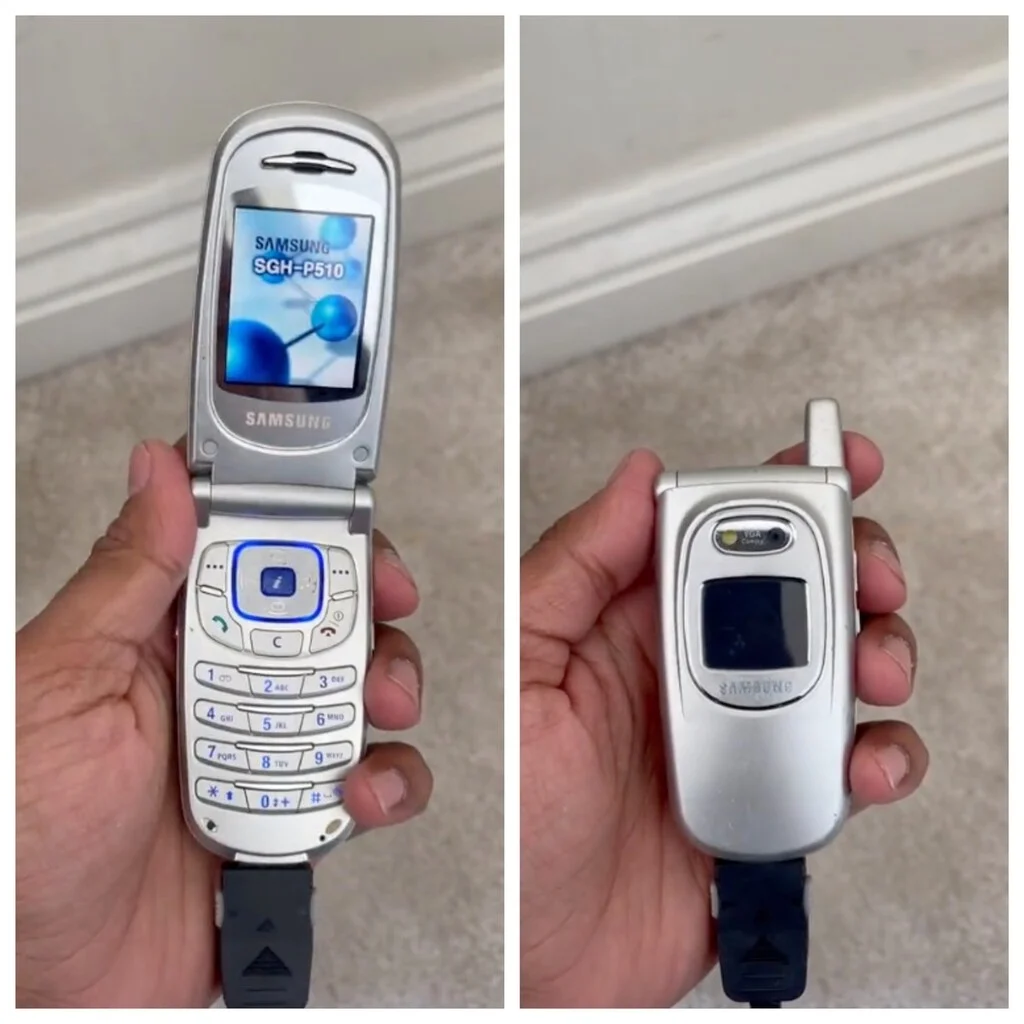

The year 2004 marked a pivotal moment in the digital landscape, especially within the Spanish-speaking tech community, as Xataka, a prominent digital media outlet, commenced its journey. Founded by Antonio Ortiz and Julio Alonso, Xataka quickly established itself as a go-to source for dissecting the technology of the era. This period, two decades ago, offers a fascinating look back at a mobile phone market vastly different from today’s, characterized by innovation in form factors and a burgeoning quest for unique user experiences. While devices like the Nokia 6820, notable for its Blackberry email integration, and the Samsung i730, an early adopter of Wi-Fi, made their debut, the overarching trend pointed towards clamshell-style foldable phones. Icons such as the Motorola RAZR V3 and the Samsung E310 dominated the market, captivating consumers with their sleek designs and compact portability. Amidst this competitive environment, a particular device, the Samsung P510, emerged, not just as another flip phone but as a marvel of mechanical engineering, boasting a distinctive automatic opening mechanism that garnered significant attention.
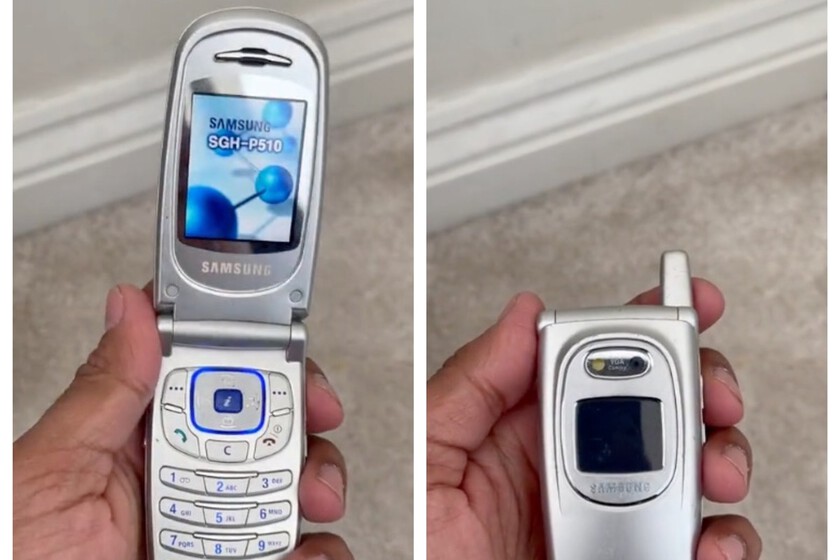
The Samsung P510, while sharing aesthetic similarities with its contemporary, the Samsung E310, distinguished itself through a singular feature: a motorized hinge that allowed the phone to open with the press of a button. This innovation, launched in select markets, provided an experience that was both futuristic and highly engaging, drawing parallels to the "flip phones" of today’s foldable market, albeit in a much simpler, pre-smartphone context. The device’s ability to spring open automatically, a feature often romanticized in popular culture, was a tangible reality for the P510, setting it apart from the manual flip mechanisms prevalent at the time.
Samsung’s Early Dominance in Foldable Design and Mechanical Innovation
Long before the advent of the Galaxy Z Fold and Z Flip series, Samsung had already established itself as a significant player in pushing the boundaries of mobile phone design, particularly in the realm of foldable devices. The P510 stands as a testament to this enduring commitment, showcasing the company’s propensity for integrating novel mechanical features into its products. The core appeal of the P510 lay in its motorized opening, a seemingly minor detail that, in 2004, represented a significant leap in user interaction and product sophistication. This automated action transformed the simple act of answering a call or checking a message into a miniature spectacle, a moment of technological flair that resonated deeply with consumers.
The "wow" factor generated by the P510’s motorized mechanism was not merely anecdotal; it translated into tangible consumer fascination. Veteran technology journalist Nils Raetting recounted his experience working in a Saturn electronics store (a chain acquired by MediaMarkt in 1990) during the P510’s release. For Raetting, the phone’s unique feature was a source of both wonder and mild exasperation. He observed firsthand the irresistible allure of the P510’s automatic opening button. Customers, particularly curious youngsters, would flock to the display model, picking it up repeatedly to experience the satisfying, motorized flick. This incessant engagement, driven more by curiosity than genuine purchasing intent, led to an extraordinary measure: the removal of the battery from the demonstration unit to prevent its premature wear and tear. This anecdote powerfully illustrates the captivating nature of the P510’s design, highlighting how a single mechanical innovation could create such a widespread, almost compulsive, user interaction.
The Mobile Landscape of 2004: A Context for Innovation
To fully appreciate the Samsung P510’s impact, it’s crucial to understand the broader mobile phone market in 2004. This was a year characterized by the mature feature phone market and the nascent stages of smartphone development. Nokia held a dominant position globally, known for its robust and user-friendly devices like the Nokia 3310 (though older, its legacy was strong) and newer camera phones. Motorola was experiencing a significant resurgence, largely propelled by the immense success of the RAZR V3, a device that became a cultural icon for its ultra-thin profile and metallic finish, further solidifying the flip phone’s appeal. Other key players included Sony Ericsson, Siemens, and LG, all vying for market share with diverse designs and feature sets.
Connectivity in 2004 was primarily 2G (GPRS/EDGE), with 3G networks still in their infancy in many regions. Mobile internet access was limited, often slow, and accessed via WAP browsers. Cameras on phones were becoming standard, though resolutions were typically VGA or 1.3 megapixels. Color screens were common, but touchscreens were rare and mostly confined to early PDA-phone hybrids running Windows Mobile or Palm OS. Battery life was a critical selling point, often measured in days rather than hours. In this environment, design and novel features were paramount differentiators. The P510’s motorized opening was a prime example of such differentiation, a sophisticated mechanical addition in an era where software sophistication was still rudimentary.
Technical Prowess and Market Positioning: Supporting Data
The Samsung SGH-P510, as it was officially known, was a compact and relatively lightweight device for its time, typically weighing around 90-100 grams. It featured a 1.9-inch CSTN display with 128×160 pixels, capable of displaying 65K colors – a standard offering for mid-range phones then. While it didn’t boast a high-resolution camera, it often included a basic VGA camera, sufficient for casual photos. Connectivity was limited to GPRS for data, supporting WAP browsing and rudimentary email. It typically offered polyphonic ringtones and basic organizer functions. The internal memory was minimal, often just a few megabytes, as external storage was not yet common in most feature phones.
Samsung’s strategy with the P510, and indeed many of its phones in the early 2000s, was to offer innovative features and stylish designs to compete with the market leaders. While Nokia focused on reliability and widespread appeal, and Motorola on design and thinness, Samsung often explored unique mechanical and aesthetic variations. The motorized flip mechanism was a bold move, adding complexity and potentially cost, but it provided a strong selling point for consumers looking for something truly distinctive. In 2004, Samsung was steadily growing its market share, challenging established players, and devices like the P510 helped solidify its reputation for innovation and quality. Its sales performance, while not reaching the mass market volumes of a Nokia 3310 or Motorola RAZR, was significant enough to be remembered, especially for its unique feature.
The Evolution of Mobile Form Factors: A Timeline
The journey of mobile phone design has been a fascinating one, marked by continuous innovation in form factor.
- Early 1990s: The "brick" phone era, characterized by bulky, rectangular devices.
- Late 1990s: Smaller, lighter candy bar phones became dominant (e.g., Nokia 3210/3310).
- Early 2000s: The rise of alternative form factors:
- Flip phones (Clamshells): Gained immense popularity for their compactness and ability to protect the screen and keypad. The Motorola StarTAC (1996) was an early pioneer, but the trend truly exploded in the early 2000s.
- Slider phones: Offered a larger screen and a hidden keypad (e.g., Siemens SL45, Nokia 8110 "banana phone").
- Swivel phones: Devices with screens that could twist or rotate, adding versatility.
- Mid-2000s: The Motorola RAZR V3 (2004) redefined flip phones with its ultra-slim profile and premium materials, setting a new design benchmark. The Samsung P510, launched in the same year, contributed to this era of mechanical exploration, showcasing a different kind of flip mechanism.
- Late 2000s: The advent of the iPhone (2007) marked a paradigm shift towards full touchscreen smartphones, gradually sidelining mechanical keypads and complex form factors.
- 2010s: Dominance of the rectangular slab smartphone, with innovation focusing on screen size, camera technology, and processing power.
- Late 2010s/Early 2020s: The resurgence of foldables, driven by flexible screen technology. Samsung, leveraging its long history of exploring innovative form factors, once again took a leading role with its Galaxy Fold and Z Flip series, bringing the "flip" concept back with a modern, smart twist.
The P510’s motorized opening, while a mechanical marvel of its time, also presented engineering challenges. Such complex mechanisms could be prone to wear and tear, consume more battery power, and add to the device’s overall weight and thickness. These trade-offs were carefully considered by manufacturers, balancing novelty with practicality.
Broader Implications: Design, User Experience, and Brand Identity
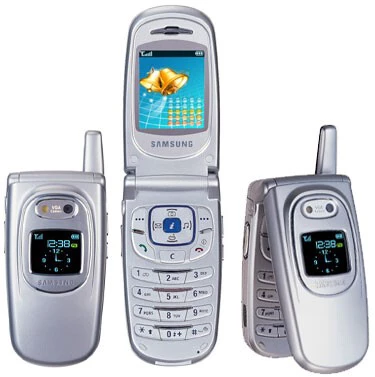
The Samsung P510, with its distinctive motorized flip, played a subtle yet significant role in shaping Samsung’s brand identity. It reinforced the company’s image as an innovator, willing to experiment with bold designs and sophisticated engineering. This willingness to push boundaries, even with features that might seem niche or overly complex, contributed to a perception of Samsung as a technologically advanced and forward-thinking brand. This reputation would prove invaluable as the mobile industry evolved, particularly in its later ventures into smartphones and ultimately, modern foldables.
From a user experience perspective, the P510 highlighted the enduring appeal of unique tactile and interactive features. In an age dominated by touchscreens, the physical satisfaction of a motorized opening mechanism tapped into a different kind of sensory pleasure. It was a talking point, a demonstration of technological prowess that delighted users and observers alike. The lessons learned from devices like the P510—about the balance between novelty, durability, and practical utility—continue to inform the development of today’s complex foldable smartphones. The modern foldable’s focus on hinge durability, the seamlessness of the fold, and minimizing the crease are direct descendants of the challenges and aspirations of early mechanical phone designs.
The Enduring Legacy: A Collector’s Item and a Precursor to Modern Foldables
Two decades on, the Samsung P510 remains more than just a relic of a bygone era; it is a sought-after piece of mobile history. Its unique motorized mechanism ensures its status as a collector’s item in retro tech markets. Listings on platforms like eBay often highlight its "fully motorized flip, rare" attribute, underscoring its continued allure. This enduring interest speaks to the impact of its innovative design, which transcended mere functionality to become a memorable aspect of the device itself.
While the current obsession in the foldable phone market revolves around screen thickness, hinge robustness, and the invisibility of the crease, the P510 reminds us that innovation in "foldable" phones once centered on the sheer act of opening. The journey from a simple, mechanically assisted flip phone to the sophisticated, flexible-display smartphones of today showcases a remarkable evolution in mobile technology. Samsung’s consistent presence at the forefront of this evolution, from the P510 to the Galaxy Z series, illustrates a continuous drive to redefine what a mobile phone can be. The P510 was a bold experiment, a glimpse into a future where phones could interact with users in unexpected and delightful ways, foreshadowing the complex, transformative designs that now characterize the cutting edge of mobile innovation.
In conclusion, the Samsung P510 may not have been the best-selling phone of 2004, but its distinctive motorized opening mechanism etched it into the annals of mobile history. It stands as a testament to Samsung’s early commitment to design innovation and mechanical prowess, a commitment that continues to define its leadership in the contemporary foldable phone market. The P510’s story is a vivid reminder that the pursuit of unique user experiences, whether through a simple button press or a flexible display, has always been a driving force in the ever-evolving world of mobile technology.
