
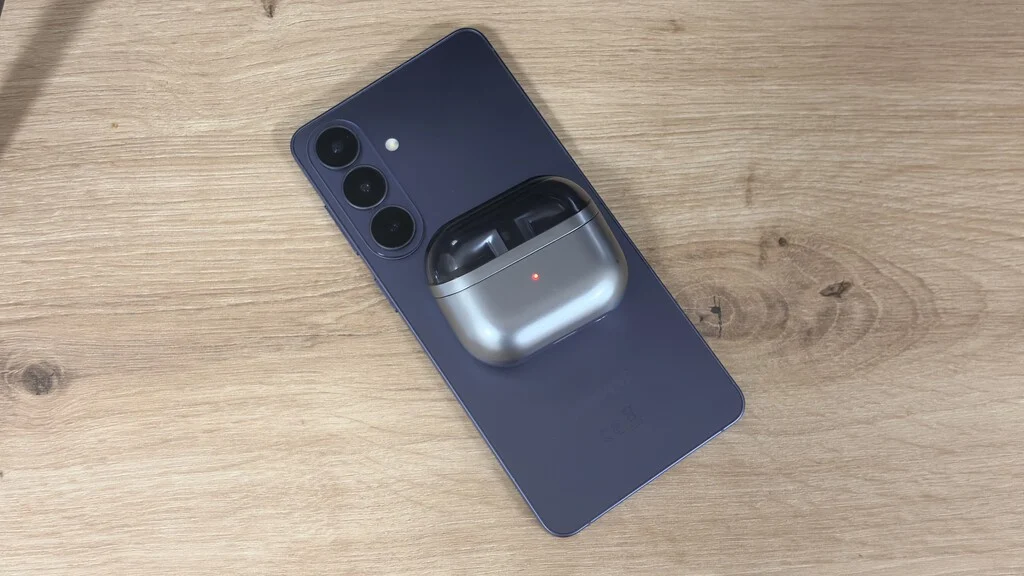

The subtle yet powerful capability of Wireless PowerShare, a feature deeply integrated into Samsung’s high-end Galaxy smartphones, often remains an unheralded utility, frequently coming to light through serendipitous discovery. Many users first encounter this functionality when their phone and a compatible accessory, such as wireless earbuds, are inadvertently placed together, triggering an unexpected charging icon. This moment of accidental revelation highlights a significant gap in user awareness regarding a feature designed for convenience and connectivity within the modern mobile ecosystem. While devices like the Samsung Galaxy S26 and S26+ proudly showcase this innovation, its true potential and optimal use cases are often misunderstood or entirely unknown by a substantial portion of the user base. The challenge lies not in the feature’s efficacy, which is robust within its design parameters, but rather in the communication and education surrounding its practical application and the specific scenarios where it truly excels.
The Genesis and Evolution of Wireless PowerShare
Wireless charging technology itself has a rich history, evolving from niche applications to a mainstream convenience. The Qi standard, developed by the Wireless Power Consortium (WPC), has been instrumental in this widespread adoption, providing a universal platform for inductive power transfer. Samsung, a prominent member of the WPC, has been at the forefront of integrating wireless charging into its flagship devices for years, offering both standard wireless charging for the phone itself and, more recently, the ability for the phone to act as a charger.
Wireless PowerShare, specifically, made its debut with the Samsung Galaxy S10 series in early 2019. At the time, it was hailed as a significant step towards greater device interoperability and a testament to Samsung’s commitment to enhancing the user experience. The initial rollout generated considerable buzz, showcasing Samsung’s vision of a self-sustaining device ecosystem where a smartphone could not only consume power but also share it intelligently. Subsequent generations of Galaxy flagships, including the S20, S21, S22, S23, S24, and the hypothetical S26 series mentioned in the original context, have continued to refine and integrate this feature as a standard offering. This chronological integration underscores Samsung’s long-term strategic investment in making its smartphones the central hub for personal electronics, capable of supporting and powering ancillary devices without the constant need for multiple dedicated chargers. The consistent inclusion across flagship models indicates that Samsung views PowerShare not as a gimmick, but as a core component of its premium device experience, albeit one that requires better user education to fully leverage.
Understanding the Mechanics: How PowerShare Works
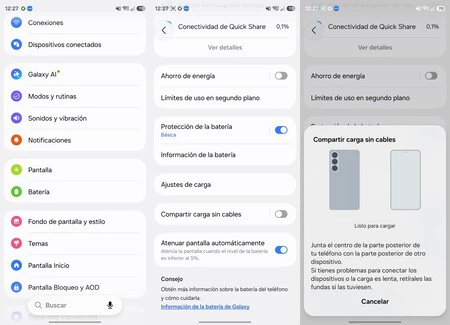
At its core, Wireless PowerShare transforms a compatible Galaxy smartphone into a portable wireless charging pad. The underlying principle is straightforward: the phone utilizes its built-in wireless charging coil in reverse, transmitting power rather than receiving it. Activation is designed to be intuitive and quick, typically accessible through the quick settings panel—a swipe down from the top of the screen reveals a toggle for "Wireless PowerShare" or "Reverse Wireless Charging." Once activated, the user simply places another Qi-compatible device, such as earbuds, a smartwatch, or even another smartphone (though less ideal for this), onto the back of the Galaxy phone. The magnetic induction immediately initiates the energy transfer, indicated by a visual cue on the phone’s screen, often an icon signifying that power is being shared.
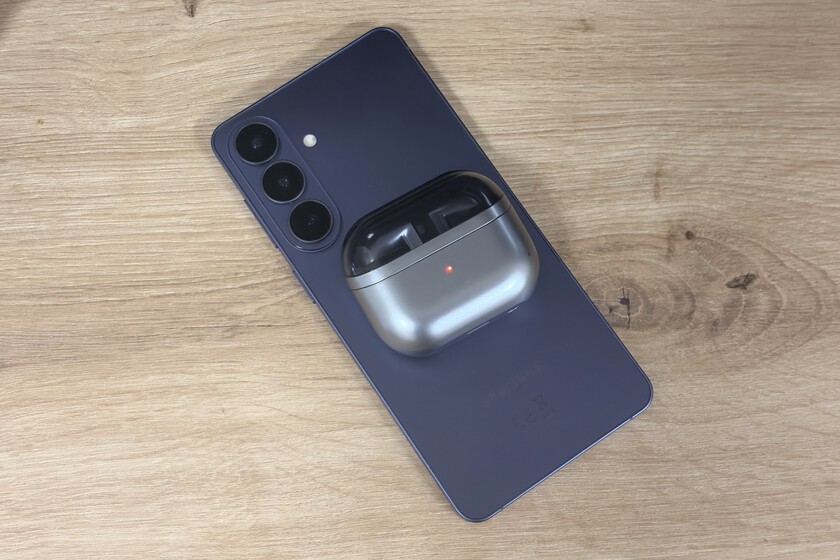
A crucial aspect of PowerShare’s design is its adherence to the universal Qi wireless charging standard. This broad compatibility means that users are not limited to Samsung-branded accessories; any device supporting the Qi standard can potentially receive a charge. This includes popular products like Apple AirPods, various smartwatches, and even small portable speakers, significantly expanding the feature’s utility beyond Samsung’s own ecosystem.
However, it is essential to manage expectations regarding the power output. Wireless PowerShare typically delivers power at a rate of approximately 4.5 Watts (W). To put this into context, many standard wireless charging pads for smartphones offer 7.5W, 10W, or even 15W, while wired fast chargers can reach 25W, 45W, or significantly higher. The 4.5W output of PowerShare is deliberately modest, optimized for smaller accessories with smaller batteries. This power level is perfectly adequate for "topping up" earbuds or a smartwatch to provide a few more hours of use, but it is demonstrably insufficient for rapidly recharging a power-hungry device like another smartphone. Attempting to fully charge another phone with PowerShare would be a slow, inefficient process, consuming a disproportionate amount of the host Galaxy phone’s battery relative to the charge delivered. This design choice highlights PowerShare’s role as an emergency or supplemental charging solution, rather than a primary power source.
Battery Dynamics, Efficiency, and Safety Protocols
The physics of wireless power transfer inherently involve energy loss. When power is transmitted wirelessly, some energy dissipates as heat during the conversion process and as it travels through the phone’s casing and the receiving device’s casing. This means that the percentage of battery lost by the Galaxy phone will not translate into an equivalent percentage gain on the receiving device. For instance, if the Galaxy phone expends 10% of its battery, the receiving earbuds might only gain 5-7% of their capacity, depending on various factors like alignment, device temperature, and specific hardware efficiencies. This inefficiency is a fundamental characteristic of inductive charging, both in standard wireless charging pads and in reverse wireless charging systems.
To safeguard the host device and ensure a practical user experience, Samsung has integrated critical safety protocols into Wireless PowerShare. The most significant of these is an automatic deactivation threshold: if the Galaxy phone’s battery level drops below 30%, PowerShare will automatically switch off. This intelligent cutoff prevents the host phone from running out of power entirely while attempting to charge an accessory, ensuring that the primary device remains functional. This threshold is a practical design decision, balancing the utility of charging an accessory with the imperative of maintaining the phone’s core functions for the user.
An interesting exception to this energy sacrifice occurs when the Galaxy phone itself is plugged into a wall charger. In this scenario, PowerShare can be activated without significant impact on the phone’s charge level. The phone continues to receive power from the wall outlet while simultaneously transmitting a portion of that incoming energy to the wirelessly charging accessory. This setup effectively transforms the Galaxy phone into a multi-device charging hub, allowing users to charge their phone and an accessory simultaneously using just one wall adapter and cable. This particular use case maximizes the convenience of PowerShare, eliminating the "sacrifice" aspect and making it an even more appealing feature for users who carry multiple Qi-compatible devices.
Optimal Use Cases and Strategic Utility
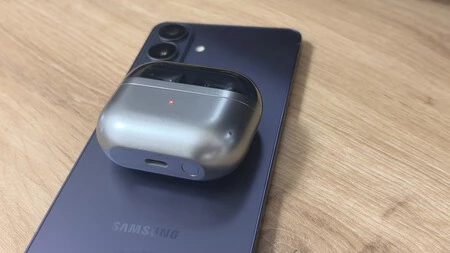
The true value proposition of Wireless PowerShare becomes evident in specific, often urgent, scenarios. Imagine being about to leave for a commute and realizing your Galaxy Buds3 are completely dead, with no wall charger or power bank immediately available. Placing them on the back of your Galaxy phone for even a few minutes can provide enough charge to last an important call or the duration of your journey. Similarly, a smartwatch that unexpectedly runs out of battery during a busy day can get a quick boost, allowing it to track fitness metrics or receive notifications for a few more hours. These "just-in-time" charging moments are where PowerShare shines, acting as a crucial emergency power source that leverages a device already in hand.
The feature is particularly beneficial for:
- True Wireless Earbuds: Small batteries that deplete quickly, often forgotten to be charged.
- Smartwatches: Similarly small batteries, often used throughout the day, benefiting from a quick top-up.
- Fitness Trackers: Devices that might not always be near their dedicated charging cradle.
- Small, Low-Power Qi Accessories: Any other small, compatible device that needs a minor charge to function.
Conversely, attempting to use PowerShare for routine or substantial charging of another smartphone is largely impractical. The low power output (4.5W) means that charging another phone would be excruciatingly slow, and the significant energy loss coupled with the host phone’s battery drain makes it an inefficient and unsustainable practice. For regular smartphone charging, dedicated wireless charging pads or wired fast chargers remain the superior and more efficient options. This distinction is vital for user understanding: PowerShare is a utility for convenience and emergencies for small accessories, not a primary power bank replacement for larger devices.
Market Context and Competitive Landscape
While Samsung was an early innovator with Wireless PowerShare, the concept of reverse wireless charging has seen adoption by other manufacturers. Huawei, Xiaomi, and other Android OEMs have integrated similar features into their flagship devices, often with varying power outputs and branding. For example, Huawei’s Mate series and P series have offered reverse wireless charging for several generations, sometimes with slightly higher power outputs than Samsung’s initial implementation.
Apple, while offering MagSafe wireless charging for its iPhones and accessories, has taken a different approach. Instead of the iPhone acting as a reverse wireless charger for other devices, Apple provides accessories like the MagSafe Battery Pack, which magnetically attaches to the iPhone to provide additional power. This highlights a divergence in philosophy: Samsung emphasizes the smartphone as a versatile power hub for its ecosystem, while Apple focuses on optimized, dedicated accessory charging solutions.
The broader implication of features like PowerShare extends to the growing trend of device interoperability and ecosystem integration. As users accumulate more smart devices—phones, watches, earbuds, smart rings, etc.—the need for seamless charging solutions becomes paramount. PowerShare contributes to Samsung’s broader ecosystem strategy, making its Galaxy phones even more central to the user’s digital life by enabling them to power other Samsung-branded or Qi-compatible accessories. This subtly encourages users to stay within the Samsung ecosystem or at least to prioritize Qi-compatible accessories, enhancing brand loyalty and perceived value.
Challenges in User Adoption and Awareness
Despite its utility, Wireless PowerShare remains a feature that many users are either unaware of or underutilize. Several factors contribute to this:
- Lack of Prominent Marketing: While mentioned in product launches, PowerShare is often overshadowed by camera improvements, processor upgrades, or screen technologies in marketing campaigns.
- Complexity of Explanation: The nuances of its power output, efficiency, and optimal use cases require more detailed explanation than a simple marketing bullet point.
- User Habits: Many users are accustomed to traditional charging methods and may not think to use their phone as a charger.
- Perceived Inconvenience: The act of placing devices precisely on the back of the phone and the temporary unavailability of the phone during charging can deter some users.
- Battery Anxiety: Concerns about draining the host phone’s battery might lead users to avoid the feature, even with the 30% safety threshold.
Overcoming these challenges requires better in-device tutorials, clearer marketing messages emphasizing specific use cases (e.g., "Never run out of earbud battery again on your commute!"), and potentially more intuitive activation methods.
Future Prospects and Potential Enhancements
The trajectory of wireless charging technology suggests several potential advancements for Wireless PowerShare. Future iterations could see:
- Increased Power Output: While still prioritizing smaller accessories, a slight increase in wattage (e.g., to 7.5W or 10W) could make it more versatile for a wider range of accessories without significantly impacting the host phone’s battery life.
- Improved Efficiency: Ongoing research in wireless power transfer aims to reduce energy loss, meaning more of the host phone’s battery could translate into charge for the receiving device.
- Enhanced Alignment and Detection: Better guidance for placing devices and more robust detection mechanisms could improve the user experience.
- Integration with Smart Home Devices: Imagine a scenario where a Galaxy phone could provide a quick charge to a smart home sensor or a small IoT device in a pinch, further expanding its utility.
- Software Intelligence: More sophisticated software could learn user habits, suggesting PowerShare activation when a paired accessory is low on battery and no other charger is detected.
Ultimately, Wireless PowerShare is more than just a technological gimmick; it represents a forward-thinking approach to device interoperability and user convenience. It’s a prime example of technology that, while not central to daily interaction, serves as an invaluable "lifesaver" when unforeseen circumstances arise. Like many advanced features embedded in our smart devices, its true genius lies in its quiet readiness, waiting to provide assistance precisely when it is most needed, transforming a premium smartphone into an indispensable, multi-faceted tool in the modern digital landscape. The ongoing challenge for Samsung and the industry at large will be to bridge the gap between technological capability and widespread user awareness, ensuring that such innovative features are fully appreciated and utilized to their maximum potential.
