
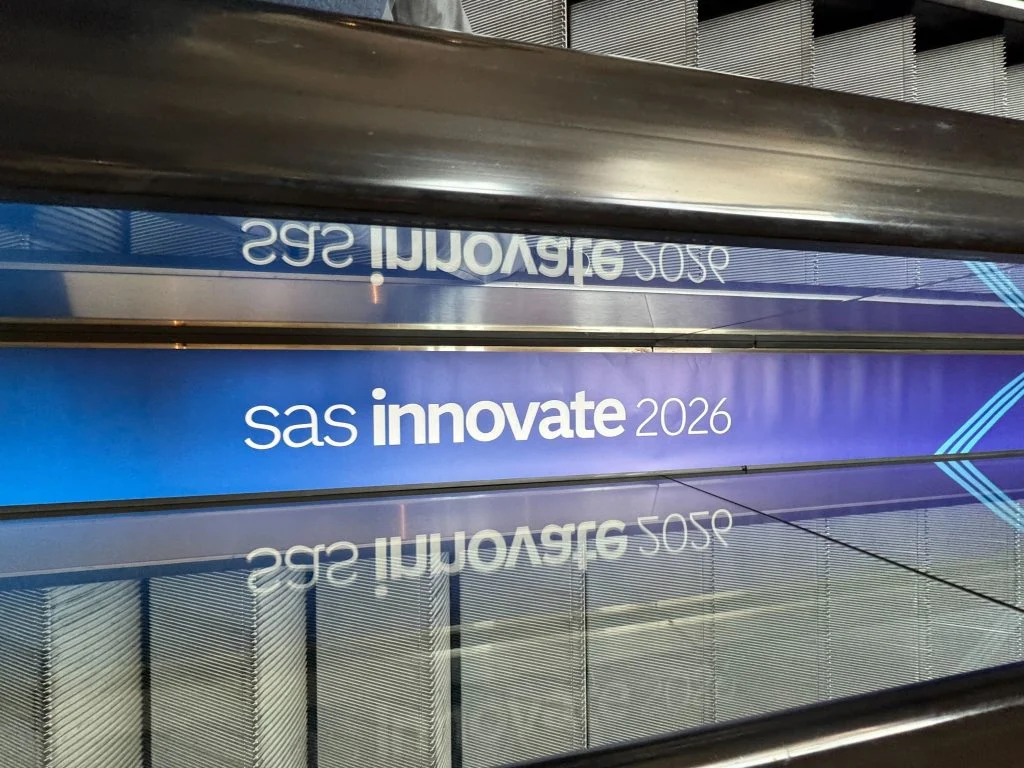

SAS, a stalwart in the analytics and decisioning software industry for half a century, is strategically pivoting its focus towards governance as its primary differentiator in the rapidly evolving landscape of AI agents. The company, long recognized for its robust solutions tailored for highly regulated sectors such as banking, insurance, government, and manufacturing, is now positioning its deep domain expertise and stringent governance frameworks as its enduring value proposition. This move comes at a critical juncture as AI agents begin to fundamentally reshape how enterprise software is consumed, suggesting that SAS’s established strengths may prove resilient, irrespective of the prevailing AI model architectures or agent frameworks that emerge.
The company’s vision was articulated by SAS CTO Bryan Harris during his keynote address at the SAS Innovate ’26 conference, held in Grapevine, Texas. Harris emphasized SAS’s foundational mission: "We empower people with technology to scale human observation and decision making. Since the beginning, SAS has been pioneering technological breakthroughs to help you close the information gap and gain a competitive advantage." However, he acknowledged the paramount importance of trust in the age of AI, particularly for the clientele SAS serves. "As AI agents reshape how enterprise software is consumed, the company’s deep domain expertise and governance might be the assets that hold their value, regardless of which model or agent architecture wins in this AI era," Harris stated, underscoring the need for businesses to have unwavering confidence in AI and AI agents. SAS’s core responsibility, as outlined by Harris, is to ensure that even complex, non-deterministic large language models (LLMs) deliver results that are not only accurate but also rigorously verified and validated.
"Our role is to really make sure we can give you a trusted answer in the moments that matter with our software—and agentic AI is just another evolution of that technology," Harris elaborated in a subsequent press briefing. This statement encapsulates SAS’s strategic intent to leverage its legacy of trust and reliability to navigate the complexities of AI integration, assuring clients that their critical decisions will be supported by dependable AI-driven insights.
SAS Analytics as an MCP-Callable Service: A Paradigm Shift
A cornerstone of SAS’s forward-looking strategy, and a feature that perhaps received understated attention at the event, is the introduction of the Viya MCP Server. This innovative component exposes SAS’s extensive analytics and decisioning capabilities as callable services, accessible by any external AI agent through the Model Context Protocol (MCP). Viya, SAS’s cloud-native data and AI platform, now acts as a robust, governed backend for a diverse range of AI agents.
This development allows organizations to integrate existing AI agents, such as Claude or Microsoft Copilot, or even custom-built agents, to directly invoke powerful SAS functionalities. For instance, an enterprise could seamlessly deploy a SAS fraud detection model or initiate a complex supply chain optimization process without compromising the rigorous governance layers that SAS has meticulously applied to its models and the underlying data. This approach circumvents the need for agents to bypass established security and compliance protocols, ensuring that all operations remain within a controlled and auditable framework.

While many vendors are adopting MCP to enable their agents to consume external tools, SAS’s more significant move is to offer its own sophisticated analytics engine as the very tool that these agents will call. This positions Viya not as a mere orchestrator of AI activities, but as the authoritative, governed repository of trusted models. It becomes the essential backend where reliable analytical processes reside, irrespective of the originating agent or user. This strategic positioning is crucial for enterprises in regulated industries, where the provenance and integrity of data and analytical models are non-negotiable.
Agents, Industry Models, and the Reinforcement of Governance
The introduction of the MCP server was not the sole agent-focused announcement from SAS. The company also unveiled an Agentic AI Accelerator, an open-source framework designed to facilitate the development of governed AI agents. Furthermore, SAS demonstrated a multi-agent system integrated within its CI360 marketing platform, showcasing how agents can enhance marketing campaign optimization. A notable addition is the Supply Chain Agent, engineered to drastically reduce the multi-day sales and operations planning cycles by enabling continuous optimization.
The distinctiveness of these industry-specific agents lies in their underlying architecture. Unlike many LLM wrappers, SAS’s agents are built upon a foundation of specialized, purpose-built models trained on domain-specific data. For example, SAS’s fraud detection models are honed using consortium data contributed by leading global banks, encompassing millions of documented fraud events across card, digital wallet, and application fraud. Similarly, the Supply Chain Agent leverages SAS’s established optimization models. The MCP Server then acts as the conduit, making these powerful, specialized capabilities accessible externally.
This philosophy of specialized, governed analytics extends to governance itself. SAS announced AI Navigator, a standalone Software-as-a-Service (SaaS) governance product scheduled for release in Q3 on the Azure Marketplace. AI Navigator is designed to inventory and govern AI use cases across a broad spectrum of vendors, including Claude, Copilot, and various open-source models, not exclusively SAS’s own offerings. This signifies SAS’s commitment to providing a unified governance solution that transcends its internal ecosystem.
Reggie Townsend, vice president of AI ethics, governance, and social impact at SAS, highlighted the strategic importance of this approach: "AI governance is too often thought of as a compliance measure. It’s a growth driver. Instead of fears of shadow AI putting the organization at risk, AI governance empowers people to push the limits of AI within a structured, transparent, and secure environment." This perspective reframes governance from a restrictive necessity to an enabler of innovation and competitive advantage.
A Chronology of SAS’s AI and Governance Evolution

SAS’s strategic evolution towards AI and governance has been a deliberate, multi-year journey. The company’s commitment to generative AI integration became evident in 2024 with the introduction of copilots within the Viya platform, alongside initiatives focused on synthetic data generation and the implementation of model cards to enhance model transparency. By 2025, SAS had begun developing agents, initially confining them to its decisioning platform, a phase described internally as "bread and butter" work. The recent announcements at SAS Innovate ’26 represent a significant expansion of this strategy, positioning the Viya platform as a foundational infrastructure that external agents can readily access.
The underlying bet for SAS is that control over trusted analytics and robust governance will remain paramount, even as AI agents become the primary user interface for many applications. This is a significant differentiator for a company of SAS’s enterprise scale, as many AI-native startups inherently integrate with large model providers. However, for established enterprise vendors, adopting such a strategy can present different leadership and architectural challenges. SAS’s approach aims to bridge this gap by offering a governed, reliable backend that complements the agility of agent-based interfaces.
Supporting Data and Market Context
The enterprise AI market is experiencing exponential growth, with projections indicating a significant surge in investments in AI governance and management tools. According to a recent report by MarketsandMarkets, the AI governance market size is projected to grow from USD 1.6 billion in 2023 to USD 5.3 billion by 2028, at a Compound Annual Growth Rate (CAGR) of 26.7%. This trend underscores the increasing awareness among enterprises of the risks associated with unregulated AI deployment and the growing demand for solutions that ensure compliance, ethical use, and operational integrity.
The financial services sector, a primary market for SAS, is at the forefront of AI adoption but also faces the most stringent regulatory scrutiny. Reports from PwC indicate that the financial services industry is expected to be one of the largest beneficiaries of AI, with the potential for trillions of dollars in economic value. However, this potential is inextricably linked to the ability of financial institutions to manage AI risks effectively. The complexity of financial transactions, the sensitivity of customer data, and the pervasive impact of regulatory frameworks like GDPR, CCPA, and Basel III necessitate a robust governance framework for any AI-driven decision-making processes.
SAS’s historical strength lies in its ability to navigate these complex regulatory environments. Its analytics solutions have long been instrumental in helping banks and insurers meet compliance requirements related to fraud detection, anti-money laundering (AML), credit risk assessment, and capital adequacy. The integration of AI agents into these workflows, without compromising existing governance structures, addresses a critical market need. The company’s deep understanding of these industry-specific challenges, coupled with its advanced analytics capabilities, positions it favorably to capture a significant share of the growing AI governance market within these sectors.
Analysis of Implications

SAS’s strategic emphasis on governance as its competitive moat in the agent era carries significant implications for the broader enterprise software landscape. By positioning Viya as a governed backend that external agents can call, SAS is effectively creating an ecosystem where its trusted analytical engines are accessible without requiring clients to abandon their existing, regulated workflows. This approach offers a pragmatic path for enterprises to adopt cutting-edge AI capabilities without exposing themselves to undue risk.
The introduction of AI Navigator as a standalone governance product further solidifies SAS’s commitment to providing comprehensive AI management solutions. This decoupling of governance from the core analytics platform allows for greater flexibility and scalability, enabling organizations to manage AI across diverse vendor solutions. This is particularly relevant in an era where enterprises are likely to adopt a multi-vendor AI strategy, leveraging the best-of-breed solutions for different tasks.
For regulated industries, SAS’s strategy provides a much-needed assurance. The ability to deploy AI agents that reliably interact with governed SAS models means that critical business functions, such as fraud detection or risk assessment, can be enhanced without sacrificing compliance or auditability. This could accelerate the adoption of AI in these sectors, driving efficiency and innovation while maintaining the highest standards of integrity and security.
Conversely, AI-native startups that may have focused primarily on LLM integration might need to consider how they can incorporate robust governance and domain-specific expertise into their offerings to compete effectively in the enterprise space. SAS’s move suggests that the future of enterprise AI will be characterized by a strong emphasis on trustworthiness and regulatory compliance, in addition to raw AI capabilities.
The long-term success of this strategy will depend on SAS’s ability to continuously adapt its governance frameworks to the evolving AI landscape and to effectively communicate the value of its integrated approach to a broad audience. However, by leveraging its half-century of experience in regulated industries and its deep commitment to trusted analytics, SAS appears well-positioned to not only navigate the agent era but to define its governance standards.
