
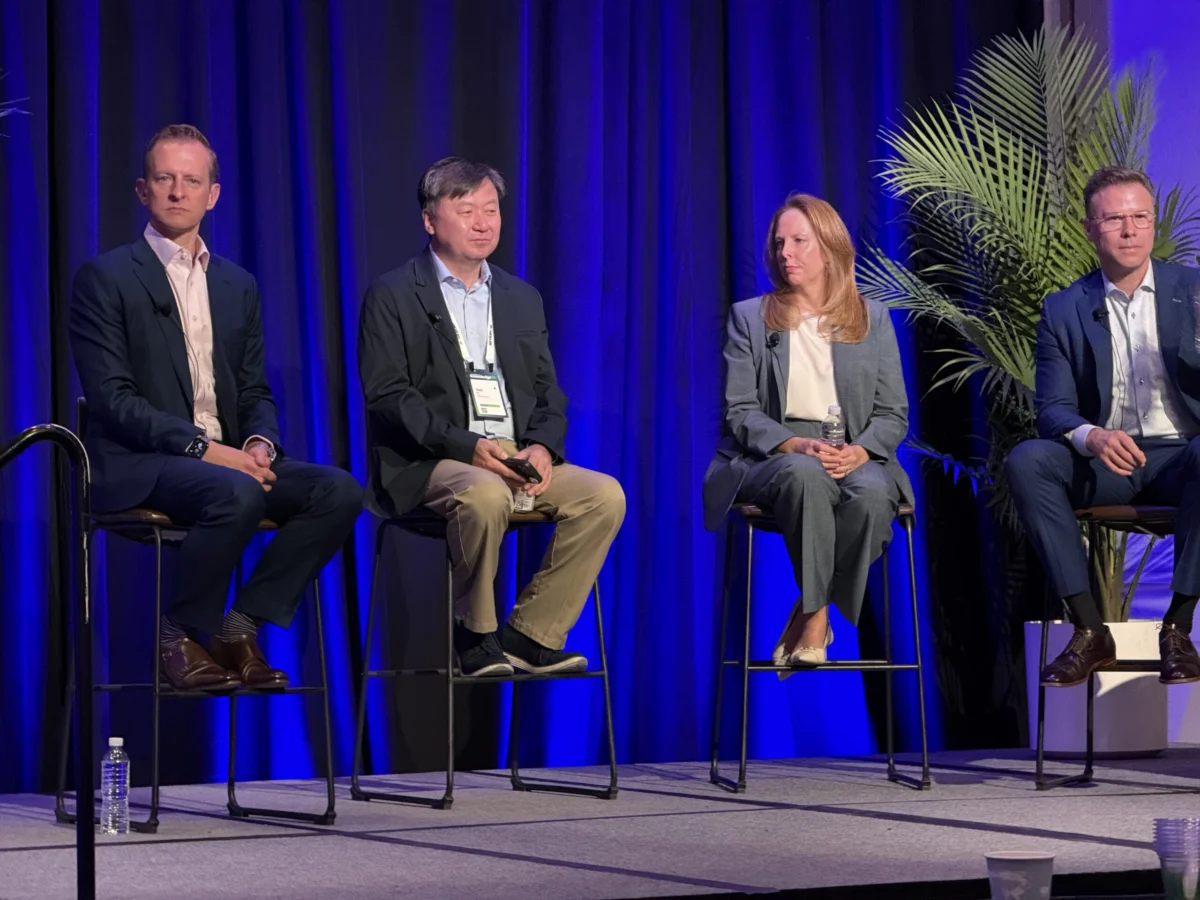

The annual Knowledge conference hosted by ServiceNow in Las Vegas has traditionally served as a barometer for the state of enterprise digital transformation. However, the 2026 iteration of the event marked a definitive shift in the industry’s narrative. While the company unveiled significant platform enhancements—most notably an expanded AI Control Tower and the aggressive integration of its Autonomous Workforce capabilities across every major enterprise function—the real story emerged from the corridors of customer experience. As ServiceNow positions itself as the "AI platform for business transformation," a high-level panel of global executives revealed that the primary obstacle to AI adoption is no longer the capability of the technology itself, but rather the structural and regulatory frameworks required to manage it at scale.
The conference, which drew thousands of IT leaders, developers, and C-suite executives to the sands of Nevada, centered on the transition from generative AI—which focuses on content creation—to agentic AI, which focuses on autonomous action. Despite the technical prowess on display, the customer panel moderated by Paul Fipps, President of Global Customer Operations at ServiceNow, provided a sobering reality check. Leaders from Standard Chartered Bank, the State of Hawaii, and Hitachi Energy emphasized that without rigorous governance and a fundamental deconstruction of business processes, the promise of an "autonomous workforce" remains an unreachable aspiration.
The Production Paradox: Why Pilots Stagnate
The current landscape of enterprise AI is characterized by a "production paradox." While organizations are prolific in creating pilots, very few are successfully transitioning these tools into live environments. Paul Fipps opened the discussion with two cautionary tales that underscored this trend. He cited an encounter with a Chief Technology Officer (CTO) at a major financial services firm who had developed 30 production-grade AI agents. Despite being operationally ready, none had been deployed. The reason was a lack of transparency; the CTO could not definitively answer what data the agents were accessing or how they were making decisions—a non-negotiable requirement in a regulated industry.
This sentiment was echoed in a second example involving a healthcare life sciences Chief Information Officer (CIO) who took the drastic step of cancelling 900 active AI pilots. The cancellation was not due to technical failure, but rather a lack of centralized control. The CIO expressed a refusal to allow "custom software running around the enterprise" without a unified governance plane. These anecdotes highlight the critical role of ServiceNow’s new AI Control Tower, which is designed to act as a centralized "control plane" for managing agents across disparate systems of record, ensuring that every autonomous action is logged, audited, and compliant with corporate policy.
Standard Chartered: A Blueprint for Regulated AI Deployment
Standard Chartered Bank, a global financial institution operating in some of the world’s most stringently regulated markets, provided a concrete example of how to overcome these hurdles. Melinda McKinley, Chief Operating Officer for enabling functions at the bank, detailed a governance-first approach that has allowed the institution to scale AI effectively. Her remit covers a vast array of internal operations, including HR, Supply Chain Management, and Group Transformation, providing a holistic view of how AI impacts diverse workforce segments.
The bank’s journey began with a virtual assistant pilot involving 50,000 employees across India and Hong Kong. The primary objective was case deflection—the ability of an AI to resolve queries without human intervention. The results were unprecedented: a 77% case deflection rate. This success enabled the bank to scale the deployment to 85,000 colleagues globally, achieving a 90% first-contact resolution rate for tasks related to knowledge management and case submission.
McKinley emphasized that these results were not accidental but the product of "intentional governance pathways." For Standard Chartered, AI deployment is treated with the same level of scrutiny as any other financial instrument. This includes clear accountability frameworks and decision-making protocols that ensure the AI operates within the "guardrails" of global banking regulations. By establishing this foundation, the bank has transitioned from simple query resolution to complex, colleague-facing agentic use cases that can proactively manage workflows.
Hitachi Energy and the Commercial Leverage of Productivity
The experience of Hitachi Energy highlights a different facet of the AI transition: the conversion of productivity gains into commercial power. Having joined ServiceNow’s Lighthouse program in 2024, Hitachi Energy had early access to the AI Control Tower, allowing them to co-develop the tool alongside ServiceNow engineers. Oliver de Wilde, Head of the ServiceNow Centre of Excellence at Hitachi, noted that this collaborative relationship ensured the platform was fit for the complexities of a global energy giant.
Following a massive organizational rebuild after Hitachi’s acquisition of ABB’s power grids business in 2020, the company utilized ServiceNow as the "ERP for the IT environment." This consolidation proved vital when AI was introduced. An enterprise-wide rollout in March 2025 reached 70,000 employees within six months, resulting in a tenfold increase in self-service adoption and a 25% reduction in IT service desk calls.
Crucially, de Wilde pointed out that these metrics provide "hard tangible savings" that translate into commercial leverage. When renegotiating contracts with third-party service providers, Hitachi Energy can now point to specific reductions in call volumes and ticket resolutions handled by AI, allowing for more aggressive procurement strategies. This shift moves AI from a "soft" productivity tool to a "hard" financial asset that impacts the bottom line through reduced operational expenditure and improved vendor management.
The Psychology of Change: Beyond the Technology
A recurring theme throughout Knowledge 2026 was the realization that change management is often the ultimate bottleneck. Standard Chartered’s McKinley revealed that their AI success was predicated on research conducted six or seven years prior to implementation. By studying employee sentiment, generational differences in tech adoption, and general "appetite" for automation, the bank was able to segment its workforce into distinct personas.
This segmentation allowed for a tailored approach to AI rollout. Rather than a one-size-fits-all training manual, the bank used "nudges" within daily workflows, gamification, and peer-to-peer use-case sharing to build trust. McKinley stressed that a virtual assistant is only as effective as the data it accesses. Consequently, the bank invested heavily in "knowledge management," ensuring that there are clear triggers for data updates and review approvals. Without this "data hygiene," employee trust in AI can erode instantly if the system provides outdated or incorrect information.
At Hitachi Energy, the cultural shift was evidenced by the evolution of the HR department’s perspective. Initially skeptical, the HR teams became the biggest advocates for AI after witnessing the IT department’s success. By first harmonizing the IT environment and demonstrating clear wins, the company created a roadmap that HR could then apply to its own processes, proving that internal advocacy is often more effective than top-down mandates.
Process Deconstruction: The "Process First, AI Second" Mantra
Perhaps the most significant strategic takeaway from the conference was the insistence on process redesign. Oliver de Wilde’s description of AI as the "cherry on top" of a well-fixed process resonated across the sessions. The consensus among the panelists was that automating a flawed process only leads to "faster failure."
McKinley described how Standard Chartered approached the onboarding of new employees. Instead of simply layering AI over the existing onboarding steps, the bank "deconstructed every task" across the entire journey. They analyzed pain points for both hiring managers and new recruits, breaking down tasks into specific skills. These skills were then categorized: some were assigned to AI, some to agentic automation, and some remained with humans. This "mass-scale work redesign" ensured that the remaining human roles were more meaningful and that the AI was applied only where it could provide maximum value.
Speed of Implementation in the Public Sector
The State of Hawaii provided a compelling case for the speed at which autonomous capabilities can be deployed, even in the traditionally slow-moving public sector. Tom Ku, IT Chief Operating Officer for the State of Hawaii, shared that ServiceNow’s approach compressed what is usually a multi-year procurement and implementation cycle into just a few weeks.
By focusing workshops entirely on business processes rather than technical specifications, the State reached User Acceptance Testing (UAT) within four weeks. This rapid deployment model challenges the notion that government agencies are inherently resistant to cutting-edge technology. It suggests that when the platform provides a sufficiently robust "out-of-the-box" framework, the primary hurdle remains the alignment of human stakeholders rather than the configuration of the software.
Analysis: The Implications of Agentic Autonomy
The shift toward an "Autonomous Workforce" as presented at Knowledge 2026 carries profound implications for the global economy. As AI agents move from "suggesting" actions to "executing" them, the role of the middle manager and the administrative professional is being fundamentally redefined. The data from Standard Chartered and Hitachi suggests that a significant portion of routine corporate labor—up to 70-90% in certain functions—can be handled by agentic systems.
However, the "production problem" identified by Paul Fipps serves as a critical check on this momentum. The future of enterprise AI will not be determined by who has the most powerful Large Language Model (LLM), but by who has the most robust governance framework. ServiceNow’s strategy to position itself as the "Control Tower" for these agents is a shrewd recognition of this market reality. By providing the "pipes" and the "policing" for AI, they are making themselves indispensable to the C-suite’s need for risk mitigation.
Chronology of the ServiceNow AI Evolution
The path to Knowledge 2026 has been marked by several key milestones in ServiceNow’s AI strategy:
- 2023: The launch of Vancouver release, introducing initial Generative AI Controller and Now Assist capabilities.
- Early 2024: Introduction of the "Lighthouse Program," allowing elite customers like Hitachi Energy and Siemens to co-develop AI solutions.
- Late 2024: The Washington, D.C. release, which expanded AI into the Creator and Workflow modules, allowing for low-code AI development.
- 2025: The shift toward "Agentic AI" and the introduction of the first iteration of the AI Control Tower.
- 2026 (Current): The full-scale launch of the Autonomous Workforce, marking the transition from AI as a tool to AI as a functional member of the organization.
Conclusion: The Road Ahead
As the Knowledge 2026 conference concludes, the mandate for enterprise leaders is clear. The "hype cycle" of AI has ended, and the "implementation cycle" has begun. Success in this new era requires a three-pronged approach: rigorous governance to satisfy regulators, deep process deconstruction to ensure efficiency, and a sophisticated change management strategy to maintain employee trust.
The insights from Standard Chartered, Hitachi Energy, and the State of Hawaii demonstrate that while the technology is ready, the organization often is not. The companies that will thrive are those that view AI not as a software upgrade, but as a catalyst for a total redesign of the nature of work. As ServiceNow continues to expand its platform’s reach, the boundary between "human" and "digital" labor will continue to blur, leaving governance as the only stable ground in a rapidly shifting corporate landscape.
