
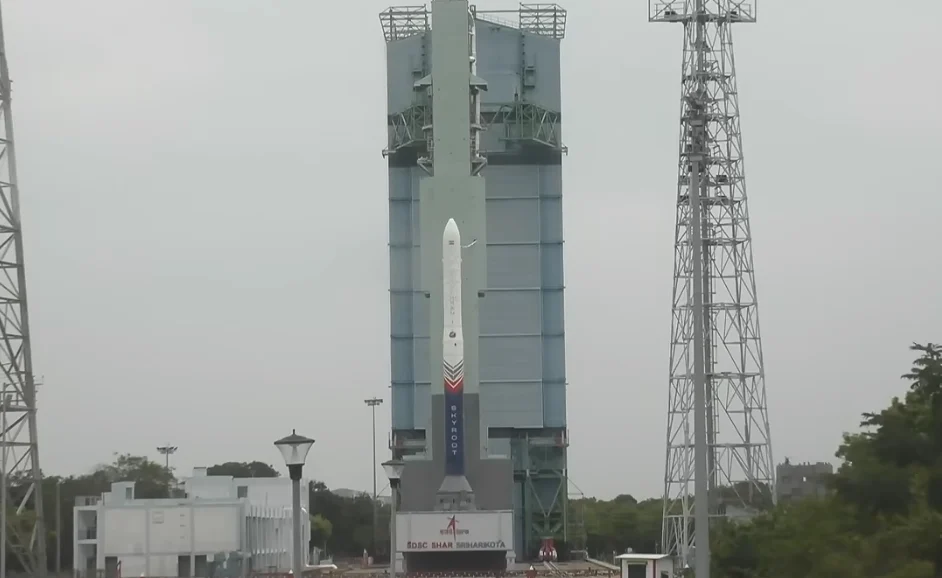

In a transformative moment for the global aerospace industry, Skyroot Aerospace successfully placed its Vikram-1 rocket into orbit over the weekend, marking the first time a private Indian company has achieved orbital delivery. The mission, which lifted off from the Satish Dhawan Space Centre (SDSC) on Sriharikota island at 12:05 p.m. local time on Saturday, July 18, signals a new era for India’s space sector as it transitions from a state-dominated monopoly to a competitive, multi-player ecosystem. The success of the Vikram-1 mission not only validates Skyroot’s proprietary technology but also cements India’s position as a rising hub for cost-effective, reliable small-satellite launch services.
Following a flawless ascent, Skyroot confirmed that the Vikram-1 vehicle reached its target altitude of 450 kilometers at a 60-degree inclination. The mission successfully deployed a diverse suite of technology demonstration payloads, including hardware from Grahaa Space, Cosmoserve, and the German-based DCubed, alongside Skyroot’s own SCOPE satellite. This orbital achievement follows years of rigorous testing and a successful suborbital flight in 2022, effectively proving that the Hyderabad-based startup can meet the stringent requirements of the international space community.
Technical Specifications and Mission Profile
The Vikram-1 is a multi-stage launch vehicle specifically engineered to cater to the burgeoning small-satellite market. Designed with a focus on rapid turnaround and cost-efficiency, the rocket features a carbon-fiber body and utilizes 3D-printed components in its propulsion systems. With a payload capacity of up to 350 kilograms to Low-Earth Orbit (LEO), the vehicle is positioned to compete with international players such as Rocket Lab and various Chinese commercial launchers.
During the Saturday mission, the rocket’s various stages performed according to telemetry predictions. The solid-propellant stages provided the initial thrust required to exit the dense layers of the atmosphere, while the liquid-fueled upper stage—utilizing Skyroot’s proprietary Raman engine—provided the precision required for orbital insertion and payload deployment. The Raman engine, named after the Nobel laureate C.V. Raman, is notable for its restart capabilities, allowing for multiple deployments in different orbital planes if necessary.
The selection of a 450 km orbit at a 60-degree inclination was strategic, providing the payload customers with an optimal environment for testing their respective technologies. Grahaa Space, an Indian startup focusing on high-resolution video streaming from space, and DCubed, which specializes in release mechanisms and actuators for small satellites, were among the key beneficiaries of this flight. The deployment of the SCOPE satellite also allows Skyroot to gather critical data on long-term orbital performance, which will inform the development of their next-generation vehicles.
The Evolution of Skyroot: From Vision to Orbit
Founded in 2018 by former Indian Space Research Organisation (ISRO) scientists Pawan Kumar Chandana and Naga Bharath Daka, Skyroot Aerospace was built on the premise that the future of space exploration lies in the hands of private enterprise. The company’s journey has been characterized by a series of rapid developmental milestones. In 2020, Skyroot became the first Indian company to successfully test a liquid-fueled rocket engine, followed by the successful test of a solid-fueled motor.
A pivotal moment occurred in November 2022 with the "Prarambh" mission. Using the Vikram-S suborbital rocket, Skyroot demonstrated its ability to manage launch logistics, telemetry, and flight safety protocols at the national launch facility in Sriharikota. That mission set the stage for the Vikram-1, which required significantly more complex guidance, navigation, and control (GNC) systems to achieve the velocities necessary for a stable orbit.
"What the world witnessed today is the result of years of work by our team, our partners, and suppliers across the country," stated Pawan Kumar Chandana, co-founder and CEO of Skyroot Aerospace, in a post-launch briefing. "It proves that India has the talent, the technology, and the industrial strength to build launch vehicles that meet the world’s standards and to serve the world from here."
Strategic Importance of the Indian Private Space Sector
The successful launch of Vikram-1 is the direct result of a major policy shift initiated by the Indian government in 2020. By opening the space sector to private players and establishing the Indian National Space Promotion and Authorization Center (IN-SPACe), the government created a regulatory pathway for startups to utilize ISRO’s infrastructure and expertise. This "co-opetition" model has allowed companies like Skyroot to bypass the decades of infrastructure building usually required for spaceflight, focusing instead on vehicle innovation.
Retired Lt. Gen. AK Bhatt, Director General of the Indian Space Association (ISpA), described the mission as a "defining milestone" for the nation. "By executing the nation’s first fully private orbital flight, Skyroot has shattered legacy boundaries, demonstrating that our domestic industry is primed to handle end-to-end space missions," Bhatt said. He further emphasized that the success of Vikram-1 sends a powerful signal to global sovereign and institutional funds, suggesting that the Indian private space sector is no longer a high-risk venture but a "highly bankable, globally competitive asset class."
The financial trajectory of Skyroot mirrors its technical success. In May 2026, the company secured $60 million in a funding round, propelling its valuation to $1.1 billion and making it India’s first "space unicorn." This influx of capital has been instrumental in scaling up manufacturing capabilities and accelerating the development of the Vikram-2 and Vikram-3 rockets.
Market Context: Addressing the Global Launch Bottleneck
The global small-satellite market is projected to grow exponentially over the next decade, driven by the demand for mega-constellations providing global internet, Earth observation, and climate monitoring. However, a significant "bottleneck" exists in the launch industry. Small-satellite operators often have to wait months or even years for "rideshare" opportunities on larger rockets like SpaceX’s Falcon 9, where they are secondary payloads with little control over the final orbit or launch schedule.
Skyroot aims to disrupt this market by offering dedicated launches for small satellites. By providing "on-demand" access to specific orbits, Skyroot can cater to customers who require precise orbital parameters that rideshare missions cannot provide.
"We don’t just want to be the player who does their first launch and takes a lot of time before coming back for the second launch," Chandana remarked. "We want to be able to do consecutive launches in a small timeframe, and then establish the reliability of the vehicle, and become a credible alternative in the small satellite launch market, and execute our customer commitments."
Future Outlook: Vikram-2 and Beyond
With the Vikram-1 now flight-proven, Skyroot is shifting its focus toward scaling its operations. The company is already deep into the development of the Vikram-2, which is targeted for an inaugural flight in 2027. The Vikram-2 is expected to have a significantly higher payload capacity, capable of lifting 1,000 kilograms to LEO. This would place Skyroot in a higher weight class, allowing it to serve a broader range of commercial and institutional clients.
Furthermore, Skyroot’s roadmap includes the Vikram-3, which aims to further increase capacity and introduce more reusable components to drive down costs. The company’s long-term strategy involves modularity, where different stages can be swapped or upgraded depending on the specific needs of a mission.
The success of Vikram-1 is also expected to catalyze further investment in the broader Indian SpaceTech ecosystem. Other startups, such as Agnikul Cosmos, are also working on innovative launch solutions, including 3D-printed semi-cryogenic engines. As these companies mature, India is likely to become a primary destination for international satellite operators seeking a balance between high-end technical reliability and the competitive pricing structures inherent in the Indian manufacturing sector.
Conclusion and Industry Impact
The Vikram-1 mission represents more than just a successful rocket launch; it represents a fundamental shift in the geopolitics of space. For decades, orbital access was the exclusive domain of national space agencies. Today, Skyroot Aerospace has demonstrated that a private entity can navigate the complexities of orbital mechanics, aerospace engineering, and international regulatory frameworks to deliver payloads to space.
As the data from the Vikram-1 mission continues to be analyzed, the global aerospace community will be watching Skyroot’s next moves closely. If the company can achieve its goal of high-frequency, reliable launches, it may well become the "SpaceX of the East," providing a crucial link in the global supply chain for space-based services. For now, the successful deployment of the SCOPE satellite and its counterparts stands as a testament to the viability of India’s private space ambitions and the technical prowess of the Skyroot team.
