
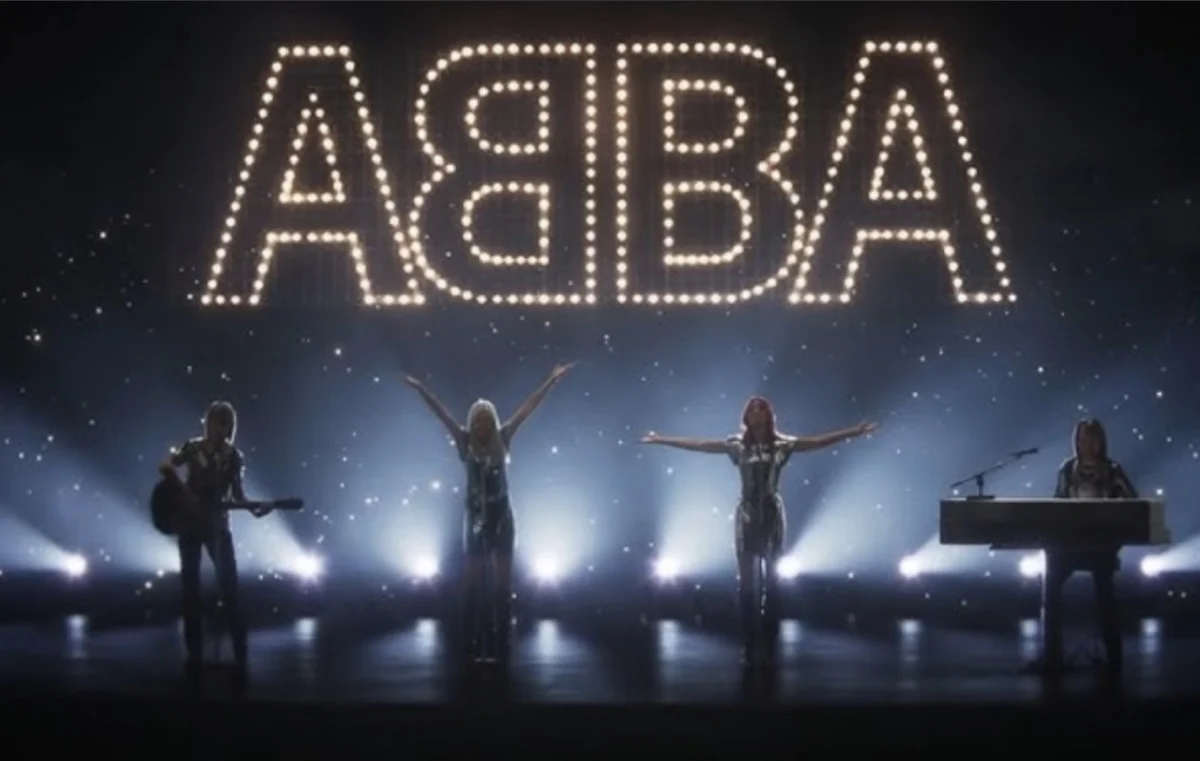

Addressing a global audience of technologists, policymakers, and diplomats at the AI for Good Global Summit in Geneva, Björn Ulvaeus, the legendary songwriter and co-founder of ABBA, delivered a poignant appeal for the ethical integration of artificial intelligence within the creative industries. Speaking in his capacity as both a pioneer of digital performance and the President of the International Confederation of Societies of Authors and Composers (CISAC), Ulvaeus emphasized that while technology offers unprecedented opportunities for artistic expression, it must not be allowed to flourish at the expense of the human creators whose work serves as its foundational data. The summit, organized by the International Telecommunication Union (ITU)—the United Nations’ specialized agency for information and communication technologies—served as the backdrop for Ulvaeus to challenge the tech sector with a fundamental question regarding the trajectory of AI development: "Good for whom?"
The Paradox of the ABBAtar: Consent as the Moral Compass
Ulvaeus opened his address by referencing his own direct involvement with high-level technology through "ABBA Voyage," the residency in London where digital versions of the band, known as "ABBAtars," perform nightly. These avatars were developed using a sophisticated blend of motion-capture technology and machine learning, meticulously capturing the movements and expressions of the four band members. Ulvaeus used this as a primary case study for "AI for good," noting that the project represents a symbiotic relationship between the artist and the machine.
The distinction, according to Ulvaeus, lies in the concept of consent. The members of ABBA were active participants in the creation of the Voyage show, providing the physical data and the creative direction required to bring the digital performance to life. Furthermore, they are compensated for the use of their likeness and intellectual property. Ulvaeus argued that the technology serves the artist in this instance because the artists were "at the table from the very beginning." This model of collaboration ensures that the technology enhances the legacy of the creator rather than erasing the creator’s agency or economic viability.
The Threat of "Free Extraction" and the Erosion of Human Testimony
In stark contrast to the controlled environment of ABBA Voyage, Ulvaeus highlighted the burgeoning trend of generative AI models that produce music at an industrial scale. He noted that modern generative systems can produce more compositions in a single day than the four million creators represented by CISAC could produce in a lifetime. This productivity is made possible because these models are trained on a century of human-made music, often ingested without the permission of the original rights holders, without financial compensation, and without acknowledgment.
Ulvaeus rejected the notion that human creativity is merely "content" or "data" to be harvested. He described songwriting and performance as "testimony"—the distillation of human experience, grief, and love into a form that others can feel. By treating this work as raw data for machine learning without a formal contract, Ulvaeus argued that the tech industry is undermining the very foundation of human culture. He asserted that the extraordinary tools being built today would not exist without the melodies, lyrics, and performances created by generations of musicians, and that these creators should be viewed as essential partners in the AI revolution rather than obstacles to be managed by legal teams.
A Chronology of Intellectual Property: From Paris to Geneva
To provide historical weight to his argument, Ulvaeus traced the evolution of copyright law, positioning the current AI crisis within a long-standing tradition of protecting intellectual labor. He cited the 1791 French legislation that first codified the author’s right to their work, followed by the pivotal treaties signed in Geneva that made these rights universal. These international agreements ensured that a song written in one corner of the globe, such as Stockholm, would receive legal protection in Seoul, Sao Paulo, or New York.
Ulvaeus suggested that the global community has reached a similar historical inflection point. Just as the world adapted to the printing press, the phonograph, and the digital streaming era, it must now establish a new "universal promise" for the age of AI. He reminded the summit that Geneva has historically been the place where the rights of creators were secured on a global scale, and he urged the current delegates to renew that commitment by ensuring AI systems operate within a framework of legal and ethical accountability.
The Proposal: Collective Licensing for AI Training
Addressing the technical complexities of AI, Ulvaeus proposed a pragmatic shift in how the industry approaches compensation. Many current legal debates focus on tracing specific "outputs"—trying to determine which original song an AI-generated track most resembles. Ulvaeus argued that this approach misunderstands the nature of large language models and generative systems, which learn relationships across billions of data points rather than making direct copies.
Instead, he advocated for a "training-based" compensation model. Under this proposal, AI companies would pay for the "raw material" that goes into the machine. Drawing a parallel to the emergence of Spotify and the streaming economy, Ulvaeus suggested a system of collective licensing. When streaming first emerged, the industry did not attempt to measure the value of every individual listen before establishing a payment structure; instead, catalogs were licensed, and a percentage of the platform’s revenue was distributed back to rights holders. Ulvaeus argued that a similar share of AI subscription revenues should flow back to creators, managed by existing collective management organizations (CMOs) that have the infrastructure to distribute these funds fairly.
Supporting Data and the Economic Landscape of AI Music
The urgency of Ulvaeus’s message is supported by current trends in the music and technology sectors. According to data from industry analysts, over 120,000 new tracks are uploaded to streaming services every day, a figure increasingly inflated by AI-generated content. Meanwhile, the generative AI market in music is projected to grow significantly over the next decade.
However, this growth poses a risk to the traditional creative economy. If the "middle class" of songwriters and musicians can no longer earn a living because their work is being used to train the very machines that displace them, the pipeline of original human creativity will inevitably diminish. Ulvaeus warned of a "drying well," where AI systems eventually begin to train on AI-generated data—a phenomenon some researchers call "model collapse"—leading to a degradation of quality and a loss of the unique human "spark" that makes music resonate.
Industry Reactions and the Legal Fork in the Road
The global music industry has already begun to take a stand on these issues. Major labels, including Universal Music Group (UMG), have been vocal about the "unauthorized use of artist content" to train AI models, recently initiating legal actions against AI firms that scrape copyrighted material. Conversely, some tech proponents argue that AI training constitutes "fair use" under existing copyright laws, suggesting that the process of "learning" from data is analogous to a human student listening to music to learn how to compose.
Ulvaeus’s stance aligns with a growing coalition of artists and labels who argue that the scale and commercial nature of AI training differentiate it from human learning. The legal cases currently moving through courts in the United States, Europe, and Asia will determine whether the creative economy of the next few decades will be built on a foundation of licensing or on "free extraction."
Broader Impact: Securing the Future of Human Artistry
The implications of this debate extend far beyond the balance sheets of record labels and tech giants. Ulvaeus emphasized that this is a societal and cultural imperative. If human creators are discouraged from mastering instruments or finding their unique voices because they cannot compete with "free" machine output, the cultural landscape will suffer.
"Human creativity is not the enemy of artificial intelligence; it is the reason artificial intelligence exists," Ulvaeus stated, summarizing the interdependence of the two fields. He concluded by urging the companies building these systems to recognize creators as partners who deserve a "share of the harvest." By establishing a fair contract between technology and the arts, the global community can ensure that AI remains a tool for human empowerment rather than a mechanism for human replacement.
As the AI for Good Summit continues to explore the role of technology in achieving sustainable development goals, the message from one of the world’s most successful songwriters remains clear: for AI to be truly "good," it must respect the human lives and labors that made its existence possible. The decisions made by policymakers in Geneva and beyond over the next several years will ultimately decide whether the future of music is a collaborative symphony or a silent, automated echo.
