
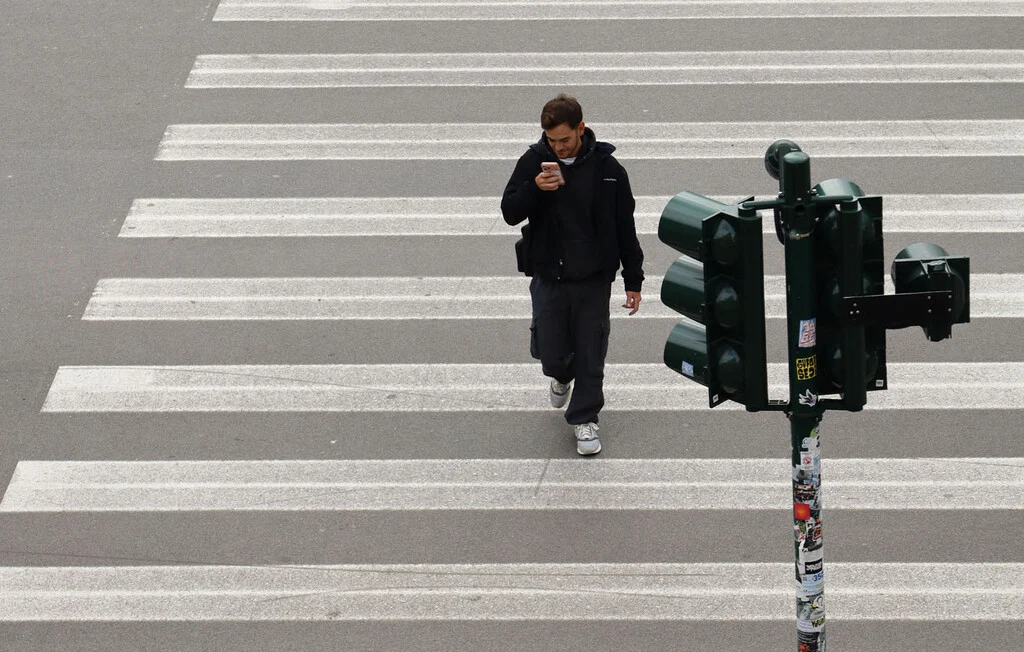

The Spanish Dirección General de Tráfico (DGT) and various municipal authorities are escalating efforts to address the growing hazard of pedestrian distraction caused by mobile phone use, a phenomenon increasingly linked to traffic incidents and fatalities. While drivers face stringent penalties, including fines of €200 and the loss of up to six driving license points for mobile phone infractions, the legal landscape for pedestrians, though different, is equally firm in its stance against behaviors that compromise road safety. This renewed focus underscores a broader commitment to ensuring the safety of all road users, recognizing that pedestrian imprudence, particularly due to smartphone engagement, significantly elevates the risk of accidents and calls for a concerted public awareness and enforcement strategy.
The Evolving Landscape of Pedestrian Responsibility
The ubiquitous presence of smartphones has fundamentally altered public behavior, extending their influence from behind the wheel to the sidewalks and crosswalks. Historically, road safety campaigns predominantly targeted drivers, emphasizing adherence to traffic laws and responsible conduct. However, as urban centers grapple with increased traffic density and a corresponding rise in pedestrian-involved accidents, the spotlight has shifted to encompass the responsibilities of those on foot. Pedestrians, as integral users of public thoroughfares, are bound by a comprehensive set of regulations outlined in the General Traffic Regulations (Reglamento General de Circulación) and the Traffic Law (Ley sobre Tráfico, Circulación de Vehículos a Motor y Seguridad Vial). These legislative frameworks stipulate a range of duties and prohibitions designed to maintain order and minimize risk for everyone sharing the road space.
Unlike drivers, pedestrians do not accrue or lose points on a driving license, but they are subject to substantial monetary penalties for violations. For instance, refusing a substance test or testing positive for drugs or a high alcohol concentration can result in fines of up to €1,000. These specific sanctions highlight the DGT’s proactive approach to mitigating risks associated with impaired judgment, regardless of whether an individual is operating a vehicle or navigating on foot. However, the direct act of "looking at a mobile phone" while walking is not explicitly codified as an infraction within Spanish traffic law. Instead, the legal framework targets the dangerous consequences of such distraction, leading to a nuanced but firm enforcement approach.
Sanctions for Distraction-Induced Impudence
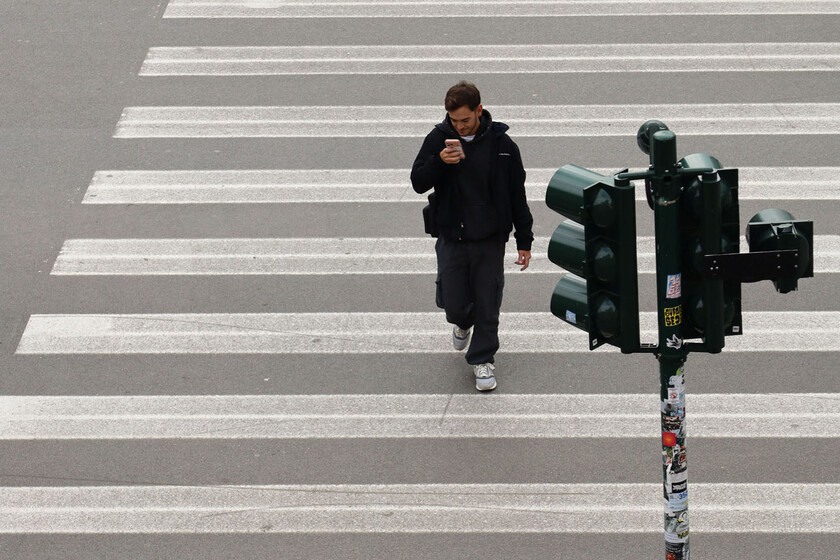
The absence of a direct fine for merely gazing at a smartphone screen does not absolve pedestrians from accountability. Rather, authorities can issue penalties when mobile phone use leads to behaviors that violate existing traffic norms. For example, crossing a street while engrossed in a mobile device, resulting in "negligent or excessively slow" movement without justifiable cause, is categorized as a minor infraction, carrying an €80 fine. This specific provision aims to deter pedestrians from impeding traffic flow or creating hazardous situations due to inattentiveness.
More severe consequences arise when mobile phone distraction escalates to grave infringements. Crossing a pedestrian crossing against a red light or traversing the roadway at an undesignated location, if caused by preoccupation with a mobile device, constitutes a serious infraction punishable by a €200 fine. This aligns with the penalties for drivers committing similar serious violations, underscoring the principle of shared responsibility for road safety. The DGT’s stance is clear: while the device itself is not the focus of the penalty, the dangerous actions it precipitates are. This legislative design acknowledges the difficulty of proving "distraction" directly but empowers law enforcement to act against the observable hazardous behaviors.
A Growing Concern: Statistics and Trends
While specific, granular data directly linking pedestrian mobile phone use to accident rates across Spain is still being rigorously collected and analyzed, reports from municipal police forces across major cities consistently highlight this as a significant contributing factor. The Policía Local de Madrid, for instance, has repeatedly emphasized that a substantial percentage of pedestrian accidents, particularly those involving collisions with vehicles, are directly attributable to imprudent behavior by pedestrians, with mobile phone distraction frequently cited.
According to DGT data, pedestrians are classified as one of the most vulnerable road user groups, alongside cyclists and motorcyclists. In 2022, pedestrian fatalities in urban areas accounted for a notable proportion of overall traffic deaths. While a precise breakdown by cause isn’t always available publicly for all incidents, the DGT’s strategic shift to include pedestrian awareness campaigns strongly suggests an upward trend in incidents where distraction, particularly from mobile phones, plays a role. Experts estimate that pedestrian distraction contributes to approximately 10-15% of all urban pedestrian accidents, a figure that has been steadily climbing over the past decade in line with smartphone penetration rates. The economic cost associated with these accidents, encompassing emergency services, medical treatment, rehabilitation, and productivity loss, runs into millions of euros annually, placing an additional burden on public health systems.
DGT and Municipal Campaigns: A Proactive Stance

In response to these escalating concerns, both the DGT and local police forces have launched targeted campaigns designed to raise awareness and enforce existing regulations. These initiatives move beyond mere warnings, integrating educational components with visible enforcement efforts. The Madrid Local Police, for example, has been particularly active, deploying officers to high-traffic pedestrian areas to observe behavior and intervene where necessary. These campaigns often involve visual aids, public service announcements, and direct interaction with pedestrians, emphasizing the dangers of "distracted walking."
Pere Navarro, the director of the DGT, has consistently advocated for a holistic approach to road safety that includes vulnerable users. His statements often reiterate that road safety is a shared responsibility, and pedestrians must also adhere to norms to protect themselves and others. These campaigns are not solely punitive but aim to foster a culture of vigilance and self-awareness among pedestrians. By highlighting the potential for serious injury or even fatality, authorities seek to encourage a voluntary change in behavior rather than relying solely on fines. The focus is on preventing tragedies by making pedestrians more conscious of their surroundings, particularly at critical junctures like crosswalks and intersections.
Chronology of Emphasis on Pedestrian Safety:
- Early 2000s: Initial focus primarily on driver behavior; pedestrian rules largely assumed.
- Mid-2000s: General Traffic Regulations (Reglamento General de Circulación) solidify existing pedestrian obligations, including alcohol/drug tests.
- 2010s: Rise of smartphones begins to show anecdotal evidence of pedestrian distraction. DGT starts issuing general warnings.
- Late 2010s – Early 2020s: Official DGT reports and local police statements increasingly identify pedestrian distraction (especially mobile phones) as a contributing factor in accidents.
- 2021: New Traffic Law (Ley sobre Tráfico, Circulación de Vehículos a Motor y Seguridad Vial) comes into effect, reinforcing existing penalties and the framework for enforcing consequences of distraction.
- 2022-Present: DGT and major city police forces (e.g., Madrid, Barcelona) launch specific, visible campaigns targeting pedestrian mobile phone use and associated imprudent behaviors, including increased enforcement of "negligent crossing" and "crossing against red light" infractions.
Broader Implications and Future Outlook
The intensified scrutiny on pedestrian behavior reflects a broader societal shift towards shared accountability in traffic safety. This approach acknowledges that accidents are often the result of multiple factors and that every road user, regardless of their mode of transport, has a role to play in prevention. The implications extend beyond immediate fines and accident prevention. It influences urban planning, encouraging the creation of safer pedestrian zones, clearer signage, and potentially even smart infrastructure that can detect and warn distracted pedestrians.
However, challenges remain. Enforcing "distraction" when it is not explicitly defined in law requires officers to observe and prove consequential dangerous behavior, which can be resource-intensive. Public perception also plays a crucial role; while most accept driver penalties, some pedestrians may feel unfairly targeted, necessitating sustained educational efforts to underscore the genuine risks involved. The ultimate goal is not to penalize but to foster a safer environment for everyone. This ongoing emphasis suggests that pedestrian safety, with a particular focus on the impact of mobile phone distraction, will remain a high priority for Spanish traffic authorities, potentially leading to further legislative refinements and more innovative campaign strategies in the years to come. The evolving dialogue around shared responsibility underscores Spain’s commitment to reducing road casualties and promoting a culture of awareness and vigilance among all who navigate its streets.
