

For over a decade, 4K resolution panels have transitioned from luxury items to commonplace fixtures in Spanish households, establishing themselves as an almost fundamental prerequisite for consuming modern content across platforms like Netflix, Prime Video, and Disney+. This widespread adoption has long underscored a significant technological lag within Spain’s Digital Terrestrial Television (DTT) network, which has struggled to keep pace with the advanced capabilities of contemporary display technology. However, a pivotal announcement from the Spanish government signals a definitive shift, promising to bridge this gap for traditional broadcast viewers, even as it highlights a curious contradiction within the digital media landscape.
This week, the government officially confirmed that national broadcasters will commence Ultra High Definition (UHD) transmissions on DTT by this autumn. This ambitious upgrade aims to align the quality of free-to-air television with the high standards consumers have grown accustomed to. Yet, this modernization initiative arrives at a juncture where consumer habits have profoundly evolved; an increasing number of Spaniards are opting to watch television through internet-connected Smart TVs, often utilizing the very streaming applications offered by the same national broadcasters. This trend reveals a critical inconsistency: while DTT is poised to embrace UHD, the streaming counterparts of these channels, ironically, continue to operate at lower resolutions, frequently not even reaching Full HD (1080p).
The Imperative for Modernization: Bridging the Resolution Gap
The journey towards 4K DTT has been a gradual one, driven by both technological advancements and growing consumer expectations. The standardization of 4K displays in the consumer market, fueled by competitive pricing and the proliferation of UHD content from global streaming services, placed immense pressure on traditional broadcast mediums to adapt. For years, the crisp detail and vibrant colors offered by 4K content on demand have contrasted sharply with the standard definition (SD) and high definition (HD) quality available via DTT, leading to a perceived downgrade for viewers switching between sources.
Historically, Spain has been at the forefront of digital television transitions. The country completed its analogue switch-off in 2010, ahead of many European counterparts, and later transitioned its DTT network to MPEG-4 compression for HD broadcasts. These moves, while significant at the time, were primarily focused on efficiency and enabling HD. The jump to 4K UHD, however, represents a more substantial leap, encompassing not only higher pixel counts (3840 x 2160) but also potentially wider color gamuts (WCG) and High Dynamic Range (HDR) for richer contrast and more lifelike images. These enhancements collectively promise a viewing experience dramatically superior to current HD broadcasts.
Government’s Ambitious Timeline and Technical Requirements
The government’s plan mandates that all DTT channels at a national level must cease their standard definition (SD) transmissions by February 14, 2024, and transition entirely to high definition (HD). Building on this foundation, the further step to UHD for major national channels is scheduled to begin this autumn, with a firm deadline for the full transition of all national DTT channels to UHD by November 2024. This structured approach aims to ensure a smooth, phased upgrade across the entire broadcast ecosystem.
This transition is not merely a software update; it necessitates significant investment in broadcast infrastructure, from production studios to transmission networks. Broadcasters will need to upgrade cameras, editing suites, and playout systems capable of handling UHD content. More critically, the DTT network will rely on the DVB-T2 standard, an advanced form of digital terrestrial television that offers greater spectral efficiency and robustness, crucial for transmitting the higher data rates associated with UHD. This means that while many modern televisions purchased in recent years are already DVB-T2 compatible, older sets or those lacking integrated DVB-T2 tuners will require external decoders to receive the new UHD signals. This requirement echoes previous digital transitions, potentially creating a temporary digital divide for households unwilling or unable to upgrade their equipment.
The Streaming Paradox: A Bottleneck in the Digital Age
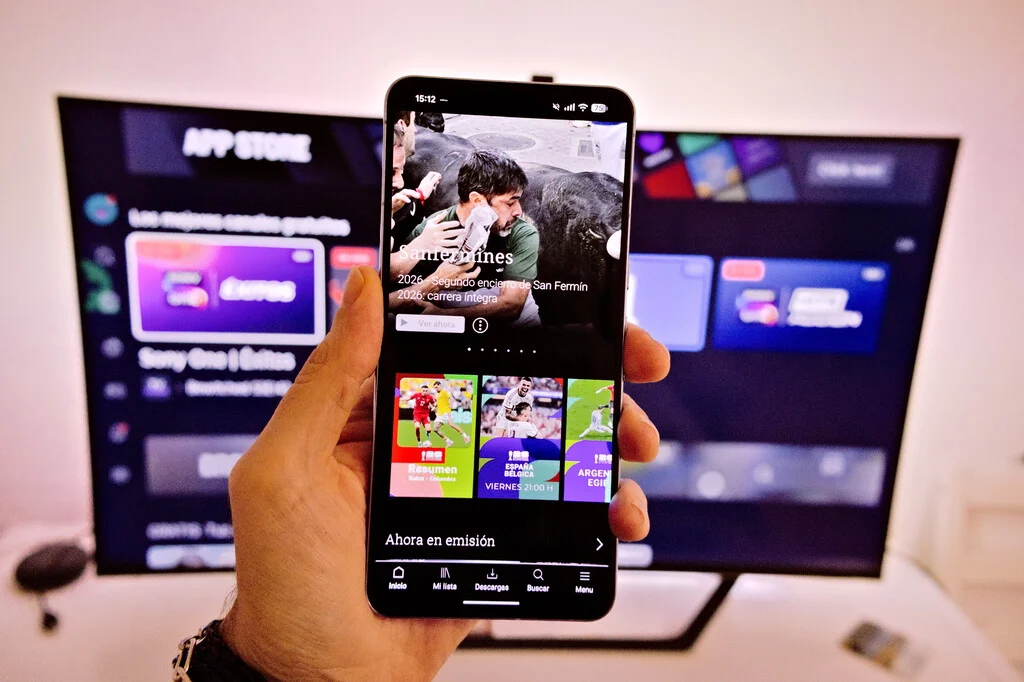
While the DTT upgrade marks a monumental step forward for traditional broadcast, it starkly exposes a significant paradox within the broader Spanish media consumption landscape: the glaring disparity between DTT’s impending 4K quality and the often-subpar resolution offered by broadcasters’ own streaming applications. Platforms such as RTVE Play, Atresplayer, and Mediaset Infinity, along with the IPTV services provided by major telecom operators like Movistar+, Vodafone TV, and Orange TV, largely continue to stream content at resolutions often capped at 720p or 1080p.
This situation creates a disjointed user experience. A viewer watching a live football match via antenna could enjoy it in pristine 4K UHD, but if they switch to the broadcaster’s app on their Smart TV for a catch-up show or live stream, they might find themselves relegated to a significantly lower resolution, despite possessing a 4K TV and a high-speed fiber internet connection. This incongruity is particularly baffling given that the underlying content is now being produced and processed in UHD for DTT transmission.
The historical justification for lower streaming quality often cited high bandwidth costs and server infrastructure expenses. Delivering 4K video streams to millions of concurrent users can indeed be prohibitively expensive, requiring robust content delivery networks (CDNs) and substantial data egress charges. However, this premise is increasingly outdated. Spain boasts one of the highest fiber optic penetration rates in Europe, with most urban and many rural households enjoying gigabit-capable internet connections. Furthermore, the cost of cloud computing and CDN services has steadily decreased, making UHD streaming more economically viable than ever before. If broadcasters are already incurring the costs of producing and mastering content in UHD for DTT, the marginal cost of encoding and distributing that content in UHD via streaming should be weighed against the significant benefits of a consistent, high-quality user experience across all platforms.
Stakeholder Perspectives and Industry Reactions
The government’s directive for DTT’s UHD transition has been generally welcomed by the broadcast industry, as it provides a clear roadmap for technological advancement and helps traditional television remain competitive against global streaming giants. Broadcasters, while facing substantial investment costs, recognize the necessity of this upgrade to maintain their relevance and deliver a premium experience to their audience.
However, the silence surrounding the simultaneous upgrade of streaming services is notable. From the perspective of telecom operators, who bundle linear TV channels with their internet and mobile services, the DTT upgrade presents both an opportunity and a challenge. On one hand, it validates the importance of high-quality linear television. On the other hand, it puts pressure on them to upgrade their own IPTV platforms to match or exceed DTT’s quality, particularly for their premium content offerings, to avoid their services being perceived as inferior.

Consumer associations, while applauding the DTT upgrade, are likely to voice concerns about the streaming disparity. The modern consumer expects seamless quality across all devices and platforms. The frustration of having a 4K TV and a fast internet connection, only to be limited by a broadcaster’s app, could lead to dissatisfaction and further migration towards international streaming services that consistently offer UHD content.
Implications for Content Production and Consumption
The DTT UHD transition will undoubtedly spur further investment in high-quality content production within Spain. Local productions will increasingly be shot and post-produced in 4K, elevating the overall visual standard of Spanish television. This ripple effect could benefit the entire creative industry, from independent filmmakers to major production houses.
For consumers, the immediate benefit will be a dramatically improved viewing experience for live television, news, and major sporting events received via antenna. The enhanced clarity, detail, and color accuracy of UHD will bring a new level of immersion to traditional broadcasting. However, the lack of parallel progress in streaming could fragment the user experience. Viewers might be forced to switch between DTT and streaming depending on whether they prioritize resolution or convenience and on-demand access. This creates an awkward duality where the "best" quality for a broadcaster’s content is found on a traditional, antenna-based system, rather than their modern internet-delivered platforms.
The Road Ahead: Towards a Unified UHD Experience
The current scenario, where DTT is poised for a 4K future while streaming lags, is unsustainable in the long term. The expectation of a unified, high-quality viewing experience across all platforms is a fundamental aspect of modern media consumption. The argument of prohibitive bandwidth costs for streaming UHD is weakening rapidly, especially when broadcasters are already producing and processing content in 4K for DTT. The next logical step for Spanish broadcasters and telecom operators must be to extend this UHD commitment to their digital platforms.
This would involve significant investment in re-encoding workflows, server infrastructure, and content delivery networks. However, the competitive advantage of offering consistent 4K quality across DTT, catch-up services, and live streaming apps would be substantial. It would help retain audiences, attract new subscribers to bundled services, and solidify the position of national broadcasters in a crowded digital landscape dominated by global players.
As November approaches, marking the official deadline for the DTT UHD rollout, the spotlight will inevitably shift to the streaming services. With Spanish households equipped with high-speed fiber and 4K televisions, the emission in streaming must give the leap to UHD to avoid becoming the weakest link in the chain of entertainment and information delivery in Spain. The technological capability is there, the content is being produced, and consumer demand is clear. The time for a comprehensive, end-to-end UHD experience is now.
