

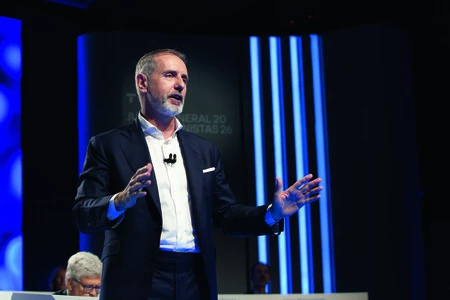
The telecommunications landscape in Europe is undergoing a period of profound structural adjustment, and Telefónica is currently positioning itself at the vanguard of this evolution. Following the unveiling of the "Transform & Grow" strategic plan—a roadmap designed to guide the company through the year 2030—the group’s Board of Directors has initiated a significant restructuring of its core domestic operations. Spearheaded by Chairman Marc Murtra, this new operational model represents a decisive move toward organizational efficiency, stripping away legacy bureaucratic layers to focus on agility and market-specific performance. By decoupling its Spanish business into three distinct, autonomous pillars, the telecommunications giant is signaling a departure from centralized management in favor of a more specialized, market-responsive approach.
The Strategic Shift: Redefining Telefónica España
At the heart of this restructuring is the fragmentation of Telefónica España into three independent business units: B2B España (Business-to-Business), B2C España (Business-to-Consumer), and Wholesale España (Mayorista). This separation is designed to allow each unit to concentrate exclusively on its specific customer segment, thereby improving service delivery and responsiveness to market fluctuations.
Historically, large telecommunications operators have suffered from "siloing" or, conversely, excessive centralization that hampers the ability to pivot when faced with aggressive competition from smaller, more nimble players. By creating independent units, Telefónica aims to optimize its value proposition for each customer archetype. The B2B segment, for instance, will now have the latitude to develop bespoke cloud, cybersecurity, and connectivity solutions without being tethered to the operational requirements of the mass-market consumer division.
Crucially, the restructuring includes the transfer of support functions—such as Finance and Control, Strategy, Human Resources, Legal, Security, and Audit—to the group’s corporate headquarters. This centralization of administrative tasks allows the local Spanish units to focus entirely on commercial execution, while the group level gains tighter oversight and potential cost synergies.
Chronology and the Path to Transformation
The current restructuring does not exist in a vacuum; it is the latest milestone in a long-term recalibration effort. Since the announcement of the 2030 strategic plan, Telefónica has been systematically pruning its non-core assets and refining its internal workflows.

- 2023: The Strategic Pivot: Telefónica unveils its "Transform & Grow" roadmap, emphasizing the need for a leaner, more digital-first organization capable of thriving in a high-interest-rate environment and intense market competition.
- Early 2024: Asset Optimization: The company continues its policy of divesting non-strategic real estate and infrastructure, most notably the sale of its iconic headquarters on Madrid’s Gran Vía for approximately €200 million, while maintaining its retail presence.
- Mid-2024: Operational Realignment: The Board of Directors formalizes the split of the domestic business. This move follows months of internal deliberation on how best to integrate Movistar Plus into a more streamlined corporate structure.
- Late 2024: Implementation: The new units—B2B, B2C, and Wholesale—begin independent operations under the oversight of CEO Emilio Gayo.
Impact on Movistar Plus and Governance Changes
One of the most notable aspects of this reorganization is the dissolution of the Board of Directors for Movistar Plus, the group’s television and media arm. Javier de Paz, who served as the non-executive president of the entity, will step down from this specific role. However, his departure does not signify a withdrawal from the company. De Paz is expected to transition into new responsibilities at the European level while maintaining his position as Deputy Director to the President.
This change reflects a broader shift in how Telefónica manages its media assets. By integrating the operations of Movistar Plus more directly into the broader business units, the company likely intends to bundle connectivity and content more efficiently, reducing the overhead costs associated with maintaining a separate board of directors and independent governance structures for a content subsidiary.
Analysis: Why the Market Demands Agility
Market analysts have long suggested that legacy telecommunications firms require radical structural changes to compete with "Over-The-Top" (OTT) service providers and specialized data firms. The move to isolate the Wholesale unit, for example, is particularly telling. By creating a dedicated entity for wholesale operations, Telefónica is effectively turning its infrastructure into a business-to-business product, potentially increasing the revenue generated from leasing its network capacity to virtual operators (MVNOs) and regional competitors.
Furthermore, the appointment of Emilio Gayo to oversee the new units—alongside the operations in Germany, Brazil, and the United Kingdom—creates a clear chain of command that emphasizes accountability. In this model, Gayo serves as the architect of the domestic strategy, ensuring that the independence of the three units does not lead to fragmentation, but rather to a "federated" strength where each unit reports to a centralized, efficient leadership core.
The Financial and Competitive Context
Telefónica’s decision to reorganize arrives during a period of intense industry consolidation in Spain. With the merger of Orange and MásMóvil, and the ongoing discussions regarding the role of private equity in the telecommunications sector, the competitive landscape has reached a point of saturation.
Supporting data from recent quarterly reports indicates that while average revenue per user (ARPU) remains stable in the premium segment, the "low-cost" segment is increasingly volatile. By separating the B2C unit, Telefónica is likely aiming to implement more surgical pricing strategies, allowing the main Movistar brand to maintain its premium positioning while potentially creating or reinforcing sub-brands to compete in the price-sensitive market without diluting the primary brand’s equity.
Official Stance and Future Implications
While the company has remained focused on the internal mechanics of the transition, the underlying message to shareholders is one of fiscal discipline. By streamlining the support services and shifting them to corporate, the company is positioning itself to reduce redundant headcount and operational costs.
The integration of the CTIO (Chief Technology and Information Officer) function into this new reporting structure—covering network, systems, and operations—further highlights the company’s commitment to network modernization. As 5G standalone networks and fiber-to-the-home (FTTH) expansion continue to require massive capital expenditure (CAPEX), the ability to manage these costs through a streamlined operational model will be a critical factor in maintaining dividends and credit ratings.
Conclusion: A New Era for a Legacy Giant
Telefónica is attempting to reconcile its identity as a legacy telecommunications powerhouse with the requirements of a modern, data-driven digital economy. The dissolution of the Movistar Plus board and the creation of three distinct business units are not merely cosmetic changes; they are fundamental shifts in how the company interacts with its customers, its infrastructure, and its stakeholders.
As the company proceeds with these changes, the primary metric of success will be its ability to maintain its market share in Spain while simultaneously improving its operating margin. Investors and industry observers alike will be closely watching the next fiscal cycle to see if this structural "simplification" translates into the growth promised in the 2030 strategic plan. For now, the message from the Board is clear: in order to grow in the future, the company must first be willing to dismantle the structures of the past.
