
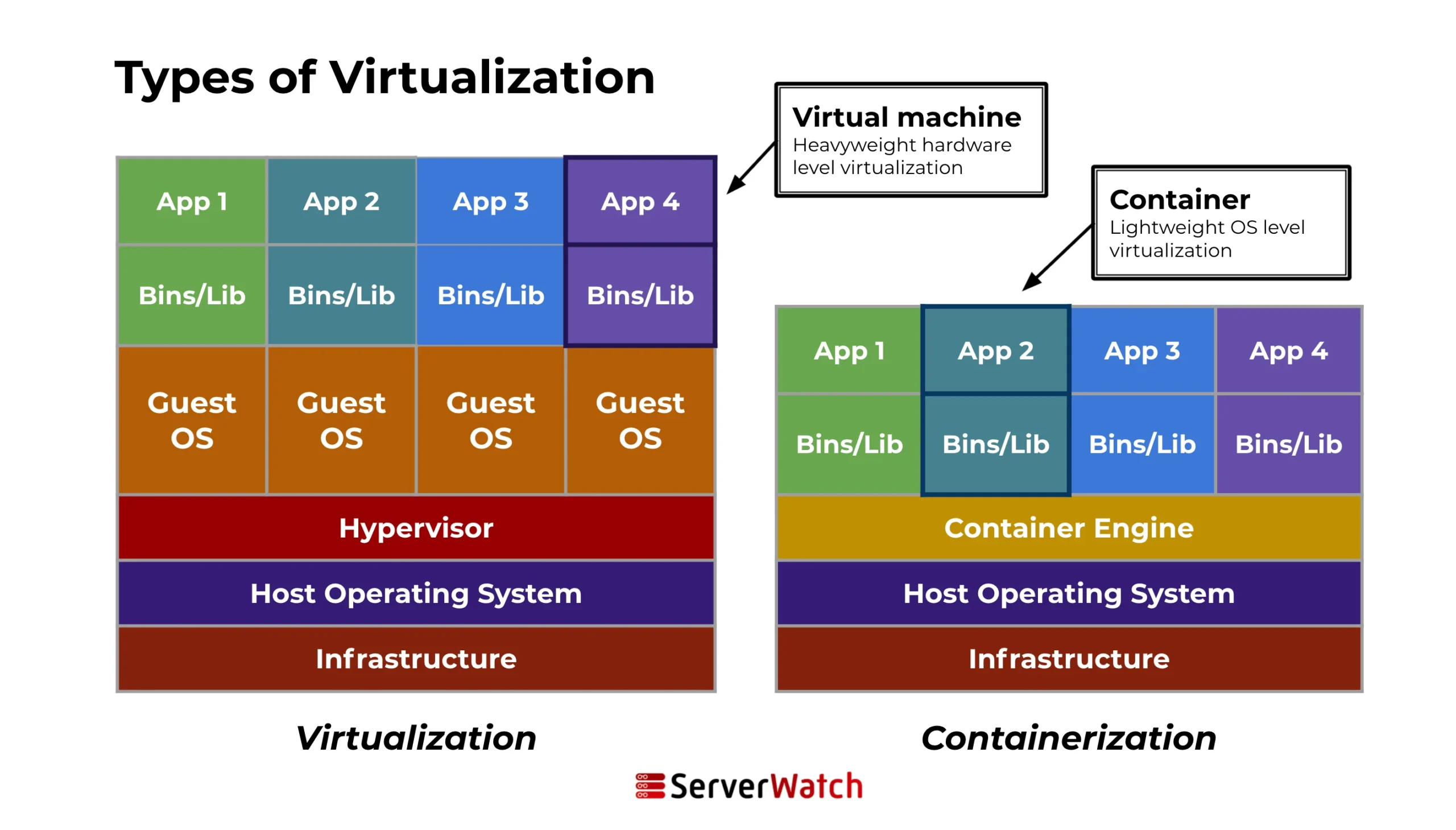

Containerization has fundamentally altered the architecture of modern software development, establishing itself as a baseline technology for cloud-native applications, microservices, and continuous integration pipelines. As enterprise IT environments demand greater agility, resource efficiency, and portability, containers have progressively displaced traditional deployment methods. Unlike legacy virtualization models that rely on hypervisors and full guest operating systems, containers operate at the application layer, sharing the host system kernel while maintaining isolated environments. This architectural efficiency underpins a broader technological shift that continues to redefine enterprise infrastructure strategies globally.
Understanding the Core Mechanics of Containerization
At its technical core, a container is a lightweight, standalone, and executable software package that bundles application code, runtimes, system tools, libraries, and configuration settings. This packaging method ensures that an application executes reliably regardless of underlying environmental shifts, bridging the gap between local developer workstations and complex production servers.
The historical development of container technology traces back to early Unix chroot implementations and FreeBSD jails, which laid the conceptual groundwork for process isolation. However, the modern containerization boom was catalyzed by the Linux kernel advancements of namespaces and cgroups (control groups). Namespaces provided process, network, and mount isolation, while cgroups managed and limited resource allocation—such as CPU, memory, and I/O—across isolated groups.
The introduction of Docker in 2013 standardized these low-level kernel capabilities into a user-friendly ecosystem. By packaging applications into immutable container images, Docker eliminated the long-standing "it works on my machine" dilemma. Following Docker’s market expansion, the industry recognized the need for standardization, leading to the formation of the Open Container Initiative (OCI) in 2015. The OCI established open industry standards for container image formats and runtime specifications, preventing vendor lock-in and fostering a robust ecosystem of compatible tools.
Architectural Comparison: Containers Versus Virtual Machines
To understand the operational advantages of containerization, industry architects frequently evaluate containers against traditional virtual machines (VMs). While both technologies provide isolated execution spaces, their architectural layers differ significantly.
Virtual machines operate via a hypervisor—either Type 1 (bare-metal) or Type 2 (hosted)—which abstracts physical hardware to run multiple guest operating systems simultaneously. Each VM requires a complete guest OS, virtualized hardware drivers, and dedicated system libraries. This configuration results in substantial resource overhead, slower boot times, and larger storage footprints.
Conversely, containers bypass the need for a guest operating system. By sharing the host machine’s kernel and isolating user-space instances, containers reduce resource utilization to the bare essentials required by the application runtime. Consequently, container instances launch in milliseconds rather than the minutes often required by VMs, enabling dynamic auto-scaling that optimizes hardware utilization and reduces operational expenditure.
Key Use Cases in the Modern Enterprise Landscape
Enterprise adoption of containerization has expanded across several critical domains, fundamentally changing how applications are conceptualized, built, and maintained.
Microservices Architecture
The shift from monolithic applications to microservices architectures relies heavily on containerization. In a microservices model, large applications are decomposed into small, independent services communicating via APIs. Encapsulating each microservice within its own container prevents dependency conflicts, enhances fault isolation, and permits independent scaling. For example, an e-commerce platform experiencing high traffic during holiday shopping events can scale its checkout container cluster independently of its product-catalog containers, maximizing efficiency.
Continuous Integration and Continuous Deployment (CI/CD)
Containers provide immutable environments that streamline CI/CD pipelines. Software engineers can build a container image during the development phase and deploy that exact image through testing, staging, and production environments. This end-to-end environmental consistency minimizes deployment anomalies, accelerates release cycles, and simplifies automated testing protocols.
Hybrid and Multi-Cloud Portability
Enterprise IT strategies increasingly prioritize hybrid and multi-cloud deployments to avoid vendor lock-in and optimize costs. Containers encapsulate all necessary execution dependencies, allowing workloads to move seamlessly between on-premises data centers and major public cloud providers—such as Amazon Web Services, Microsoft Azure, and Google Cloud Platform—without code modifications.
Ecosystem Orchestration and Management

As container adoption scaled within enterprise environments, managing hundreds or thousands of individual containers introduced significant operational complexity. This challenge spurred the development of container orchestration platforms, most notably Kubernetes.
Originally developed by Google and subsequently donated to the Cloud Native Computing Foundation (CNCF), Kubernetes has emerged as the industry standard for automated deployment, scaling, and management of containerized applications. Kubernetes automates operational tasks across distributed clusters, including service discovery, load balancing, automated rollouts and rollbacks, and self-healing mechanisms that restart failed containers or replace unresponsive nodes.
Complementing orchestration engines, container registries—such as Docker Hub, Amazon Elastic Container Registry (ECR), and GitHub Packages—serve as centralized repositories for storing, signing, and distributing container images. These registries enforce security scanning policies and version control, enabling development teams to execute rapid rollbacks to stable application versions when vulnerabilities or defects are identified in production releases.
Enterprise Benefits of Containerization
Organizations implementing containerization report substantial operational and financial advantages. Industry data consistently highlights several primary benefits:
- Resource Efficiency: Sharing the host kernel minimizes CPU, memory, and storage overhead, allowing higher density workloads per physical server.
- Speed and Agility: Rapid container instantiation accelerates development cycles, enabling continuous delivery models.
- Portability: Write-once-run-anywhere capabilities simplify cloud migration and multi-cloud strategies.
- Fault Isolation: The failure of a single containerized service rarely cascades to destabilize neighboring applications or the host system.
- Scalability: Orchestration engines facilitate elastic scaling based on real-time computational demand.
- Version Control and Immutability: Container images function as immutable snapshots, ensuring deterministic application behavior across updates.
- Enhanced Developer Productivity: Standardized environments eliminate system-configuration discrepancies between development and production teams.
- Cost Optimization: Efficient resource utilization directly correlates with reduced hardware acquisition and cloud compute expenditures.
- Ecosystem Maturity: Robust open-source tooling and extensive documentation lower the barrier to enterprise adoption.
- Simplified Maintenance: Patching dependencies often involves replacing an immutable image rather than modifying live systems.
- Security Segmentation: Namespaces and control groups enforce strict boundaries between disparate applications.
- Integration with DevOps: Seamless alignment with automated testing and deployment pipelines accelerates software delivery.
- Future-Proofing: Alignment with cloud-native standards prepares IT infrastructure for emerging technological paradigms.
Security Challenges and Considerations
Despite their structural advantages, containerized environments introduce unique security vectors that require active mitigation. Because containers share the host operating system kernel, a kernel-level vulnerability can potentially compromise the entire host system and all co-located containers.
Key security considerations include container escape vulnerabilities, where malicious actors exploit kernel weaknesses to breach host isolation; insecure base images containing unpatched vulnerabilities or malware; and improper privilege management, such as running internal applications as the root user inside the container. Furthermore, securing container networks against unauthorized east-west traffic requires advanced micro-segmentation and service mesh technologies like Istio or Linkerd.
To address these concerns, security teams implement rigorous vulnerability scanning within CI/CD pipelines, enforce strict runtime security monitoring, apply the principle of least privilege regarding user permissions, and utilize immutable infrastructure practices where containers are frequently destroyed and replaced with newly patched images.
Future Outlook and Emerging Trends
The trajectory of containerization continues to intersect with emerging technologies, shaping the next generation of enterprise architecture.
Serverless containers represent a significant evolution, abstracting underlying infrastructure management entirely and allowing enterprises to run containers on-demand without provisioning or managing servers. Platforms like AWS Fargate and Google Cloud Run exemplify this paradigm, charging organizations strictly for the compute resources consumed during execution.
Concurrently, the integration of containerization with Artificial Intelligence (AI) and Machine Learning (ML) workloads is accelerating. Training and deploying complex AI models require specialized computing environments equipped with GPU acceleration and precise dependency management. Containers provide an ideal mechanism to package ML frameworks, libraries, and model weights into reproducible units, facilitating smooth migration from local research laptops to massive cloud-based GPU clusters.
Regulatory standards and security compliance frameworks are also adapting to containerized infrastructure. As governmental and industry bodies enforce stricter data privacy and governance mandates, container standards organizations are refining compliance auditing tools, cryptographic signing of container images (via projects like Sigstore), and verifiable supply chain security frameworks to ensure software integrity from source code to production deployment.
Bottom Line: The Indispensable Role of Containers in Digital Transformation
Containerization has matured from an innovative developer utility into a foundational pillar of enterprise digital transformation. By providing unmatched portability, resource efficiency, and environmental consistency, containers solve longstanding deployment challenges inherent in legacy IT infrastructure. As organizations continue to modernize applications, embrace microservices, and integrate advanced AI workloads, containerization technologies and their accompanying orchestration ecosystems will remain central to operational strategy, driving agility and innovation across the global technology sector.
