
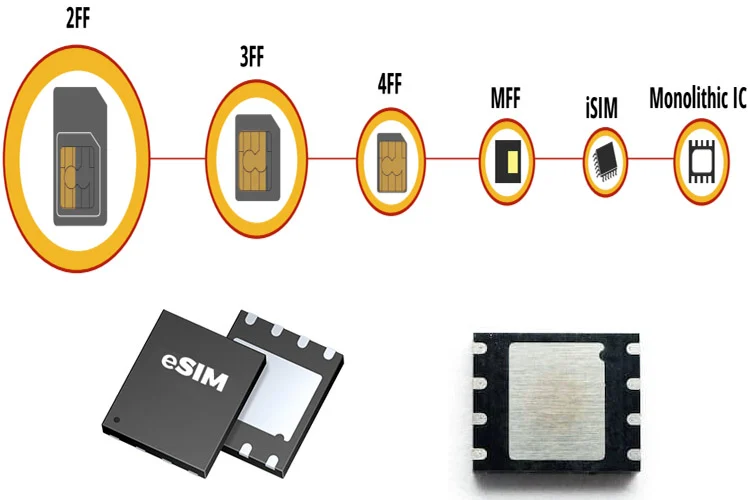

The telecommunications landscape is currently undergoing its most significant structural transformation since the transition from analog to digital cellular networks. At the heart of this shift is the eSIM, or embedded Subscriber Identity Module, a technology that is systematically dismantling the decades-old reliance on physical plastic cards. As mobile devices become increasingly streamlined and global connectivity becomes a baseline requirement for both consumers and enterprise-level IoT (Internet of Things) deployments, the adoption of eSIM technology has accelerated from a niche feature to an industry standard. This transition represents not merely a change in form factor, but a fundamental redesign of how mobile identities are managed, secured, and provisioned across the globe.
The Technical Foundation: What Defines an eSIM?
An eSIM is a specialized hardware component—specifically an eUICC (Embedded Universal Integrated Circuit Card)—that is soldered directly onto a device’s motherboard during the manufacturing process. Unlike the traditional SIM card, which acts as a removable token of identity, the eSIM is a permanent fixture. It functions by storing digital profiles that contain the same essential data as a physical SIM: the International Mobile Subscriber Identity (IMSI), authentication keys, and network-specific configurations.
The defining characteristic of an eSIM is its capacity for Remote SIM Provisioning (RSP). This allows users to download and install carrier profiles over-the-air (OTA) without the need for physical intervention. Because the hardware is programmable, a single eSIM chip can store multiple profiles, enabling a device to hold credentials for various carriers simultaneously, though typically only one or two can be active at any given moment depending on the device’s modem capabilities.
A Chronology of SIM Evolution: From Credit Cards to Code
To understand the impact of the eSIM, it is necessary to examine the chronological progression of the Subscriber Identity Module. The journey toward the embedded standard has been defined by a constant drive toward miniaturization and digital efficiency:
- 1991: The Full-Size SIM (1FF). The first SIM cards were the size of a standard credit card, used primarily in early "car phones."
- 1996: The Mini-SIM (2FF). This became the industry standard for over a decade, introducing the recognizable "corner-cut" plastic design.
- 2003: The Micro-SIM (3FF). Introduced to save space in increasingly compact mobile handsets.
- 2012: The Nano-SIM (4FF). Driven largely by Apple’s design requirements for the iPhone 5, this removed almost all plastic bordering the chip.
- 2016: The Arrival of eSIM (M2M/Consumer). The GSMA (Global System for Mobile Communications Association) released the first technical specifications for eSIMs. Initial adoption began in smartwatches like the Samsung Gear S2 Classic 3G and later in the iPhone XS and XR in 2018.
- 2022: The eSIM-Only Milestone. Apple released the iPhone 14 series in the United States without a physical SIM tray, signaling a "point of no return" for the industry and forcing carriers to finalize their eSIM infrastructures.
Market Data and Adoption Trends
The shift toward eSIM is supported by robust market data indicating a total eclipse of traditional SIM cards in the premium device segment. According to a 2023 report by Juniper Research, the number of devices using eSIM technology is expected to rise from roughly 1.2 billion in 2023 to over 3.4 billion by 2025. This growth is driven not only by smartphones but also by the expansion of the IoT sector, where embedded connectivity is vital for smart meters, connected vehicles, and industrial sensors.
Geographically, North America and Western Europe lead in adoption, but emerging markets are rapidly catching up. In regions with high international travel volumes, such as Southeast Asia and the Middle East, the demand for "travel eSIMs"—short-term data plans purchased via apps—has created a multi-billion dollar secondary market for digital connectivity.
Strategic Advantages of the Embedded Standard
The transition to eSIM offers a suite of benefits that address the limitations of the 30-year-old physical SIM standard. These advantages can be categorized into consumer convenience, hardware engineering, and security.
1. Consumer Flexibility and Global Roaming
The most immediate benefit for consumers is the elimination of "SIM swapping." For international travelers, the ability to download a local data plan before landing in a new country eliminates expensive roaming fees and the logistical hurdle of finding a local kiosk. Furthermore, dual-SIM functionality—using an eSIM for data and a physical SIM for a primary number, or two eSIMs simultaneously—allows users to manage work and personal lines on a single device with ease.
2. Hardware Engineering and Innovation
For manufacturers like Samsung, Apple, and Google, removing the physical SIM tray is a strategic victory. The SIM tray assembly, including the mechanical ejector and the slot itself, occupies significant internal volume. By removing it, engineers can utilize that space for larger batteries, improved haptic engines, or better thermal management systems. Additionally, removing an external opening aids in achieving higher IP (Ingress Protection) ratings for water and dust resistance.
3. Enhanced Security and Theft Deterrence
From a security perspective, an eSIM is significantly more resilient than a physical card. If a device is stolen, a thief cannot simply "throw away the SIM card" to prevent the device from being tracked via cellular networks. Because the eSIM cannot be removed without dismantling the device, the phone remains connected to the network, allowing the rightful owner to track its location through services like "Find My" or "Find My Device" more effectively.
Industry Perspectives: Carrier Reactions and Challenges
The telecommunications industry initially viewed eSIM technology with skepticism. For decades, physical SIM cards served as a "lock" that tethered a customer to a specific carrier. The ease with which a customer can now switch providers via a QR code or an app download was seen as a threat to customer retention.
However, major carriers such as Verizon, AT&T, and T-Mobile have since pivoted to embrace the technology, recognizing the reduced overhead costs. Distributing physical SIM cards involves manufacturing, logistics, and retail staffing. eSIM provisioning, by contrast, is a nearly zero-cost digital transaction. "The shift to eSIM is about removing friction," noted an industry analyst during a recent telecommunications summit. "While it makes switching easier, it also makes the onboarding process for new customers instantaneous, which is a net win for aggressive market competitors."
Despite the benefits, challenges remain. Some smaller regional carriers and "Value" MVNOs (Mobile Virtual Network Operators) have been slow to update their backend systems to support eSIM, leading to a fragmented user experience where a customer might own a compatible device but remain unable to use the feature on their preferred network.
Comprehensive Device Support and Ecosystems
As of 2024, eSIM support has moved beyond flagship smartphones into the mid-range market and wearable ecosystems.
- Apple: Every iPhone since the XS/XR series supports eSIM. The US-model iPhone 14 and 15 series are eSIM-exclusive. iPads with cellular capabilities also utilize eSIM technology for data plans.
- Android Ecosystem: The Google Pixel line (from Pixel 3 onwards) and the Samsung Galaxy S-series (from S20 onwards) have been the primary drivers of Android eSIM adoption. Other manufacturers, including Motorola, Sony, and Xiaomi, have integrated eSIM into their premium offerings.
- Wearables: The Apple Watch (GPS + Cellular models) and the Samsung Galaxy Watch series were among the first devices to prove the necessity of eSIM, as their small form factors could not accommodate a physical SIM slot.
- Laptops: High-end business laptops, such as the Microsoft Surface Pro and Lenovo ThinkPad X1 Carbon, frequently include eSIM support to provide "always-on" connectivity for remote professionals.
Technical Implementation: The Activation Process
Activating an eSIM is a standardized but slightly different process depending on the operating system. It generally relies on the "Discovery Service" (DS+) or a direct QR code scan provided by the carrier.
Activating on iOS (iPhone)
Apple has simplified the process through "eSIM Quick Transfer," which allows users to move their SIM from an old iPhone to a new one during the setup process without contacting the carrier. For new activations:
- Navigate to Settings > Cellular.
- Select Add eSIM.
- Scan the QR code provided by the carrier or transfer from a nearby iPhone.
- Once the profile is downloaded, the user labels the line (e.g., "Primary" or "Travel") and chooses which line to use for data and voice.
Activating on Android
The process on Android devices is similar but varies slightly by manufacturer:
- Open Settings > Network & Internet > SIMs.
- Tap Add SIM (or the ‘+’ icon).
- Select Download a SIM instead?.
- Scan the carrier’s QR code.
- Confirm the activation. On Samsung devices, this is managed through the "SIM Card Manager" in the Connections menu.
Broader Implications and the Future of Connectivity
The rise of eSIM technology is a precursor to the next stage of evolution: the iSIM (Integrated SIM). While the eSIM is a separate chip on the motherboard, the iSIM integrates the SIM functionality directly into the device’s main processor (SoC). This will further reduce power consumption and save even more space, potentially bringing cellular connectivity to even the smallest IoT devices and "smart" everyday objects.
Furthermore, the environmental impact cannot be overlooked. The telecommunications industry produces billions of plastic SIM cards annually, many of which end up in landfills. The transition to a digital-only standard represents a significant reduction in plastic waste and the carbon footprint associated with the shipping and distribution of physical cards.
Conclusion
The transition from physical SIM cards to eSIM technology is an inevitable evolution of mobile telecommunications. By offering superior flexibility for consumers, greater design freedom for manufacturers, and enhanced security protocols, the eSIM has redefined the standards of connectivity. While the industry continues to navigate the transition—particularly in terms of universal carrier support and user education—the trajectory is clear. The era of the plastic SIM card is drawing to a close, replaced by a digital-first framework that promises a more seamless, secure, and globally connected future. For the end-user, the choice between eSIM and traditional SIM is increasingly being decided by the market; as devices move toward eSIM-only configurations, the digital SIM is no longer just an alternative—it is the new foundation of mobile identity.
