

Security leaders have spent the better part of the last two years debating whether generative artificial intelligence will catalyze a "doomsday" class of cyberattack—a digital event of unprecedented scale and sophistication. While the industry fixates on the possibility of an AI-driven "black swan" event, the reality of the threat landscape has shifted in a far more immediate and pervasive way: AI has fundamentally altered the economics of failure. For modern cybercriminals, AI has transformed a failed intrusion attempt from a costly, time-consuming setback into a trivial, low-friction iteration.
The mechanics of this shift are deceptively simple. In a traditional intrusion scenario, a threat actor might gain access to a low-privilege cloud environment only to encounter a series of technical barriers. Previously, attempting to escalate privileges involved hours of labor-intensive documentation review, manual permission auditing, and iterative script debugging. If an attacker lacked the specific institutional knowledge or technical acumen to overcome these obstacles, the campaign often stalled or was abandoned entirely. Today, with a large language model integrated into the attacker’s workflow, the error is diagnosed in real-time, the exploit script is refined, and a new enumeration path is launched within minutes. No individual step in this sequence represents a novel capability; rather, the synergy between AI and human intent has effectively stripped the "unglamorous middle" of an intrusion—the research and troubleshooting phase—of its cost and complexity.
A Chronology of AI-Assisted Intrusion
The public record provides a stark trajectory of how adversarial use of AI has matured from simple productivity gains to complex, automated exploitation. By early 2025, Google’s Threat Intelligence Group (GTIG) documented a clear shift in behavior: state-backed actors were utilizing generative models primarily as force multipliers for translation, scripting assistance, and reconnaissance.
By late 2025, the sophistication of these tools had reached a new threshold. Security researchers observed malware samples capable of querying AI models mid-execution to interpret environment variables and suggest lateral movement paths. Simultaneously, an illicit underground market for "jailbroken" or purpose-built AI models began to flourish. Anthropic’s security team reported a significant disruption of an extortion campaign that leveraged AI across the entire lifecycle of the attack, from initial credential harvesting and automated reconnaissance to the drafting of highly personalized ransom demands.
The paradigm shifted again in May 2026, when GTIG identified a critical vulnerability in an open-source administration tool. The threat actors involved had developed a functional exploit for a two-factor authentication bypass. GTIG’s analysis concluded with high confidence that the exploit’s structure and syntax were the products of AI-assisted development. This marked a watershed moment: the use of AI not just to support an attack, but to facilitate the discovery and development of the exploit itself. Through collaborative efforts with the affected vendor, the vulnerability was patched before widespread exploitation occurred, marking a rare win for proactive defense in an era of rapid-fire development.
The Attack Loop: Compression of Time and Skill
Traditional cybersecurity pedagogy visualizes the attack lifecycle as a linear progression: reconnaissance, access, escalation, and impact. In practice, however, the modern adversary operates in a high-velocity loop. They monitor the environment, form a hypothesis, execute a test, analyze the telemetry, and refine their approach.
AI acts as a catalyst for this loop, significantly reducing the "decision latency" for the attacker. For a novice, this means staying in the game longer despite a lack of experience. For an expert, it means the ability to run dozens of high-fidelity experiments in the time it once took to execute one. While defensive organizations often measure "Mean Time to Acknowledge" (MTTA) and "Mean Time to Remediate" (MTTR), these metrics frequently obscure the reality of the "reconstruction interval." An alert might be acknowledged in seconds, but the actual investigation often stalls for hours while analysts manually bridge the gap between identity logs, endpoint telemetry, and cloud configuration data. This decision latency is the primary vulnerability in the modern Security Operations Center (SOC).
The Crisis of the "Lossy Handshake"
The internal architecture of most large-scale security operations is built upon a series of functional handoffs: threat intelligence, threat hunting, detection engineering, investigation, and remediation. While these silos are often necessary for organizational scale, they are prone to what security researchers call the "lossy handshake."
As a piece of context moves from one team to another, the rich nuance of the threat—the "why" behind a detection, the specific assumptions made by the engineer, or the behavioral oddities noted by the hunter—is often compressed into a binary ticket or a status code. In a recent three-part analysis of SOC architecture, experts identified five critical data points frequently lost in these handoffs:
- Provenance: The origin and reliability of the data.
- Confidence Levels: The degree of certainty associated with an alert.
- Competing Hypotheses: Alternative explanations that were discarded.
- Contextual Constraints: Business-specific reasons why an action might be high-risk.
- Coverage Gaps: What the security stack simply cannot see.
When these handoffs fail, teams end up duplicating work, investigating the same incidents under different labels, or—more dangerously—making containment decisions based on incomplete situational awareness.
Toward a Stateful Security Operations Center
The industry’s reflexive response to this complexity has been the pursuit of the "unicorn analyst"—an individual expected to possess deep expertise in identity, cloud architecture, endpoint security, and malware analysis. This is not a sustainable talent strategy; it is a symptom of a systemic failure to maintain organizational state.
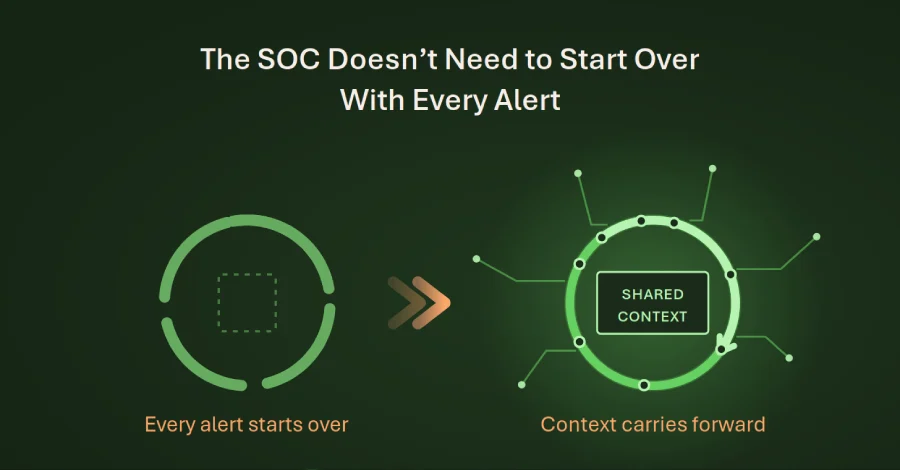
A stateful SOC is one that treats operational memory as a core asset. In a stateful model, every workflow—whether performed by a human or an automated agent—must write to a shared pool of context. If an investigation into a suspicious login concludes that the activity was benign, that verdict, the evidence that led to it, and the remaining uncertainties must be accessible to every future analyst.
The transition to a stateful SOC requires three fundamental changes in institutional discipline:
- Recording the "Unknown": Analysts must be encouraged to document what they cannot see. If an endpoint is unmanaged and lacks telemetry, the case should explicitly record this gap rather than defaulting to a misleading "no malicious activity observed" status.
- Closing the Learning Loop: When a detection rule fires, the reasoning behind the eventual verdict must be fed back to the detection engineering team. This prevents "noisy" rules from persisting for years and ensures that the organization learns from every incident, regardless of the outcome.
- Decoupling Authority from Confidence: The introduction of agentic AI into the SOC necessitates a strict separation of powers. An AI agent might provide a highly confident assessment of an attack, but the authority to act—such as disabling a payroll account during a critical business window—must remain with human operators who possess the necessary business context.
The Future of Defensive Architecture
As NIST and other regulatory bodies update their incident response guidelines, the shift toward risk-based, integrated security management is becoming the new gold standard. Organizations can no longer rely on self-contained, fragmented SOC activities to counter an adversary that uses AI to treat their infrastructure as a dynamic playground.
The immediate path forward is not found in the promise of full-scale autonomous defense, but in the unglamorous work of architecture. It involves mapping out where context is currently lost, identifying the decision-makers who hold critical business data, and ensuring that every investigation leaves behind a legacy of knowledge rather than a closed ticket.
In the current environment, the defender’s greatest disadvantage is not a lack of tools, but a lack of continuity. By transforming the SOC into a stateful system—one that remembers the "why" as clearly as the "what"—organizations can begin to match the speed and iteration of the AI-empowered adversary. The goal is to move the analyst’s job "up the stack," allowing them to focus on challenging hypotheses and evaluating high-stakes containment decisions, rather than spending their shift re-deriving the state of the network. In an era where attacks are run as loops, the defense must be designed as a learning system, ensuring that the lesson of today prevents the catastrophe of tomorrow.
