
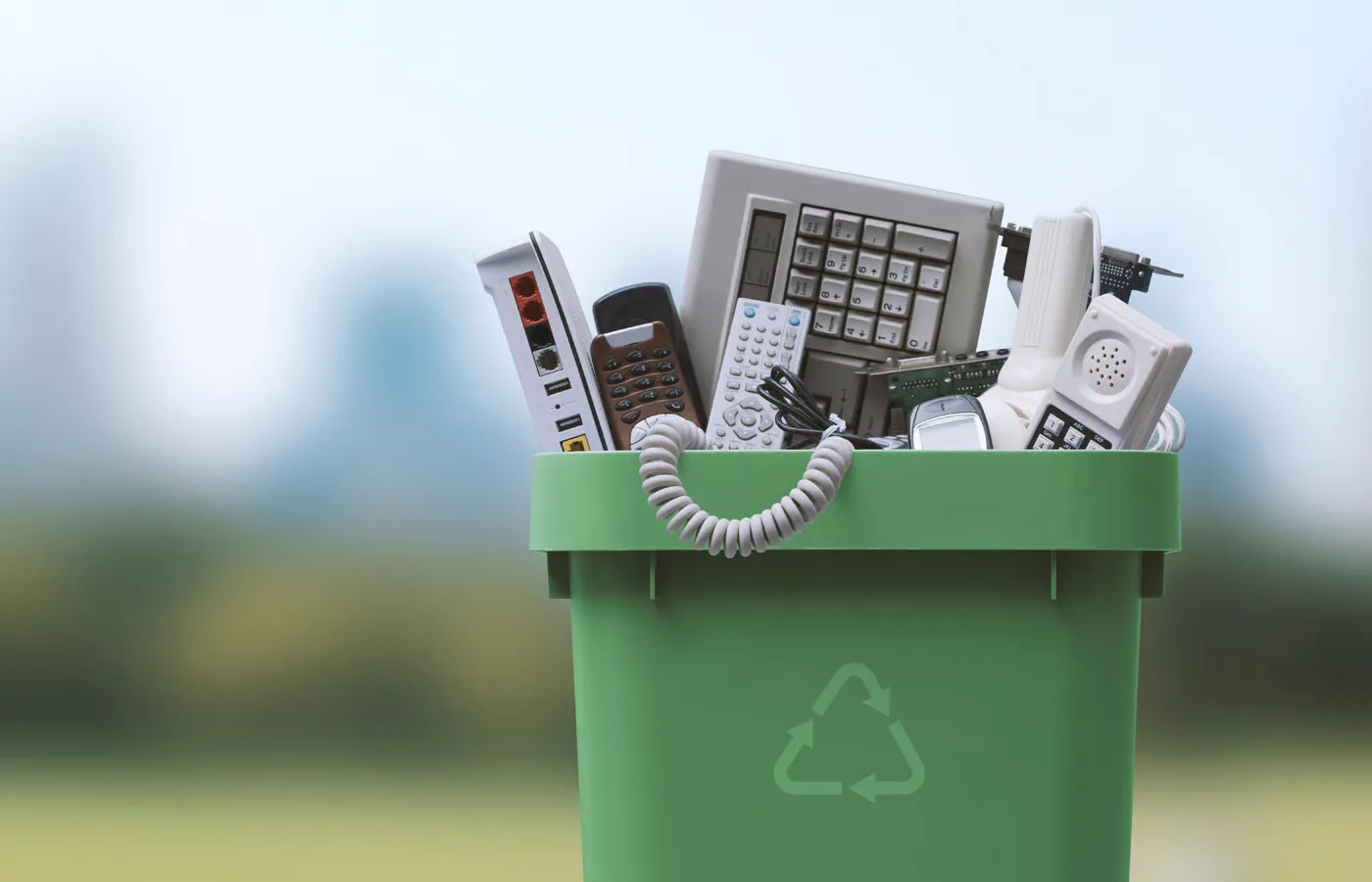

Electronic waste, commonly referred to as e-waste, has emerged as one of the most pressing environmental and operational challenges of the twenty-first century. Encompassing everything from pocket-sized smartphones and discarded MP3 players to large commercial appliances such as industrial refrigerators, HVAC systems, and high-definition televisions, e-waste represents a complex and rapidly expanding category of refuse. Driven by rapid technological obsolescence, consumer demand for continuous upgrades, and shorter product lifecycles, this form of waste threatens ecosystems and public health globally. At the same time, it presents a significant opportunity for resource recovery through sustainable management, circular economy models, and advanced recycling technologies.
Understanding the magnitude of the problem requires examining both the composition of e-waste and its historical growth trajectory. The modern electronics boom began in earnest during the late 20th century with the mass commercialization of personal computers and mobile phones. As silicon chip manufacturing advanced in accordance with Moore’s Law, devices became exponentially more powerful while simultaneously becoming cheaper and more disposable. This economic dynamic fostered a global "throwaway culture," which systematically undervalues the importance of equipment repair, component reuse, and responsible end-of-life disposal.
By 2019, global e-waste generation reached an estimated 53.6 million metric tonnes (59 million U.S. tons), according to data from the World Health Organization and global waste monitoring frameworks. Alarmingly, only 17.4% of that staggering volume was officially documented as collected and properly recycled. The remaining 82.6% either ended up in municipal landfills, was improperly incinerated, or was informally processed under hazardous conditions—frequently in developing nations. This disparity highlights a profound systemic failure in global resource stewardship, supply chain transparency, and waste infrastructure development.
The core challenge of e-waste lies in its dual composition: it is simultaneously a toxic hazard and a treasury of critical raw materials. Discarded electronics contain hazardous substances such as lead, mercury, cadmium, brominated flame retardants, and beryllium. When these items are dumped in conventional landfills or subjected to crude backyard burning and acid-bath stripping—methods common in informal recycling sectors—toxic chemicals leach into groundwater supplies, contaminate agricultural soils, and release dangerous particulate matter into the atmosphere. Occupational exposure in these informal settings leads to severe neurological damage, respiratory illnesses, kidney disease, and developmental disorders among vulnerable populations, particularly children.
Conversely, e-waste is rich in valuable and increasingly scarce commodities. Devices incorporate significant quantities of copper, aluminum, iron, and precious metals like gold, silver, and palladium. Furthermore, modern electronics rely heavily on critical raw materials and rare earth elements—such as neodymium, cobalt, indium, and lithium—which are vital for manufacturing renewable energy technologies, electric vehicle batteries, and advanced computing hardware. Recovering these elements through formal recycling processes reduces the heavy environmental footprint associated with virgin mining operations, stabilizes supply chains, and prevents geopolitical vulnerabilities related to mineral monopolies.
Addressing this multifaceted crisis requires a comprehensive understanding of the different categories of electronic waste. E-waste is broadly classified into several functional streams: temperature exchange equipment (such as refrigerators and air conditioners), screens and monitors, lamps, large equipment (washing machines, electric stoves, and commercial servers), small equipment (microwaves, electric shavers, and toasters), and small IT and telecommunications equipment (laptops, mobile phones, routers, and printers). Each category demands specialized handling protocols, safety measures, and mechanical or chemical separation techniques to maximize recovery rates and mitigate environmental harm.
The management and recycling of e-waste follow a multi-stage industrial process designed to strip away hazards while extracting valuable commodities. The process typically begins with manual sorting and dismantling, where skilled technicians remove hazardous components like batteries, capacitors, and mercury-containing lamps. Next, the remaining hardware undergoes mechanical shredding and crushing to break the materials down into manageable fragments. Advanced magnetic separators then extract ferrous metals, while eddy current separators isolate non-ferrous metals like aluminum and copper. Finally, sophisticated metallurgical and chemical processes—including hydrometallurgical refining and pyrometallurgical smelting—purify the precious metals and critical minerals, preparing them for re-entry into the manufacturing supply chain.
Despite these established industrial methodologies, e-waste management is severely inhibited by persistent operational and economic challenges. One of the primary obstacles is the sheer complexity of modern product design. Manufacturers frequently glue or weld components together rather than using screws, and they embed proprietary microchips that trigger software lockouts if unauthorized replacement parts are installed. This design philosophy intentionally discourages repair and impedes efficient recycling. Additional challenges include the lack of standardized global collection infrastructure, illegal international transboundary shipments of e-waste from developed to developing nations, and fluctuating market prices for secondary raw materials, which can make formal recycling economically unviable for smaller operators.
The responsibility for managing this crisis extends across multiple sectors of society, with the corporate world bearing a foundational obligation. Leading technology companies and equipment manufacturers are increasingly pressured to adopt Extended Producer Responsibility (EPR) frameworks, which hold producers physically and financially accountable for the entire lifecycle of their products, including take-back, recycling, and final disposal. Corporate sustainability initiatives now frequently incorporate "Design for Environment" (DfE) principles. These guidelines dictate that new electronics should be manufactured using fewer hazardous substances, engineered for effortless manual disassembly, and constructed with standardized modular components that allow consumers to easily upgrade or repair devices rather than replacing them entirely.
Consumers also play a critical role in altering the lifecycle dynamics of electronic devices. Consumer behavior heavily influences market demand, and a shift toward conscious consumption is vital. Best practices for everyday users include keeping devices for longer periods, utilizing manufacturer-certified repair services, participating in local e-waste drop-off and municipal recycling programs, and thoroughly wiping personal data before donating or recycling old hardware. By rejecting the cycle of premature obsolescence, consumers can exert significant economic pressure on manufacturers to produce more durable and sustainable goods.
Governments at the regional, national, and international levels have stepped in to establish legal frameworks designed to govern the collection and processing of e-waste. Internationally, the Basel Convention on the Control of Transboundary Movements of Hazardous Wastes and Their Disposal remains a cornerstone agreement, regulating the movement of hazardous waste across borders and protecting developing nations from becoming dumping grounds for wealthy industrialized countries. Regional directives, such as the European Union’s Waste Electrical and Electronic Equipment (WEEE) Directive and the Restriction of Hazardous Substances (RoHS) Directive, set stringent legal standards for recycling quotas, hazardous material bans, and producer take-back mandates. In the United States, e-waste policy is largely decentralized, driven by a patchwork of state-level laws, right-to-repair legislation, and EPA guidelines that encourage voluntary recycling partnerships.
Looking toward the future, mitigating the global e-waste crisis will depend heavily on technological innovation and systemic economic restructuring. Advanced recycling technologies are rapidly transforming how material recovery is conducted. Artificial intelligence-driven sorting robots equipped with computer vision and high-speed optical sensors are increasingly deployed to identify and categorize different plastics and metals with unprecedented speed and accuracy. Simultaneously, advanced spectrometry allows for precise elemental identification, while innovative chemical and biological processes—such as bioleaching, which utilizes specific microorganisms to extract precious metals from electronic scrap—offer clean, low-energy alternatives to traditional smelting.
Beyond end-of-pipe recycling solutions, the global economy is witnessing a fundamental pivot toward circular economy models within the technology sector. The "product-as-a-service" (PaaS) business model is gaining traction, wherein enterprise customers and consumers lease hardware configurations rather than purchasing them outright. This economic model aligns the financial incentives of manufacturers with product longevity; because the manufacturer retains ownership of the hardware, they are inherently incentivized to build durable, upgradeable, and easily recyclable electronics that can be continuously refurbished and redeployed across multiple user lifecycles.
Ultimately, addressing the global e-waste challenge is a collective imperative that requires coordinated action among policymakers, industrial leaders, and everyday consumers. The integration of cutting-edge recycling infrastructure, the widespread adoption of sustainable product architectures, and the enforcement of robust environmental legislation are non-negotiable steps toward a cleaner, more sustainable future. As the volume of global electronic consumption continues to escalate, society must adapt its handling methodologies to ensure that the technological progress of the digital age does not come at the permanent expense of planetary health and human well-being. For organizations and enterprises navigating these shifts, operational sustainability extends beyond hardware recycling; optimizing server room power consumption and enhancing data center energy efficiency represent vital, immediate strategies for reducing overall carbon footprints and mitigating environmental degradation.
