
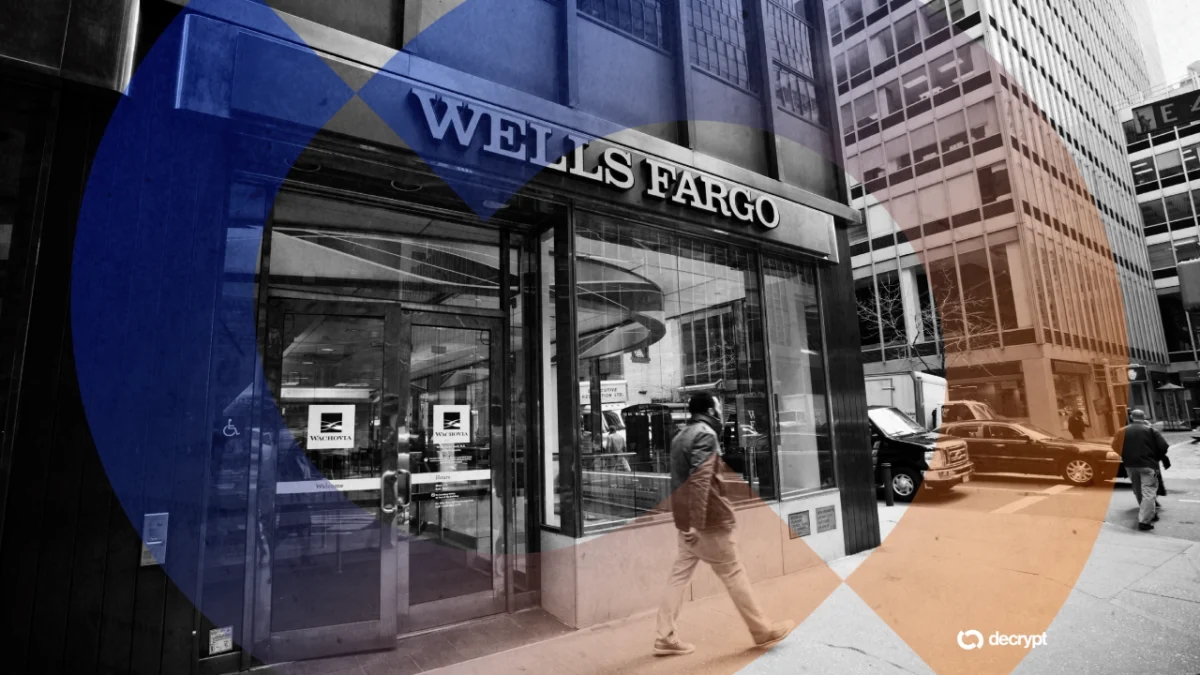

The list of major U.S. corporations formally opposing the inclusion of their equity on the OKX and ICE Tokenized Securities Venue (TSV) is expanding rapidly, signaling a significant rift between traditional finance giants and the emerging frontier of blockchain-based trading. According to an updated public notice released by the joint venture on Friday, October 26, 2026, six additional companies—Wells Fargo, Cisco Systems, Marvell Technology, Arm Holdings, Moderna, and Intuit—have formally requested that their shares remain excluded from the platform. This latest update brings the total number of objecting issuers to 22, a substantial increase from the 16 recorded on October 19 and the nine identified just days prior on October 15.
The OKXICE TSV, a 50-50 partnership between the New York Stock Exchange owner Intercontinental Exchange (ICE) and the global cryptocurrency exchange OKX, aims to facilitate the trading of tokenized U.S. securities on a 24/7 basis. By leveraging Uniswap v4 liquidity pools on the XLayer blockchain and pairing trades with stablecoins like USDC, the platform seeks to capture the burgeoning demand for round-the-clock equity access. However, the consistent flow of "opt-out" notices from industry leaders suggests that many of the world’s most valuable companies are not yet ready to endorse or participate in this experimental market structure.
A Chronology of Opposition
The resistance began to materialize shortly after the platform’s public unveiling. The initial cohort of objectors set a tone of caution, with industry titans such as Microsoft, Alphabet, Goldman Sachs, Verizon, Broadcom, and UnitedHealth Group appearing on the earliest lists of companies seeking to block their inclusion.
The timeline of this growing friction reflects a rapidly evolving regulatory and operational environment:
- Mid-October 2026: The OKXICE TSV initiative gains public traction, prompting the first wave of institutional responses. Nine companies, including tech stalwarts and major financial services firms, issue notices to opt out of the tokenization program.
- October 19, 2026: The list of objectors grows to 16, signaling that the initial concerns raised by the first group were being echoed by a broader cross-section of the S&P 500.
- October 26, 2026: The list reaches 22, as Wells Fargo becomes the second major U.S. bank to join the fray, alongside high-profile semiconductor and biotechnology firms like Arm, Marvell, and Moderna.
Despite the frequency of these notices, the companies involved have maintained a conspicuous silence regarding the specific legal or strategic rationales behind their objections. None of the official communications detail whether these companies fear regulatory repercussions, security vulnerabilities, or a perceived dilution of their corporate governance standards through decentralized trading.
The Structural Mechanics and Regulatory Landscape
The OKXICE TSV operates under the framework of the SEC’s innovation exemption, a policy introduced in September 2026 as a bridge for digital asset experimentation after the federal Clarity Act stalled in the U.S. Senate. This exemption provides a unique, albeit untested, sandbox for companies to explore tokenized offerings.

The technical architecture of the platform relies on the XLayer blockchain and automated market maker (AMM) protocols. While proponents argue that this creates a more efficient, inclusive, and accessible market, the platform’s own disclosures have highlighted a series of inherent risks that may be contributing to the widespread corporate hesitation:
- Market Stability: Unlike traditional exchanges, the venue lacks standard circuit breakers. The platform is designed to pause trading only when the underlying traditional stock market halts, leaving it vulnerable to extreme volatility during off-market hours.
- MEV Vulnerabilities: The platform has no formal policies addressing Maximal Extractable Value (MEV), which allows sophisticated traders to front-run or reorder transactions for profit at the expense of retail participants.
- Governance and Smart Contracts: Administrators retain the ability to upgrade smart contracts without advance notice to the user base. Furthermore, the contract governing participant eligibility has undergone only internal auditing, a practice that contrasts sharply with the rigorous, third-party security standards typically demanded by large-cap issuers.
- Operational Ambiguity: The platform acknowledges that broker-dealers face unresolved questions concerning trade reporting requirements and the standard of "best execution," which could lead to thin liquidity and regulatory friction for firms that decide to participate.
Comparative Market Context
The move by OKX and ICE represents a competitive response to broader industry shifts. Nasdaq, which secured its own SEC approval for a tokenized securities pilot program, has taken a markedly different approach by opting its shares out of the broader innovation exemption. This suggests that even within the exchange industry, there is a lack of consensus on the appropriate pace and methodology for bringing traditional securities onto the blockchain.
The International Monetary Fund (IMF) has recently weighed in on the sector, noting that while there is verified, tangible demand for tokenized stocks—particularly among retail investors who seek to trade outside of standard 9:30 a.m. to 4:00 p.m. ET hours—the market remains structurally fragile. The IMF’s findings emphasize that current liquidity levels are insufficient to prevent significant price swings, potentially exposing investors to risks that the traditional financial system is specifically designed to mitigate.
The Broader Implications for Tokenization
The refusal of 22 major companies to participate in the OKXICE TSV is a bellwether for the "tokenization of everything" movement. While proponents maintain that blockchain technology is the logical next step for equity markets, the current resistance highlights a fundamental clash of philosophies.
Traditional companies are accustomed to the stability, regulatory clarity, and centralized oversight of the NYSE and Nasdaq. The transition to a decentralized, smart-contract-driven environment requires these firms to accept a level of technical and operational uncertainty that they appear unwilling to embrace. Furthermore, the lack of a clear legal framework regarding the rights of token holders—specifically, how they interact with shareholder voting and dividend distributions—remains a significant hurdle.
For the OKXICE joint venture, the challenge is two-fold: they must prove that their platform is secure enough to satisfy the legal departments of the world’s largest corporations while simultaneously building enough volume to attract liquidity. The fact that the platform has recently opened the door for issuers to tokenize their own shares suggests a pivot toward a more collaborative model, where the platform provides the infrastructure while the companies maintain control over the issuance process.
However, as long as the list of objectors continues to grow, the dream of a seamless, 24/7 tokenized stock market remains a work in progress. For investors, the current landscape is a reminder that while the technology is ready, the integration of traditional corporate equity into the decentralized web requires a level of institutional alignment that has yet to be achieved. Whether this growing list of objectors is a temporary reaction to the nascent state of the technology or a permanent rejection of the model remains the primary question facing the future of tokenized finance. As 2026 draws to a close, market observers will be watching closely to see if any major issuer reverses their decision or if the trend of "opting out" continues to accelerate into the new year.
