
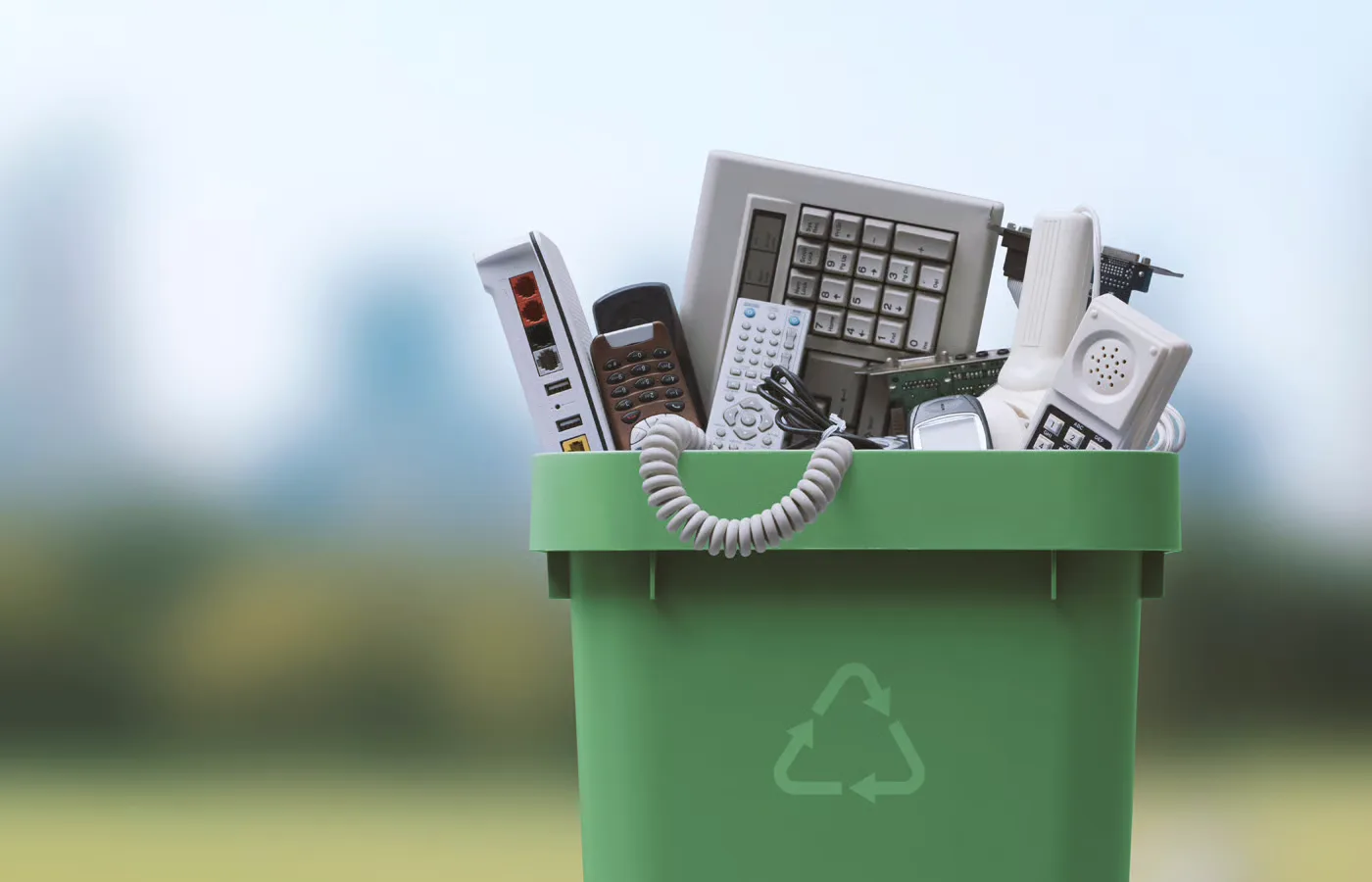

The rapid acceleration of technological innovation has fundamentally transformed modern society, driving unprecedented access to digital tools, communication platforms, and computational power. However, this relentless march of progress carries a severe ecological consequence: the exponential accumulation of electronic waste, or e-waste. Encompassing everything from discarded smartphones and wearable fitness trackers to obsolete household refrigerators, industrial air conditioning units, and flat-screen televisions, e-waste has emerged as one of the most pressing environmental and public health challenges of the twenty-first century.
While properly recycled electronics offer a vital secondary supply of critical materials—such as copper, gold, and rare earth elements—that can be reintroduced into the manufacturing pipeline, the vast majority of discarded devices are handled improperly. When exposed to rudimentary dismantling techniques or left to degrade in municipal landfills, toxic components including lead, mercury, cadmium, and brominated flame retardants leach into soil and water tables, or release carcinogenic dioxins into the atmosphere when burned.
Understanding the multifaceted nature of this global crisis requires examining its historical trajectory, the severe economic and environmental implications of current disposal trends, the roles and responsibilities of various stakeholders, and the innovative technological interventions offering a pathway toward a circular economy.
The Evolution of the E-Waste Crisis: A Historical Chronology
The genesis of the e-waste phenomenon can be traced back to the mid-to-late twentieth century, coinciding with the commercialization of personal computers, consumer audio equipment, and mobile telephony. During the 1970s and 1980s, electronic devices were largely manufactured with longer life cycles and higher repairability indices. However, the subsequent digital revolution of the 1990s and 2000s catalyzed a paradigm shift.
By the turn of the millennium, the widespread adoption of the internet, coupled with the rapid miniaturization of semiconductor components, shortened product life cycles dramatically. The introduction of the modern smartphone in the late 2000s accelerated this trend, embedding a cultural expectation of annual device upgrades.
In 2019, the United Nations Institute for Training and Research (UNITAR), alongside the International Telecommunication Union (ITU) and the International Solid Waste Association (ISWA), published a landmark report estimating that a staggering 53.6 million metric tonnes of e-waste were generated globally in that single year. This equated to roughly 7.3 kilograms per capita worldwide. Most alarmingly, the report revealed that only 17.4 percent of this total volume was officially documented as having been collected and recycled through formal, environmentally sound channels.
Projections indicate that global e-waste generation is on track to surpass 74 million metric tonnes annually by 2030, propelled by rising consumer demand in developing economies, the proliferation of Internet of Things (IoT) devices, and the absence of robust global collection infrastructure.
Composition and Categories of Electronic Waste
Electronic waste is a uniquely complex material stream. Unlike organic waste or traditional municipal refuse, electronic equipment represents a concentrated convergence of both highly valuable precious metals and lethal chemical toxins.
From a compositional standpoint, a typical smartphone or laptop contains dozens of distinct elements. Precious metals such as gold, silver, palladium, and platinum are utilized in circuit boards for their superior conductivity and corrosion resistance. Base metals like copper, aluminum, and iron form the structural and wiring framework. Concurrently, these devices house hazardous substances designed to insulate, power, or regulate internal components. Lead solder, mercury switches, lithium-ion battery electrolytes, cadmium coatings, and persistent organic pollutants are standard elements within modern electronics.
To manage this diverse material flow effectively, international regulatory bodies and waste management organizations generally categorize e-waste into several distinct operational streams:
- Temperature Exchange Equipment: Commonly referred to as cooling and freezing equipment, this category includes refrigerators, freezers, air conditioners, and heat pumps, which often contain ozone-depleting substances or potent greenhouse gases in their refrigerants and insulating foams.
- Screens and Monitors: Televisions, computer monitors, laptops, notebooks, and tablets featuring cathode ray tubes (CRTs), liquid crystal displays (LCDs), or organic light-emitting diodes (OLEDs), which frequently harbor leaded glass and mercury backlights.
- Lamps: Fluorescent tubes, high-intensity discharge lamps, and LED light sources containing heavy metals.
- Large Equipment: Washing machines, clothes dryers, dishwashers, electric stoves, large printing devices, and photovoltaic panels.
- Small Equipment: Microwaves, ventilation equipment, vacuum cleaners, electric shavers, toasters, digital cameras, and electronic toys.
- Small IT and Telecommunication Equipment: Mobile phones, Global Positioning System (GPS) devices, pocket calculators, routers, personal computers, printers, and telephones.
Environmental and Public Health Implications
The consequences of mismanaged electronic waste extend far beyond aesthetic degradation of landscapes; they represent a direct threat to global ecological stability and human health.
When e-waste is diverted to informal recycling hubs—predominantly located in developing nations across parts of Africa and Asia—it is frequently subjected to primitive recovery methods. Workers, often operating without personal protective equipment, employ open burning of plastic cable casings to extract copper wire, or use concentrated acid baths to strip gold from circuit boards.
These practices release toxic fumes containing dioxins, furans, and polycyclic aromatic hydrocarbons into the local air supply. Simultaneously, heavy metals such as lead and cadmium seep directly into unlined soil, contaminating agricultural land and local aquifers. Bioaccumulation of these toxins in the food chain leads to severe health pathologies among local populations, including neurological damage, respiratory disorders, kidney failure, endocrine disruption, and elevated rates of carcinogenesis.
Furthermore, the improper disposal of cooling appliances releases hydrofluorocarbons and chlorofluorocarbons directly into the atmosphere, accelerating global climate change and eroding the ozone layer.
Logistical and Structural Challenges in E-Waste Management
Establishing an efficient global e-waste management framework is fraught with persistent logistical, economic, and behavioral hurdles.
First, the global trade in second-hand electronics and illegal e-waste smuggling remains a formidable barrier. Despite international treaties designed to curb the movement of hazardous waste across borders, millions of tons of obsolete electronics are routinely mislabeled as "functional goods" and exported from developed nations to regions with lax environmental enforcement.
Second, modern product design actively discourages repair and recycling. Manufacturers frequently employ proprietary screws, glued-in batteries, and hermetically sealed casings that render non-destructive disassembly nearly impossible. This phenomenon, often termed planned obsolescence, forces consumers to discard entire systems rather than replacing isolated, failing components.
Third, the lack of formalized collection infrastructure in many jurisdictions leaves consumers with few viable options for disposal. Without accessible municipal drop-off sites or convenient take-back programs, individuals frequently store obsolete electronics in residential basements and drawers—a trend known as "hoarding" of e-waste—or discard them into standard household trash bins, where they end up in conventional landfills or incinerators.
Corporate Responsibility and the Circular Economy
Addressing the root causes of the e-waste crisis requires a fundamental shift in how corporations conceptualize product lifecycles. Industry leaders, manufacturers, and technology enterprises bear substantial responsibility for engineering practices that either exacerbate or mitigate environmental degradation.
In response to mounting regulatory pressure and consumer demand, progressive companies are increasingly embracing the principles of the circular economy. Rather than adhering to the traditional linear economic model of "take, make, dispose," the circular framework emphasizes closed-loop systems where materials are continuously recovered, remanufactured, and repurposed.
Key corporate strategies gaining traction include:
- Design for Environment (DfE): Manufacturers are redesigning products to minimize the use of hazardous substances from the outset. This involves utilizing modular architectures, where individual components—such as camera modules, batteries, and display panels—can be easily swapped out using standard tools, thereby extending the operational lifespan of the core device.
- Product-as-a-Service (PaaS) Business Models: Shifting away from outright product ownership, PaaS models involve consumers or enterprises leasing hardware functionality. Because the manufacturer retains ownership of the physical device throughout its lifecycle, they maintain a direct financial incentive to design durable, easily upgradeable, and fully recyclable equipment that can be reclaimed and refurbished at the end of a lease term.
- Extended Producer Responsibility (EPR): Many corporations are voluntarily adopting or complying with mandatory EPR frameworks, which hold manufacturers financially and physically accountable for the entire lifecycle of their products, including post-consumer collection, dismantling, and recycling.
The Role of Consumers and Enterprise IT Practices
While corporate initiatives and regulatory policies provide the overarching architecture for sustainable e-waste management, individual consumer choices and enterprise IT strategies remain vital catalysts for change.
For individual consumers, shifting away from a culture of disposable technology requires conscious purchasing habits. Prioritizing device repair over immediate replacement, supporting manufacturers that commit to transparent sustainability metrics, and utilizing certified local e-waste recycling collection events are critical actions.
For commercial enterprises and data center operators, the stakes are equally high. Organizations manage vast fleets of servers, networking hardware, and employee workstations that are regularly upgraded to maintain computational competitiveness. To mitigate their electronic footprint, businesses are adopting rigorous IT asset disposition (ITAD) protocols.
Beyond recycling hardware, organizations can significantly cut back on their carbon footprint and operational overhead costs by optimizing server virtualization and improving data center and server room power consumption efficiency. Consolidating workloads onto high-density, energy-efficient server infrastructure reduces thermal output, lowers electricity demand, and extends the operational deployment window of enterprise hardware, thereby delaying the onset of premature e-waste generation.
Policy, Legislation, and International Frameworks
The transboundary nature of electronic waste necessitates robust legal frameworks operating at national, regional, and international levels.
At the international level, the Basel Convention on the Control of Transboundary Movements of Hazardous Wastes and Their Disposal serves as the primary global treaty governing the movement of e-waste. Designed to restrict the export of hazardous waste from developed nations to developing countries, the convention has increasingly tightened controls on plastic and electronic scrap to ensure transparency and accountability.
Regionally, legislative bodies have enacted stringent directives to force industry compliance. The European Union’s Waste Electrical and Electronic Equipment (WEEE) Directive sets mandatory targets for the collection, recycling, and recovery rates of all types of electrical goods, placing the financial burden of recycling directly on producers. Furthermore, the EU’s recent push for universal charging standards and mandatory right-to-repair legislation represents a watershed moment in regulatory enforcement, compelling global tech giants to alter their hardware design philosophies.
In the United States, e-waste management is largely decentralized, governed by a patchwork of state-level laws rather than a comprehensive federal statute. Over half of U.S. states have enacted electronics recycling laws, prohibiting the disposal of specific items—such as televisions and computer monitors—in municipal landfills while establishing manufacturer-funded collection programs.
Advanced Technological Innovations in E-Waste Processing
As the volume of global electronic waste continues to mount, the future of e-waste handling increasingly relies on cutting-edge technological innovations designed to optimize material recovery and minimize environmental impact.
The integration of artificial intelligence (AI) and machine vision into recycling facilities has revolutionized sorting operations. AI-driven robotic sorting systems can rapidly identify, categorize, and separate complex plastics, circuit boards, and battery types at speeds far exceeding manual human labor, drastically increasing recovery purity rates.
Furthermore, advancements in chemical processing and metallurgy have introduced sustainable alternatives to traditional pyrometallurgical (smelting) and hydrometallurgical (acid leaching) techniques. Bioleaching, for instance, utilizes specific strains of microorganisms to extract precious metals from electronic ores through biological oxidation, significantly reducing energy consumption and toxic chemical runoff.
The Bottom Line: A Cleaner Future Through Collective Action
The proliferation of electronic waste is an inevitable byproduct of a technology-driven world, but its current mismanaged trajectory is not an immutable reality. Mitigating the profound environmental, ecological, and public health impacts of e-waste requires a synchronized, multi-sectoral approach.
Governments must enforce rigorous legislative frameworks and international treaties that penalize illegal dumping and uphold extended producer responsibility. Corporations must continue to pivot toward circular economy principles, embedding modularity, repairability, and non-toxic material sourcing into the foundational design of every electronic device. Concurrently, consumers and enterprise organizations must exercise intentional stewardship—optimizing energy consumption in server rooms, maintaining hardware longevity, and committing to certified recycling protocols.
Ultimately, transitioning toward a sustainable technological ecosystem demands that innovation in device disposal match the speed and ingenuity of innovation in device creation. Only through the concerted, collaborative efforts of policymakers, industry leaders, and informed end-users can society ensure that the digital revolution does not leave a legacy of permanent environmental degradation.
