

A container is a lightweight, standalone, executable package of software that includes everything needed to run a piece of software: code, runtime, system tools, system libraries, and settings. This technology is part of a broader trend known as containerization, a method of packaging software so it can be run with its dependencies isolated from other processes. This article explores what containerization is, the key components of containers, and its differences from virtual machines (VMs), delving into the benefits, use cases, popular container technologies, potential challenges, and future trends in this transformative field.
Understanding the Core of Containerization
At its heart, containerization allows developers to package and run applications in isolated environments. This process ensures a consistent and efficient means of deploying software across diverse infrastructures, from a developer’s local workstation to large-scale production servers. Crucially, it mitigates the "it works on my machine" problem by eliminating concerns about differing OS configurations and underlying hardware.
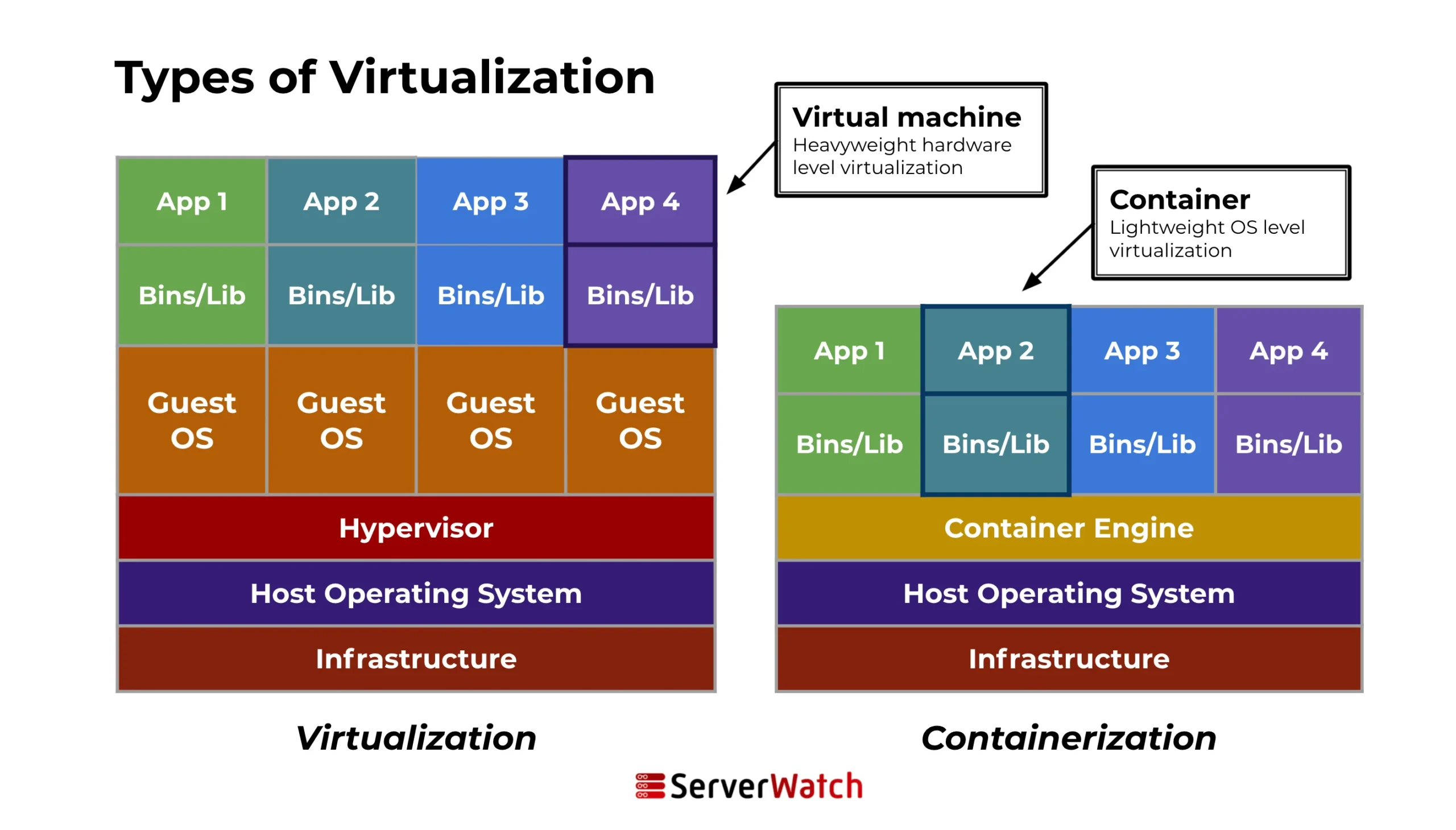
Unlike traditional deployment methods that often involve installing software directly onto an operating system, containers encapsulate an application along with all its necessary dependencies. This encapsulated unit, known as a container image, contains the application code, runtime environment, libraries, and system tools. A key architectural advantage is that containers share the host system’s kernel. While maintaining their own isolated filesystem, CPU, memory, and process space, this shared kernel makes them significantly more lightweight and resource-efficient compared to virtual machines.
Containers vs. Virtual Machines: A Fundamental Distinction
Both containers and virtual machines (VMs) serve the purpose of providing isolated environments for running applications. However, their underlying architectures and operational principles differ significantly.
| Feature | Containers | Virtual Machines (VMs) |
|---|---|---|
| Architecture | Containers share the host system’s kernel, isolating application processes from the OS. They do not require a full guest operating system for each instance, leading to a lighter footprint and faster startup times. | A VM bundles an application, its dependencies, and an entire guest operating system. This guest OS runs on virtual hardware managed by a hypervisor, which sits atop the host’s physical hardware. VMs are isolated from each other and the host, offering a high degree of security and control. |
| Resource Management | Containers are more resource-efficient due to the shared kernel and the absence of individual operating systems. They consume fewer system resources, primarily needing only the application and its runtime environment. This leads to more efficient utilization of underlying hardware. | The requirement to run a full operating system within each VM means they consume more system resources (CPU, RAM, storage). This can lead to less efficient utilization of the underlying hardware compared to containerization. |
| Isolation Level | Process-level isolation. Applications within containers are isolated from each other and the host OS, but they share the host kernel. | Hardware-level isolation. Each VM has its own dedicated virtual hardware and operating system, providing stronger isolation from the host and other VMs. |
| Portability | Highly portable. Container images can run consistently across different environments with compatible container runtimes. | Portable, but can be more complex to move between different hypervisor platforms or cloud environments. |
| Startup Time | Seconds or milliseconds. | Minutes. |
| Size | Megabytes. | Gigabytes. |
The Mechanics of Containerization
The process of containerization involves encapsulating an application and its operating environment into a self-contained unit. This is achieved through several key components:
- Container Image: This is a lightweight, standalone, executable package that includes everything needed to run a piece of software. It’s a read-only template containing the application code, runtime, libraries, environment variables, and configuration files.
- Container Runtime: This is the software responsible for running containers. It manages the lifecycle of containers, including starting, stopping, and monitoring them. Examples include containerd, CRI-O, and Docker Engine.
- Container Engine: A higher-level tool that orchestrates the creation and management of containers. Docker Engine is a prominent example, providing the tools to build, ship, and run containers.
- Container Orchestration Platform: For managing large numbers of containers, orchestration platforms like Kubernetes and Docker Swarm automate the deployment, scaling, and management of containerized applications.
Key Components of a Container
Each container, while sharing the host kernel, operates with its own isolated resources. The essential components include:
- Isolated Filesystem: Each container has its own root filesystem, ensuring that applications within a container do not interfere with the host system or other containers.
- Process Space: Containers run processes independently of the host and other containers, with their own process IDs (PIDs).
- Network Interface: Each container typically has its own virtual network interface, allowing it to communicate with other containers and the outside world.
- Resource Limits: Containerization platforms allow for the imposition of resource limits on CPU, memory, and I/O for individual containers, preventing one application from consuming all available resources.
Driving Modern Software Development: Container Use Cases
The versatility and efficiency of containers have made them indispensable across a wide spectrum of software development and deployment scenarios.
Microservices and Cloud-Native Architectures
Containers are a natural fit for microservices, an architectural style that structures an application as a collection of small, independent services. Each microservice can be deployed within its own container, fostering isolation, simplifying updates, and enabling independent scaling. In cloud-native environments, this translates to applications that are highly scalable, resilient, and can be dynamically managed using orchestration tools like Kubernetes for optimal resource utilization and high availability.
Streamlining CI/CD Pipelines
Containerization significantly enhances Continuous Integration and Continuous Deployment (CI/CD) pipelines. By providing consistent environments that mirror production, containers help catch bugs early in the development cycle. Automated testing can be performed within these ephemeral, production-like environments, leading to more reliable deployments and accelerated release cycles. The portability of containers ensures that an application behaves identically across development, testing, staging, and production environments, drastically reducing deployment-related failures.
Efficient Application Packaging and Distribution
The ability of containers to bundle an application with all its dependencies simplifies software packaging and distribution. This portability allows applications to run consistently across various operating systems and cloud platforms without requiring modifications. Furthermore, container registries act as central repositories for storing and managing container images, enabling easy version control and swift rollbacks if issues arise, thereby enhancing deployment stability.
The Multifaceted Benefits of Containerization
The widespread adoption of containerization is driven by a compelling set of advantages:
- Portability: Applications packaged in containers can run consistently across any environment that supports the container runtime, from a developer’s laptop to on-premises servers and public cloud infrastructure. This eliminates the "it works on my machine" problem and simplifies cross-platform development and deployment.
- Consistency: Containers ensure that the application environment remains identical from development to production, reducing the risk of unexpected behavior due to environmental differences.
- Agility and Speed: Containers start up in seconds or milliseconds, enabling rapid application deployment, scaling, and updates. This speed is crucial for agile development methodologies and responding to market demands quickly.
- Resource Efficiency: By sharing the host OS kernel, containers consume fewer resources (CPU, memory, storage) compared to VMs. This leads to higher server density and lower infrastructure costs.
- Isolation: While not as strong as VM isolation, containers provide sufficient isolation for most applications, preventing conflicts between dependencies and ensuring that one application’s issues don’t affect others.
- Scalability: Container orchestration platforms like Kubernetes make it easy to scale applications up or down by launching or terminating container instances as needed, ensuring optimal performance and availability.
- Simplified Management: Containerization, especially when paired with orchestration, automates many aspects of application deployment, scaling, and management, reducing operational overhead.
- Cost Savings: Increased resource efficiency, faster deployment cycles, and reduced operational overhead can translate into significant cost savings for organizations.
- Improved Developer Productivity: Developers can focus on writing code without worrying about the underlying infrastructure or environment configurations, leading to increased productivity.
- Enhanced Security: While security is a consideration, containers can be designed with security in mind, offering granular control over processes and resource access.
- Faster Time to Market: The combination of agility, consistency, and simplified management accelerates the entire software delivery lifecycle, allowing businesses to bring new features and products to market faster.
- Microservices Enablement: Containers are the foundational technology for building and deploying microservices architectures, allowing for independent development, deployment, and scaling of individual services.
- Legacy Application Modernization: Containerization can be used to package and deploy legacy applications, making them more manageable and portable without requiring complete rewrites.
Navigating the Challenges of Containerization
Despite its advantages, implementing and managing containerized environments comes with its own set of complexities and considerations.
Security Concerns
While containers offer isolation, they are not impervious to security threats. Potential vulnerabilities include:
- Kernel Exploits: Since containers share the host kernel, a vulnerability in the kernel could potentially affect all containers running on that host.
- Image Vulnerabilities: Container images may contain outdated libraries or vulnerable software components, requiring diligent scanning and patching.
- Insecure Registries: Publicly accessible container registries can be targets for attackers, and private registries need robust access control.
- Runtime Security: Misconfigurations in container runtimes or orchestration platforms can expose containers to unauthorized access or manipulation.
- Privilege Escalation: If a container is granted excessive privileges, an attacker could potentially use it to gain access to the host system.
Management Complexity
Managing a large-scale containerized environment can be complex:
- Orchestration Overhead: While powerful, tools like Kubernetes have a steep learning curve and require expertise to set up, configure, and maintain.
- Networking: Managing network traffic between numerous containers and services can become intricate, requiring sophisticated networking solutions.
- Storage: Persistent storage for stateful applications within containers needs careful planning and management.
- Monitoring and Logging: Comprehensive monitoring and logging across a distributed containerized system are essential for troubleshooting and performance analysis.
- Skill Gap: Organizations may face a shortage of personnel with the necessary skills to effectively manage containerization technologies.
Integration with Existing Systems
Integrating containerization into an existing IT infrastructure presents its own set of challenges:
- Hybrid Cloud Strategies: Seamlessly managing containers across on-premises data centers and multiple cloud providers requires robust hybrid cloud management tools.
- Legacy System Compatibility: Migrating or integrating legacy applications into containerized environments can be a significant undertaking.
- DevOps Culture Shift: Successful container adoption often necessitates a cultural shift towards DevOps practices, requiring collaboration between development and operations teams.
- Security Policy Alignment: Ensuring that container security policies align with existing organizational security frameworks can be a complex process.
Leading the Charge: Popular Container Technologies
The containerization ecosystem is rich with powerful tools and platforms, with some achieving widespread industry adoption.
Docker: The Pioneer of Accessible Containerization
Docker is arguably the most influential container platform, democratizing containerization and making it accessible to a broader audience. It provides a comprehensive suite of tools for building, shipping, and running containerized applications.
Key Features of Docker:
- Dockerfile: A text file containing instructions for building a Docker image.
- Docker Images: Read-only templates for creating containers.
- Docker Containers: Runnable instances of Docker images.
- Docker Hub: A cloud-based registry for sharing Docker images.
- Docker Compose: A tool for defining and running multi-container Docker applications.
Benefits of Docker:
- Ease of Use: Simplifies the process of creating and managing containers.
- Portability: Ensures applications run consistently across different environments.
- Efficiency: Lightweight containers lead to better resource utilization.
- Large Community Support: Extensive documentation and community forums provide ample support.
Kubernetes: The Orchestration Powerhouse
Kubernetes, often abbreviated as K8s, is the de facto standard for container orchestration. Developed by Google and now maintained by the Cloud Native Computing Foundation (CNCF), it automates the deployment, scaling, and management of containerized applications.
Key Features of Kubernetes:
- Pod: The smallest deployable unit, representing a group of one or more containers.
- Deployment: Manages the lifecycle of Pods, enabling declarative updates and rollbacks.
- Service: Provides a stable network endpoint for accessing Pods.
- Ingress: Manages external access to services within a cluster.
- StatefulSets: For managing stateful applications.
- ReplicaSets: Ensures a specified number of Pod replicas are running.
Benefits of Kubernetes:
- Automated Scaling: Dynamically scales applications based on demand.
- Self-Healing: Automatically restarts failed containers, replaces dead containers, and kills containers that don’t respond to health checks.
- Load Balancing and Service Discovery: Distributes network traffic and enables services to find each other.
- Rolling Updates and Rollbacks: Manages application updates with zero downtime and allows for easy rollbacks.
- Declarative Configuration: Enables defining desired states, and Kubernetes works to achieve them.
Other Notable Container Technologies
Beyond Docker and Kubernetes, several other technologies contribute to the containerization landscape:
- containerd: An industry-standard core container runtime that emphasizes simplicity, robustness, and portability. It is used by Docker and Kubernetes.
- CRI-O: A lightweight container runtime specifically designed for Kubernetes, focusing on implementing the Kubernetes Container Runtime Interface (CRI).
- Podman: A daemonless container engine for developing, managing, and running OCI-compliant containers on Linux systems. It offers a Docker-compatible CLI.
- LXC/LXD: Linux Containers are an operating-system-level virtualization method for running multiple isolated Linux systems (containers) on a control host using a single kernel. LXD provides a more user-friendly experience.
- rkt (Rocket): An open-source container runtime that aimed to improve upon Docker’s initial design, emphasizing security and composability. While its development has slowed, it influenced subsequent container technologies.
The Horizon: Future Trends in Containerization
The evolution of containerization is far from over, with emerging trends poised to further reshape the technological landscape.
Integration with Emerging Technologies
Containerization is increasingly intertwined with cutting-edge advancements:
- AI and Machine Learning: Containers are ideal for deploying and scaling AI/ML workloads, allowing for consistent environments for training models and serving predictions across diverse hardware. Technologies like Kubeflow leverage Kubernetes for ML operations.
- Edge Computing: As computing moves closer to the data source, lightweight containerization solutions are becoming crucial for deploying applications on resource-constrained edge devices.
- Serverless Computing: While seemingly distinct, serverless platforms often utilize containers under the hood to package and execute functions, offering a managed and scalable execution environment.
- WebAssembly (Wasm): Wasm is gaining traction as a portable, secure, and efficient runtime for code execution. Its integration with container technologies promises new paradigms for distributing and running applications across various environments.
Evolution of Container Standards and Regulations
As containerization matures, standardization and regulatory frameworks are becoming increasingly important:
- Open Container Initiative (OCI): The OCI, an open governance structure for the container industry, develops and maintains open industry standards for container formats and runtimes, ensuring interoperability between different container technologies.
- Security Standards and Compliance: With increasing adoption in regulated industries, there’s a growing emphasis on developing robust security standards and compliance frameworks for containerized environments, including supply chain security and runtime security.
- Sustainable Containerization: As the environmental impact of data centers becomes a greater concern, there’s a growing interest in optimizing container resource utilization and energy efficiency.
- Cloud-Native Security: The focus on security within cloud-native ecosystems continues to evolve, with an increasing emphasis on DevSecOps practices, automated security checks, and granular access controls for containerized workloads.
Bottom Line: The Indispensable Role of Containers
Containers have fundamentally reshaped the landscape of software development and deployment, offering unparalleled efficiency, scalability, and consistency. As these technologies continue their rapid evolution, their integration into various sectors will only deepen, fostering innovation and driving operational efficiencies.
Looking ahead, the potential of containerization is vast. Its capacity to seamlessly integrate with emerging technological advancements and adapt to evolving regulatory landscapes positions it as a cornerstone of digital transformation strategies. Organizations that strategically leverage container technologies will find themselves at the forefront of innovation, well-equipped to navigate the complexities and capitalize on the opportunities of a rapidly transforming digital world. The journey of containerization, from its nascent stages to its current ubiquity, underscores its transformative power and its enduring significance in the future of computing.
