
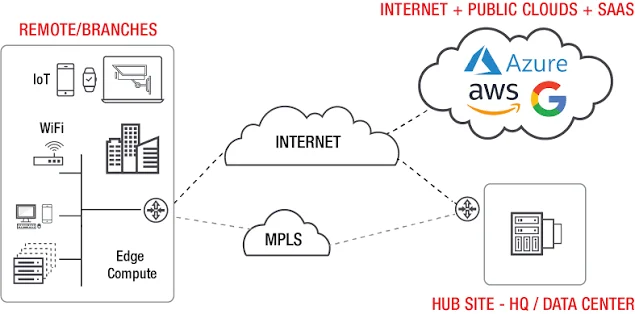

The technological landscape is undergoing a profound decentralization as artificial intelligence migrates from the massive, power-hungry confines of centralized cloud data centers directly to the point of interaction. This transition, known as Edge AI, marks a fundamental change in how devices perceive, interpret, and respond to the physical world. By processing data locally, these systems are effectively neutralizing the challenges of latency, privacy risks, and the staggering energy consumption profiles currently associated with large-scale cloud infrastructure.
The evolution of edge computing represents the next logical step in the progression of the Internet of Things (IoT). While early IoT was characterized by the simple collection and transmission of raw data to the cloud, Edge AI introduces the "intelligence" layer, allowing devices to make autonomous, split-second decisions. This shift is not merely an architectural preference; it is a necessity driven by the increasing volume of sensor data and the critical need for real-time responsiveness in industrial, medical, and automotive applications.
The Chronology of Decentralized Intelligence
The journey toward localized AI has been steady, moving through distinct phases of adoption. In the early 2010s, "edge" was largely synonymous with basic signal processing—filtering out noise before sending data to a server. By 2018, the introduction of specialized neural processing units (NPUs) into mobile chipsets allowed for basic on-device inference, such as facial recognition.
Today, we are in the era of high-capability edge AI. Smaller, highly efficient large language models (LLMs) and optimized computer vision algorithms have enabled devices to move beyond binary "if-then" logic to complex reasoning. The timeline for this adoption has accelerated as industries move toward "Industry 4.0," where the integration of digital twins and product lifecycle management (PLM) necessitates a continuous, reliable data loop that cannot afford the latency of a round-trip to a distant cloud server.
Industry Perspectives on the Edge Ecosystem
The move toward the edge is being orchestrated by a collaboration of semiconductor designers, software architects, and systems engineers. Sathish Balasubramanian, head of product for EDA AI at Siemens EDA, emphasizes that the edge is defined by proximity to the physical event. "For example, in a robotic surgery suite, the system must know exactly how much pressure to apply at a specific millisecond," Balasubramanian notes. "If the patient’s heart rate spikes or they show signs of waking, the system must react instantly. That is the essence of edge AI: it is a bridge between the physical and digital realms."
This sentiment is echoed by William Chen, product marketing group director for design IP at Cadence, who highlights the technical requirements for this transition. "By placing compute near data sources, we enable local inference across everything from industrial gateways to smart building controllers," Chen explains. "To make massive sensor data tractable, raw outputs must be processed locally to reduce bandwidth requirements before any information is forwarded upstream."
Technical Pillars: Compute, Connectivity, and Memory
The transition to edge AI requires a re-engineering of the silicon stack. Unlike cloud servers, which have the luxury of massive power budgets and liquid cooling, edge devices are often constrained by battery life, thermal envelopes, and physical size.
The current hardware strategy involves a heterogeneous approach. Programmable Logic Controllers (PLCs) are increasingly being augmented with NPUs and VPUs (Vision Processing Units). Furthermore, the emergence of chiplet-based architectures, enabled by standards such as Universal Chiplet Interconnect Express (UCIe), allows designers to mix-and-match specialized silicon to handle specific AI tasks while keeping costs low.
Memory architecture has similarly evolved to meet these demands. High-performance edge systems are adopting a mix of DDR5 and LPDDR5X, prioritizing energy efficiency alongside high bandwidth. For battery-constrained robotics or wearables, LPDDR remains the gold standard, providing the necessary memory throughput without triggering thermal throttling.

Security Implications and the Risk of Decision Manipulation
As devices move from data collection to autonomous decision-making, the threat landscape has shifted significantly. Historically, cybersecurity focused on data exfiltration—stealing information. In the era of edge AI, the focus has moved to "decision manipulation."
Dana Neustadter, senior director of product management at Synopsys, warns that the largest attack surface is now the management platform itself. "We are seeing cyber attackers move toward manipulating decisions," Neustadter explains. "If an attacker can compromise a fleet management platform, they can influence the behavior of thousands of devices simultaneously. This goes beyond data theft; it is about sabotaging physical processes, which can have catastrophic consequences in medical or industrial settings."
The NIST (National Institute of Standards and Technology) has flagged adversarial machine learning as a primary concern. In these scenarios, attackers introduce subtle, imperceptible perturbations into the data stream, causing AI models to misclassify objects or misinterpret sensor readings. Consequently, establishing "verifiable trust"—ensuring the integrity of the model, the data, and the firmware—has become the central challenge for system architects.
The Balancing Act: Autonomy vs. Cloud Connectivity
A common misconception is that Edge AI is an "all-or-nothing" replacement for the cloud. In practice, the most robust systems utilize a hybrid model. As Balasubramanian notes, "It is similar to how humans sleep and process their memories. You have a local model doing the heavy lifting in real-time, but it occasionally ‘phones home’ to the cloud to receive model updates, learn from new corner cases, or synchronize data across the enterprise."
This hybrid architecture allows companies to maintain an air-gapped environment for highly proprietary manufacturing processes while still benefiting from the continuous improvement cycles of cloud-based training.
Fact-Based Analysis of Industrial Impact
The adoption of Edge AI analytics is fundamentally changing the metrics by which industrial performance is measured. The primary objective is no longer just "data accumulation" but "actionable efficiency."
- Reduction in Downtime: By identifying anomalies at the sensor level, edge devices can trigger maintenance protocols before a component fails, potentially reducing unplanned downtime by 20% to 30% in high-volume manufacturing environments.
- Bandwidth Optimization: Processing multi-camera video streams locally can reduce the volume of data sent to the cloud by upwards of 90%, significantly lowering networking costs and latency.
- Regulatory Compliance: For sectors like healthcare and finance, processing data locally ensures that sensitive information never leaves the secure, private perimeter of the organization, simplifying compliance with GDPR and other regional privacy mandates.
Future Outlook: The Rise of Autonomous Systems
The next wave of innovation will be defined by the "intelligent edge." We are moving toward a future where the distinction between a machine and an intelligent agent disappears. According to Stephan Zizala, division president of edge systems at Infineon Technologies, the focus is shifting toward "effective action."
"The next wave of innovation will not be defined by how much data we collect, but by how effectively we can turn that data into action," Zizala stated. This philosophy suggests that the winners in the next decade of technology will be those who can seamlessly integrate the sensing, computing, and security layers into a single, reliable, and autonomous fabric.
As the industry matures, we can expect to see further standardization in how edge models are deployed and managed. The integration of silicon lifecycle management (SLM) with product lifecycle management (PLM) will provide the "digital thread" that connects the factory floor to the cloud, ensuring that every piece of firmware and every AI model is traceable, auditable, and secure.
Conclusion
Edge AI represents the maturation of the digital revolution. By moving intelligence to the periphery, organizations are not only improving the speed and reliability of their operations but are also building more resilient, private, and energy-efficient systems. However, this transition requires a disciplined approach to security and system architecture. The challenge ahead lies in balancing the desire for autonomous, lightning-fast decision-making with the immutable need for safety, human oversight, and verifiable trust. As the technology continues to scale, the successful deployment of edge AI will likely become the benchmark for operational excellence in the modern global economy.
