
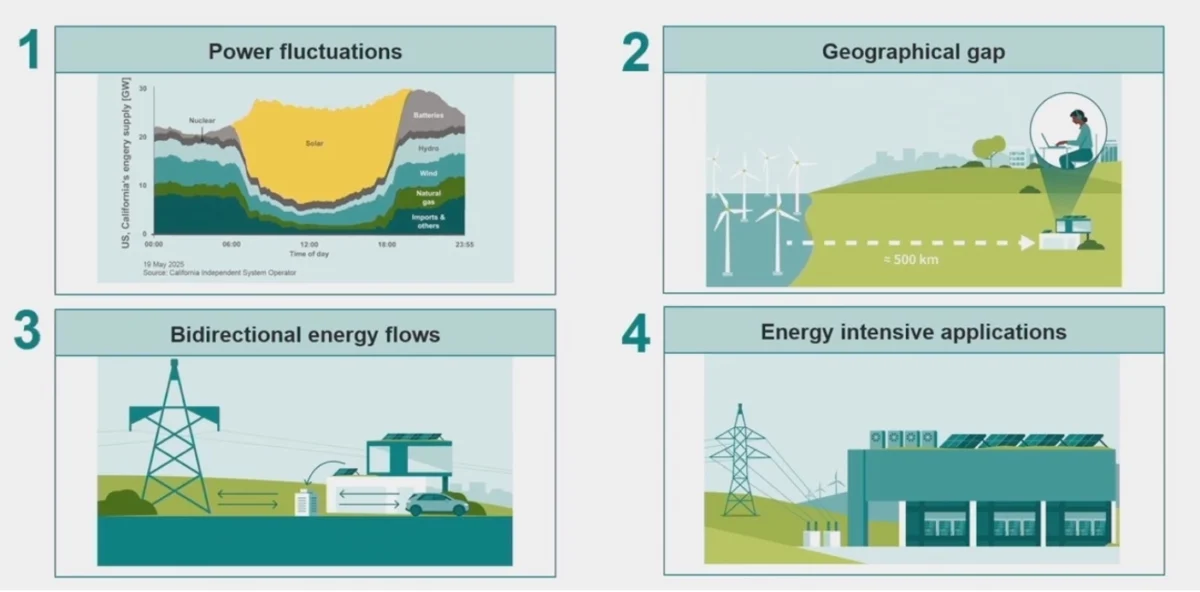

The global energy landscape is witnessing an unprecedented convergence as two of the most power-hungry sectors—artificial intelligence data centers and the electric vehicle industry—align their technological trajectories to overcome shared infrastructure limitations. While these industries appear distinct, they are increasingly functioning as mirror images of one another: AI data centers are evolving into massive, stationary energy consumers requiring high-density compute, while modern electric vehicles (EVs) are becoming "data centers on wheels" that demand sophisticated power management to maximize range and intelligence. This intersection has sparked a cross-industry exchange of hardware innovations, battery management strategies, and grid-interaction protocols that are accelerating the timeline for energy-efficient solutions.
The Dual Energy Crisis: Demand Outpacing Infrastructure
The primary driver behind this convergence is a shared sense of urgency regarding energy availability. AI data centers, particularly those training Large Language Models (LLMs), have an insatiable appetite for power. According to reports from the International Energy Agency (IEA), data center electricity consumption could double by 2026, reaching over 1,000 terawatt-hours (TWh) globally—roughly equivalent to the total electricity consumption of Japan. This surge is driven by the fact that AI workloads are significantly more energy-intensive than traditional cloud computing. A single AI query can consume ten times the electricity of a standard Google search, and the energy required to train a frontier model can power hundreds of homes for a year.
Simultaneously, the automotive sector is undergoing a total electrification. As manufacturers shift from internal combustion engines to battery electric vehicles (BEVs), the demand for high-voltage power electronics and efficient energy storage has skyrocketed. However, both industries have hit a common wall: the aging electrical grid. Grid capacity is not expanding at a rate commensurate with the demand from hyperscale data centers or the proliferation of EV charging networks. In the United States, the wait times for new projects to connect to the grid can span several years, creating a bottleneck that threatens to stall the AI revolution and the green energy transition alike.
A Chronology of Cross-Industry Innovation
The relationship between these two sectors has evolved through three distinct phases. In the early 2010s, data centers and the automotive industry operated in silos, with data centers focusing on low-voltage silicon for servers and the automotive industry focusing on mechanical engineering. By the late 2010s, the rise of Tesla and the "software-defined vehicle" began to bridge the gap, as cars required more onboard computing power.
The current phase, beginning around 2023, is characterized by a "reverse flow" of technology. The innovations developed to make EVs more efficient—such as silicon carbide (SiC) power modules and 800V battery architectures—are now being integrated into data center power supplies to handle the massive currents required by AI chips. Conversely, the telemetry and digital twin technologies used by hyperscale data center operators are being adopted by automotive OEMs to manage vehicle fleets and optimize battery health in real-time.
Semiconductors and the Shift to High-Voltage Architectures
At the heart of this convergence is a revolution in power semiconductors. Traditional silicon-based power components are reaching their physical limits in terms of efficiency and heat dissipation. To address this, both industries are turning to wide-bandgap (WBG) materials, specifically Silicon Carbide (SiC) and Gallium Nitride (GaN).
In the automotive world, SiC has become the gold standard for traction inverters because it allows for higher switching frequencies and better thermal management, which translates directly to increased driving range. Data centers are now leveraging this same technology to shift their rack-level power architecture. Historically, data centers operated on 12V or 48V DC power rails. However, as AI processors like NVIDIA’s Blackwell GPUs demand thousands of amperes, these low-voltage systems suffer from significant resistive power losses. By adopting 800V architectures—a standard popularized by high-end EVs like the Porsche Taycan and Hyundai Ioniq 6—data centers can deliver higher power density with lower current, significantly reducing energy waste.
Pradeep Shenoy, a compute power technologist at Texas Instruments, notes that the data center industry is actively "borrowing" technology already proven on the road. The infrastructure for 800V systems, including isolation components and gate drivers, is already mature due to automotive volume production, allowing data center architects to deploy these solutions rapidly.
Energy Storage Systems: The Second Life of Batteries
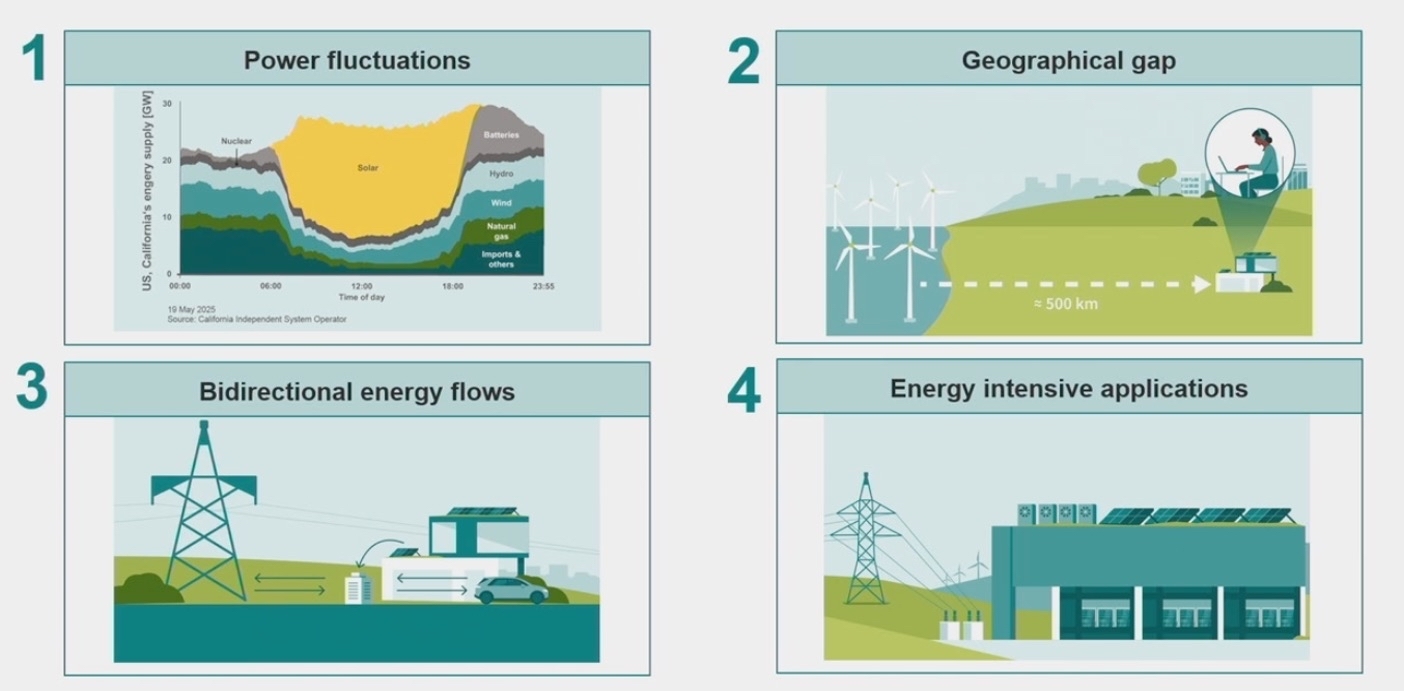
The management of energy fluctuations is another critical area of synergy. AI data centers experience extreme volatility in power demand; as large training jobs start and stop, power draw can fluctuate by a factor of ten in milliseconds. If left unmanaged, these spikes can cause local grid instability or "brownouts."
To mitigate this, data centers are increasingly installing large-scale Battery Energy Storage Systems (BESS). These systems act as a buffer, absorbing excess energy during low-demand periods and discharging it during peak loads. This is where the automotive industry provides a secondary benefit: the "second life" of EV batteries. An EV battery is typically considered end-of-life for automotive use when its capacity drops to 70-80%. However, these batteries are still perfectly viable for stationary storage in data centers.
A recent partnership between Waymo and B2U Storage Telemetry highlights this trend, where retired EV batteries are being repurposed to provide clean energy for local communities and industrial sites. As battery prices continue to drop due to increased competition and new chemistries like Lithium Iron Phosphate (LFP), the adoption of BESS in data centers is expected to become a standard operational requirement.
Beyond the Grid: On-Site Generation and Flow Batteries
Because grid connection times have become prohibitively long, many data center developers are exploring "behind-the-meter" solutions. This includes on-site power generation via natural gas turbines or modular nuclear reactors, combined with long-duration energy storage.
While lithium-ion batteries are excellent for short-term bursts (1-4 hours), they are less cost-effective for multi-day storage. This has led companies like Google to investigate flow batteries. Unlike conventional batteries, flow batteries store energy in liquid electrolytes contained in external tanks. This technology allows for much longer discharge cycles, providing the resilience needed for a data center to operate independently of the grid during peak pricing or outages. This "microgrid" approach mirrors the development of smart homes, where solar panels and EVs (via vehicle-to-home charging) create a self-sustaining energy ecosystem.
Thermal Management and the Scandinavian Model of Heat Reuse
One of the most overlooked aspects of the AI-automotive convergence is the challenge of heat. Both high-performance EVs and AI servers generate massive amounts of thermal energy that must be dissipated to prevent hardware failure. In the automotive sector, this has led to sophisticated liquid cooling loops. In the data center sector, liquid cooling is rapidly replacing traditional air cooling as rack power densities exceed 100kW.
Innovative regions, particularly in Scandinavia, are turning this waste heat into a resource. In Finland and Denmark, data centers are being integrated into municipal district heating systems. Instead of venting heat into the atmosphere, the hot water from server cooling loops is pumped into the city’s heating grid to provide warmth for thousands of households. This model not only improves the "Energy Reuse Effectiveness" (ERE) of the data center but also provides a sustainable revenue stream for operators.
Industry experts from Infineon Technologies suggest that while the technology for such systems is mature, the primary hurdle remains the initial capital investment. However, as political pressure mounts to reduce the environmental footprint of AI, government subsidies and carbon taxes are making heat-recycling projects more economically viable.
The Role of Software and Digital Twins
Managing the complex interplay between the grid, storage systems, and dynamic loads requires a level of intelligence that traditional software cannot provide. This has led to the rise of "Digital Twins"—virtual replicas of physical systems that allow operators to simulate energy flows and predict failures.
Cadence Design Systems and Siemens EDA are at the forefront of this, providing modeling tools that allow engineers to visualize how energy moves through a battery pack or a data center rack. By using AI to manage AI power, operators can optimize cooling cycles and battery charging schedules to minimize costs. This software-driven approach is also being used in "software-defined vehicles" to manage fleet-level battery health, ensuring that every watt of energy is used as efficiently as possible.
Broader Impact and Economic Implications
The convergence of AI and automotive energy solutions has profound implications for the general public. As data centers consume a larger share of the available power, utility rates for residential consumers are likely to face upward pressure. This has prompted a resurgence of interest in nuclear power. In Pennsylvania, the planned recommissioning of the Three Mile Island nuclear plant—specifically to power Microsoft’s data centers—serves as a landmark example of how the tech industry is reshaping national energy policy.
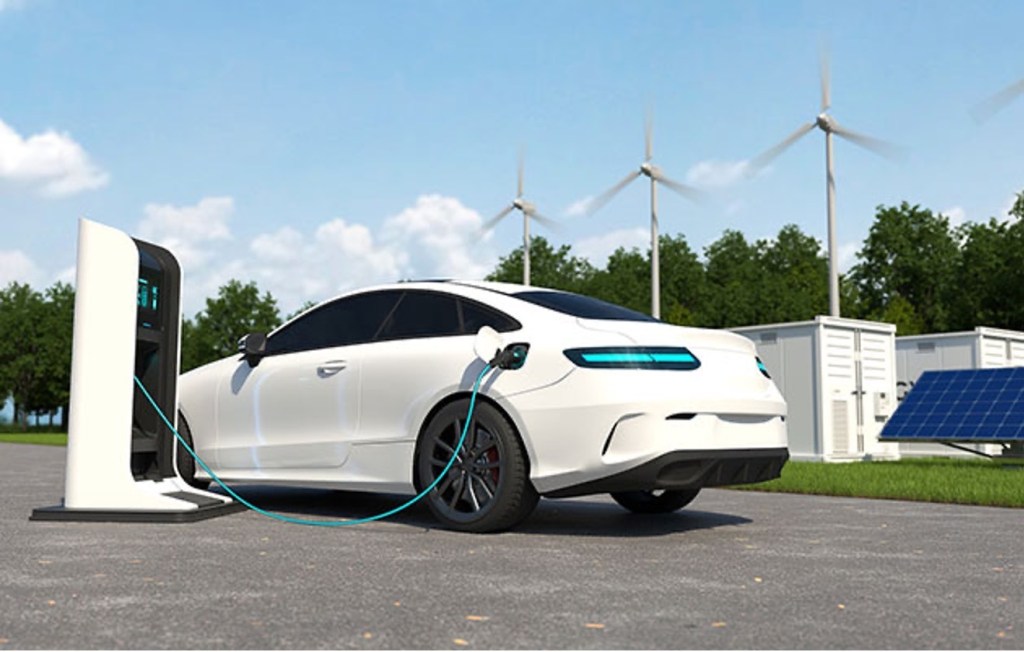
Furthermore, the "bidirectional" nature of this energy relationship means that EVs may soon play a role in stabilizing the grid for data centers. Through Vehicle-to-Grid (V2G) technology, parked EVs could collectively act as a massive, distributed battery, feeding energy back into the system during periods of extreme AI compute demand.
Conclusion: Efficiency as the New Currency
As the AI revolution and the transition to electric mobility continue to accelerate, "intelligence per watt" and "range per charge" have become the new benchmarks of success. The boundary between a computing facility and a power plant is blurring, as is the boundary between a vehicle and an energy asset.
The path forward lies in a holistic approach to energy: leveraging wide-bandgap semiconductors for efficiency, repurposing automotive batteries for stationary storage, and utilizing AI-driven software to orchestrate the movement of power. By breaking down the silos between the semiconductor, automotive, and energy industries, engineers are creating a more resilient and efficient infrastructure capable of supporting the next generation of technological advancement. The success of this transition will depend not just on how much energy we can generate, but on how intelligently we can share and reuse it across these converging sectors.
