
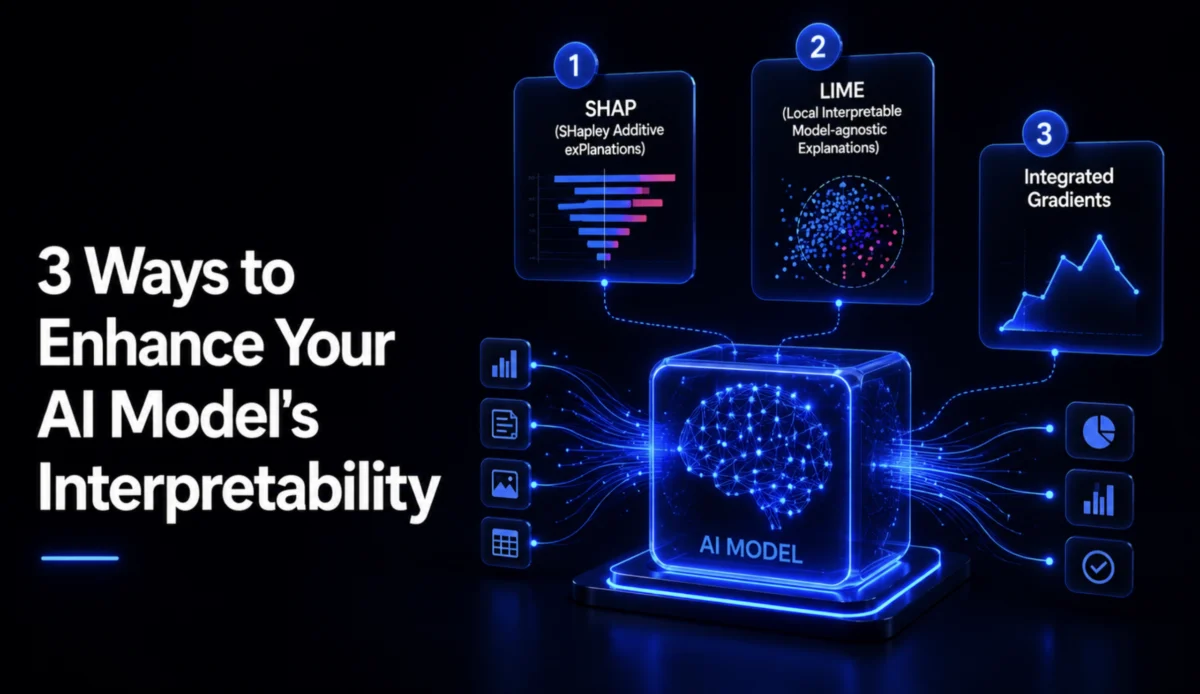

In the contemporary landscape of artificial intelligence, the ability to explain why a model arrives at a specific conclusion has transitioned from a niche academic pursuit to an essential operational requirement. As organizations increasingly rely on algorithmic decision-making for high-stakes processes—ranging from credit approval and healthcare diagnostics to customer churn management—the "black box" nature of complex models has become a significant liability. This shift is codified in recent legislative frameworks, most notably the European Union’s AI Act, which mandates that high-risk AI systems provide sufficient transparency for deployers to interpret their outputs.
The fundamental challenge for data scientists is that predictive accuracy does not inherently imply logical consistency. A model may demonstrate high performance on a test set while simultaneously relying on spurious correlations or biased data patterns. For instance, a churn prediction model that flags a loyal, five-year customer as high-risk represents a critical failure if the organization cannot provide a defensible rationale to management, the customer, or regulatory bodies.
The Evolution of Model Interpretability
Historically, practitioners relied on internal model attributes, such as the .featureimportances property available in many scikit-learn ensemble models. While these tools offer a quick, one-line solution for understanding which features hold the most weight globally, they are inherently limited. They provide a static, top-down view of the entire dataset but fail to explain individual, per-prediction anomalies. Furthermore, these traditional methods are often biased toward high-cardinality features, which may appear more important simply because they offer more potential split points, rather than providing genuine predictive value.
To move beyond these limitations, the industry has gravitated toward three robust, model-agnostic, and model-specific techniques: SHAP (SHapley Additive exPlanations), LIME (Local Interpretable Model-agnostic Explanations), and Integrated Gradients. By applying these methods to a consistent synthetic churn dataset—where the underlying drivers, such as tenure, contract type, and support ticket frequency, are known—we can evaluate their effectiveness in surfacing true, rather than merely plausible, explanations.
SHAP: The Gold Standard of Cooperative Game Theory
SHAP has emerged as the most widely adopted interpretability framework, largely because it is rooted in cooperative game theory. It treats every feature as a "player" in a coalition, with the model’s output representing the total payout. The method calculates the marginal contribution of each feature by averaging its effect across all possible combinations of feature sets.
The primary advantage of SHAP is its consistency; it provides both global importance rankings and local explanations for specific instances. When applied to the churn example, SHAP often reveals discrepancies that traditional methods miss. For example, while a standard importance metric might prioritize tenure globally, SHAP can isolate why a specific, long-tenured customer was flagged as high-risk. In this case, the analysis might show that while tenure is a protective factor, a surge in support tickets (e.g., five recent interactions) creates a dominant positive contribution toward churn risk, overriding the tenure-based "safety" signal. Despite its mathematical rigor, SHAP’s main hurdle remains computational cost; while TreeSHAP optimizes this for tree-based models, general applications (KernelSHAP) require extensive model evaluations.
LIME: Local Fidelity Through Perturbation
Where SHAP seeks a game-theoretic "fair share," LIME operates on the principle of local surrogate modeling. LIME generates a perturbed sample set around a specific data point, weights these samples by their proximity to the original input, and fits a simple, interpretable model—usually a linear regressor—to these samples.
This approach is highly effective because it does not require access to the internal architecture of the underlying model. Consequently, LIME is "model-agnostic," making it an ideal choice for complex neural networks or proprietary black-box APIs. The practical benefit of LIME is its efficiency; it can deliver explanations in real-time environments where latency is a concern. However, practitioners must be aware of its inherent instability. Because LIME relies on random sampling to create its local neighborhood, the resulting explanation can fluctuate slightly between runs. Despite this, when LIME and SHAP provide consistent explanations for the same prediction, the confidence in that model’s decision logic increases significantly.
Integrated Gradients: Leveraging Differentiable Architectures
For organizations utilizing deep learning and neural networks, Integrated Gradients offers a more direct path to transparency. Unlike SHAP and LIME, which treat the model as an opaque function, Integrated Gradients exploits the model’s differentiable structure. It works by calculating the gradient of the output with respect to the input features along a linear path from a "baseline" input (often a zeroed-out or neutral feature vector) to the actual input.
By accumulating these gradients, the method quantifies exactly how much each feature drove the final prediction. A key feature of this technique is the "convergence delta," a metric that validates the numerical soundness of the explanation. If the sum of the attributions closely matches the difference in output between the baseline and the target, the explanation is considered highly reliable. For neural network-based churn models, this provides a granular, high-fidelity view of model behavior that is both mathematically sound and computationally efficient for modern GPU-accelerated environments.
Implications for Regulatory Compliance and Trust
The adoption of these interpretability techniques has profound implications for corporate governance and regulatory compliance. The EU AI Act, specifically Article 13, establishes that the transparency of high-risk AI is not an optional feature but a deployment requirement. As companies move to comply with these standards, the ability to document why an AI system denied a loan or flagged a customer for churn will become a standard auditing requirement.
Furthermore, these tools facilitate a more collaborative relationship between data science teams and domain experts. When a model’s output can be broken down into human-readable components, domain experts can verify that the model is making decisions based on business logic rather than data artifacts or noise. This "human-in-the-loop" validation is essential for mitigating risks related to model drift, where a model’s performance might degrade as the underlying data distribution changes over time.
Strategic Selection of Interpretability Tools
Selecting the right tool for the job requires a clear understanding of the project constraints:
- SHAP is the preferred choice when using tree-based models and when both global and local, theoretically sound explanations are required. It provides the most comprehensive, albeit computationally intensive, overview.
- LIME is the tool of choice for real-time systems, black-box APIs, or scenarios where rapid, approximate explanations are needed to satisfy immediate business inquiries without the overhead of heavy computation.
- Integrated Gradients is the standard for differentiable models. By utilizing the internal gradient information of neural networks, it provides a precise attribution that is unmatched for deep learning architectures.
Conclusion
The transition from a "black box" approach to one of transparent, explainable AI is a necessary evolution for any organization scaling its machine learning operations. While traditional methods like feature importance provide a helpful starting point, they are fundamentally insufficient for the demands of modern, high-stakes deployments. By integrating SHAP, LIME, or Integrated Gradients into the development lifecycle, teams can transform their models from mysterious black boxes into defensible, understandable, and reliable decision-support systems. In an era where AI transparency is increasingly synonymous with corporate responsibility, mastering these interpretability techniques is not just a technical edge—it is a foundational requirement for sustainable innovation.
