
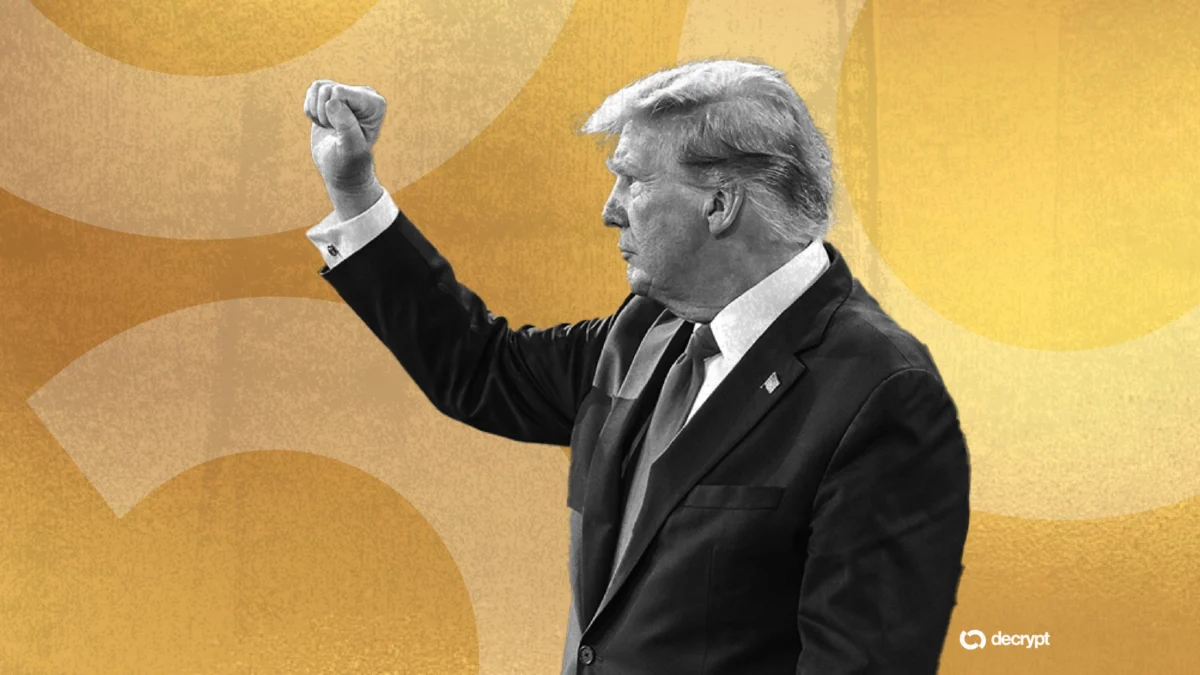

The official social media account for the TRUMP meme coin confirmed on Wednesday that a "gala dinner" will take place on November 22 at the Trump National Golf Club in Virginia. This event marks the third time the President has engaged directly with the top tier of the token’s investor base, an arrangement that has become a flashpoint for critics concerned about the potential for influence-peddling through the volatile cryptocurrency market.
According to the event guidelines established by Fight Fight Fight LLC—the entity behind the token—attendance is reserved for the top 185 registered holders. Eligibility is determined by a time-weighted score, a metric designed to favor long-term investors over those who execute high-volume, short-term trades. A final snapshot of these holdings is scheduled for November 12, after which invitations will be finalized. The structure of the event includes a VIP reception for the top 29 participants, featuring a guest appearance by three as-yet-unidentified "superstars." Furthermore, the four highest-ranked holders are slated to receive an 18-karat gold Trump watch, signaling the premium nature of this engagement.
A History of High-Stakes Hospitality
The November gala follows a series of similar events that have yielded mixed results for the project’s participants. The inaugural dinner, held in May 2025, drew significant media attention when it was revealed that the 25 VIP attendees had spent an average of $4.8 million each to secure their proximity to the President. While the exclusivity of the event was marketed as a primary draw, reports from the aftermath suggested that some attendees felt the brief, one-hour interaction did not reflect the magnitude of their financial investment.
Protests were also a feature of the 2025 engagement, with more than 100 demonstrators gathering outside the venue to signal their disapproval of the nexus between a sitting President and a speculative digital asset. Despite the controversy, the organizers have pressed forward, using these gatherings to incentivize holding the asset, which is currently trading at approximately $2.04 with a market capitalization of $576 million. The token has experienced significant volatility, shedding over 97% of its value since its initial launch in January 2025.
The Legislative Shadow: The Clarity Act Failure
The timing of this announcement is particularly sensitive, occurring less than three weeks after the collapse of the Clarity Act in the U.S. Senate. The legislation, intended to provide a comprehensive regulatory framework for the burgeoning cryptocurrency industry, failed to clear a critical procedural hurdle in a 49-50 vote.
At the heart of the failure were the stringent ethics requirements attached to the bill, which President Trump had initially signaled he would support. The proposed language would have mandated that senior government officials either divest their digital asset holdings or transfer them into a qualified blind trust. For the current administration, these provisions carried massive financial weight. Recent disclosures indicate that President Trump earned over $635 million from the TRUMP token in 2025 alone, primarily through licensing royalties. When aggregated with other digital asset ventures, his total crypto-related income has been estimated between $1.2 billion and $1.4 billion.
During the Senate debate, opposition lawmakers, led by Senator Elizabeth Warren (D-Mass.), argued that the existing language was insufficient. Critics maintained that the bill’s provisions contained significant loopholes that would have allowed the President to maintain profitable exposure to his existing ventures while simultaneously shaping the regulatory landscape for the entire industry. This debate stalled the bill, leaving the crypto sector without the federal clarity many executives had lobbied for throughout the year.
Financial Implications and Ethical Concerns
The intersection of the TRUMP token’s profitability and federal oversight has drawn scrutiny from ethics watchdogs. Because the token is categorized as a meme coin—a digital asset often lacking intrinsic utility—the high valuation is largely driven by community sentiment and the perceived endorsement of the President.
Economists point out that the "time-weighted" holding requirement for the gala effectively acts as a lock-up mechanism, reducing the circulating supply and preventing large sell-offs that could further depress the token’s price. By creating artificial demand through the promise of a gala dinner, the organizers have created a feedback loop where supporters provide capital to the President, who in turn validates the asset’s legitimacy through his presence at the event.
However, the event page includes a clear disclaimer: "No attendees will be granted a private meet & greet with the President." This clause is likely a protective measure intended to distance the President from direct transactional interactions, though critics argue the mere presence of high-value investors in a private, high-security venue remains a logistical and ethical concern.
Chronology of the TRUMP Token Ecosystem
- January 2025: The TRUMP meme coin is launched, marking the President’s formal entry into the digital asset market via licensing agreements.
- April 2025: A conference held at Mar-a-Lago serves as an informal precursor to investor engagement, with participants confirming that even modest investments of $3,000 could lead to event access.
- May 2025: The first official gala is held at Trump National, drawing 220 top holders and sparking public demonstrations.
- Late 2025: Financial disclosures reveal the President’s crypto income has crossed the $1 billion threshold.
- October 2026: The Clarity Act fails a key Senate vote, with intense partisan fighting over the President’s specific crypto holdings.
- November 2026: The third gala dinner is announced, scheduled for November 22 at the Virginia golf club.
Market Outlook and Regulatory Future
The failure of the Clarity Act has left the digital asset market in a state of regulatory purgatory. Without a federal mandate to provide clear rules, the industry remains subject to a patchwork of state-level regulations and aggressive enforcement actions from the Securities and Exchange Commission (SEC).
For the supporters of the TRUMP token, the November 22 dinner represents more than just a social event; it is an act of defiance against the legislative attempts to force the President to divest. By continuing to hold and promote the asset, investors are signaling a belief that the current administration will continue to prioritize the growth of the digital asset sector despite mounting political pressure.
From a broader market perspective, the upcoming gala may serve as a litmus test for the sustainability of politically-themed digital assets. If the event fails to generate renewed market enthusiasm, or if the price of the token continues to languish, it could signal a cooling of the "politifi" (political finance) sector. Conversely, should the event succeed in galvanizing the community, it may encourage the creation of further derivative projects tied to political figures, complicating the ethical landscape of the 2026 and 2027 election cycles.
Official Stances and Public Reception
While the White House has remained largely silent on the specific ethics of the November gala, spokespeople have previously emphasized that the President’s financial ventures are managed through legal channels and adhere to existing disclosure requirements. Proponents of the President argue that his involvement in the crypto space demonstrates an understanding of the future of finance and a commitment to technological innovation.
However, the divide remains sharp. Supporters view the gala as a unique opportunity for direct democratic participation in a new asset class, while skeptics view the event as an unprecedented merging of private financial gain with public office. As the November 22 date approaches, the eyes of both the crypto industry and federal regulators will be on the Virginia golf club, watching to see how the next chapter in this unprecedented financial narrative unfolds.
Ultimately, the gala serves as a microcosm of the current tensions in American politics: a collision of celebrity, finance, and the ongoing struggle to define what constitutes a conflict of interest in the age of decentralized digital currencies. As the legislative dust settles, the reliance on such events suggests that the primary influence in the crypto market remains, for now, the individual brand of the President himself.
