

The rapid integration of artificial intelligence into the modern corporate landscape has ignited a profound global debate regarding the future of human labor. At the center of this discourse are two competing narratives. The first envisions artificial intelligence as an indispensable cognitive co-pilot, seamlessly managing repetitive administrative burdens, synthesizing complex data sets, and liberating human employees to focus on strategic, value-driven initiatives. The second, more cautionary perspective warns of widespread displacement, predicting that advanced automation will systematically absorb core workplace responsibilities and trigger unprecedented structural unemployment.
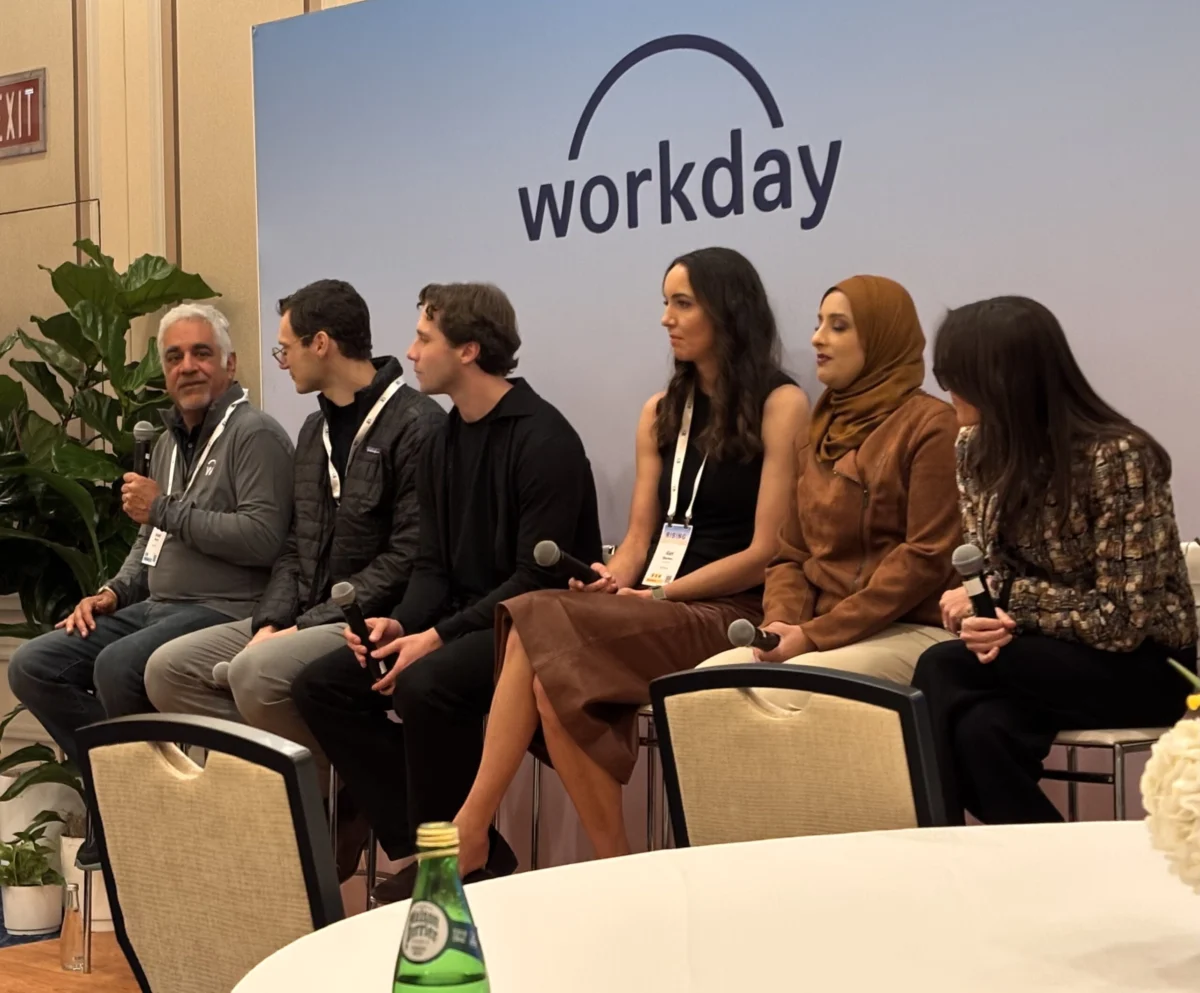
This dichotomy took center stage at the annual Workday Rising conference, where executive leadership addressed the multifaceted implications of the technology. Against a backdrop of accelerating enterprise adoption, Workday’s executive team confronted the imminent risks facing entry-level labor markets while issuing an urgent call to action for large-scale, enterprise-led reskilling initiatives. The discussions highlighted a complex ecosystem in which technological innovation intersects with persistent labor shortages, structural organizational bloat, and a fundamental disconnect between traditional academic pipelines and modern market demands.
The Entry-Level Labor Crisis and Generative AI
Opening the dialogue on the macroeconomic consequences of automation, Workday Co-Founder and CEO Aneel Bhusri articulated deep concerns regarding the near-term professional prospects of recent university graduates. Bhusri noted that as corporations increasingly recognize the efficiency gains offered by generative artificial intelligence, many are proactively recalibrating their hiring models and decelerating entry-level recruitment.
This trend threatens to disrupt the traditional corporate ascension ladder. Entry-level positions have historically served as the foundational training ground where junior employees acquire institutional knowledge, operational fluency, and the competencies required for advancement into supervisory or specialized roles. If artificial intelligence assumes these introductory responsibilities, organizations risk inadvertently dismantling the early-career pipeline necessary to cultivate the leadership of tomorrow.
Bhusri emphasized that this challenge transcends national borders, creating severe socioeconomic vulnerabilities across advanced economies in North America and Europe. Left unaddressed, a prolonged contraction in entry-level hiring could precipitate high rates of structural youth unemployment, compounding existing generational inequalities. Consequently, private sector enterprises, academic institutions, and policymakers must collaborate urgently to mitigate these systemic risks before they manifest as chronic economic instability.
Labor Market Dichotomies and the Education Disconnect
While entry-level white-collar positions face downward pressure from algorithmic efficiencies, Gerrit Kazmaier, President of Product and Technology at Workday, highlighted a paradoxical labor market reality. Kazmaier observed that while certain sectors experience constrained hiring, numerous critical industries face severe, structural labor shortages that technology alone cannot resolve.
To illustrate this divergence, Kazmaier pointed to the global healthcare sector. The primary operational bottleneck in modern healthcare systems is rarely physical infrastructure, such as hospital bed capacity; rather, it is the acute scarcity of qualified healthcare practitioners available to deliver patient care. Similar shortages persist across advanced manufacturing, specialized engineering, and technical trades.
Compounding these supply constraints is a structural misalignment between formal education systems and contemporary enterprise requirements. Kazmaier argued that educational institutions continue to prepare students within a legacy, pre-AI paradigm, whereas graduates are immediately thrust into accelerated, AI-augmented workplaces. This chronological disconnect leaves new entrants underprepared for the operational realities of the modern firm.
To bridge this divide, market demand has shifted dramatically toward specialized technological proficiencies. Roles such as artificial intelligence engineers, AI-driven marketing strategists, and automated sales architects are experiencing unprecedented growth trajectories. However, the supply of qualified professionals capable of stepping into these specialized roles remains severely limited, underscoring the imperative for comprehensive educational reform and corporate upskilling investments.
Redefining Enterprise Productivity and Dynamic Work Assembly
Addressing concerns that enterprise software platforms might be deployed primarily to justify headcount reductions, Kazmaier firmly rejected the notion that tools like Workday’s Work Intelligence suite are engineered to facilitate wholesale downsizing. Rather than utilizing automation solely to eliminate human labor, modern enterprise platforms are designed to synthesize human ingenuity with machine intelligence, driving sustainable organic growth.
By augmenting existing talent with advanced technological capabilities, businesses can achieve exponential productivity gains without resorting to continuous, reactionary hiring and firing cycles. Kazmaier noted that this operational stability fundamentally protects long-term employment by insulating organizations from the volatile labor fluctuations characteristic of previous economic cycles.
Furthermore, artificial intelligence is catalysing a fundamental restructuring of corporate architecture. Traditional hierarchical models, characterized by rigid organizational charts and static departmental silos, are rapidly giving way to dynamic work assembly frameworks. Organizations are increasingly evaluating operations through the granular lens of discrete tasks, missions, and project-based assignments.
Within this agile paradigm, individual employees wield significantly greater strategic impact. Human capital is no longer treated as a fungible, easily expendable resource subject to cyclical headcount scaling, but rather as a core, irreplaceable strategic asset. Kazmaier also debunked the prevailing misconception that leading technology companies operate in isolation from human capital, emphasizing that even pure-play AI enterprises aggressively compete to recruit and retain elite talent, recognizing that human judgment remains the primary catalyst for maximum technological impact.
Accelerating Workforce Transformation Through AI-Driven Retraining
Providing historical context on workforce mobility, Joel Hellermark, Chief AI Officer at Workday and former leader of Sana prior to its strategic acquisition, shared compelling evidence of how artificial intelligence can successfully orchestrate massive, cross-industry labor redeployment. During the acute disruptions of the global COVID-19 pandemic, Sana participated in large-scale reskilling initiatives designed to transition redundant workers into critical healthcare support functions.
Under conventional educational methodologies, transitioning professionals into entirely new, highly regulated domains historically required up to twelve months of intensive institutional training. However, by deploying personalized learning algorithms and AI-driven reskilling frameworks, the organization successfully retrained approximately 200,000 individuals, tailoring educational modules to individual learning curves and pre-existing competencies.
Despite this success, Hellermark cautioned that the primary challenge moving forward will be the unprecedented velocity of technological transformation. Historically, major technological revolutions unfolded across generational timelines spanning decades, affording labor markets ample natural adjustment periods. The current wave of artificial intelligence adoption is compressing these adoption curves into compressed, multi-year windows.
To navigate this accelerated transition, Workday is channeling substantial capital into the development of advanced pedagogical tools designed to streamline corporate retraining. By functioning as infrastructure builders, the enterprise aims to provide organizations worldwide with the digital instruments necessary to future-proof their labor forces against rapid technological disruption.
Global Initiatives and Private Sector Reskilling Commitments
Recognizing that private enterprise bears a social responsibility to address the labor displacement risks associated with automation, Workday has established expansive partnerships aimed at preparing the global workforce for an AI-centric future. Bhusri highlighted the company’s foundational role as an early partner in Raise US, a collaborative coalition of prominent technology organizations that has pooled significant financial resources to fund comprehensive workforce reskilling programs.
In addition to domestic American initiatives, the Workday Foundation directs substantial philanthropic investments toward international digital literacy and vocational retraining organizations. In Europe, the Foundation provides ongoing financial backing to institutions such as Ada – The National College for Digital Skills and the INCO Group. Furthermore, Workday recently formalized a strategic partnership with Technology Ireland to launch a dedicated artificial intelligence upskilling initiative tailored to the European technology labor market.
Contextualizing Corporate Restructuring and Recent Workforce Reductions
Taking the opportunity to address broader industry trends and the company’s own recent operational adjustments, Bhusri spoke candidly about Workday’s decision earlier in the year to eliminate approximately 900 positions. In an economic climate where numerous technology firms have publicly attributed workforce reductions to the deployment of generative artificial intelligence, Bhusri clarified that Workday’s restructuring was entirely unrelated to automation capabilities.
Instead, the leadership team acknowledged that the organization had developed significant internal bureaucratic bloat during periods of rapid enterprise expansion. Internal reviews revealed that certain core development divisions had grown overly complex, with up to ten distinct managerial layers separating executive leadership from the software developers executing foundational work. Feedback from individual contributors indicated that excessive approval hierarchies were actively impeding operational velocity and innovation.
The primary objective of the subsequent layoffs was therefore to dismantle middle-management friction and directly empower frontline creators. Under the restructured organizational model, traditional managers are being transitioned into operational coaches equipped with the technical proficiency to actively participate in product development alongside individual contributors.
Bhusri noted that affected personnel were offered alternative individual contributor roles better aligned with the lean, execution-focused operational structures characterizing modern AI-driven enterprises. While acknowledging the human cost of the restructuring, Bhusri maintained that streamlining the corporate hierarchy was a necessary strategic imperative to ensure long-term corporate agility, emphasizing that the decision was driven by structural efficiency rather than algorithmic replacement.
Implications and Broader Outlook
The discourse at Workday Rising underscores a critical inflection point for the global economy. As artificial intelligence matures from an experimental novelty into core enterprise infrastructure, the responsibilities of leadership extend far beyond immediate profit optimization. The convergence of entry-level labor contraction, educational misalignment, and accelerated technological velocity demands a coordinated, proactive response from corporate executives, academic institutions, and policymakers alike.
By prioritizing strategic reskilling, embracing dynamic organizational frameworks, and maintaining transparency surrounding corporate restructuring, enterprises can navigate the complexities of the automation era. Ultimately, the successful integration of artificial intelligence will not be measured solely by operational efficiency gains, but by the industry’s collective ability to preserve, elevate, and redeploy human potential in an evolving digital economy.
