
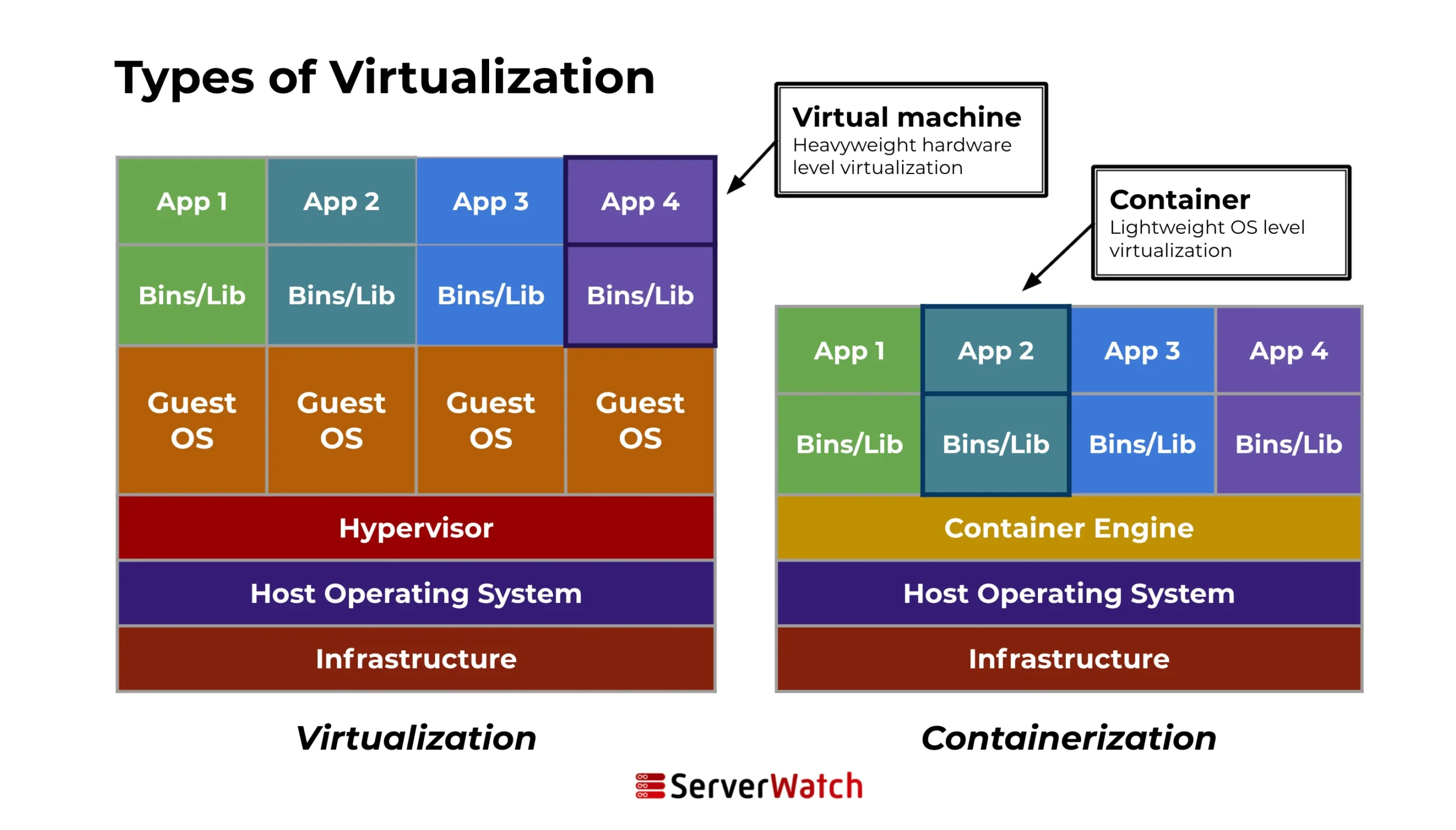

Containers are lightweight, standalone, executable packages of software designed to encapsulate code, runtime, system tools, system libraries, and settings, ensuring that applications run consistently across different computing environments. This technology is a cornerstone of modern software development and deployment, representing a significant shift in how applications are packaged and managed. Containerization, at its core, is a method of packaging software with its dependencies, isolating it from other processes and the underlying infrastructure. This article delves into the intricacies of containerization, exploring its fundamental concepts, comparing it with virtual machines, outlining its benefits and use cases, and examining popular technologies and future trends.
Understanding the Power of Containers
The fundamental advantage of containers lies in their ability to provide isolated environments for applications. This isolation, achieved through containerization, ensures that software can be deployed and executed reliably, regardless of the host system’s configuration or the underlying infrastructure. This consistency is a game-changer, eliminating the age-old problem of "it works on my machine."
Unlike traditional deployment methods that often involve complex configurations and potential conflicts with existing system components, containers encapsulate an application and all its necessary dependencies within a single unit, known as a container image. This image is a blueprint that contains everything required for the application to run: the application code itself, the runtime environment (like Java, Python, or Node.js), essential libraries, and system tools.
A key distinction that contributes to the efficiency of containers is their relationship with the host system’s kernel. While containers maintain their own isolated filesystem, CPU, memory, and process space, they share the host operating system’s kernel. This shared kernel architecture makes containers significantly lighter and more resource-efficient than virtual machines (VMs). This efficiency translates into faster startup times, lower memory overhead, and the ability to run more applications on the same hardware.
Containers vs. Virtual Machines: A Fundamental Distinction
While both containers and virtual machines serve the purpose of creating isolated environments for running applications, their underlying architectures and operational mechanisms differ significantly. Understanding these differences is crucial for selecting the appropriate technology for specific needs.
| Feature | Containers | Virtual Machines |
|---|---|---|
| Architecture | Containers share the host system’s kernel, isolating application processes from the system. They do not require a full operating system for each instance, making them lightweight and fast to launch. | A virtual machine includes the application, its dependencies, and an entire guest operating system. This guest OS runs on virtual hardware managed by a hypervisor, which itself runs on the host system’s physical hardware. VMs offer a high degree of isolation from each other and the host. |
| Resource Management | Containers are highly resource-efficient. By sharing the host system’s kernel and only requiring the application and its runtime environment, they consume fewer resources (CPU, memory) compared to VMs. This leads to better hardware utilization. | The necessity of running a full operating system within each VM leads to higher resource consumption. This can result in less efficient utilization of the underlying hardware, as each VM has its own OS overhead. |
| Isolation Level | Process-level isolation, leveraging the host kernel’s features. While robust, it’s generally considered less isolated than VMs. | Hardware-level virtualization, providing strong isolation between VMs and the host. This offers enhanced security and control. |
| Startup Time | Milliseconds to seconds, due to minimal overhead. | Seconds to minutes, as a full operating system needs to boot. |
| Portability | Highly portable across different environments that support the container runtime. | Portable as disk images, but can be more complex to move and manage due to OS dependencies. |
| Use Cases | Microservices, CI/CD pipelines, application development and testing, stateless applications. | Running different operating systems on a single machine, legacy application support, strong security isolation requirements, full OS control. |
How Containerization Works
The process of containerization involves packaging an application with its operating environment into a self-contained unit. This typically begins with a developer creating a Dockerfile or a similar configuration file that defines the steps to build a container image. This file specifies the base operating system, the installation of necessary software and dependencies, the application code, and configuration settings.
Once the Dockerfile is written, a container engine (like Docker) builds the container image. This image is essentially a read-only template. When an instance of the application needs to be run, a container is created from this image. This container is a live, running instance that includes the application and its isolated environment. The container engine then manages the lifecycle of this container, including starting, stopping, and networking.
Key Components of a Container
A container is a complex yet efficient construct built from several core components:
- Container Image: A lightweight, standalone, executable package that includes everything needed to run an application. It’s a read-only template.
- Container Runtime: The software responsible for running containers. It pulls images, starts containers, and manages their execution. Docker Engine and containerd are popular examples.
- Container Engine: A broader term that encompasses the runtime and other tools needed to build, manage, and run containers.
- Operating System Kernel: The core of the host operating system, which containers share. This is a fundamental aspect of containerization’s efficiency.
- Namespaces: A Linux kernel feature that provides process isolation. Each container gets its own set of namespaces for PID (process IDs), network, mounts, users, etc., creating the illusion of a separate operating system.
- Control Groups (cgroups): Another Linux kernel feature that limits, accounts for, and isolates the resource usage (CPU, memory, disk I/O, network) of a collection of processes. This ensures that one container doesn’t consume all available resources, impacting others.
- Union File Systems: A filesystem technology that allows multiple directories or partitions to be overlaid, appearing as a single coherent filesystem. This enables the efficient layering of container images.
Container Use Cases: Driving Modern Software Development
The versatility and efficiency of containers have made them indispensable across various facets of the software lifecycle.
Microservices and Cloud-Native Applications
Containers are a natural fit for microservices architectures, where applications are broken down into small, independent, and loosely coupled services. Each microservice can be packaged and deployed within its own container. This isolation simplifies development, testing, and deployment, as individual services can be updated, scaled, or replaced without affecting the entire application.
In the realm of cloud-native applications, containers are foundational. They enable applications to be designed for the cloud, offering inherent scalability, resilience, and portability. Orchestration platforms like Kubernetes further enhance this by automating the deployment, scaling, and management of containerized applications, ensuring high availability and efficient resource utilization in dynamic cloud environments.
Continuous Integration and Continuous Deployment (CI/CD) Pipelines
The consistency offered by containers is a significant boon for CI/CD pipelines. By packaging applications and their dependencies into containers, development teams can ensure that the environment remains identical from the developer’s local machine to the testing servers and finally to production. This drastically reduces "works on my machine" issues and speeds up the release cycle.
Containers enable the creation of ephemeral testing environments that can be spun up and torn down rapidly for each code commit. This automated testing in production-like conditions leads to higher quality software and more reliable deployments. The ability to version and roll back container images also adds a layer of safety and agility to the deployment process.
Application Packaging and Distribution
The self-contained nature of containers makes them an ideal solution for packaging and distributing software. An application and all its dependencies can be bundled into a single container image, which can then be easily shared and deployed across different operating systems and cloud platforms without modification.
Container registries, such as Docker Hub or Google Container Registry, act as central repositories for storing and managing these container images. This facilitates easy access, version control, and the ability to roll back to previous stable versions if issues arise, thereby enhancing the overall stability and reliability of application deployments.
The Broad Spectrum of Containerization Benefits
The adoption of containerization is driven by a compelling set of advantages that address many long-standing challenges in software development and operations.

- Portability: Containers run consistently across different environments, from developer laptops to on-premises servers and various cloud providers, eliminating environment-specific issues.
- Agility: Faster development cycles, quicker deployments, and the ability to iterate rapidly on applications.
- Scalability: Applications can be easily scaled up or down by launching or terminating container instances, adapting to fluctuating demand.
- Efficiency: Lower resource overhead compared to VMs, leading to better utilization of hardware and reduced costs.
- Isolation: Applications and their dependencies are isolated from each other and the host system, preventing conflicts and enhancing security.
- Consistency: Ensures that applications behave the same way in development, testing, staging, and production environments.
- Speed: Significantly faster startup times compared to VMs, enabling rapid provisioning and response.
- Resource Optimization: Efficient use of CPU, memory, and storage due to shared OS kernel.
- Simplified Management: Streamlined deployment, updates, and rollback processes.
- Developer Productivity: Developers can focus on writing code without worrying about environment configurations.
- Cost Savings: Reduced infrastructure costs due to higher density and efficient resource utilization.
- Fault Isolation: If one container fails, it does not typically affect other containers or the host system.
- Standardization: Promotes standardized packaging and deployment practices across teams and organizations.
Challenges and Considerations in Containerization
Despite its numerous benefits, the widespread adoption of containerization also presents several challenges and considerations that organizations must address for successful implementation.
Security Concerns
While containers offer isolation, they are not inherently immune to security threats. Potential vulnerabilities exist at various levels:
- Image Vulnerabilities: Container images may contain outdated software with known security flaws. Regular scanning and updating of images are crucial.
- Container Escapes: Malicious actors might exploit vulnerabilities to "escape" the container’s isolation and gain access to the host system.
- Insecure Configurations: Misconfigurations in container orchestration platforms or the container runtime itself can expose systems to risks.
- Privilege Escalation: Running containers with excessive privileges can increase the attack surface.
- Network Security: Securing communication between containers and with external services is vital.
Organizations must implement robust security practices, including image scanning, vulnerability management, least privilege principles, network segmentation, and continuous monitoring, to mitigate these risks.
Complexity in Management
While containerization simplifies many aspects of application deployment, managing a large-scale containerized environment can introduce its own complexities:
- Orchestration Complexity: Tools like Kubernetes, while powerful, have a steep learning curve and require significant expertise to manage effectively.
- Monitoring and Logging: Aggregating logs and monitoring the health and performance of numerous distributed containers can be challenging.
- Storage Management: Persistent storage for stateful applications within containers requires careful planning and management.
- Networking Complexity: Designing and managing complex network topologies for inter-container communication and external access can be intricate.
- Skill Gap: Finding and retaining personnel with the necessary skills in container technologies and orchestration can be a hurdle.
Effective management often necessitates adopting specialized tools for orchestration, monitoring, logging, and security, alongside investing in team training.
Integration with Existing Systems
Integrating modern container technologies with legacy IT infrastructure can pose significant challenges:
- Compatibility Issues: Ensuring that containerized applications can interact seamlessly with existing databases, middleware, and other on-premises systems.
- Data Migration: Moving data from legacy systems to be accessed by containerized applications requires careful planning and execution.
- Cultural Shift: Transitioning from traditional IT operational models to a DevOps culture that embraces containerization often requires significant organizational change and buy-in.
- Hybrid Cloud Strategies: Managing containers across on-premises data centers and multiple cloud providers adds another layer of complexity.
A phased approach, thorough planning, and collaboration between development and operations teams are essential for successful integration.
Popular Container Technologies Shaping the Landscape
Several technologies have emerged as leaders in the containerization space, each offering unique features and capabilities.
Docker
Docker is widely recognized as the platform that democratized containerization. It provides a comprehensive ecosystem for building, shipping, and running containerized applications. Docker’s user-friendly interface and robust tooling have made it the de facto standard for many developers.
- Key Features: Docker Engine (runtime), Dockerfiles (image definition), Docker Hub (registry), Docker Compose (multi-container application management).
- Benefits: Ease of use, vast community support, extensive documentation, rapid prototyping, consistent development environments.
Kubernetes
Kubernetes, often abbreviated as K8s, is an open-source container orchestration platform that automates the deployment, scaling, and management of containerized applications. Developed by Google and now maintained by the Cloud Native Computing Foundation (CNCF), Kubernetes has become the leading solution for managing containerized workloads at scale.
- Key Features: Automated rollouts and rollbacks, self-healing capabilities, service discovery and load balancing, storage orchestration, secret and configuration management, horizontal scaling.
- Benefits: High availability, robust scalability, efficient resource utilization, automated operations, resilience, vendor-neutral.
Other Notable Container Technologies
Beyond Docker and Kubernetes, several other technologies contribute to the container ecosystem:
- containerd: A high-level container runtime that is part of the Docker project and is also a graduated CNCF project. It focuses on the core functionalities of running and managing containers.
- Podman: A daemonless container engine for developing, managing, and running OCI (Open Container Initiative) containers on Linux systems. It offers a Docker-compatible CLI.
- LXC/LXD: Linux Containers (LXC) is an operating-system-level virtualization method for running multiple isolated Linux systems (containers) on a control host using a single Linux kernel. LXD is a more user-friendly interface for LXC.
- rkt (Rocket): An open-source container runtime that emphasizes security and composability, though its development has largely been superseded by other projects.
- Buildah: A tool that facilitates the building of OCI-compatible container images.
Future Trends in Containerization
The evolution of containerization is far from over. Several emerging trends are poised to further shape its role in the IT landscape.
Integration with Emerging Technologies
Containerization is increasingly becoming a key enabler for other cutting-edge technologies:
- Artificial Intelligence (AI) and Machine Learning (ML): Containers provide consistent environments for training and deploying complex AI/ML models, managing dependencies for frameworks like TensorFlow and PyTorch.
- Edge Computing: Lightweight containers are ideal for deploying applications closer to data sources at the edge, enabling real-time processing and reducing latency.
- Serverless Computing: While seemingly contradictory, serverless platforms often leverage containers under the hood to package and run functions, offering scalability and cost-efficiency.
- WebAssembly (Wasm): Wasm’s portability and security features are making it an attractive option for running code in containers, potentially offering even greater efficiency and broader language support.
- Service Meshes: Technologies like Istio and Linkerd are evolving to manage inter-service communication within containerized microservices architectures, enhancing observability, security, and reliability.
Evolution of Container Standards and Regulations
As containerization matures and becomes more integral to enterprise IT, the development and enforcement of standards and regulations are becoming increasingly important:
- Security Standards: The Open Container Initiative (OCI) continues to refine standards for container image formats and runtimes, promoting interoperability and security. Regulatory bodies are also beginning to establish guidelines for container security best practices.
- Compliance: Organizations operating in regulated industries (e.g., finance, healthcare) need to ensure their containerized deployments meet stringent compliance requirements. This is driving the development of container platforms and tools with built-in compliance features.
- Sustainability: As the energy consumption of data centers comes under scrutiny, there is a growing focus on developing more energy-efficient container technologies and orchestration strategies.
- Cloud-Native Standards: The CNCF ecosystem is a prime example of how industry collaboration is driving standards and best practices for cloud-native development, with containerization at its heart.
Bottom Line: The Indispensable Role of Containers
Containers have fundamentally reshaped the landscape of software development and deployment, delivering unprecedented levels of efficiency, scalability, and consistency. Their ability to package applications with all their dependencies into portable, isolated units has become indispensable for modern IT operations.
As these technologies continue their rapid evolution, containers are poised to become even more deeply integrated into the fabric of digital transformation. Their capacity to seamlessly interface with emerging technologies, adapt to evolving regulatory environments, and drive innovation across industries positions them as a cornerstone of future IT strategies. Organizations that strategically leverage container technologies will undoubtedly be at the forefront of innovation, better equipped to navigate the complexities and seize the opportunities of a rapidly changing digital world. The journey of containerization is a testament to the power of abstraction and modularity in software engineering, promising continued advancements and broader impact in the years to come.
