

The telecommunications sector in the Lao People’s Democratic Republic has undergone a radical metamorphosis over the last decade, transitioning from a nascent market with limited connectivity to a competitive landscape boasting more than 10 million mobile subscribers as of 2021. This figure is particularly striking given the nation’s population of approximately 7.5 million, indicating a mobile penetration rate exceeding 130%—a phenomenon driven by the prevalence of multi-SIM usage among consumers seeking to optimize costs and network coverage. Today, the industry is defined by four primary operators: Unitel, Lao Telecom (LaoTel), TPlus Laos, and ETL Laos. Together, these entities are navigating a complex environment characterized by rapid technological adoption, significant geographical challenges, and a government-led push toward a unified digital economy.
The Competitive Hierarchy: Market Share and Corporate Profiles
The Laotian mobile market is currently an asymmetrical oligopoly, dominated by two major entities that control over 80% of the total subscriber base. This concentration of power has shaped the investment patterns and service standards across the country.
Unitel: The Market Leader
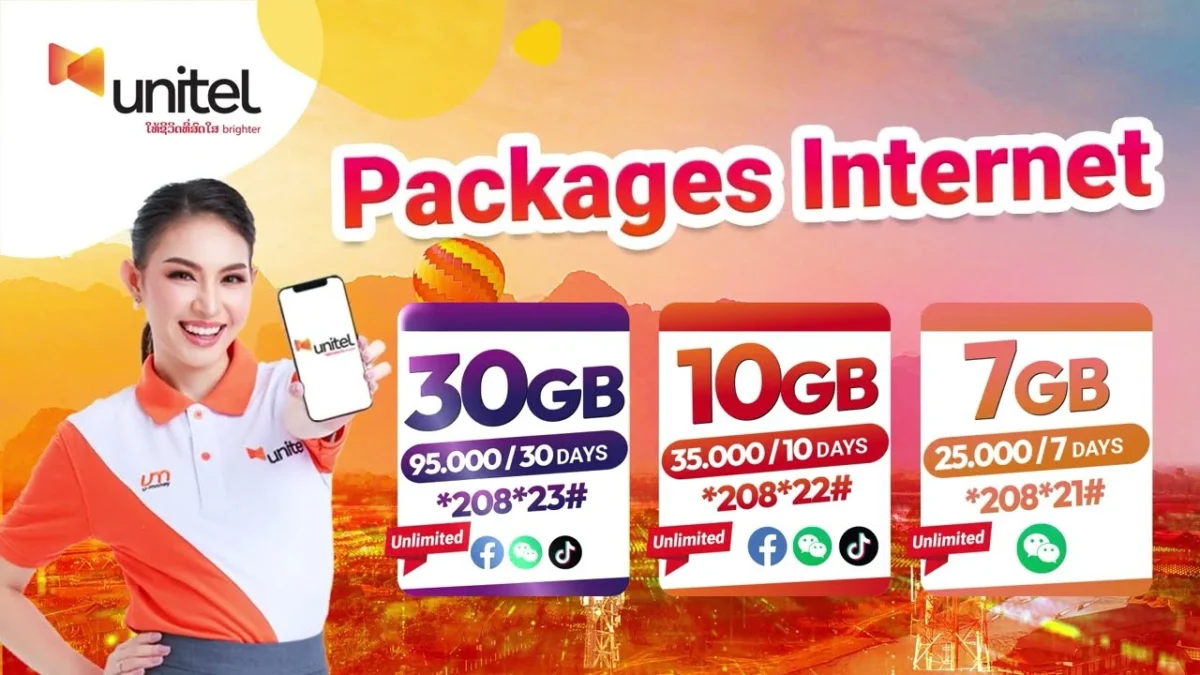
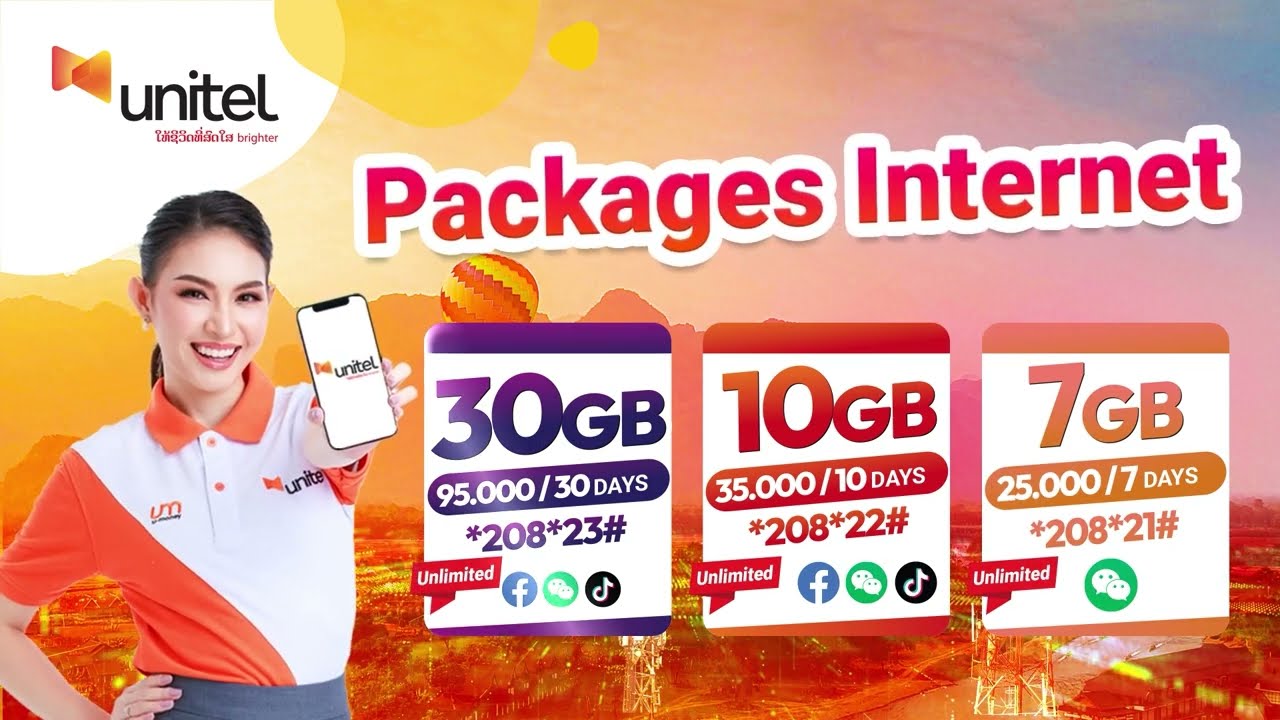
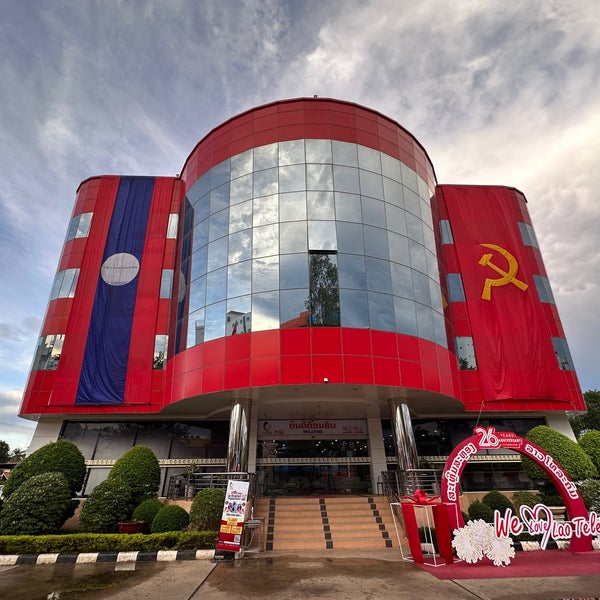
Unitel stands as the undisputed titan of the Laotian telecom industry. Established in 2008 as a joint venture between the Lao Asia Telecom and Viettel, the military-run telecommunications giant from Vietnam, Unitel has leveraged its partner’s extensive experience in emerging markets to build a robust infrastructure. Holding a commanding 51% market share as of late 2020, the operator serves over 5 million subscribers. Unitel’s success is largely attributed to its "broadcasting-like" strategy of deploying base stations in remote, mountainous regions that competitors initially deemed unprofitable. Beyond traditional voice and data, Unitel has diversified into broadband internet and a suite of value-added services (VAS), including digital gaming, music streaming, and the "U-Money" mobile payment platform, which has become a cornerstone of financial inclusion in rural Laos.
Lao Telecom (LaoTel): The Established Incumbent
As the oldest operator in the country, founded in 1996, Lao Telecom maintains a prestigious position with a 34% market share. It is a joint venture between the Government of Laos (51%) and the Singapore-listed Shenington Investments (49%). With a subscriber base exceeding 3 million, LaoTel has historically been the preferred provider for government agencies and urban professionals. The company was the first to pilot 5G technology in Vientiane, signaling its intent to capture the high-value, tech-savvy demographic. Their digital ecosystem includes "M-Money," a direct competitor to Unitel’s financial services, aimed at bridging the gap for the unbanked population.
TPlus Laos: The Rebranded Challenger
TPlus Laos, formerly known as Beeline and originally a subsidiary of the Russian-owned VimpelCom, holds a 10% market share with approximately 1 million subscribers. Following a rebranding effort to shed its previous identity, TPlus has focused on the youth demographic and urban centers. While its network footprint is smaller than the two leaders, TPlus competes aggressively on price and international connectivity services, including roaming packages and digital payment integrations.
ETL Laos: The State-Owned Specialist
Enterprise of Telecommunications Lao (ETL) holds the remaining 5% of the market. Established in its current form in 2015, ETL is a state-owned enterprise that has undergone various restructuring phases, including a period of Chinese investment. ETL’s strategy focuses on providing reliable data services and internet access to corporate clients and government institutions, though it maintains a competitive presence in the consumer voice and data segment.
A Chronology of Telecommunications Development in Laos
The evolution of the Laotian telecom sector can be divided into three distinct eras: the foundational period, the competitive explosion, and the digital integration phase.
- The Foundational Period (1996–2007): This era was marked by the establishment of Lao Telecom and the initial rollout of GSM networks. Connectivity was a luxury reserved for the elite in Vientiane and Luang Prabang.
- The Competitive Explosion (2008–2015): The entry of Unitel in 2008 changed the market’s trajectory. Viettel’s capital injection led to a massive expansion of fiber optic cables and base stations. During this time, the number of mobile subscribers jumped from fewer than 1 million to over 6 million. The introduction of 3G services began to shift consumer behavior from SMS to data-driven communication.
- The Digital Integration Phase (2016–Present): This period is defined by the rollout of 4G LTE and the pilot testing of 5G. The focus has shifted from mere connectivity to "digital life" services, including e-commerce, mobile banking, and government-to-citizen (G2C) digital platforms.
Infrastructure and Technological Standards
Laotian operators primarily utilize the Global System for Mobile Communications (GSM) standard for voice services, while data services have transitioned from 3G to 4G LTE. As of 2021, 4G coverage has become the standard in major municipalities such as Vientiane, Savannakhet, and Pakse.
The network architecture in Laos is unique due to the country’s landlocked geography. Laos relies heavily on terrestrial fiber optic links through neighboring Thailand, Vietnam, and China to access international internet gateways. Unitel and LaoTel have invested heavily in domestic fiber backbones, which now span thousands of kilometers, connecting even the most isolated provincial capitals.
The most recent technological milestone is the introduction of eSIM (embedded SIM) technology. This innovation has particularly benefited the tourism sector. By visiting platforms like laosesim.com or authorized retail outlets, international visitors can activate local data plans without the need for physical SIM cards, facilitating seamless navigation and communication upon arrival.
Economic Analysis: Pricing and Consumer Trends
Laos offers some of the most competitive mobile pricing in the Association of Southeast Asian Nations (ASEAN) region. The average cost of mobile data ranges between $2 and $5 per gigabyte. This affordability is a result of intense competition and a regulatory environment that discourages monopolistic pricing.
However, the "Average Revenue Per User" (ARPU) remains relatively low compared to Thailand or Malaysia, reflecting the lower purchasing power of the general population. To compensate, operators have focused on high-volume data consumption through social media-specific bundles (e.g., unlimited Facebook or YouTube packages) and the promotion of mobile financial services, which provide a steady stream of transaction-based revenue.
Regulatory Environment and Government Oversight
The Ministry of Post and Telecommunications (MPT) serves as the primary regulatory body. The MPT’s mandate includes spectrum allocation, licensing, and ensuring that telecommunications infrastructure aligns with the "National Digital Economy Development Plan 2021–2025."
Key regulatory focuses include:
- SIM Registration: To enhance national security and digital trust, the government has mandated strict SIM registration linked to national IDs or passports.
- Rural Development: The government incentivizes operators to expand into "white zones" (areas with no coverage) to ensure equitable access to information.
- Cybersecurity: With the rise of mobile banking, the MPT has introduced stricter protocols for data protection and fraud prevention.
Challenges and Barriers to Growth
Despite the rapid growth, the sector faces significant headwinds. The most prominent is the geographical terrain; nearly 70% of Laos is mountainous and heavily forested, making the installation and maintenance of base stations exceptionally expensive. In many rural areas, operators must rely on solar-powered towers and satellite backhaul, which increases operational costs.
Furthermore, there is a persistent "digital divide." While urban penetration is high, rural populations often lack the digital literacy required to fully utilize smartphones for education or business. There is also a shortage of skilled local labor in high-tech fields such as network engineering and cybersecurity, forcing operators to rely on foreign experts from Vietnam, China, and Singapore.
Future Outlook: The Road to 5G and Beyond
The future of Laotian telecommunications is inextricably linked to the country’s broader economic integration within the Mekong sub-region. The recently completed China-Laos Railway is expected to act as a catalyst for further infrastructure development, as fiber optic cables are often laid alongside rail corridors.
Industry analysts predict that 5G will see a commercial rollout in urban centers by 2024-2025. This will not only provide faster internet for consumers but will also enable "Industry 4.0" applications in the mining and hydropower sectors—the two pillars of the Laotian economy. Additionally, the government’s push for a "Digital Laos" suggests that mobile operators will increasingly evolve into "TechCos" (Technology Companies), providing cloud computing, IoT (Internet of Things) solutions for agriculture, and sophisticated e-government portals.
Conclusion
Mobile operators in Laos have successfully transitioned from providing basic voice services to becoming the backbone of the nation’s digital infrastructure. While Unitel and LaoTel maintain a dominant duopoly, the presence of TPlus and ETL ensures a level of competitive tension that benefits the consumer through lower prices and innovative services like eSIMs. As the country moves toward 5G and greater regional connectivity, the telecommunications sector will remain the primary engine of Laotian modernization, bridging the gap between its rugged geography and the global digital economy. The success of this transition will depend on continued infrastructure investment, a balanced regulatory approach, and a concerted effort to enhance digital literacy among all citizens.
