
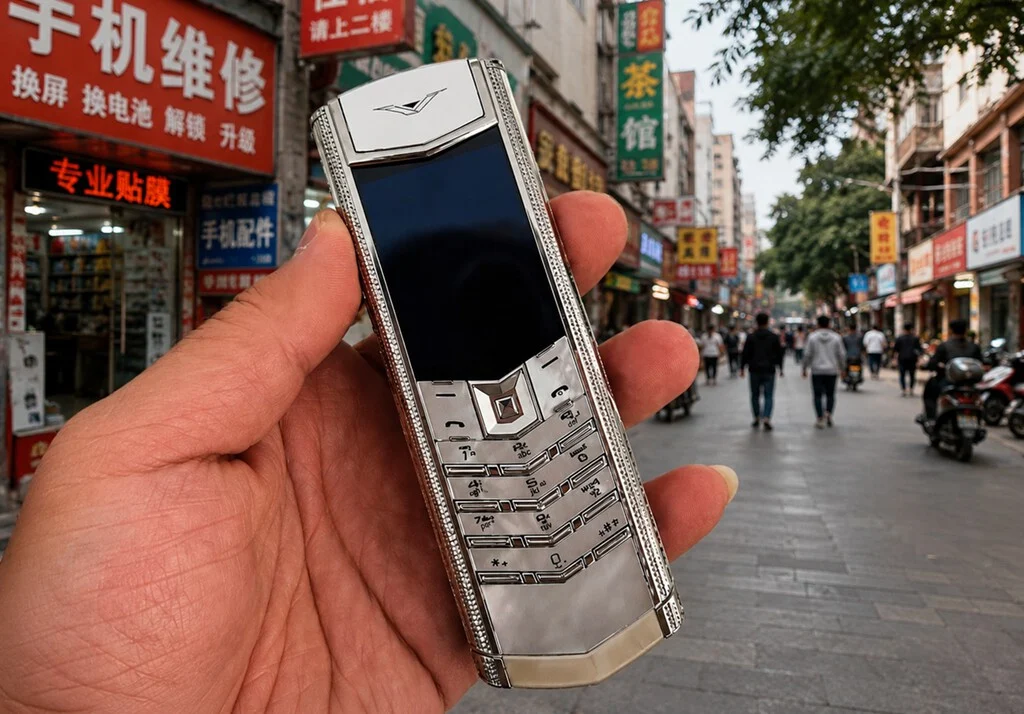

The world of ultra-luxury mobile phones, characterized by bespoke craftsmanship, exotic materials, and exorbitant price tags, has long existed as a niche segment catering to the affluent. Brands like Vertu have cultivated an image of exclusivity, offering devices that are as much a statement of status as they are communication tools. However, a recent incident involving a high-end Vertu Signature phone purchased for over 38,000 euros (approximately 297,000 Chinese Yuan) in 2015 highlights a stark reality: even the most opulent technological investments are susceptible to the relentless march of technological obsolescence and network evolution. This particular device, once a symbol of aspiration and wealth in China, has now been rendered entirely non-functional for its primary purpose due to the phasing out of 2G mobile networks in mainland China, transforming it from a communication device into an extravagant paperweight.
The Unraveling of a Luxury Icon: Vertu’s Aspirational Promise
Vertu, originally established in 1998 as a subsidiary of Nokia, pioneered the concept of the luxury mobile phone. Its philosophy revolved around creating devices that transcended mere functionality, positioning them as pieces of wearable art and high-end jewelry. Each Vertu phone was meticulously handcrafted from premium materials, often featuring aerospace-grade titanium, sapphire crystal screens, precious metals like gold and platinum, and exotic leathers such as alligator or crocodile skin. The brand also prided itself on offering exclusive concierge services, providing owners with 24/7 access to a lifestyle manager, a service that further justified its extraordinary pricing.
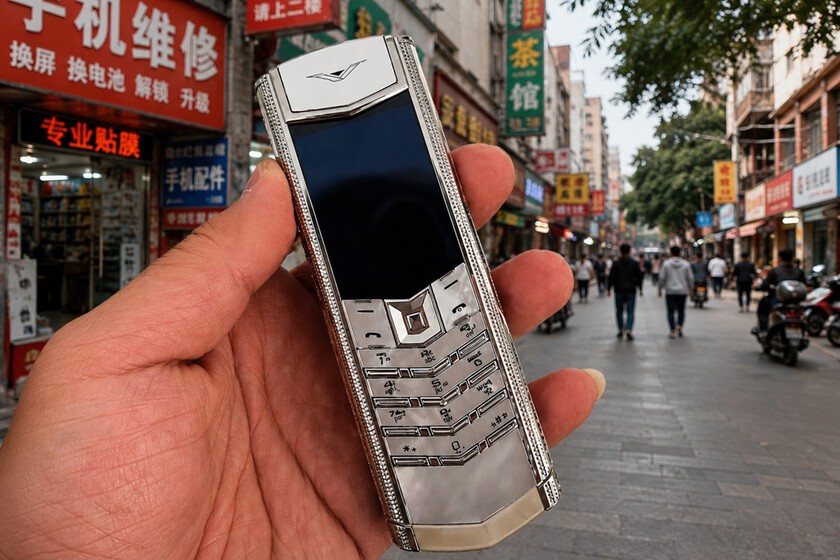
The Vertu Signature model, in particular, became synonymous with this extravagant ethos. The device at the center of this story, acquired in 2015, exemplified this dedication to luxury. It boasted a design adorned with white diamonds, keys crafted from rubies, and a display protected by a scratch-resistant sapphire crystal – features that contributed to its staggering price tag. For its owner, it represented not just a phone, but a long-term investment in a piece of exquisite engineering, a tangible symbol of success and discerning taste. At the time of its purchase, the device’s reliance on 2G connectivity was not a concern; 2G, or GSM (Global System for Mobile Communications), was still a widely supported global standard, offering basic voice and SMS capabilities, which for many luxury users, was sufficient, often paired with a more functional smartphone for data-intensive tasks. The allure was in its build quality, its aesthetic, and its exclusivity, rather than cutting-edge specifications.
The Silent Disconnect: China’s Aggressive 2G Sunset
The precipitous decline in the utility of this Vertu device stems directly from China’s accelerated efforts to decommission its legacy 2G mobile networks. Driven by the immense demand for faster data speeds, greater network capacity, and improved spectral efficiency, Chinese telecommunications operators have been at the forefront of migrating users from older technologies to 4G and, more recently, 5G. The spectrum previously occupied by 2G (and 3G) networks is invaluable for repurposing to support these newer, more data-intensive technologies, which are critical for the nation’s digital economy and smart infrastructure initiatives.
While a precise, single nationwide "switch-off" date for 2G in mainland China is complex due to regional variations and ongoing transition periods, major carriers like China Mobile, China Unicom, and China Telecom have progressively reduced support for 2G (and 3G) over the past few years. This process has involved ceasing the activation of new 2G-only devices, gradually shutting down 2G base stations in areas with low usage, and actively encouraging subscribers to upgrade to 4G/5G compatible handsets through various incentives. For a device exclusively reliant on 2G, like the 2015 Vertu Signature, this gradual decommissioning has led to a complete loss of service, rendering it incapable of making or receiving calls, sending messages, or accessing any form of network-dependent feature. The article notes that while mainland China has largely completed this transition, Hong Kong, a special administrative region, is also nearing the end of its 2G/3G services, with China Mobile Hong Kong having set a deadline of June 23 for discontinuation, further illustrating the regional momentum of this global trend.
A Global Trend: The Phasing Out of Legacy Networks
The experience of the Vertu owner in China is not an isolated incident but rather a microcosm of a broader, global telecommunications trend. Countries worldwide are systematically phasing out 2G and 3G networks to free up valuable spectrum for more advanced technologies like 4G LTE and 5G New Radio (NR). This transition is driven by several compelling factors:
- Spectral Efficiency: Newer technologies are significantly more efficient at transmitting data, allowing more users and more data to be handled within the same frequency bands.
- Cost Reduction: Maintaining multiple generations of network infrastructure (2G, 3G, 4G, 5G) is expensive. Consolidating to fewer, more advanced networks reduces operational costs, energy consumption, and maintenance complexity for operators.
- Technological Advancement: The vast majority of modern smartphones and IoT devices are designed for 4G and 5G, with diminishing reliance on 2G/3G for anything beyond emergency calls in some regions.
- Innovation: Reallocating spectrum allows for greater investment in and deployment of next-generation services, from enhanced mobile broadband to advanced IoT applications and smart cities.
Several countries have already completed or are well underway with their 2G/3G shutdowns. For example, Australia was an early mover, with Telstra shutting down its 2G network in 2016, followed by Optus in 2017 and Vodafone in 2018. Singapore completed its 2G shutdown in 2017. In the United States, AT&T decommissioned its 2G network in 2017, and T-Mobile followed suit for 2G in April 2024 (after shutting down its 3G network in 2022). Japan and South Korea have also largely moved beyond 2G. These chronological developments underscore the inevitability of network evolution and the challenges it poses for legacy devices, even those deemed "timeless" in their craftsmanship.
Europe’s Dilemma: eCall and Public Safety
While the economic and technological drivers for shutting down 2G/3G networks are clear, the process is not without significant challenges, particularly in Europe. The European Union has encountered a unique hurdle related to public safety systems. The eCall system, mandatory in all new car models sold in the EU since April 2018, is designed to automatically dial emergency services in the event of a serious road accident, transmitting the vehicle’s location and other critical data. This system was initially developed and implemented to rely exclusively on 2G and 3G networks for its connectivity.
With an estimated 64 million vehicles across Europe now equipped with eCall, the prospect of widespread 2G/3G shutdowns has raised serious concerns about the continued functionality of this vital safety feature. If these older networks are decommissioned without adequate transitional solutions, a significant number of vehicles could lose their ability to automatically trigger an emergency call, potentially compromising accident response times and endangering lives. Consequently, the European Union has formally requested telecommunications operators to delay the complete shutdown of 2G and 3G networks. This plea highlights a critical tension between technological progress and the need to maintain essential public services that were designed around older standards. Solutions being explored include mandating upgrades to eCall modules in vehicles, developing dual-mode 4G/5G modules that can fall back to 2G/3G if necessary, or designating specific frequencies for eCall that would be maintained for a longer period.
Spain’s Roadmap for Network Modernization
Following the broader European context, Spain, a key member state of the EU, is also charting its course for the eventual shutdown of 2G and 3G networks. Major Spanish operators have already laid out their roadmaps for this transition. Movistar, a leading telecommunications provider, has publicly announced its intention to complete the disconnection of its 2G network by 2027. Similarly, Orange Spain plans to follow suit with its 2G/3G shutdown by 2030. Vodafone Spain, another major player, has also indicated plans for 3G shutdown by 2028 and 2G by 2030, aligning with the industry trend.
These timelines, while providing a clear horizon for consumers and businesses, also underscore the complexity of the transition. They involve massive infrastructure upgrades, extensive communication campaigns to inform users, and the necessity of ensuring that critical services like eCall remain operational. The staggered approach across different operators and technologies reflects the intricate balance between modernizing networks, managing costs, and mitigating potential disruptions to a wide array of legacy devices and services.
Beyond the Handset: Broader Implications of Network Evolution
The plight of the Vertu owner extends beyond a mere anecdote of luxury tech gone stale; it illuminates several broader implications inherent in the rapid evolution of telecommunications:
- Planned Obsolescence vs. Natural Obsolescence: While not always intentional, the rapid pace of technological development inevitably leads to the obsolescence of older devices. For standard consumer electronics, this is largely accepted. However, for items marketed as timeless luxury investments, the perceived value proposition is severely undermined when fundamental functionality is lost. This raises questions about the long-term viability of "future-proof" claims in a tech context.
- The Sustainability Challenge: The accelerated retirement of perfectly functional hardware due to network changes contributes to the growing problem of electronic waste (e-waste). Even luxury devices, crafted with precious materials, become landfill fodder if they cannot connect. This pushes manufacturers, consumers, and policymakers to consider more sustainable design principles, upgradeability, and recycling initiatives.
- Consumer Awareness and Responsibility: The incident serves as a cautionary tale for consumers, especially those investing heavily in technology. Understanding network compatibility, product lifecycles, and future technology trends becomes increasingly important. While a 2015 purchase couldn’t foresee the exact timing of 2G shutdowns, a general awareness of network evolution could inform purchasing decisions for devices intended for long-term use.
- Impact on the Internet of Things (IoT): Beyond mobile phones, a vast ecosystem of Machine-to-Machine (M2M) devices and early IoT deployments often relied on 2G for low-bandwidth, ubiquitous connectivity. These include smart meters, asset trackers, security systems, and vending machines. Their continued operation is directly threatened by 2G/3G sunsets, necessitating costly upgrades or replacements, which can have significant economic ramifications for industries.
- The Digital Divide: While the Vertu owner represents the ultra-wealthy, network shutdowns can disproportionately affect vulnerable populations or remote areas that still rely on older, cheaper 2G devices or where 4G/5G coverage is sparse. Ensuring a smooth transition for all segments of society remains a critical challenge.
In conclusion, the transformation of a multi-thousand-euro Vertu phone into a non-functional artifact due to network modernization vividly illustrates the paradox of luxury technology in an era of rapid digital change. What was once a symbol of enduring value and status has succumbed to the inexorable march of progress, highlighting the transient nature of even the most premium technological investments. This individual story serves as a potent reminder of the global challenges and intricate considerations involved in phasing out legacy networks, balancing technological advancement with public safety, environmental responsibility, and consumer expectations. As the world continues its journey towards 5G and beyond, the careful management of these transitions will remain a critical task for telecommunications operators, regulators, and manufacturers worldwide.
