

The landscape of global telecommunications is currently undergoing its most significant architectural shift since the transition from analog to digital cellular networks. At the heart of this transformation is the embedded Subscriber Identity Module, or eSIM, a technology that is systematically dismantling the decades-old reliance on physical plastic cards to authenticate mobile users. While the traditional SIM card has been a staple of mobile telephony since 1991, the arrival of the eSIM represents a move toward a more integrated, secure, and flexible digital ecosystem. This transition is not merely a change in hardware; it is a fundamental reimagining of how consumers and machines connect to the internet and to each other.
The Technical Framework of Embedded SIM Technology
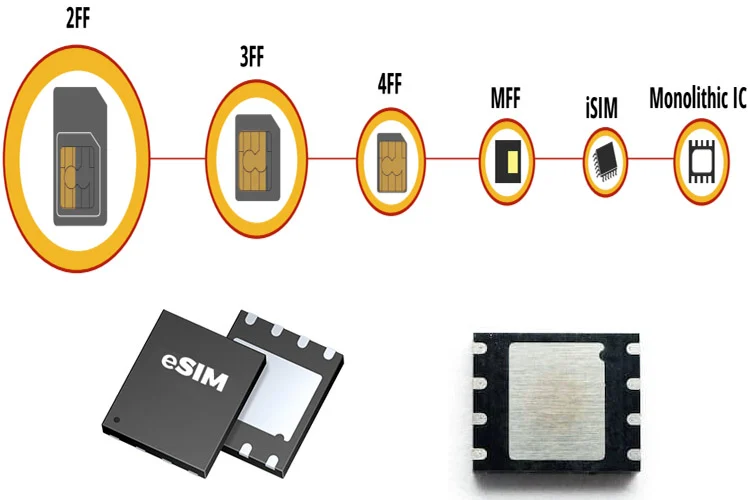
An eSIM, technically known as an embedded Universal Integrated Circuit Card (eUICC), is a rewritable chip built directly into a device’s motherboard during the manufacturing process. Unlike its predecessor, the physical SIM (Subscriber Identity Module), which requires a dedicated tray and mechanical insertion, the eSIM is a permanent fixture. It performs the same essential function—storing the International Mobile Subscriber Identity (IMSI) and the related key used to identify and authenticate subscribers on mobile telephony devices—but it does so through a programmable interface.
The operational core of the eSIM is its ability to be programmed over-the-air (OTA). This is facilitated by a process called Remote SIM Provisioning (RSP). When a user signs up for a mobile plan, the carrier sends a digital profile to the device via a secure encrypted link, often initiated by scanning a QR code or through a carrier’s proprietary application. This profile contains the necessary network authentication keys, allowing the device to connect to the carrier’s infrastructure without the need for a physical medium.
A Chronology of SIM Evolution: From Credit Cards to Software
To understand the impact of the eSIM, it is necessary to examine the historical trajectory of SIM technology. The journey has been characterized by a relentless drive toward miniaturization and digital integration.
In 1991, the first SIM cards, developed by Giesecke & Devrient, were the size of a standard credit card. As mobile phones became more compact, the industry moved to the Mini-SIM, followed by the Micro-SIM in 2003, and finally the Nano-SIM in 2012. Each iteration reduced the physical footprint but maintained the same mechanical requirement: a user had to physically handle a piece of plastic to change their service provider.
The eSIM era began in earnest around 2016, when the GSMA (the global organization representing mobile operators) released specifications for remote SIM provisioning in smartwatches and tablets. The Samsung Gear S2 Classic 3G was among the first consumer devices to utilize the technology. However, the true "tipping point" occurred in 2018, when Apple integrated eSIM technology into the iPhone XS and XR series. This move forced global carriers to accelerate their support for the standard. By 2022, Apple took the unprecedented step of launching the iPhone 14 in the United States as an eSIM-only device, effectively signaling the beginning of the end for the physical SIM tray in flagship smartphones.
Market Adoption and Statistical Overview
The adoption of eSIM technology is accelerating at a rapid pace, driven by both consumer demand for convenience and manufacturer desire for internal device space. According to data from GSMA Intelligence, the number of eSIM-capable smartphone models has increased by over 200% since 2019. Research from Juniper Research suggests that the number of eSIM installations in connected devices will rise from roughly 1.2 billion in 2021 to over 3.4 billion by 2025.
This growth is not limited to smartphones. The Internet of Things (IoT) sector is a primary driver of eSIM integration. In industrial settings, where devices are often deployed in remote or inaccessible locations, the ability to switch network providers remotely via eSIM is a logistical necessity. The automotive industry has also embraced the technology; modern "connected cars" use eSIMs to provide real-time navigation, emergency services (eCall), and in-car Wi-Fi without requiring the owner to manage a physical card.
Strategic Advantages for Consumers and Enterprises
The transition to eSIM offers a suite of benefits that extend beyond simple convenience.
- Streamlined Switching and Global Roaming: For frequent international travelers, the eSIM eliminates the need to find a local kiosk to purchase a physical SIM card upon arrival. Users can download a local data plan before they even land, maintaining their primary number for calls while using a local eSIM for data.
- Enhanced Security: Because an eSIM cannot be physically removed from a device, it is a deterrent to certain types of theft. If a device is stolen, the thief cannot simply "toss" the SIM card to prevent the phone from being tracked. Furthermore, eSIMs are less susceptible to "SIM swapping" scams, where criminals trick carriers into porting a number to a physical card in their possession.
- Space Optimization for Manufacturers: By removing the SIM tray and its associated internal hardware, manufacturers reclaim valuable "real estate" inside the device. This space can be used for larger batteries, better cooling systems, or additional sensors. It also makes it easier to achieve higher ratings for water and dust resistance (IP68 and beyond), as there is one fewer hole in the device’s chassis.
- Multi-Profile Management: A single eSIM chip can store multiple profiles. While usually only one or two can be active simultaneously, this allows users to keep a work line, a personal line, and an international travel line on a single device without swapping hardware.
Device Compatibility and Industry Ecosystem
While the technology is becoming standard, it is currently most prevalent in the premium and mid-range segments of the market.
- Apple: All iPhones from the XS/XR series onward support eSIM. In the US, the iPhone 14, 15, and 16 series are eSIM-exclusive.
- Samsung: The Galaxy S20 series and all subsequent S-series flagships, as well as the Galaxy Z Fold and Flip series, feature eSIM support.
- Google: The Pixel 3 and all newer models are eSIM-compatible.
- Wearables: Most cellular-enabled smartwatches, including the Apple Watch, Samsung Galaxy Watch, and Google Pixel Watch, rely exclusively on eSIM technology due to their small size.
Despite the hardware availability, carrier support remains a variable. While major Tier-1 carriers like AT&T, Verizon, T-Mobile, Vodafone, and Orange have fully embraced the technology, some smaller regional carriers and Mobile Virtual Network Operators (MVNOs) are still in the process of upgrading their backend systems to support digital provisioning.
Activation Protocols: A Step-by-Step Guide
The process of activating an eSIM is designed to be user-friendly, though it differs slightly between operating systems.
For iOS Devices:
- Navigate to Settings > Cellular.
- Select Add eSIM or Set Up Cellular.
- Choose Use QR Code and scan the code provided by the carrier.
- If a QR code is not available, some carriers support "eSIM Carrier Activation," where the plan is assigned to the device’s EID (Embedded Identity Document) number automatically upon purchase.
- Follow the on-screen prompts to label the new plan (e.g., "Travel" or "Business").
For Android Devices (General Steps):
- Open Settings > Network & Internet.
- Tap the + or Add icon next to "SIMs" or "Mobile Network."
- Select Download a SIM instead?
- Scan the carrier’s QR code when prompted.
- Confirm the activation and select which SIM to use for data, calls, and messages.
Industry Reaction and Economic Implications
The shift to eSIM has met with a mixed reaction from traditional mobile network operators. On one hand, it reduces the logistical costs associated with manufacturing, storing, and shipping physical SIM cards. On the other hand, carriers have historically used physical SIMs as a "friction" point to prevent churn. With eSIM, the "barrier to exit" for a customer is significantly lowered; a user can switch providers in minutes from their couch.
Industry analysts suggest that this will lead to a more competitive market where carriers must compete more aggressively on price and service quality rather than relying on consumer inertia. Furthermore, the rise of "Travel eSIM" apps like Airalo, Holafly, and Nomad has created a new multi-billion dollar sub-sector in the telecom industry, specifically targeting the roaming market that was previously dominated by expensive carrier roaming packages.
Environmental Impact and Sustainability
From a sustainability perspective, the move to eSIM is a significant victory. Millions of plastic SIM cards are produced annually, many of which are eventually discarded in landfills. Additionally, the credit-card-sized plastic holders in which SIMs are shipped represent a massive amount of unnecessary plastic waste. By transitioning to a digital-first model, the telecommunications industry can significantly reduce its carbon footprint and plastic consumption.
The Broader Impact: Looking Toward a SIM-less Future
The implications of eSIM technology extend far beyond the smartphone. We are moving toward a world of "ubiquitous connectivity," where every tablet, laptop, and wearable is connected to the internet by default. Microsoft and Qualcomm have been vocal proponents of "Always Connected PCs," which utilize eSIMs to provide cellular data to laptops, eliminating the reliance on insecure public Wi-Fi.
In the long term, the eSIM is likely to evolve into the iSIM (integrated SIM). While the eSIM is a separate chip on the motherboard, the iSIM integrates the SIM functionality directly into the device’s main processor (SoC). This will further reduce power consumption and save even more space, paving the way for a new generation of ultra-small IoT devices and advanced medical implants.
Conclusion
The eSIM is more than a technical convenience; it is a catalyst for a more flexible, secure, and environmentally conscious telecommunications industry. While the transition from physical SIMs is still ongoing—particularly in developing markets where legacy hardware remains prevalent—the momentum is irreversible. For the consumer, the eSIM offers unprecedented freedom to manage their digital identity. For the industry, it provides the foundation for the next wave of innovation in IoT and global connectivity. As we look toward the future, the physical SIM card will likely be remembered as a relic of a transitional era, replaced by a seamless, invisible, and entirely digital infrastructure.
