
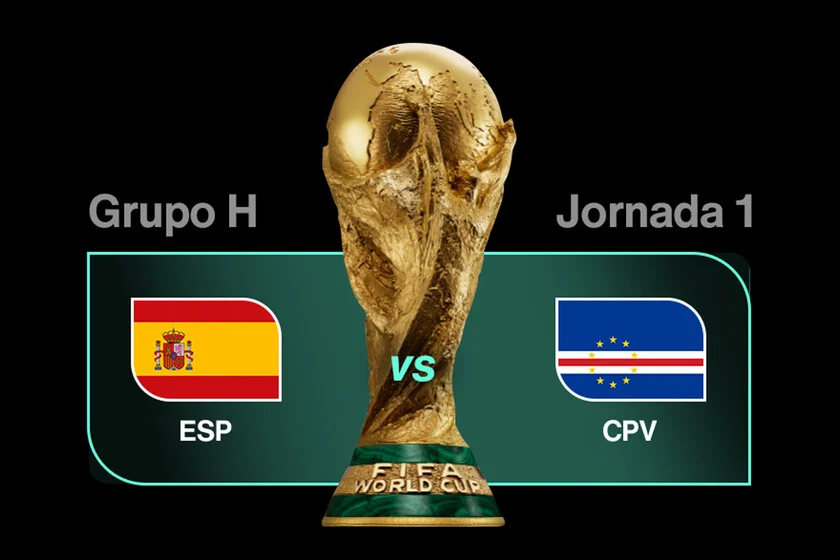

The highly anticipated moment for Spanish football enthusiasts has arrived, as the Spanish National Team, La Roja, makes its grand debut in the FIFA World Cup 2026. After several days of tournament action, today marks a pivotal occasion for Spain, as they face Cabo Verde in their inaugural match at the state-of-the-art Mercedes-Benz Stadium in Atlanta, United States. This fixture, scheduled for 18:00 Central European Time (CET), formerly Peninsular Time, signifies the commencement of Spain’s quest for a coveted second star, a testament to their ambition to replicate their 2010 triumph. The match is set to be a significant event, not just for its sporting implications but also for the multifaceted viewing experience offered by contemporary broadcasting technologies, ranging from traditional terrestrial television to advanced streaming platforms.
The Genesis of a Global Spectacle: FIFA World Cup 2026
The FIFA World Cup 2026 is poised to be an unprecedented event in the history of global football, marking several significant firsts. Co-hosted by three North American nations—the United States, Canada, and Mexico—it will be the first World Cup to feature 48 national teams, an expansion from the previous 32-team format. This new structure aims to increase global participation and exposure, offering more nations the opportunity to compete on football’s biggest stage. The tournament will span across 16 host cities, with Atlanta serving as one of the key venues in the United States. The Mercedes-Benz Stadium, renowned for its retractable roof and innovative design, is a fitting arena for such a momentous occasion, capable of accommodating over 70,000 spectators and offering a world-class experience for both players and fans. The expanded format will also see a record number of matches, totaling 104, promising an extended festival of football that will captivate billions worldwide. This structural change brings both excitement and logistical challenges, requiring meticulous planning from FIFA and the host nations to ensure smooth operations across vast geographical distances.
Spain’s Aspirations: The Pursuit of a Second Star
For Spain, the World Cup 2026 represents a fresh opportunity to reaffirm its status among football’s elite. Following their historic victory in 2010, where an Andrés Iniesta goal secured their maiden title, La Roja has experienced a period of mixed fortunes in subsequent tournaments. While they have showcased moments of brilliance, particularly in UEFA European Championships, consistency at the World Cup level has been elusive. The current squad, a blend of seasoned veterans and promising young talents, arrives in Atlanta with renewed optimism under the guidance of their national coach. The emphasis is on a possession-based, fluid style of play, a hallmark of Spanish football, combined with tactical adaptability. The opening match against Cabo Verde is crucial, not only for securing the initial three points but also for building momentum and confidence within the squad. A strong start is often indicative of a team’s potential to progress deep into the knockout stages, and the psychological boost derived from a convincing victory can be invaluable for the remainder of the group stage and beyond. The "second star" ambition is a powerful motivator, symbolizing the desire to etch another glorious chapter in the nation’s footballing annals and inspire a new generation of players and fans.
Cabo Verde: The Rise of the Blue Sharks
Cabo Verde, officially the Republic of Cabo Verde, enters the World Cup 2026 as one of the tournament’s compelling underdog stories. Hailing from an archipelago nation off the northwest coast of Africa, the "Blue Sharks" have steadily risen through the ranks of African football over the past two decades. Their qualification for the World Cup is a historic achievement, marking their first appearance at the global showpiece event. This milestone reflects years of investment in youth development, the establishment of professional leagues, and the increasing number of Cabo Verdean players making their mark in European clubs. Despite being considered, on paper, the weakest opponent in Group H, Cabo Verde’s team is known for its physical prowess, disciplined defense, and surprising flashes of attacking flair. They often draw inspiration from their strong sense of national identity and the support of a passionate diaspora spread across the globe. For a nation with a population of just over half a million, their presence at the World Cup is a source of immense national pride and a testament to their burgeoning footballing talent. While the odds may be stacked against them, their role as potential giant-killers adds an intriguing dimension to the group stage, capable of producing unexpected results against more established footballing powers. Their participation underscores the expanded World Cup’s goal of fostering greater diversity and representation in global football.
Atlanta: A Premier Host City and Venue
Atlanta, Georgia, stands as a testament to the growing appeal of football in North America and its capability to host events of monumental scale. The city’s selection as a host for the FIFA World Cup 2026 highlights its world-class infrastructure, extensive transportation networks, and vibrant cultural scene. The Mercedes-Benz Stadium, opened in 2017, is a marvel of modern sports architecture. Beyond its aesthetic appeal, the stadium boasts advanced technological capabilities, including a 360-degree halo board that enhances the fan experience, and state-of-the-art facilities for players, media, and officials. Atlanta’s diverse population and strong economic base make it an ideal location for a global sporting event, capable of welcoming international visitors and creating a festive atmosphere. The city has a rich history of hosting major sporting events, including the 1996 Olympic Games, further solidifying its reputation as a premier destination. The economic impact of hosting World Cup matches is substantial, with projections including significant boosts to tourism, hospitality, and local employment. The influx of international fans, media, and teams will generate considerable revenue, enhancing Atlanta’s global profile and leaving a lasting legacy for sports development in the region.
The Modern Broadcasting Landscape: TDT vs. Streaming
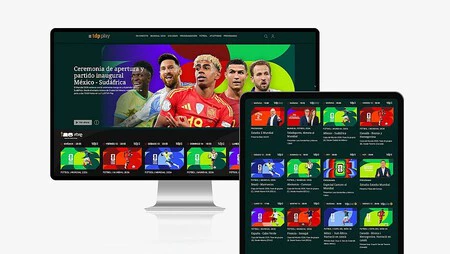
The broadcasting of Spain’s World Cup debut against Cabo Verde underscores the evolving dynamics of media consumption in the 21st century. Viewers in Spain have a multitude of options to tune into the match, reflecting a dual-platform strategy employed by rights holders. Public broadcaster RTVE, through its flagship channel La 1 and the RTVE Play app, offers free-to-air coverage, ensuring universal access. This commitment to public service broadcasting is critical for events of national interest, upholding the principle that major sporting spectacles should be accessible to all citizens. Concurrently, DAZN Mundial, a dedicated channel available through DAZN’s subscription service and integrated into platforms like Movistar Plus (dial 55) and Orange TV (dial 111), provides premium, often enhanced, coverage for subscribers. This hybrid model caters to different consumer preferences, balancing broad accessibility with specialized, ad-free, or technically superior viewing experiences.
The choice between these platforms, however, is not merely one of cost or convenience; it often hinges on technical nuances that significantly impact the live viewing experience. A common challenge in the age of digital streaming is latency, the delay between the live event and its appearance on the viewer’s screen. Traditional Digital Terrestrial Television (TDT) broadcasts, due to their direct signal transmission, typically exhibit minimal latency, often just a few seconds. In contrast, streaming services, which rely on internet protocols, data compression, and content delivery networks (CDNs), inherently introduce greater delays. These can range from 10 to 60 seconds or more, depending on network conditions, device processing, and platform architecture. This delay becomes particularly noticeable and frustrating during high-stakes, real-time events like football matches. For many fans, the communal aspect of football viewing, where cheers from neighboring apartments or real-time updates on social media can prematurely reveal a goal, profoundly impacts the enjoyment. This "spoiler effect" is a significant factor in viewership choices, with many opting for the lowest-latency option, even if it means foregoing certain premium features.
The 4K UHD Experience: A Visual Revolution
Adding another layer to the broadcasting discussion is the availability of 4K Ultra High Definition (UHD) resolution. RTVE’s commitment to offering the match in 4K via La 1 UHD on TDT represents a significant technological advantage for free-to-air viewers. 4K UHD provides four times the pixel count of standard Full HD (1080p), delivering incredibly sharp images, finer detail, and a more immersive viewing experience. This is particularly impactful for sports, allowing viewers to discern intricate plays, facial expressions, and distant details with unprecedented clarity. The availability of 4K on TDT, a public service, underscores a commitment to democratizing advanced viewing technologies. Most major operators, with the notable exception of some legacy systems like certain Movistar Plus configurations, have integrated La 1 UHD into their channel lineups, making this premium viewing option widely accessible.
The decision to watch in 4K, however, involves considerations beyond just resolution. It requires a compatible 4K television and, for TDT, a compatible tuner. For streaming services, 4K demands a robust internet connection with sufficient bandwidth to handle the higher data rates without buffering or quality degradation. While DAZN and other streaming platforms increasingly offer 4K content, their inherent latency issues can sometimes detract from the overall live experience, even with superior image quality. This creates a fascinating dilemma for discerning viewers: prioritize minimal latency for the purest "live" feel, or opt for superior visual fidelity with the acceptance of a slight delay. The fact that a public broadcaster like RTVE is at the forefront of delivering 4K live sports with minimal latency is a strong statement about the enduring relevance and technical capabilities of traditional broadcasting infrastructure.
The Fan Experience: Community, Anticipation, and Avoiding Spoilers
For millions of Spaniards, the World Cup debut is more than just a football match; it’s a unifying national event. The cultural significance of La Roja extends beyond mere sport, often serving as a catalyst for collective national identity and shared emotional experiences. The evocative comparison to the Spanish pop group Mecano’s lyric about "doing something at the same time" perfectly encapsulates the communal spirit that grips the nation during such occasions. Families gather, friends convene, and entire neighborhoods echo with the collective gasps, cheers, and celebrations of goals. This shared experience is precisely what makes the threat of spoilers, particularly from a slight broadcasting delay, so potent. The visceral thrill of a goal, witnessed live and simultaneously with millions of compatriots, is an irreplaceable aspect of the football fan experience.
The preference for TDT, despite potential subscriptions to premium streaming services, highlights a deeper psychological aspect of live sports viewing. It’s not just about watching the game; it’s about being in the moment with everyone else. The collective anticipation, the synchronized roar, the immediate shared joy or despair – these elements are subtly yet significantly undermined by even a few seconds of delay. This phenomenon speaks to the unique nature of live sports as perhaps the last truly appointment-viewing content in a fragmented media landscape. While other forms of entertainment have embraced on-demand consumption, the essence of sports lies in its unpredictable, real-time drama. For dedicated fans, ensuring they are among the first to experience these moments becomes a priority, influencing their technological choices and viewing habits. The choice of commentators, while sometimes a factor, often pales in comparison to the fundamental desire for synchronous engagement with the live event and the national consciousness it creates.
Economic and Societal Impact of the World Cup
Beyond the immediate sporting drama and broadcasting considerations, the FIFA World Cup 2026 carries profound economic and societal implications. For the host nations, the tournament is projected to generate billions in economic activity through tourism, infrastructure development, and increased consumer spending. The global advertising market sees a significant boost, with brands vying for visibility during the world’s most-watched sporting event. Broadcast rights, a critical revenue stream for FIFA, are negotiated for astronomical sums, reflecting the immense value placed on live sports content. For participating nations like Spain and Cabo Verde, the World Cup offers a platform for national branding, cultural exchange, and inspiration for future generations of athletes. The exposure gained by players can lead to increased transfer values and career opportunities, while national team success can foster social cohesion and national pride. The tournament’s expanded format, encompassing a wider array of nations, further amplifies these impacts on a global scale, making the World Cup a truly unique phenomenon that transcends sport to influence economies, cultures, and societies worldwide.
Looking Ahead: Spain’s Group H Journey
Spain’s encounter with Cabo Verde is merely the first step in what promises to be a challenging Group H campaign. While considered the favorite in this opening match, the unpredictable nature of World Cup football means no opponent can be underestimated. The results of this game will set the tone for La Roja‘s journey, impacting their standing within the group and influencing subsequent tactical approaches. Following this debut, Spain will face other formidable opponents in their group, each presenting a unique set of challenges. Their performance in these initial matches will be critical in securing a top-two finish, which is necessary to advance to the knockout stages. The ultimate aspiration of achieving a second World Cup star is a long and arduous path, requiring sustained excellence, tactical ingenuity, and unwavering team spirit throughout the tournament. As the whistle blows in Atlanta, the eyes of a nation, and indeed the world, will be fixed on La Roja as they embark on this ambitious quest.
