

The accelerating build-out of edge artificial intelligence is fundamentally redefining the interface between human users and autonomous systems, shifting the industry’s center of gravity from massive, centralized data centers to highly efficient, localized workloads. While the global AI narrative has been dominated by the hyperscale models of OpenAI and Anthropic, a parallel revolution is occurring at the network edge. This transition emphasizes immediate results and granular efficiency over the broad, data-intensive mining characteristic of global cloud infrastructures. In both paradigms, the priority remains the rapid movement and processing of data; however, at the edge, the volume of data is smaller, the physical distances are shorter, and the requirements for power efficiency are exponentially more stringent.
This technological shift marks a departure from generalized Large Language Models (LLMs) toward Small Language Models (SLMs) that are domain-specific and workload-optimized. Instead of performing contextual searches or training massive neural networks, edge AI focuses on functional precision. This includes tasks such as calculating the exact tactile pressure required for a robotic arm to grasp a fragile object or triggering a vehicle’s braking system when a pedestrian enters its path. The emergence of these targeted capabilities is driving a surge in demand for hardware that can deliver high-performance intelligence within ultra-low power envelopes, a field formerly known as "tiny machine learning" (TinyML).
The Historical Context and Chronological Evolution of Connectivity
To understand the current state of edge AI, one must look at the chronological development of the wireless standards that support it. For decades, Wi-Fi was viewed primarily as a consumer-grade "best-effort" technology, designed for the convenience of home internet and public hotspots. The evolution from the early 802.11b standard to the current Wi-Fi 7 (802.11be) represents a metamorphosis from a simple utility to a mission-critical industrial tool.
The timeline of this evolution highlights a steady march toward reliability. Wi-Fi 6 and 6E, introduced between 2019 and 2021, opened the 6 GHz band, providing the bandwidth necessary for the initial wave of IoT expansion. Wi-Fi 7, currently being integrated into the latest generation of semiconductors, introduces Multi-Link Operation (MLO), allowing devices to transmit and receive data across different bands and channels simultaneously. Looking further ahead, the industry is already preparing for Wi-Fi 8, expected in late 2028, which is anticipated to prioritize "determinism"—the ability to guarantee data delivery within specific, ultra-tight latency bounds.
According to industry leaders, this shift toward determinism is the final hurdle in making Wi-Fi a viable replacement for wired industrial Ethernet in robotics and automation. Sivaram Trikutam, senior vice president for Infineon’s wireless product line, notes that while cellular technologies were built with inherent reliability, Wi-Fi’s origins were different. However, the modern industrial landscape—populated by autonomous mobile robots (AMRs) and automated factory floors—demands a "no-blip" utility. The transition from "best effort" to "guaranteed delivery" is the primary driver of current research and development.
The Competitive Landscape: Wi-Fi Versus 5G and 6G
For several years, the telecommunications industry positioned 5G, and eventually 6G, as the definitive future of high-speed industrial communications. The promise of 5G millimeter wave (mmWave) technology was significant, boasting theoretical speeds exceeding 10 gigabits per second, comparable to fiber optics. However, the practical application of mmWave in industrial and indoor environments has faced substantial physical hurdles.
Millimeter wave signals suffer from rapid attenuation and lack the ability to penetrate solid objects like walls, windows, or even dense foliage. In a dynamic factory environment, moving objects such as forklifts, trucks, or groups of personnel can disrupt the line-of-sight required for mmWave stability. The infrastructure cost of overcoming these limitations—requiring a dense network of repeaters and small cells—has proven prohibitive for many enterprises.
In contrast, Wi-Fi has largely won the battle for on-premises data movement. It offers the ability to stream data to multiple devices simultaneously within a localized environment without the massive infrastructure overhead of cellular small cells. Sassan Ahmadi, product manager at Keysight Technologies, emphasizes that Wi-Fi’s ability to serve many different nodes connected to a single centralized point makes it ideal for environments where robots move between access nodes. This localized architecture is where AI chips are now being deployed to process analytics in real-time, optimizing traffic handling and mobility enhancement directly at the source.
Security and the Rise of Local Sovereignty
One of the most critical drivers for edge AI and advanced Wi-Fi integration is the increasing demand for data security and "data sovereignty." In sensitive sectors such as defense, aerospace, and high-tech manufacturing, the risks associated with transmitting data to a distant cloud server are often unacceptable. Localized processing ensures that sensitive information remains within the corporate firewall, significantly reducing the surface area for potential cyberattacks or data leaks.
The industry is responding by building sophisticated security features directly into the silicon. Shishir Gupta, vice president of product marketing at Synaptics, highlights the move toward hardware-based security. Modern Wi-Fi 7 and 8 chips are being designed with a "hardware root of trust," incorporating Platform Security Architecture (PSA) Level 3 certification, Arm TrustZone, and secure boot protocols. This ensures that the device is protected from the moment it powers on, providing a secure environment for AI models to operate without external interference.
By processing data locally, companies also avoid the "turnaround time" latency inherent in cloud computing. In time-sensitive services, even a delay of a few hundred milliseconds can lead to system failures. By keeping the "edge" within the physical premises of the facility, operators can guarantee the near-instantaneous response times required for safety-critical AI applications.
Architectural Innovations in Edge Silicon
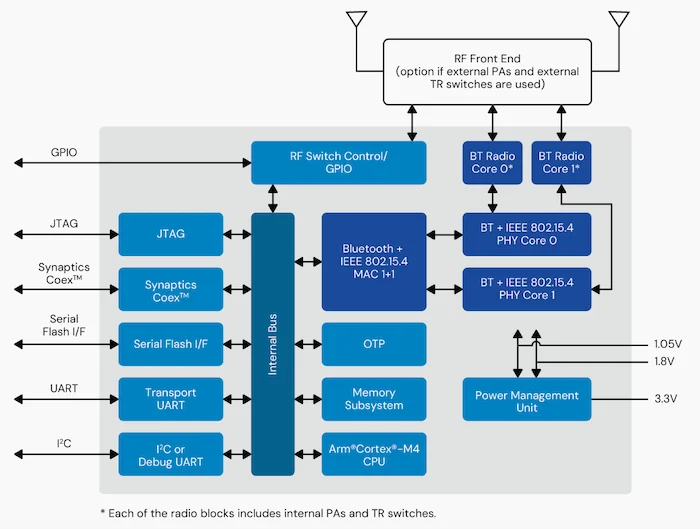
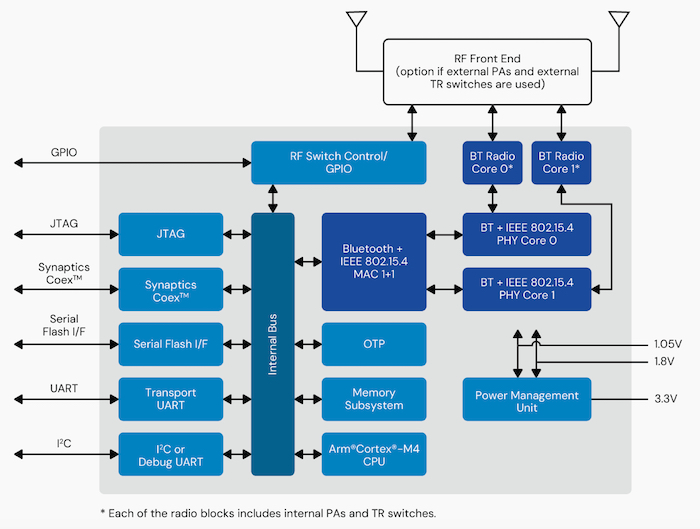
The shift toward edge AI is forcing a radical rethinking of semiconductor architecture. Traditional chip designs often struggle with the power-to-performance ratios required for edge inferencing. Modern solutions, such as those being developed by Synaptics and Infineon, utilize distributed memory architectures to maximize efficiency.
Ananda Roy, senior product line manager at Synaptics, explains that modern Wi-Fi SoCs (System on Chips) now feature specialized memory segments. For instance, dedicated RAM and ROM are reserved for connectivity tasks like baseband processing, while a separate application SRAM handles the data for specific AI workloads. By utilizing "execute-in-place" (XiP) technology from external flash memory, these chips can boot securely and run complex code with minimal latency, avoiding the power drain of moving massive amounts of software into the primary chip memory.
Furthermore, these chips are becoming multi-protocol hubs. A single Wi-Fi 7 or 8 chip must now support Bluetooth Low Energy (BLE) 6.0, Thread, and Zigbee to ensure compatibility across a vast ecosystem of IoT devices. Innovations like "Bluetooth channel sounding"—which uses radio wave phase analysis to estimate distance with 20-centimeter accuracy—are replacing more expensive and power-hungry technologies like radar or ultra-wideband (UWB) in certain applications.
Performance Metrics and the Role of Fiber Backhaul
While wireless connectivity is the visible face of the edge, its performance is inextricably linked to the physical medium of the backhaul. To achieve the sub-one-millisecond round-trip time required for high-end edge AI, edge nodes must be connected to field nodes via high-capacity fiber optics, typically operating at 10 to 25 gigabits per second.
The physical constraints of light speed and signal propagation mean that distance remains a factor even in the age of AI. For every kilometer of optical fiber, there is a predictable three-microsecond delay. Over a distance of 20 kilometers, this adds up to a significant delay that can compromise deterministic performance. This reality reinforces the necessity of the "local edge"—keeping the processing power as close to the sensors as physically possible to ensure that data synchronization remains tight, especially as users or robots move through a facility.
Implications and Future Outlook
The "coming of age" of Wi-Fi in the era of AI was not entirely predictable. The sudden ubiquity of generative AI and LLMs following the release of ChatGPT in late 2022 served as a catalyst, but the groundwork was laid by years of incremental improvements in wireless standards and semiconductor efficiency.
As edge AI continues to gain traction, the implications for various industries are profound:
- Manufacturing: Predictive maintenance models will run locally on Wi-Fi-connected sensors, identifying equipment failures before they occur without ever sending proprietary data to the cloud.
- Healthcare: Wearable devices will use Wi-Fi sensing to monitor patient movement and vital signs, providing real-time alerts to medical staff with high reliability.
- Smart Cities: Autonomous traffic management systems will rely on the deterministic nature of Wi-Fi 8 to coordinate vehicle movements at intersections, reducing congestion and improving safety.
In conclusion, the evolution of edge AI represents a transition toward a more decentralized, efficient, and secure digital world. Wi-Fi 7 and the upcoming Wi-Fi 8 are no longer just tools for internet access; they are the essential plumbing of the intelligent edge. By providing the high-speed, reliable, and deterministic connectivity required for localized machine learning, these technologies are enabling a new generation of autonomous systems that are faster, smarter, and more resilient than their cloud-dependent predecessors. The demarcation point for the future of AI has moved from the data center to the device, and Wi-Fi is the bridge that makes this transition possible.
