


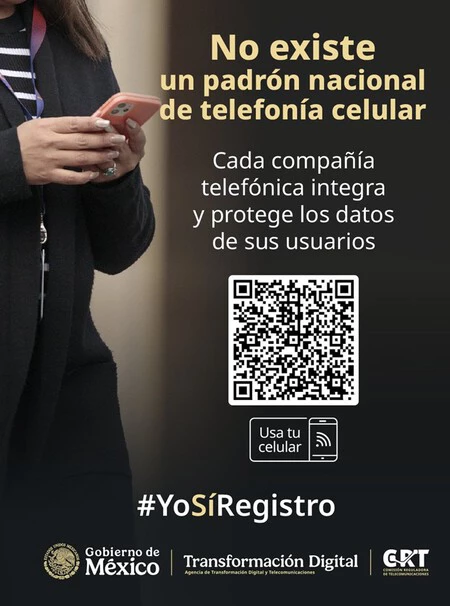
As the June 30th deadline for mandatory mobile phone line registration in Mexico rapidly approaches, a wave of public concern and government clarification has swept across the nation. While citizens are urged to link their phone numbers to their Unique Population Registry Code (CURP), the Mexican government has stepped forward to dispel a pervasive misconception: the absence of a centralized "National Mobile Telephony Registry" (Padrón Nacional de Telefonía Móvil). This clarification, issued via the Ministry of Public Education (SEP) on its official X account, underscores that the responsibility for managing and safeguarding user data rests not with a single governmental database, but individually with each telecommunications operator. This distinction is crucial, shaping both public perception and the practical implications for data privacy and security.
The Genesis of Mandatory Registration: A Quest for Security
The current push for mobile line registration is not an isolated event but rather the latest iteration in Mexico’s protracted struggle against crime facilitated by anonymous phone usage. For years, the proliferation of unregistered SIM cards has been identified as a significant enabler for various criminal activities, most notably extortion, kidnapping, and sophisticated phone fraud. Criminal organizations frequently exploit the anonymity of prepaid mobile lines to carry out their illicit operations, making it exceedingly difficult for law enforcement agencies to trace and apprehend perpetrators.
The legislative framework underpinning this mandate traces back to amendments aimed at bolstering public security. The objective is clear: by linking every active mobile line to a verifiable identity, authorities hope to dismantle the anonymity that shields criminals and thereby reduce the incidence of phone-related crimes. This measure is intended to create a transparent digital footprint for mobile communications, theoretically deterring misuse and providing crucial investigative leads when crimes occur.
However, the path to achieving this goal has been fraught with challenges. Mexico previously attempted a similar initiative with the creation of the National Registry of Mobile Phone Users (RENAUT) in 2008. RENAUT mandated the registration of all mobile lines, collecting personal data and even biometric information. Despite its ambitious goals, RENAUT ultimately failed and was dissolved in 2011 due to a combination of factors: widespread public distrust regarding data privacy, significant logistical hurdles for registration, and perhaps most critically, the emergence of a thriving black market for pre-registered SIM cards. This historical precedent casts a long shadow over the current initiative, raising pertinent questions about its potential pitfalls and effectiveness.
Understanding the Current Mandate: Who, What, and How
The present registration process, while aiming for similar security objectives as RENAUT, attempts to address some of its predecessors’ shortcomings, particularly concerning data centralization. Under the current regulations, all Mexican citizens are required to link their mobile phone lines to their CURP. This unique alphanumeric identifier is a cornerstone of personal identification in Mexico, ensuring a direct link between the phone line and a verifiable individual. Each citizen can register a maximum of ten mobile lines under their CURP.
For foreign residents in Mexico, the process accommodates their specific circumstances, allowing registration using either a temporary CURP or a valid passport. This provision ensures that the mandate applies broadly across the population, regardless of nationality, reflecting the universal nature of mobile communication in the country. Businesses, on the other hand, are required to register their corporate mobile lines using their Federal Taxpayer Registry (RFC), providing a similar layer of accountability for commercial entities.
A critical aspect of the current mandate is the explicit prohibition against the collection and storage of biometric data, such as fingerprints or facial scans. While some online registration processes may require a "proof of life" selfie – a photograph taken in real-time to verify the user’s presence during the digital registration – this image is strictly for immediate verification purposes and must be deleted immediately after the registration is complete. It is not to be stored or integrated into any database, addressing one of the major privacy concerns that plagued the RENAUT initiative. This limited use of biometric data is a key distinction, aiming to build greater public trust while still ensuring the authenticity of the registrant.
The Clarification: No Centralized "Padrón Nacional"

At the heart of the recent government communication lies the crucial clarification that "there is no national mobile telephony registry." This statement, disseminated by the SEP, seeks to correct the widespread colloquial understanding that the government is compiling a monolithic database of all mobile phone users. Instead, the government emphasizes that "each telephone company integrates and protects the data of its users."
This means that while registration is mandatory, the resulting data is not pooled into a single, centralized government-managed repository. Rather, each telecommunications operator – be it Telcel, AT&T, Movistar, or any other virtual mobile operator (OMV) – is individually responsible for collecting, storing, and safeguarding the personal data of its subscribers. This decentralized model implies that if authorities require specific user data for investigative purposes, they would need to submit official requests to the individual telecom companies rather than accessing a central government database.
The rationale behind this distributed data management approach is multi-faceted. Firstly, it aims to mitigate the significant privacy concerns associated with a centralized "padrón," which could potentially become a single point of failure for data breaches or a tool for mass surveillance. By distributing data across multiple private entities, the risk of a comprehensive data compromise is theoretically reduced, and the legal framework governing data protection (such as Mexico’s Federal Law on Protection of Personal Data Held by Private Parties) would apply directly to the operators. Secondly, it places the administrative and security burden of data management squarely on the shoulders of the private companies, leveraging their existing infrastructure and cybersecurity protocols.
The Approaching Deadline and Its Immediate Consequences
The looming deadline of June 30th marks a critical juncture for millions of unregistered mobile phone users in Mexico. Failure to comply with the registration mandate by this date will not immediately result in the permanent loss of service, but rather a phased restriction of functionality. Initially, unregistered lines will enter a state of "suspension." During this period, users will only be able to make emergency calls to designated numbers (911, 074, 079, 088, and 089) and calls to their respective customer service hotlines. All other services, including outgoing and incoming calls, text messages, and mobile data, will be temporarily disabled.
This suspension period is designed to provide a grace period, allowing users ample opportunity to complete their registration. While the exact duration of this suspension before permanent blocking was initially unclear, subsequent communications have suggested that full deactivation of unregistered lines would occur around late September. This phased approach aims to minimize immediate disruption while still applying pressure for compliance. The government’s intention is to ensure that even during the suspension, individuals retain access to critical emergency services, preventing potential public safety hazards.
However, the practical implications of this phased rollout are significant. Millions of users, particularly those in remote areas or with limited access to formal identification or digital literacy, may face considerable challenges in completing their registration in time. The potential for widespread service disruption, even temporary, could have cascading effects on personal communication, economic activity, and access to essential digital services.
Broader Impact and Unintended Consequences
Despite the government’s best intentions and the carefully articulated decentralized data management, the mandatory registration process has already revealed several concerning "unintended consequences" and raised significant questions about its overall effectiveness.
One of the most alarming developments is the emergence of a nascent black market for pre-registered SIM cards. Reports indicate that unscrupulous vendors are selling "registered" chips, often at inflated prices (e.g., 200 pesos), that are supposedly linked to the CURP of unsuspecting third parties. This phenomenon directly undermines the core objective of the law, which is to eliminate anonymity and link every line to its legitimate user. If criminals can easily acquire SIM cards already registered under someone else’s identity, the entire system’s ability to trace illicit activities is compromised. This mirrors a key vulnerability that contributed to the failure of RENAUT and highlights the persistent challenge of enforcing such mandates in a complex informal economy.
Furthermore, the mandatory registration has had a tangible impact on the mobile telephony market. Mexico has already experienced a significant loss of millions of mobile lines since the inception of this initiative. This decline can be attributed to several factors:
- Users with multiple lines: Many individuals maintained several prepaid lines for various purposes, and may choose to only register their primary line, abandoning the others.
- Informal users: A substantial segment of the population, particularly in marginalized communities, might operate without formal identification or face hurdles in completing the registration process, leading to the deactivation of their lines.
- Privacy concerns: Despite the government’s clarifications, lingering fears about data privacy and potential misuse continue to deter some users from registering.
- Criminal elements: Lines previously used for illicit activities are likely being discarded to avoid identification, contributing to the overall decline.
This reduction in active lines, while potentially reflecting a cleansing of the market from anonymous users, also poses challenges for telecom operators, impacting their subscriber base and revenue. Experts warn that the problem of "lost" lines may only be beginning, with further attrition expected as the deadlines tighten and unregistered lines are fully deactivated.
Stakeholder Perspectives: A Multi-faceted Debate
The mandatory registration has elicited a range of reactions from various stakeholders, reflecting the complex interplay of security, privacy, and economic considerations.
Government Officials consistently reiterate the imperative of enhancing public security. Their stance emphasizes that the registration is a vital tool in the fight against organized crime and common delinquency, particularly phone-based extortion and fraud. They argue that the inconvenience of registration is a small price to pay for a safer society and that the decentralized data management model adequately addresses privacy concerns.
Telecommunications Operators find themselves in a challenging position. On one hand, they are legally bound to comply with the mandate, undertaking the significant administrative and technical burden of collecting, verifying, and securing user data. This requires substantial investment in systems, personnel, and cybersecurity infrastructure. On the other hand, they face the commercial reality of potentially losing millions of subscribers, particularly in the lucrative prepaid segment, which could impact their market share and profitability. They also bear the responsibility and liability for data breaches, adding another layer of operational risk.
Privacy Advocates and Civil Society Organizations have voiced considerable skepticism and concern. Their primary apprehension revolves around the potential for state surveillance, even with a distributed data model, and the vulnerability of personal data held by private companies. They point to the historical failure of RENAUT and argue that mandatory registration often leads to a false sense of security while creating new avenues for data exploitation and eroding civil liberties. Concerns about the digital divide are also prominent, as marginalized populations may be disproportionately affected by the registration requirements.
Consumers exhibit a mix of compliance, confusion, and frustration. Many are willing to comply, understanding the stated security objectives, while others remain wary of sharing personal data, fearing misuse or security breaches. The complexity of the process, particularly for those less technologically savvy, adds to the burden. The fear of losing phone service, a critical lifeline in modern society, serves as a powerful motivator for many to complete the registration.
The Road Ahead: Challenges and Efficacy
As Mexico navigates the final stretch towards its registration deadline, the efficacy of this ambitious initiative remains a subject of intense debate. While the government aims to curb crime by eliminating anonymity, the emergence of a black market for pre-registered SIMs highlights the persistent challenges in implementation and enforcement. The experience of RENAUT demonstrates that even well-intentioned laws can be undermined by practical loopholes and public resistance.
The success of the current mandate will ultimately hinge on several critical factors: the robustness of the registration process itself, the effectiveness of measures to prevent and combat the black market for SIM cards, the ability of telecom operators to securely manage vast amounts of personal data, and the actual impact on crime rates. If phone-based crimes significantly decrease, the measure might be deemed a success, despite its challenges. However, if such crimes persist or adapt, while millions of legitimate users face service disruption and privacy concerns proliferate, the policy’s long-term viability and public acceptance could be jeopardized.
The Mexican government’s efforts to clarify the nature of the "registry" are a crucial step in managing public perception and addressing some privacy fears. Yet, the broader implications—ranging from consumer rights and data security to the economic health of the telecom sector and the fight against crime—will continue to unfold long after the June 30th deadline. The nation watches closely to see if this latest attempt to bring accountability to mobile communications will finally achieve its elusive goal of enhancing public safety without unduly compromising individual freedoms.
