

Vercel, a prominent platform for frontend developers and modern web infrastructure, has officially launched Eve, a new open-source framework designed to simplify the creation and deployment of AI agents. Unveiled at Vercel’s Ship conference in London, Eve aims to provide a structured and production-ready environment for developers building sophisticated AI-powered applications. The framework treats each AI agent as a self-contained directory, bundling all necessary infrastructure for seamless deployment.
Dubbed "Next.js for agents," a nod to Vercel’s highly successful web framework, Eve introduces a paradigm shift in how AI agents are conceptualized and developed. The core philosophy behind Eve mirrors Next.js’s approach to web applications: a singular directory encapsulates all components of an agent, from its underlying model configuration to its operational logic and integration tools. This unified structure promises to streamline the development lifecycle, making agent creation more accessible and manageable.
The launch of Eve is part of a broader initiative by Vercel, collectively branded as the "Agent Stack." This suite of products is designed to empower developers with the tools needed to build, deploy, and manage AI agents at scale. The introduction of Eve signifies Vercel’s strategic investment in the burgeoning field of AI agent development, recognizing the increasing demand for intelligent systems that can perform complex tasks autonomously.
The Agent as a Directory: A Unified Development Model
A cornerstone of Eve’s design is its innovative approach to agent organization. Similar to how Next.js defines a web application through its file structure, Eve structures an AI agent within a single directory. This directory serves as a comprehensive blueprint for the agent, containing all the essential elements required for its operation.

Within this directory, specific files dictate various aspects of the agent’s functionality. A dedicated configuration file specifies the AI model the agent will leverage, with Vercel’s AI Gateway providing a crucial layer of abstraction and provider fallback capabilities. This ensures that agents can seamlessly switch between different AI models or providers without requiring extensive code modifications. The agent’s core logic and persona are defined in a system prompt, written in Markdown, allowing for intuitive and human-readable instructions.
Tools, which are the functional capabilities of an agent, are implemented as individual TypeScript files. The filename itself serves as the tool’s identifier, eliminating the need for separate registration processes. This convention simplifies the integration of new tools and enhances the overall clarity of the agent’s architecture. Eve also incorporates support for skill.md files and Model Context Protocol (MCP) servers, enabling sophisticated interactions and interoperability with other tools and services, aligning with emerging industry standards for agent communication.
Production-Ready Features: Durability, Security, and Scalability
Eve is engineered with production-readiness at its forefront, incorporating robust features that address the critical demands of deploying AI agents in real-world scenarios. A key differentiator is its use of Vercel’s open-source Workflow SDK. Each agent conversation is managed as a durable workflow, a system that meticulously checkpoints each step of the process. This checkpointing mechanism ensures that agent sessions can be paused, survive system crashes, and resume execution precisely where they left off, guaranteeing uninterrupted operation and a resilient user experience.
Security is another paramount consideration in Eve’s design. Each agent operates within its own sandboxed environment, providing a secure isolation layer for any code it generates. This prevents potential security vulnerabilities from impacting the broader application or Vercel’s infrastructure. Furthermore, Eve allows for granular control over tool execution, with the option to mandate human approval before any tool is activated. This feature is crucial for agents performing sensitive tasks or those requiring oversight.
The framework also facilitates complex agent interactions and integrations. Agents can delegate tasks to sub-agents, enabling hierarchical task management and specialized agent roles. Connectivity to external services is achieved through MCP servers or standardized OpenAPI documents, ensuring broad compatibility. For user interaction, Eve offers built-in channels for popular platforms such as Slack, Discord, Microsoft Teams, Telegram, Twilio, GitHub, and Linear, enabling agents to engage with users across a wide range of communication interfaces.

Enhanced Observability and Seamless Deployment
Visibility into agent operations is critical for debugging, monitoring, and optimization. Eve addresses this by generating OpenTelemetry traces for every agent run. These traces are seamlessly integrated into Vercel’s observability dashboard, providing developers and IT teams with detailed insights into agent behavior. The ability to export this telemetry data to specialized services like Datadog and Honeycomb further enhances an organization’s monitoring capabilities, allowing for in-depth analysis and proactive issue resolution.
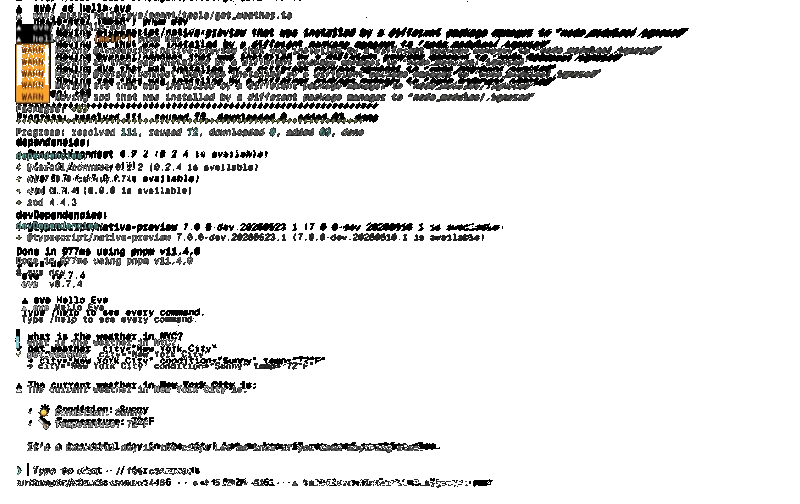
The developer experience is further streamlined through Vercel’s familiar deployment workflow. Developers can initiate an agent locally with a single command and interact with it via a terminal interface. Deploying agents is as straightforward as deploying any other Vercel project, utilizing the standard vercel deploy command. Notably, even if a new version of an agent is deployed while a session is in progress, the ongoing task will continue to completion on the version it initiated with, ensuring continuity and avoiding disruptions.
Eve is currently available in public preview and is licensed under the Apache 2.0 license, with its source code accessible on GitHub. This open-source nature fosters community contribution and transparency, encouraging broader adoption and collaborative development.
Vercel’s Internal Adoption and the Growing Agent Ecosystem
Vercel itself is a significant early adopter of Eve, utilizing over 100 agents internally for various critical functions. Examples include a sophisticated data-analysis agent that employees query thousands of times monthly via Slack, and a routing agent responsible for directing user inquiries to the most appropriate agent. This internal validation underscores the framework’s robustness and efficacy.
The impact of agents on Vercel’s platform traffic is substantial. Agents are now responsible for approximately 29% of deployments on Vercel, a dramatic increase from less than 3% a year ago. The company anticipates this share to grow to as much as 50%, highlighting the escalating importance of AI agents in modern web development workflows.

Navigating a Competitive Landscape
Eve enters a rapidly evolving and increasingly competitive market for AI agent frameworks. Several notable competitors are vying for developer mindshare and market share. Mastra, a TypeScript-native framework backed by Y Combinator, offers a platform-agnostic approach and reached version 1.0 in January. LangChain’s LangGraph, a well-established player, primarily focuses on Python and shares Eve’s emphasis on durable execution. Inngest’s AgentKit is another TypeScript-based option that provides built-in durability features.
Beyond dedicated frameworks, major cloud providers are also entering the fray with infrastructure-level solutions. Cloudflare is building agents on its Workers platform and Durable Objects. Amazon’s Bedrock AgentCore, Google’s Vertex AI Agent Engine, and Microsoft’s Agent Framework offer managed runtimes that can support agents built with various frameworks. OpenAI has also released its own AgentKit, which is specifically tied to its proprietary models.
While Eve currently operates exclusively on the Vercel platform, the company has indicated that support for other deployment environments is planned for the future. This expansion will be crucial for Eve to compete effectively in a market where platform flexibility is a key consideration for many organizations.
The launch of Eve signifies Vercel’s ambition to become a central player in the AI agent development space. By offering a developer-friendly, production-ready framework that simplifies the creation and deployment of intelligent agents, Vercel aims to empower a new generation of AI-powered applications and services. The "Next.js for agents" analogy suggests a future where building complex AI systems is as accessible and streamlined as building modern web applications. As the agent ecosystem continues to mature, Eve’s integrated approach to agent development, deployment, and observability positions it as a significant contender in this rapidly advancing field.
