
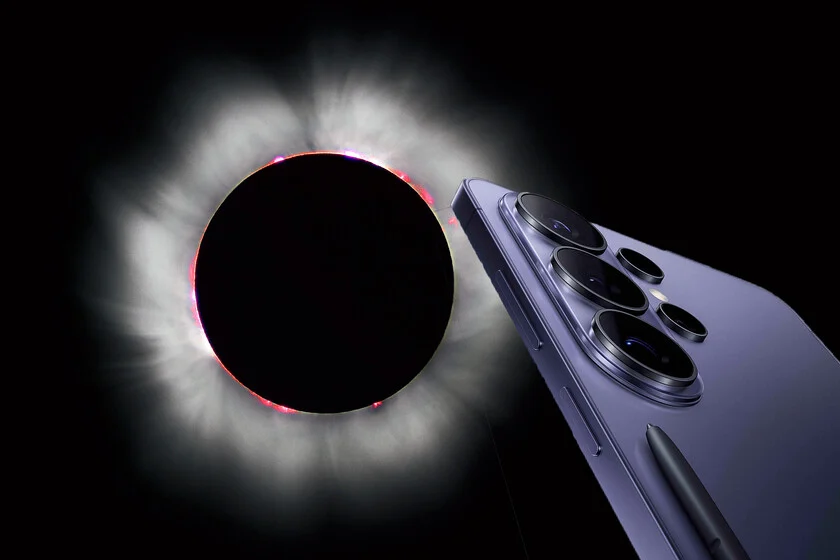

Spain is poised to become the focal point of global astronomical observation as it prepares for an extraordinary sequence of three solar eclipses over the next four years. This rare celestial phenomenon, commencing this summer and extending through 2028, promises to captivate millions and has already set in motion a significant tourism surge across the country. The event is particularly notable as it marks the first total solar eclipse visible from the Iberian Peninsula since 1912, making it a truly historic occasion for both scientific communities and the general public. While the spectacle itself is a cause for celebration, it also brings unique challenges, especially for the growing number of individuals eager to capture these breathtaking moments using their smartphones.
The Historic Triple Eclipse Phenomenon: A Celestial Alignment Unseen in Over a Century
The impending series of eclipses includes two total solar eclipses and one annular solar eclipse, an alignment that underscores the dynamic dance between the Earth, Moon, and Sun. The chronology of these events is as follows:
- August 12, 2024: The first of the trio will be a total solar eclipse, an event where the Moon completely obscures the Sun, revealing its ethereal corona. This particular eclipse holds immense significance as Spain is uniquely positioned as the only populated landmass from which the totality will be visible.
- August 2, 2027: The second total solar eclipse will grace the skies, offering another opportunity for observers to witness the rare phenomenon of a darkened daytime sky and the Sun’s magnificent outer atmosphere.
- 2028: Concluding the trio will be an annular solar eclipse. Unlike a total eclipse, an annular eclipse occurs when the Moon is farther from Earth in its orbit, appearing smaller than the Sun. This results in a "ring of fire" effect, where the Moon covers the Sun’s center, leaving a bright outer ring of sunlight visible.
The rarity of this sequence cannot be overstated, particularly the two total eclipses. The last time a total solar eclipse was observed from the Spanish mainland was in 1912, an event that predates significant advancements in both astronomy and public engagement. This historical gap amplifies the excitement and underscores the unique opportunity for current generations to witness such a profound astronomical spectacle. Recognizing the scientific and public interest, the Spanish Ministry of Science has launched the "Trío Eclipses" website (Trío Eclipses), providing comprehensive information and guidance for these upcoming events, an initiative that highlights the official backing and educational emphasis placed on this astronomical milestone.
Spain’s Unique Vantage Point Fuels Unprecedented Tourism and Economic Impact
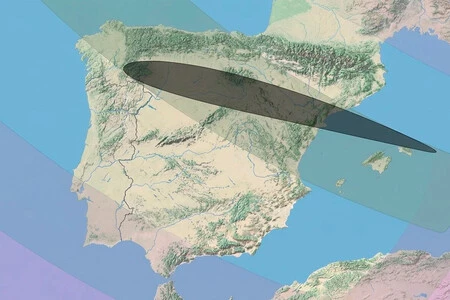
The geographical alignment for the August 2024 total solar eclipse places Spain in an unparalleled position, as it is the sole populated region on Earth where the full totality will be observable. This distinction has transformed specific areas of the country into prime viewing destinations, triggering an extraordinary surge in tourism. Accommodation providers, particularly hotels and rural lodgings within the designated "band of totality," have reported being fully booked for months, with tourists from across the globe reserving their spots well in advance. This influx represents a significant economic boost for local communities, impacting hospitality services, local businesses, and infrastructure.
The visibility of the August 2024 eclipse will not extend across the entire Spanish territory. Instead, it will be confined to a precise, narrow band stretching across the northern third of the Iberian Peninsula. Regions such as parts of Galicia, Asturias, Cantabria, the Basque Country, and northern Castilla y León are expected to experience the totality. Outside this specific corridor, observers will only witness a partial solar eclipse. This geographical specificity has concentrated the tourist demand, leading to logistical challenges related to crowd management, traffic control, and ensuring public safety in these often-smaller, picturesque locations.
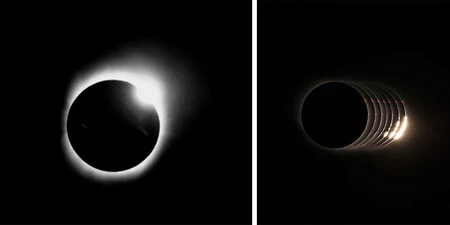
Beyond the main event of the Sun’s occultation, observers within the totality path will have the chance to witness several other spectacular phenomena. Just before and after totality, two distinct visual effects known as the "diamond ring" and "Baily’s Beads" will be visible. The diamond ring effect occurs when the last sliver of sunlight shines through a valley on the Moon’s limb, creating a brilliant point of light resembling a diamond on a ring. Following this, as the Moon continues its movement, sunlight filters through multiple valleys and craters along the lunar edge, producing several bright spots that resemble a string of beads—known as Baily’s Beads (Perlas de Baily). These transient phenomena add layers of visual drama to the eclipse, further enhancing the overall viewing experience and drawing even greater interest from both amateur and professional photographers.
The Allure of Eclipse Photography: Bridging Professionalism and Public Accessibility
The profound visual spectacle of a solar eclipse naturally inspires a fervent desire to capture and preserve the moment. This universal urge spans the spectrum from dedicated astrophotographers, equipped with sophisticated telescopes and high-end cameras, to everyday individuals armed with their smartphones. The unique opportunity to witness the Sun’s corona, the diamond ring, or Baily’s Beads drives thousands to prepare their gear, often traveling considerable distances to be within the path of totality.
Historically, capturing high-quality images of celestial events like solar eclipses was the exclusive domain of experienced photographers possessing specialized equipment. The technical demands—requiring long focal lengths, precise exposure control, and robust filtering—meant that professional DSLRs or mirrorless cameras with telephoto lenses were indispensable. However, the advent of advanced smartphone camera technology has democratized photography, making it accessible to virtually everyone. Today, a significant portion of the eager public will attempt to immortalize the eclipse with their mobile devices, regardless of whether their equipment is truly suited for the task or if they possess the necessary technical knowledge. This shift presents a dichotomy: while it broadens participation, it also introduces challenges related to image quality, equipment safety, and managing public expectations for what a smartphone can realistically achieve. The pursuit of that perfect shot, often inspired by iconic professional images, drives this widespread photographic ambition.
Mobile Photography Challenges and Realistic Expectations for Eclipse Capture
While the convenience and ubiquity of smartphones make them an appealing tool for capturing any moment, it is crucial to temper expectations regarding their capability to photograph a solar eclipse effectively. Frankly, no matter how advanced a smartphone camera system might be, it is inherently not the ideal instrument for capturing detailed, high-magnification images of the Sun during an eclipse.
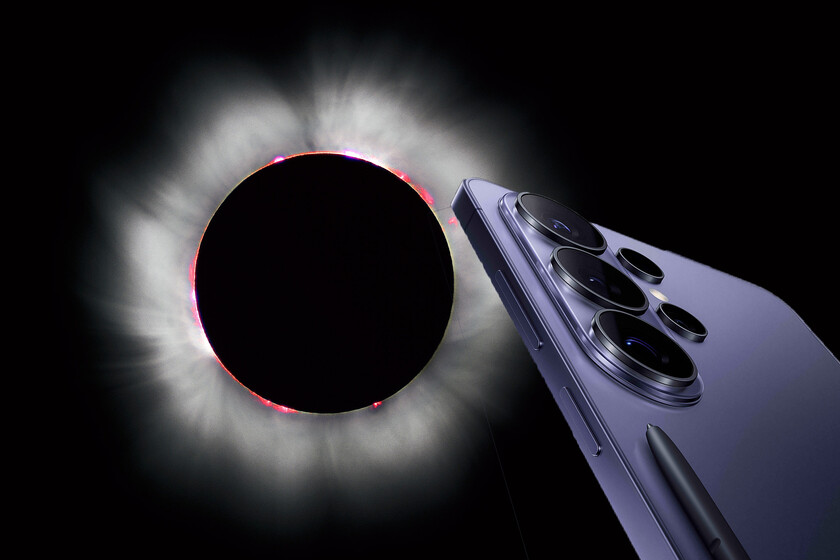
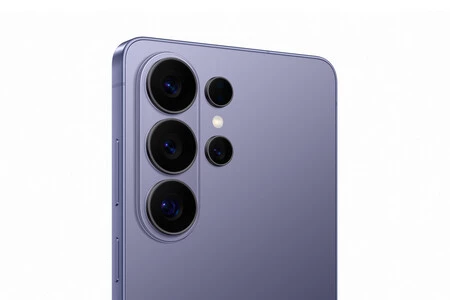
The primary limitation lies in the smartphone’s optical focal length. Even leading models like the Samsung Galaxy S2x Ultra or the latest iPhone Pro Max, despite boasting impressive zoom capabilities, offer equivalent focal lengths that are significantly shorter than what is required for compelling eclipse photography. For instance, a Galaxy S26 Ultra’s maximum optical zoom might equate to around 120mm on a full-frame camera, while an iPhone Pro Max might reach an equivalent of 200mm with its 8x zoom. To truly capture the Sun as a prominent, detailed disc in the frame, revealing its intricate features like the corona or prominences, a minimum focal length of 600mm is typically recommended for dedicated cameras, with many astrophotographers employing lenses of 1000mm or more. With a smartphone’s native optical zoom, the Sun will appear as a tiny, undifferentiated speck—a black circle barely a centimeter or two in diameter within the overall image. Relying on digital zoom to enlarge this speck will only result in a pixelated, low-quality image, as digital zoom merely crops and interpolates pixels rather than gathering more optical information.
Furthermore, achieving the dramatic "compression of planes" seen in professional eclipse photos—where the Sun appears colossal behind a distant foreground element like a person’s silhouette, a tower, or a church—is virtually impossible with standard smartphone lenses. This effect is a direct result of using extremely long telephoto lenses, which visually compress distances and magnify distant objects. Without such optical compression, a smartphone can only capture a wide-angle scene with a minuscule sun, or a heavily cropped, digitally zoomed image of the sun that lacks detail and quality. Therefore, it is essential for mobile users to set realistic expectations: a smartphone can document the event and its surroundings, but it will struggle to produce the kind of close-up, high-detail images of the solar disc that dedicated astrophotography setups achieve.
Essential Protection: Safeguarding Your Device and Vision During the Eclipse
Beyond managing photographic expectations, the single most critical aspect of attempting to photograph a solar eclipse with any device, especially a smartphone, is the absolute necessity of proper protection. Just as direct exposure to the Sun’s intense rays can cause irreversible damage to human eyesight, prolonged exposure of a camera sensor to unfiltered sunlight can permanently damage or even destroy the delicate imaging sensor within your mobile phone. Think of it like using a magnifying glass to focus sunlight onto a piece of paper; the concentrated energy can quickly cause scorching or burning. The same principle applies to your smartphone’s camera sensor, which is highly susceptible to thermal and light damage.
Therefore, safeguarding your smartphone’s camera sensor is paramount. Traditional, often improvised methods of protection, such as using X-ray films, darkened glass, or standard welding goggles, are unequivocally dangerous and ineffective. These materials do not block the necessary spectrum of harmful light, risking severe damage to both your eyes and your expensive smartphone camera. The only safe and guaranteed method for photographing an eclipse is to use specialized solar filters.
These are not standard neutral density (ND) filters, which are commonly used in photography to reduce the amount of light entering the lens for various creative effects. Regular ND filters typically reduce light by 6 to 10 stops, which is insufficient for directly photographing the Sun. For eclipse photography, you require a filter specifically designed to block an extreme amount of light, typically an ND100000 filter, which reduces light by approximately 16 to 17 stops. These specialized filters are specifically engineered to block over 99.999% of visible light, as well as harmful infrared and ultraviolet radiation.
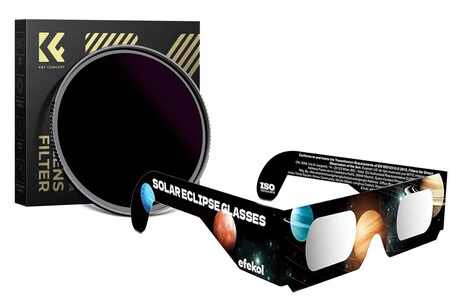
The challenge for smartphone users is that dedicated, mobile-specific eclipse filters are not readily available. Therefore, improvisation with certified equipment is often necessary. One viable option is to adapt circular solar filters designed for traditional cameras. Brands like Marumi (Marumi EXUS ND100000), Haida (Haida ND100000), or K&F Concept (K&F CONCEPT Nano-Xcel ND100000) offer such filters. These are not inexpensive, and users would need to purchase the smallest available diameter and a suitable adapter or holder to affix it securely to their smartphone’s camera lens. K&F Concept, for example, offers a practical and affordable universal clip-on filter holder (K&F Concept Filter Clip) that could be used for this purpose.
Another practical option involves using certified solar eclipse viewing glasses (meeting the ISO 12312-2 international safety standard). The Mylar film from these glasses can be carefully cut and affixed over the smartphone’s camera lens using adhesive tape. It is imperative that this filter remains in place throughout all partial phases of the eclipse. The filter should only be removed during the brief period of total eclipse, when the Sun’s disc is completely obscured and only the corona is visible. Crucially, as soon as the first sliver of sunlight reappears at the Moon’s edge (signaling the end of totality), the filter must be immediately reapplied to protect both the camera sensor and any human eyes that might inadvertently glance at the Sun. Failing to adhere to these safety protocols risks permanent damage to your device and, more importantly, to your vision.
Navigating Mobile Photography Gear and Enhancements for Eclipse Capture
Given the inherent limitations of smartphone cameras for eclipse photography, prospective mobile astrophotographers often seek accessories to enhance their capabilities. While these accessories can improve results, they rarely bridge the gap entirely to professional-grade equipment.
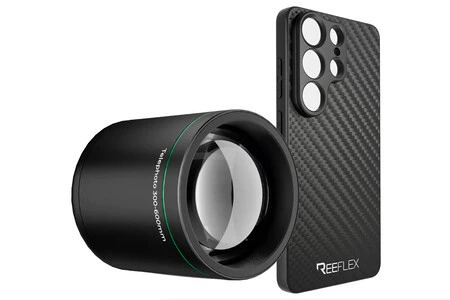
For users seeking to increase their smartphone’s focal length, specialized telephoto attachments are becoming available. Reeflex, for instance, is offering the G-Series Ultra Telephoto 300-600mm (Reeflex G-Series Ultra Telephoto) for Samsung Galaxy S26 Ultra (and compatible with earlier models down to S23 Ultra), priced at 319 euros. This attachment promises to deliver a significantly longer focal length, approaching the lower end of what is typically recommended for eclipse photography. However, potential buyers should note that this product is currently in pre-sale, with shipments expected to commence around July 13. Given the anticipated high demand for such an event, there is a risk that delivery might be delayed, preventing its timely use for the August 2024 eclipse. Furthermore, the Reeflex telephoto requires a compatible carbon Android case (Reeflex G-Series Carbon Android Case), which costs an additional 54 euros.
Some smartphone brands, such as Vivo and OPPO, have begun to integrate more advanced modular telephoto lens systems into their high-end models, offering up to 400mm equivalent focal lengths. While still short of the ideal 600mm+ for extreme close-ups, these systems offer a noticeable improvement over standard smartphone optical zooms and represent a step towards more versatile mobile photography.
Beyond telephoto capabilities, securing the necessary solar filters to a smartphone lens requires specific accessories. As previously mentioned, universal clip-on filter holders, such as those offered by K&F Concept, provide a practical solution for attaching circular camera-grade filters to a smartphone. These holders ensure the filter is securely positioned over the camera lens, maintaining alignment and preventing light leaks.
Regardless of telephoto attachments or filter choices, a sturdy tripod and a reliable phone mount are indispensable. Even minor vibrations can blur images when working with high magnification and precise focusing. A tripod ensures stability, allowing for sharper images and easier composition. Additionally, using a remote shutter release (either Bluetooth or wired) can further minimize camera shake, ensuring the clearest possible shots. These accessories, while adding to the overall cost, are crucial for maximizing the potential of smartphone eclipse photography and protecting your device.
Practical Tips for Capturing the Eclipse with Your Mobile Phone
For those determined to photograph the upcoming eclipses with their mobile phones, here are several practical recommendations to enhance your chances of success and ensure the safety of your device:
- Prioritize Safety: Reiterate: Never point your phone’s camera directly at the Sun without a certified solar filter (ND100000 / 16-17 stops) securely attached. This is non-negotiable for device safety and human eye protection. Remove the filter only during the brief period of totality.
- Use a Tripod and Remote Shutter: Stability is paramount. A sturdy tripod with a robust phone mount will prevent blurry images, especially when attempting any form of zoom or during longer exposures. Use a remote shutter release to avoid physical contact with the phone, which can introduce vibrations.
- Manual Camera Mode: If your phone’s camera app offers a "Pro" or "Manual" mode, utilize it. This allows you to control ISO, shutter speed, and white balance. Lock the focus on the Sun (or infinity focus). Experiment with settings before the eclipse, with your filter on, using the daytime Sun (briefly, and with extreme caution).
- Experiment with Exposure: With the solar filter on, your exposure times will likely be longer, even in bright sunlight. During totality (filter removed), the corona is much fainter, requiring different, often shorter, exposures. Bracket your shots (take multiple photos at different exposures) to capture the full dynamic range of the corona.
- Avoid Digital Zoom: While tempting, digital zoom degrades image quality significantly. If you cannot achieve sufficient magnification optically (either with your phone’s native telephoto lens or an attachment), accept that the Sun will appear small in your frame. Focus on capturing the overall scene and the environmental changes during the eclipse.
- Capture the Environment: Don’t just focus on the Sun. Consider wide-angle shots that show the darkening sky, the landscape, or people reacting to the event. These can be powerful images that tell the story of the eclipse experience, even if the Sun itself is a small element.
- Battery Management: Fully charge your phone and bring a portable power bank. Extended use, especially with camera apps, can drain the battery quickly.
- Practice Makes Perfect: Familiarize yourself with your phone’s camera settings and any accessories beforehand. Practice attaching and removing the filter, adjusting settings, and mounting your phone to the tripod.
- Enjoy the Moment: While capturing the event is exciting, remember to take time to experience the eclipse with your own eyes (using certified eclipse glasses). The fleeting beauty of a total solar eclipse is a profound experience that should not be missed behind a screen.
Broader Implications and Public Engagement
The triple eclipse series in Spain represents more than just a fleeting astronomical event; it is a catalyst for broader societal impacts. Scientifically, it offers researchers unique opportunities to study the Sun’s corona, atmospheric phenomena, and gravitational effects under controlled conditions, potentially yielding new data that advances our understanding of stellar physics. Publicly, it serves as a powerful educational tool, inspiring interest in astronomy, physics, and STEM fields among people of all ages. The extensive media coverage and public engagement campaigns, such as the Ministry of Science’s "Trío Eclipses" initiative, play a vital role in raising scientific literacy and fostering a sense of wonder about the cosmos.
Culturally, these eclipses will create shared national memories, drawing communities together in collective observation and celebration. The blend of ancient awe and modern technological pursuit—from the intricate dance of celestial bodies to the challenges of capturing it with a device held in one’s hand—highlights humanity’s enduring fascination with the sky. As Spain braces for this historic period, it underscores the importance of responsible viewing and photography, ensuring that the pursuit of a memorable image does not compromise safety or detract from the profound experience of witnessing nature’s grandeur. The coming years will undoubtedly be a luminous chapter in Spain’s astronomical history, leaving a lasting legacy on its scientific community, tourism sector, and the collective consciousness of its people.
