

The Emergence of Continuous Physics Reasoning (CPR)
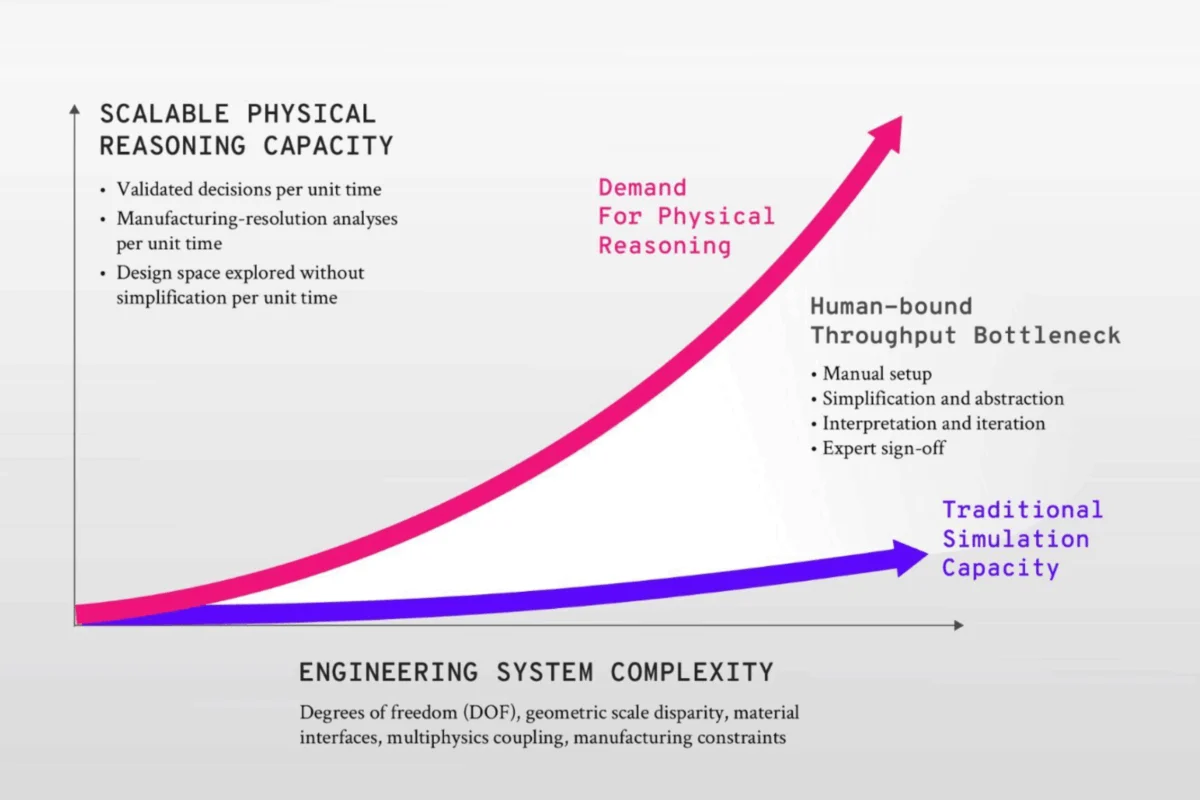
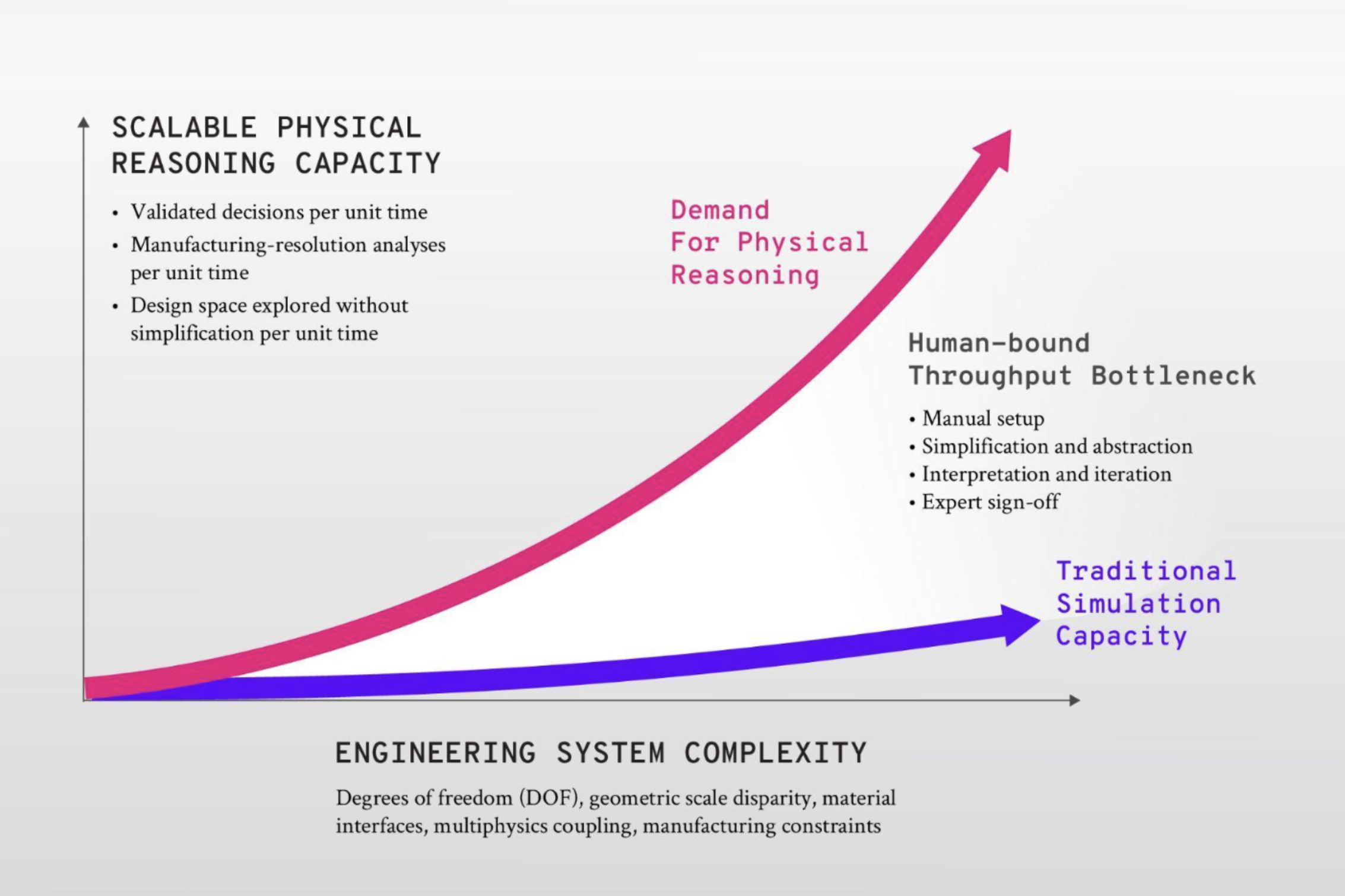
The central thesis of the Vinci paper is the transition from "Discrete Simulation" to "Continuous Physics Reasoning" (CPR). For decades, the standard workflow in engineering has involved a linear progression: a designer creates a geometric model, which is then handed off to a simulation specialist who prepares a mesh, applies boundary conditions, and runs a solver. This process, while accurate, is fundamentally intermittent. It creates a "feedback lag" where design errors or physical impossibilities are often discovered days or weeks after the initial concept was formed.
Continuous Physics Reasoning proposes a world where physical constraints—thermal, mechanical, and electrical—are reasoned over in real-time throughout the entire product lifecycle. This capability is not merely about faster simulation; it is about the "democratization of physics" within the design environment. By making physical reasoning continuously available, engineers can evaluate the manufacturing readiness and lifecycle performance of a component at the very moment of its inception. This paradigm shift is necessitated by the fact that modern products now concentrate more physics across more scales than ever before. For instance, a modern high-performance chip or a high-density EV battery pack involves multi-physics interactions where thermal expansion directly affects electrical conductivity and mechanical integrity simultaneously.
The Foundation Model for Physics: A New System Class
To enable CPR, the paper defines a specific class of technology: the Foundation Model for Physics (FMP). Unlike previous iterations of AI in engineering, which often relied on "surrogate models" trained on narrow datasets to predict specific outcomes, an FMP is described as a general-purpose system. It reasons natively over physical structure with "solver-grade" accuracy.
Vinci’s definition of an FMP sets a high bar for what qualifies as a foundation model in this space. It must be deterministic, meaning that for a given set of physical inputs and boundary conditions, the model must produce consistent, repeatable results that align with the laws of physics. Furthermore, it must operate at "manufacturing resolution." This means the model cannot simplify geometry to the point where critical manufacturing tolerances are lost; it must be able to reason over the minute details that dictate whether a part can actually be produced on a factory floor.
Chronology of Engineering Simulation and the Path to 2026
The evolution toward Continuous Physics Reasoning has been decades in the making, characterized by several distinct eras of computational engineering:
- The Era of Manual Calculation (Pre-1960s): Engineering relied on closed-form analytical solutions and physical prototyping. Testing was slow, expensive, and limited by human calculation capacity.
- The Birth of Finite Element Analysis (1960s–1980s): The introduction of FEA and Computational Fluid Dynamics (CFD) allowed for the digital approximation of physical behavior. However, these tools required massive mainframe computers and were restricted to the most well-funded aerospace and defense projects.
- The Integration of CAD and CAE (1990s–2010s): Computer-Aided Design (CAD) and Computer-Aided Engineering (CAE) became desktop staples. While tools became more accessible, the "silo" between the designer and the analyst remained largely intact.
- The Rise of AI Surrogates (2018–2024): Engineers began using machine learning to create "black-box" surrogates that could predict simulation results quickly. While fast, these models often lacked generality and failed when presented with geometries outside their narrow training sets.
- The Foundation Model Era (2025–Present): The current shift, as defined by Vinci, involves models that understand the underlying principles of physics (conservation of mass, energy, and momentum) natively, allowing them to generalize across any geometry or physical domain without task-specific retraining.
Minimum Qualifying Standards and Disqualifying Patterns
A critical contribution of the Vinci paper is the establishment of a classification framework to prevent "AI washing" in the engineering software market. As the demand for AI-integrated tools grows, many legacy vendors have rebranded simple automation scripts or narrow neural networks as "physics AI." Vinci identifies several "disqualifying patterns" that prevent a system from being classified as a true Foundation Model for Physics:
- Task-Specific Surrogates: Models that only work for a specific type of part (e.g., a model trained only on turbine blades) fail the generality test.
- Per-Domain Model Forks: If a system requires a completely different architecture or model weights to switch from thermal analysis to structural analysis, it is not a foundation model.
- Nondeterministic Execution: Systems that provide "probabilistic" or "hallucinated" physical results are unsuitable for engineering, where safety and reliability are paramount.
- Workflow Automation without Reasoning: Simply automating the process of clicking buttons in a traditional simulation tool does not constitute physical reasoning.
To qualify, a system must provide "out-of-the-box generality." This means a user should be able to input a completely novel physical structure—something the model has never seen—and receive a deterministic, solver-grade evaluation of its physical properties immediately.
Supporting Data: The Economic Imperative for CPR
The drive toward Continuous Physics Reasoning is fueled by the escalating costs of design failures. According to industry data from 2025, the cost of a "late-stage" design change in the semiconductor industry can exceed $100 million when accounting for mask set re-spins and lost time-to-market. In the automotive sector, thermal management issues discovered during the physical prototyping phase can delay a vehicle launch by six to nine months, costing manufacturers billions in projected revenue.
Furthermore, the complexity of manufacturing is increasing exponentially. In 2026, the average number of physical constraints (thermal, mechanical, electromagnetic) that an engineer must consider simultaneously has tripled compared to a decade ago. Traditional "step-by-step" simulation cannot handle this multi-dimensional constraint space efficiently. Vinci’s research suggests that implementing CPR can reduce the "design-to-validation" cycle by as much as 70%, as physical viability is checked thousands of times during the design phase rather than once at the end.
Industry Reactions and Broader Implications
The announcement has prompted a range of responses from across the technology and manufacturing sectors. Chief Technology Officers at leading Electronic Design Automation (EDA) firms have noted that CPR could finally bridge the gap between "logical design" and "physical reality" in chip manufacturing. As transistors shrink toward the 1-nanometer scale, the physical structure of the chip becomes the dominant factor in its performance, making native physical reasoning an absolute necessity.
Environmental and operational efficiency advocates have also hailed the move toward CPR. By enabling "lifecycle performance" reasoning, these models allow engineers to simulate how a product will degrade over ten years of operation under varying environmental conditions. This leads to more durable products, reduced material waste, and more accurate "digital twins" that can predict maintenance needs before failures occur.

However, some experts caution that the transition to FMPs will require a massive shift in computational infrastructure. While these models provide "real-time" reasoning for the user, the underlying "training" of a foundation model that understands the breadth of physical laws requires specialized high-performance computing (HPC) clusters and vast amounts of high-fidelity synthetic and empirical data.
Analysis of Implications for the Engineering Workforce
The shift to Continuous Physics Reasoning will inevitably transform the role of the professional engineer. For decades, the "simulation expert" has served as a gatekeeper, possessing the specialized knowledge required to operate complex solvers. With the advent of general-purpose foundation models for physics, the "expert-mediated" barrier is lowered.
This does not render the simulation expert obsolete; rather, it shifts their focus. Instead of spending 80% of their time on mesh generation and solver debugging, they will focus on "high-level physics strategy"—defining the complex boundary conditions and multi-physics environments that the foundation models will then reason through. The engineer moves from being a "calculator" to being a "curator" of physical intent.
Conclusion: The Future of Manufacturing Resolution
Vinci’s proposal for Continuous Physics Reasoning marks a definitive end to the era of "guess and check" engineering. By establishing a rigorous standard for Foundation Models for Physics, the industry now has a roadmap for developing systems that can keep pace with the complexity of 21st-century technology. As these models become integrated into every CAD window and manufacturing execution system, the boundary between the digital concept and the physical reality will continue to blur. The ultimate goal is a state of "deterministic creativity," where the laws of physics are not a hurdle to be cleared at the end of a project, but a continuous guide that informs every step of the creative process. This evolution ensures that as products become more complex, the systems used to design them become more intelligent, reliable, and natively aware of the physical world they are destined to inhabit.
